Wholesale Heated Apparel Battery Performance 2026: the Buyer Acceptance Binder for Runtime Claims and Cycle Life Data
Most heated apparel reorder decisions run on a spreadsheet with three columns: unit price, minimum order quantity, lead time. It is missing the column that decides whether your listing survives EU market surveillance. Buyers who track heated apparel battery performance before placing the PO — usable runtime at a stated wattage and ambient temperature, capacity retention at a stated cycle count, and the pack-and-garment field failure rate — reorder with fewer surprises because the risk is priced rather than discovered. This is the working document for that check: the binder you assemble, the claims you reject in writing, the calendar you run before a Q4 hero SKU lands. We track the regulatory shifts in heated apparel industry news and the supplier mechanics in our supply chain coverage.
1. Why Runtime and Cycle Life Claims Decide Your Reorder
A heated apparel line is a two-variable product: the pack and the garment. The pack sets the chemistry, the certification file and the safety envelope. The garment sets the thermal mass and how long the wearer keeps it switched on. Buyers who treat heated apparel battery performance as one number on a spec sheet negotiate with a supplier who never promised a protocol.
Three facts belong in the acceptance file before you reorder: usable runtime at a named wattage tier and ambient temperature, capacity retention at a named cycle count, and the field failure rate of the pack-and-garment system. When a heated apparel battery performance manufacturer produces all three in writing, the purchase order conversation shifts to price and lead time rather than to who carries the risk of an indefensible claim. The same holds for a heated apparel battery performance wholesale supplier.
| Product tier | Pack rating | Usable runtime | Test condition |
|---|---|---|---|
| Socks | 2,200 mAh, 3.7 V | 2.3 h | 3W, 20 °C |
| Gloves | 3,000 mAh, 3.7 V | 1.5 h | 6W, 20 °C |
| Vests | 10,000 mAh, 3.7 V | 3.5 h | 9W, 20 °C |
| Jackets | 20,000 mAh, 3.7 V | 5.2 h | 12W, 20 °C |
| Jackets, winter SKU | 20,000 mAh, 3.7 V | 4.3 h | 12W, 0 °C |
2. The Three Supplier Claims to Reject in Writing
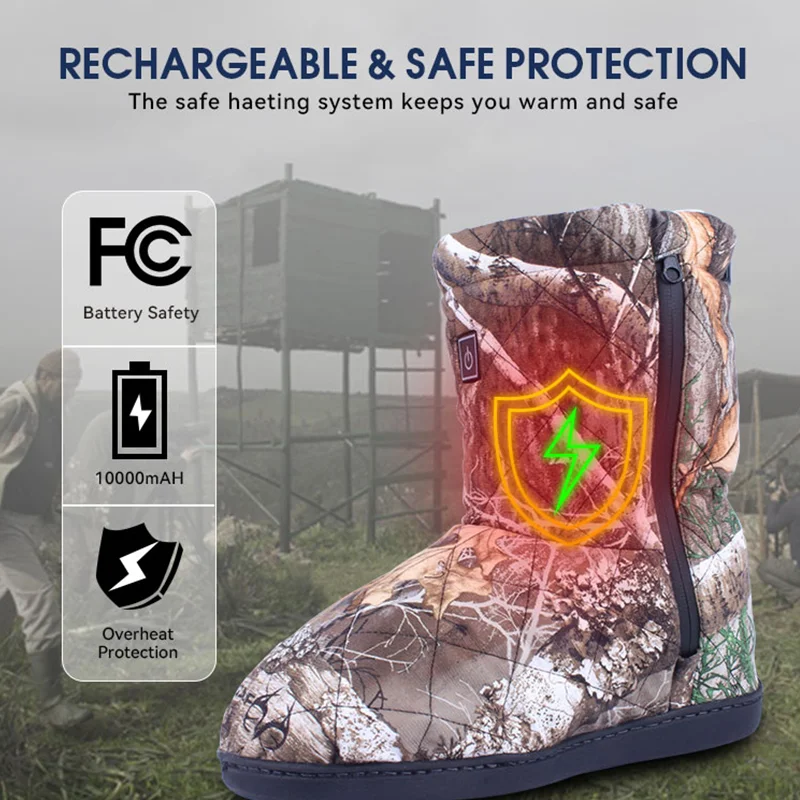
Put three sentences into the purchase order as written rejections, not requests buried in an email. First, “same runtime as the original” — with no reference SKU, wattage tier or ambient temperature, it is unfalsifiable. Second, “tested to IEC standard” — IEC 62133-2:2017+AMD1:2021 covers cell and pack safety, not runtime or cycle life. Third, “cycle life equivalent” — without a retention percentage at a defined cycle count, it carries no measurable content.
Rejecting these claims in writing protects heated apparel battery performance claims that end up on your product page, and your returns budget. Reserve $0.83 per unit as a wholesale compliance reserve, which is $4,150 on a 5,000-unit order, covering retesting, document rebuilds and listing remediation when a claim proves to be a marketing line.
| Claim as written | What is missing | What to require instead |
|---|---|---|
| Same runtime as the original | Reference SKU, wattage, temperature | Runtime in hours at a named wattage and ambient temp |
| Tested to IEC standard | Which IEC part, and the method | UN 38.3 and IEC 62133-2:2017+AMD1:2021 reports |
| Cycle life equivalent | Retention percentage, cycle count | Retention at a defined cycle count |
3. The Buyer Acceptance Binder: Nine Documents You Should Be Able to Hold
The binder answers one question: what evidence do I need from my supplier before I reorder? It is a nine-document set that should exist before the first PO and be refreshable on every reorder. Documents 1 to 5 cover the pack; documents 6 to 9 cover the system around it — controller, compliance file and warranty history.
The cost of not holding it is concrete. If the cell supplier changes between seasons, rebuilding the runtime claim file costs $11,600 in retesting, lab time and documentation — a cost that lands in the buyer’s PO because the buyer, not the factory, owns the listing claim. A heated apparel battery performance OEM that cannot produce documents 1 to 5 on request will have that claim file rebuilt later, on your schedule, at your price.
| # | Document | Must contain | Buyer gate |
|---|---|---|---|
| 1 | Cell datasheet, lot traceability | Chemistry, rated capacity, date code | Lot code traceable to units |
| 2 | Cell and pack safety report | IEC 62133-2:2017+AMD1:2021 results | No unresolved deviations |
| 3 | Transport test summary | UN 38.3 summary | Shipping lanes confirmed |
| 4 | Pack and charger certification | UL 2054 pack, UL 1642 charger | Certificates match model |
| 5 | Runtime protocol and raw log | Wattage, ambient temp, duty cycle | Raw logs, not a slide |
| 6 | Cycle life test report | Retention at a cycle count | Same cell lot as production |
| 7 | BMS and controller spec | Cut-offs, over-current limit, connector | Connector matches harness |
| 8 | EU Declaration of Conformity, index | Risk assessment, traceability, operator | EU operator named |
| 9 | Warranty, RMA policy, failures | Return rate by quarter, defect codes | Rate below your ceiling |
4. What a Checkable Runtime Claim Must Specify
A runtime claim is checkable when five parameters are stated and reproducible by a third party. Rated capacity is the nameplate figure; usable capacity is what the controller delivers before cut-off, typically 85% of rated at 20 °C. The wattage tier must be named — 3W, 6W, 9W, 12W — because the same pack yields very different headlines across tiers. The ambient temperature must be stated, because usable capacity at 0 °C falls to roughly 70% of rated. The cycle count at which the claim holds tells you whether you are buying a new pack or a two-year-old cell dressed as new.
If a heated apparel battery performance runtime claim omits any one of those five, it cannot be checked, and an unverifiable claim cannot be reproduced on an EU listing. This is where the soft-plant gap appears: a supplier claiming five hours on a 12W jacket is describing rated energy divided by power, not usable energy delivered to a wearer in a cold room.
| Parameter | Value to state | Typical failure in the claim |
|---|---|---|
| Rated vs usable capacity | Rated in mAh, usable in Wh | Only the nameplate number |
| Wattage tier | 3W, 6W, 9W or 12W | “Up to 12W” on a 6W product |
| Ambient temperature | 20 °C or 0 °C, stated | Test room never mentioned |
| Duty cycle | Continuous or intermittent | Intermittent at 50% shown as peak |
| Cycle count at claim | e.g. 100 cycles from new | Claim drifts under 8 h by cycle 60 |
5. Cycle Life Data: Retention at a Defined Cycle Count
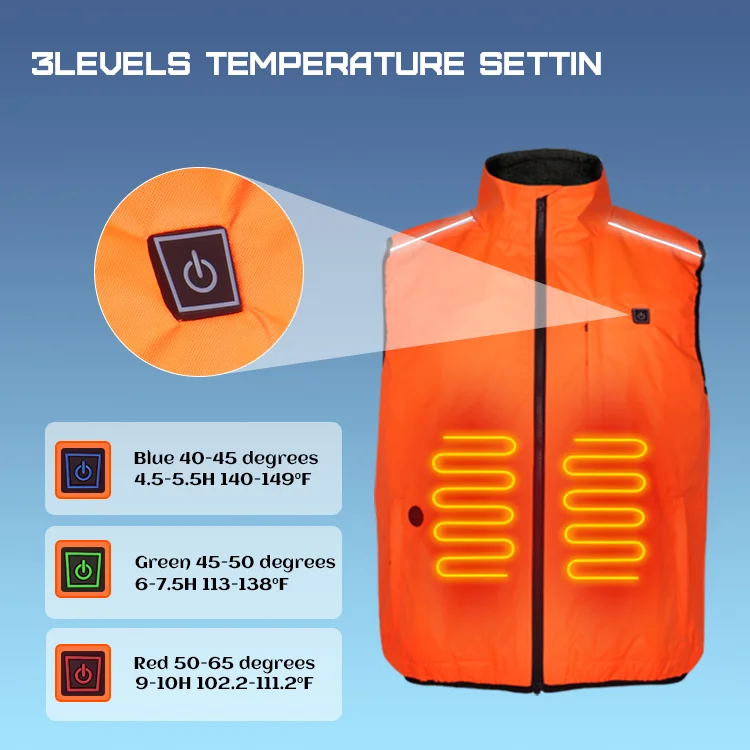
heated apparel battery performance cycle life data means one number and one protocol: the percentage of rated capacity still available after a stated number of full charge cycles, under a stated temperature, charge rate and discharge rate. Without the protocol, the number is decoration. A pack quoted at “500 cycles” could mean 500 cycles at 0.2C charge and 0.5C discharge at 25 °C, or 500 shallow cycles ending at a 4.2 V cut-off — different products at different costs.
For a heated apparel line, retention at cycle 500 is the acceptance gate, because a consumer-season garment sees 150 to 300 cycles in three winters. The ordering implication is direct: heated apparel battery performance above 80% retention at cycle 500 supports a full warranty year on the pack, while a line below 70% by cycle 300 generates returns in its second season, in the middle of your next Q4 peak.
| Cycle count | Minimum retention | Buyer acceptance |
|---|---|---|
| 100 cycles | 95% | Baseline sanity check |
| 300 cycles | 88% | Single-season program |
| 500 cycles | 80% | Recommended acceptance gate |
| 1,000 cycles | 70% | Premium tier only |
6. Durability Testing From the Buyer’s Side
heated apparel battery performance durability testing is where the pack and the garment meet, and where most returns originate. A pack tested alone on a bench passes; a pack flexed into a harness, washed ten times, dropped in a courier parcel and charged at -10 °C fails. Connector and controller failures dominate field returns: a loose 2-pin connector, a drifting NTC, a controller that no longer recognises a pack after a firmware update. Ask for the failure breakdown by component.
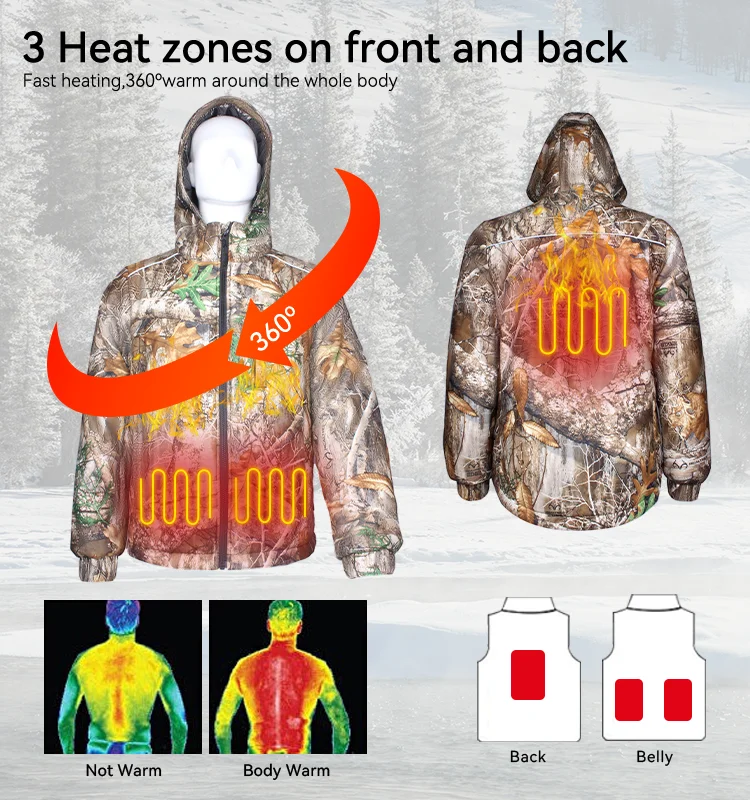
Thermal mass is the second buyer lesson. The same 12 W pack runs longer in a cotton shell than in a thick vest, because the garment stores heat and the controller’s duty cycle reflects the wearer’s comfort target rather than the pack’s energy. That is why a runtime claim measured on a bare bench pack is worth little, and why a garment-mounted test at 20 °C and 0 °C belongs in the binder. A garment hot enough to trip thermal protection is a returns engine regardless of cell quality.
| Test | Method | Buyer acceptance |
|---|---|---|
| Pack plus garment burn-in | 3W, 6W, 9W, 12W in garment | No thermal cut-off under 60 °C |
| Connector mating | 500 mate cycles on harness | No resistance drift |
| Wash durability | 10 wash cycles, pack removed | No moisture, no faults |
| Cold charge | Charge at -10 °C, conditioned | Accepted, no lock-out |
| Drop and vibration | 1 m drop, courier profile | No protection trip |
| Controller fault injection | Over-current, over-temp, NTC open | Protected, no hazard |
7. Information Disclosure Under Article 8 as It Reaches Your EU Listing
Regulation (EU) 2023/1542 on batteries and waste batteries (the Batteries Regulation) reaches your business through Article 8 (information to be provided regarding the battery), and the requirements arrive in three places: the manual, the product page and the compliance file. Article 13 (labelling and marking requirements for batteries) adds the CE mark, the capacity and duration marking, and the machine-readable data access pointing back to the declaration. Article 11 (removability and replaceability of portable batteries) means a heated apparel pack must be removable and replaceable by the end user — a design constraint to verify before tooling. On due diligence, Article 47 (due diligence obligations) applies above certain thresholds; portable apparel battery packs fall below those thresholds, so no filing is owed, and a supplier charging you for one is selling a document you do not need.
Heated apparel battery performance information disclosure is also where the General Product Safety Regulation applies. Regulation (EU) 2023/988 on general product safety (the General Product Safety Regulation), which applies from 13 December 2024 and replaces Directive 2001/95/EC, requires an EU Declaration of Conformity, a technical file and an economic operator inside the EU. Under Directive 2005/29/EC on unfair commercial practices (the Unfair Commercial Practices Directive), an unsubstantiated runtime headline is a misleading claim — a returns problem becomes an enforcement one.
Hold returns exposure in the same budget as the compliance reserve. A 2.8% RMA reserve, which is $2,240 on a 5,000-unit purchase order, covers the second-season pack returns that follow a weak cycle-life file, the replacement packs you ship, and freight on both legs.
| Disclosure | Legal anchor | Where it lands |
|---|---|---|
| Runtime, capacity, cycle life | Article 8 | Manual and listing page |
| User-replaceable pack design | Article 11 | Design, spare-part pricing |
| CE mark, capacity marking | Article 13 | Pack label, artwork |
| No due diligence filing owed | Article 47 | Removes a fake service fee |
| Declaration, file, EU operator | General Product Safety Regulation | DoC file |
| Substantiated runtime claims | Unfair Commercial Practices Directive | Listing copy, media |
8. The Cost of a Claim Failure: Surveillance, Suspension and the Reserve
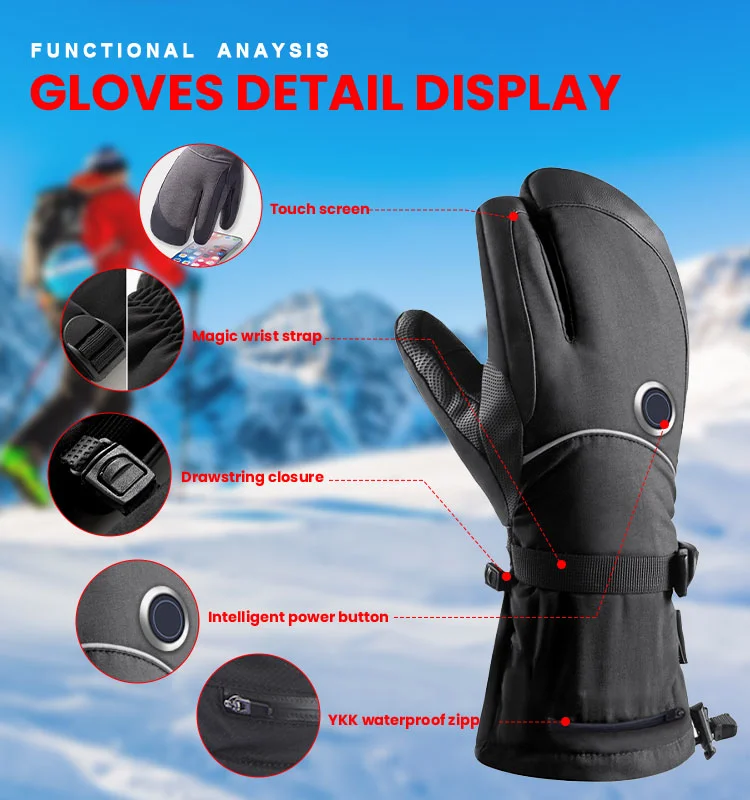
The failure path is short and expensive. A customer in Frankfurt receives a 12 W jacket rated at five hours, gets under two on a cold street, and files a review. A competitor reports the same defect, EU market surveillance opens a file, and the authority asks for the technical documentation behind the runtime figure you printed. If the heated apparel battery performance information disclosure in your file is a brochure rather than a test report, the outcome is a listing suspension, a corrective action plan, and a batch you cannot sell while it is reviewed.
The commercial consequence follows fast: the PO you cannot cancel, the container you cannot return, the listing held in a review queue during your Q4 window, and paid media running against a suspended page. Hold two reserves — the compliance reserve from Section 2 for testing and documentation, and the RMA reserve from Section 7 for returns. A buyer who reorders with the binder complete converts an unknown into a number; a buyer who reorders with a brochure converts it into a surveillance file.
9. A 60-Day Buyer Acceptance Calendar (T-60 to T-3)
Run this before a Q4 hero-SKU launch, with the supplier, so every gate has an owner and a date. The calendar works because the longest-lead item — cycle-life and runtime testing on production-representative units — sits at the front, where it can fail without killing the launch date. Reserve the final week for the EU Declaration of Conformity file and the listing copy, because that is where a missing document becomes a delayed shipment rather than a cheap fix.
| Gate | Action | Output |
|---|---|---|
| T-60 | Issue the nine-document request | Request issued in writing |
| T-52 | Review cell datasheet, traceability | Cell acceptance decision |
| T-38 | Garment-mounted runtime test at 20 °C, 0 °C | Runtime per wattage tier |
| T-30 | Review cycle-life report at a cycle count | Retention decision |
| T-22 | Connector, wash, cold-charge tests | Durability report |
| T-10 | Freeze the runtime claim wording | One claim, one protocol |
| T-3 | Confirm listing copy, labels, reserves | Listing, reserve approved |
10. Frequently Asked Questions
What is the minimum runtime evidence I should require before a first purchase order?
Raw logs naming the wattage tier, ambient temperature, duty cycle and the cycle count at which the claim holds, measured on a pack inside the garment.
What is the difference between rated capacity and usable capacity?
Rated capacity is the nameplate figure; usable capacity is what the controller delivers before cut-off, typically 85% of rated at 20 °C and 70% at 0 °C.
Should I accept a runtime claim measured at 20 °C if customers use the product at 0 °C?
Only if the claim states the 20 °C condition and you publish the cold figure separately, because 12W drops from 5.2 hours at 20 °C to 4.3 hours at 0 °C.
How many cycles before a heated apparel pack falls below 80% retention?
A qualified pack holds 95% at 100 cycles and 80% at 500 cycles, so specify that 500-cycle gate rather than the datasheet nominal.
Does cycle life data matter for a seasonal line that sells out every winter?
More, because the pack you ship in year two comes from cells aged in the supplier’s warehouse, and a customer with a bad pack gives you no second chance.
What is the minimum cycle life protocol a supplier must disclose?
The cycle count, the retention percentage, the charge and discharge rates, and the ambient temperature, ideally at 25 °C with 0.2C charging and 0.5C discharging.
Do I need UN 38.3 and IEC 62133-2:2017+AMD1:2021 documents for EU sales?
You need the underlying reports for your file and for transport, plus UL 2054 for the pack and UL 1642 for the charger where carriers require them, because they prove the pack is safe to ship and sell.
What does Article 8 of the Batteries Regulation require me to do as importer of record?
It requires battery information to be provided to the user, so capacity, runtime, cycle life and warranty terms must reach the manual and listing, not stay in the factory file.
Does Article 11 require my heated apparel packs to be user-replaceable?
Yes, so verify the removal and replacement design before tooling and price a spare pack, because a non-replaceable pack is a compliance and return-rate problem at once.
What labelling does Article 13 require on the battery or the product page?
The CE mark, capacity and duration marking, and machine-readable data access pointing back to the declaration, which means approving artwork before packaging prints.
Do I have to file due diligence under Article 47 of the Batteries Regulation?
No, because portable apparel battery packs fall below the thresholds that trigger those due diligence obligations, so no filing is owed and any fee for one should be declined.
What should my EU Declaration of Conformity file contain under the General Product Safety Regulation?
The declaration, the risk assessment, the test evidence, the traceability records, and the economic operator responsible inside the EU.
What reserve should I hold for returns on a 5,000-unit purchase order?
A 2.8% RMA reserve, which is $2,240, covering second-season pack returns, replacement packs and inbound and outbound freight.
How do I detect a silent cell substitution on a reorder?
Verify the lot date code against the binder datasheet, then re-run the garment-mounted runtime test at 12 W for 30 minutes before accepting delivery.