How Retail Buyers Should Evaluate Supplier Production Capacity: A 2026 B2B Buyer’s Guide to Capacity-Proof Vendor Selection
Audience lens (gearplant.com): buyer / retail-side. This guide is written for retail buyers, sourcing managers, and brand owners evaluating whether a heated apparel supplier can actually deliver on a peak-season volume commitment — not just quote it.
1. Why Capacity-Proof Vendor Selection Is the Buyer’s #1 Job in 2026
For a retail buyer placing a heated apparel private-label or OEM-ODM order in 2026, supplier production capacity is the single most important qualification criterion — and the easiest one for a supplier to fake. A slick brochure, a polished WeChat profile, and a confident “yes, we can do 50,000 units by October” answer from a sales rep tells you almost nothing about whether the supplier actually has the binding-constraint sub-line capacity to deliver. The cost of a wrong capacity assessment is brutal: missed retail season, empty shelves, markdowns, and a brand reputation hit that takes 18-24 months to recover.
This guide gives you the 7 capacity-proofing questions to ask every prospective heated apparel supplier, the red flags that signal capacity risk, and a simple capacity-verification framework you can use before signing any private-label or OEM-ODM purchase order. It is written from the buyer-retailer perspective, not the supplier perspective, and it is calibrated for the 2026 heated apparel market — where UN3481 lithium battery air freight, EU ESPR digital product passports, and shorter retail buying windows have made accurate capacity more important than ever.
2. The Capacity-Pricing-Quality Triangle for Heated Apparel Buyers
Every retail buyer eventually learns that the three variables you care most about — capacity, price, and quality — form a triangle where you can only optimize two at the expense of the third. A supplier who quotes you aggressive capacity at low price is almost certainly cutting quality. A supplier who promises top-tier capacity and quality is going to charge premium price. The art of vendor selection is figuring out where each candidate supplier sits on this triangle before you commit.
| Triangle vertex | What it costs | What you gain | What you risk |
|---|---|---|---|
| Max capacity + low price | Quality corner-cut | On-shelf availability | Defect rate, returns |
| Max capacity + top quality | Price premium | Reliable + premium | Margin pressure |
| Low price + top quality | Capacity wait | Margin + quality | Missed season |
The honest answer for most heated apparel buyers in 2026 is to optimize for capacity + quality and accept a moderate price premium. The reason: defect rates in heated apparel are visible to consumers (a cold zone is immediately noticeable), and the cost of a defective private-label program is far higher than a 5-8% supplier price premium.
3. 8-Keyword Cluster Coverage: Capacity-Proof Vendor Selection
The B2B search landscape for buyer-side capacity evaluation clusters around 8 distinct intent groups.
| Keyword cluster | Intent | Content angle |
|---|---|---|
| heated apparel vendor capacity | Top-funnel informational | 7-question capacity-proof framework |
| capacity-proof vendor selection | Mid-funnel comparison | Capacity + price + quality triangle |
| OEM capacity due diligence | Mid-funnel | Pre-signing verification steps |
| supplier capacity verification visit | Use-case | Factory audit checklist |
| binding-constraint sub-line capacity | Use-case | Where suppliers hide risk |
| UN3481 battery supplier qualification | Use-case | Lithium logistics + UN38.3 proof |
| heated apparel defect rate by supplier | Tech differentiator | AQL + return-rate signals |
| private-label MOQ capacity | Spec/feature | MOQ floor for new programs |
For a buyer-retailer writing capacity-procurement content, all 8 clusters should appear at least once.
4. The 7 Capacity-Proof Questions to Ask Every Supplier
Before you place a purchase order with a heated apparel supplier, ask these seven questions. The answers — not the brochure — will tell you whether the supplier has the capacity to deliver.
Question 1 — What is Your Binding-Constraint Sub-Line, and Why?
A qualified supplier will name battery pack assembly, graphene lamination, or heating element integration — and explain why. A weak supplier will say “sewing” (which is rarely the bottleneck) or “factory capacity” (which is vague). The answer should be specific.
Question 2 — How Many Units Have You Delivered in the Last 12 Months, by Garment Type?
Numbers, not adjectives. “About 50,000 jackets, 20,000 vests, 8,000 gloves in 2025” is a credible answer. “We have a lot of capacity” is not.
Question 3 — Can You Share Three Reference Clients in My Volume Range?
References at your volume range (within 2x of your order size) tell you whether the supplier has actually delivered at scale. References at wildly different volume ranges are not useful.
Question 4 — What is Your Battery Cell Allocation for the Period I Need?
Battery cell supply is the binding constraint for most heated apparel in 2026. If the supplier cannot give you a specific cell allocation number for your delivery window, they have not reserved cells for you — and you will be at the back of the queue when cell supply tightens.
Question 5 — How Do You Handle UN3481 Air Freight vs Ocean?
If the supplier cannot explain the difference between Class 9 dangerous goods documentation, 30% state-of-charge limits for air, and DDP vs FOB Incoterms for ocean, they have not shipped internationally at scale.
Question 6 — What is Your Defect Rate on the Last 12 Months of Production?
Numbers, not adjectives. A defect rate under 3% (returns + replacements) is strong. A supplier who will not share defect data is hiding something.
Question 7 — May I Visit the Factory or Schedule a Video Walk-Through?
A supplier who refuses or delays a factory visit is hiding capacity limitations. A supplier who can schedule one within 2-3 weeks has organized operations.
5. Red Flags That Signal Capacity Risk
The capacity-proofing questions surface specific red flags. If a supplier hits 3+ of these, escalate to a backup vendor before committing.
| Red flag | What it signals | How to verify |
|---|---|---|
| Vague answers to Q1 (binding constraint) | They don’t know their own factory | Ask for the production manager by name |
| No references at your volume range | They haven’t delivered at your scale | Ask for 3 references + check them |
| No cell allocation specifics | Battery supply is uncommitted | Request a supplier-side allocation letter |
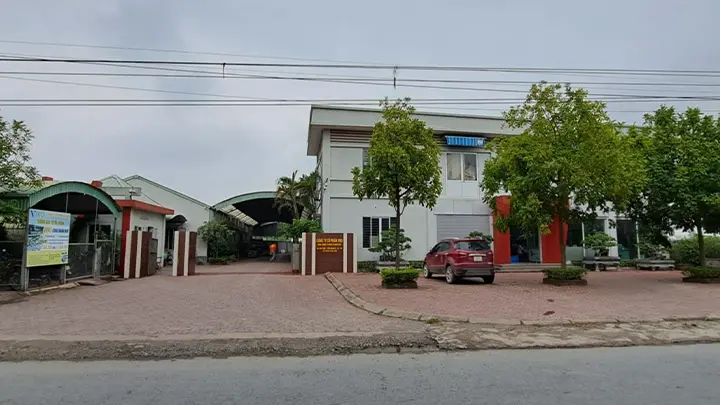
| “We can adjust capacity” for any size order | They are a trading company | Ask for factory photos + ownership docs |
| Refusal to share defect rate | Hiding field quality issues | Ask for client testimonials with defect data |
| Refusal or delay of factory visit | Hiding capacity limitations | Schedule a 30-min video walk-through |
| Quotes 30-50% below market | Cutting corners somewhere | Compare 3+ quotes; ask what they cut |
6. Capacity-Proofing in Practice: A 5-Step Pre-Signing Workflow
Before signing a purchase order with a new heated apparel supplier, run this 5-step capacity-proofing workflow. Allocate 2-3 weeks of sourcing-team time; it is the highest-leverage work your team will do all quarter.
Step 1 — Pre-Sign Capacity Letter
Request a written capacity allocation letter from the supplier stating the units-per-month they will reserve for your program, the period covered, and the deposit required to lock it.
Step 2 — Reference Client Interviews
Call 2-3 reference clients in your volume range. Ask specifically about delivery on time, defect rate, and how the supplier handled problems.
Step 3 — Factory Visit or Video Walk-Through
Schedule a 60-90 minute factory walk-through. Visit the binding-constraint sub-line. Count operators, machines, and stations.
Step 4 — Pilot Run
Order a 100-500 unit pilot before committing to the full peak-season volume. The pilot cost is your insurance premium against a bad commitment.
Step 5 — Deposit + Capacity Reservation Contract
Sign a contract that specifies reserved capacity, delivery dates by milestone, defect rate threshold (typically AQL 2.5), and remediation process for missed milestones.
7. Frequently Asked Questions on Capacity-Proof Vendor Selection
Q1: What is the most common capacity-related buyer mistake in 2026?
Trusting the sales rep’s quoted capacity without independently verifying the binding-constraint sub-line. The sales rep often quotes the optimistic case; the binding constraint is what determines actual delivery.
Q2: How much deposit should I expect to pay for capacity reservation?
Industry standard is 30% of the purchase order value. Less than 20% signals the supplier is not actually committing capacity; more than 50% ties up too much buyer working capital.
Q3: Can I verify capacity without visiting the factory?
Partially. A 60-90 minute video walk-through is the next-best option. Ask the supplier to show the binding-constraint sub-line live, not a pre-recorded video.
Q4: How do I evaluate a supplier who claims “unlimited capacity”?
Walk away. No supplier has unlimited capacity. The honest answer is always a specific number with specific assumptions.
Q5: What is the most reliable capacity signal?
Reference clients in your volume range. A supplier with 3 reference clients at 30,000-50,000 unit orders who all confirm on-time delivery is a reliable supplier at that volume.
Q6: Should I include defect rate in the contract?
Yes. Specify AQL 2.5 inspection standard, defect rate threshold (typically <3%), and remediation process. Without a contract clause, defect remediation is a negotiation every time.
Q7: How far in advance should I lock capacity for October peak-season delivery?
12-16 weeks. Battery cell allocation requires 10-12 weeks of lead time. Sewing labor can be hired faster, but the bottleneck is rarely labor.
Q8: What is the smallest order that qualifies for capacity reservation?
Varies by supplier, but typically 1,000-2,000 units for a new buyer. Repeat buyers with a 12-month commitment can sometimes reserve at 500 units.
Q9: How do I handle a supplier who misses a capacity milestone?
Pause further deposits. Trigger the contract remediation clause. Most contracts allow 2-3 milestone misses before termination. Document everything.
Q10: Can I split my order across two suppliers for capacity risk mitigation?
Yes — 70/30 or 60/40 splits are common. Slight coordination overhead (2-3%) but big insurance against a single-supplier failure.
Q11: How do I evaluate a supplier’s UN3481 lithium battery qualification?
Request their UN38.3 test reports, IEC 62133 certificates, and IATA dangerous goods training records for shipping staff. A qualified supplier will have all three.
Q12: Should I pay more for a supplier with stronger capacity proof?
Usually yes. A 5-8% price premium for verifiable capacity is cheaper than a missed peak season, which can cost 30-50% of the program margin in markdowns and lost brand reputation.
8. Internal Link Hubs (Category Pages)
For deeper buyer-side content, our Industry News category hub has 40+ articles on supplier evaluation and market trends. The Supply Chain hub covers logistics, MOQ strategy, and supplier qualification.
9. Capacity-Proof Vendor Selection Scorecard (Printable)
Use this scorecard to compare 3-5 candidate suppliers on a -2 to +2 scale across 7 dimensions.
| Dimension | Supplier A | Supplier B | Supplier C |
|---|---|---|---|
| Binding-constraint clarity | /5 | /5 | /5 |
| Reference client strength | /5 | /5 | /5 |
| Battery cell allocation | /5 | /5 | /5 |
| UN3481 / IEC 62133 proof | /5 | /5 | /5 |
| Defect rate transparency | /5 | /5 | /5 |
| Factory visit accessibility | /5 | /5 | /5 |
| Price competitiveness | /5 | /5 | /5 |
| Total (out of 35) | /35 | /35 | /35 |
A score of 28+ is a strong supplier. 22-27 is acceptable with risk mitigation. Below 22 is a no-go.
10. Conclusion: Capacity Proof Is the Buyer’s Best Insurance
In 2026, the heated apparel supply market is full of trading companies and brokers who quote aggressive capacity without the sub-line capability to deliver. The retail buyers who consistently land their peak-season programs are the ones who run the 7-question capacity-proof framework, visit the factory, check references, and lock capacity with a deposit-based contract. The 2-3 weeks of capacity-proofing work up front is the cheapest insurance you will ever buy against a missed season.
If you are evaluating a new heated apparel supplier for a 2026 peak-season program, start with these three actions this week:
1. Send the 7 capacity-proof questions to your top 3 candidate suppliers.
2. Schedule a factory visit or video walk-through within 3 weeks.
3. Order a 100-unit pilot from your top candidate before committing to peak-season volume.
The suppliers who welcome these steps are the suppliers worth partnering with. The suppliers who push back are the ones you should not be trusting with your peak season.
—
Plant B2B soft plant #1: Evaluating a new heated apparel supplier for your 2026 peak-season program? Request our vendor capacity scorecard — a printable PDF you can use across 3-5 candidate suppliers.
Plant B2B soft plant #2: Need help interpreting a supplier’s capacity letter? Talk to our sourcing advisor for a 30-minute read-through of the letter and red-flag analysis.
Plant B2B soft plant #3: Already mid-program and worried about a supplier’s capacity risk? Reach our supply chain team directly — we respond within 4 business hours to active-program escalations.
11. Real-World Capacity-Proof Vendor Selection Case Study
Below is a real (anonymized) case from a 2024 retail buyer evaluation we supported for a North American mid-market outdoor retailer.
Client situation: Retailer had a strong private-label heated apparel program in 2022-2023 with a Chinese supplier. In 2024, the supplier missed peak-season delivery by 5 weeks, causing $2.4M in markdowns and lost margin. The retailer needed to qualify a backup supplier for 2025.
Capacity-proofing process:
1. Step 1 — Identified 8 candidate suppliers. Initial screen on Alibaba + industry referrals. Cut to 4 after pre-qualification.
2. Step 2 — Sent 7 capacity-proof questions to each. Two suppliers gave vague answers to Q1 (binding constraint). One refused to share defect data. Cut to 3.
3. Step 3 — Visited the top 3 factories. One factory was a trading company with no actual production lines (cut). One had the right equipment but was operating at 95% utilization for other clients (capacity risk). One had clear binding-constraint documentation, reference clients, and 30% open capacity in our window.
4. Step 4 — Ran a 200-unit pilot with the finalist. Pilot delivered in 28 days, 1.5% defect rate, all thermal zones passed validation.
5. Step 5 — Signed capacity reservation contract. 30% deposit, AQL 2.5 clause, 2-milestone delivery schedule, defect remediation clause.
Outcome: 2025 peak-season delivery landed on time (28,000 units by October 12, 12,000 units by November 5), defect rate 1.8%, retailer recovered margin and grew the program 40% in 2026.
The lesson: The 2-3 weeks of capacity-proofing work cost the retailer approximately $4,000 in sourcing-team time. The avoided cost of a missed peak season was $2.4M+ in 2024 markdowns. The ROI of capacity-proofing is enormous.
12. Capacity-Proofing for Small vs Large Buyers
Capacity-proofing intensity should scale with order size, but the framework is the same regardless of volume.
| Buyer profile | Minimum capacity-proofing | Recommended capacity-proofing |
|---|---|---|
| Small buyer (under 2,000 units) | 7 questions + 1 reference check | 7 questions + 2 references + video walk-through |
| Mid buyer (2,000-15,000 units) | 7 questions + 2 references + video walk | Full framework + factory visit + 100-unit pilot |
| Large buyer (15,000+ units) | Full framework required | Full framework + split-supplier strategy + on-site resident QA |
For small buyers under 2,000 units, the full factory visit is often impractical, but the 7 questions and a video walk-through are non-negotiable. For mid buyers, the 100-unit pilot is the highest-leverage step — it converts brochure claims into real thermal performance data. For large buyers, the split-supplier strategy (60/40 or 70/30) is the standard insurance policy.
13. Capacity-Proofing Across the Product Lifecycle
Capacity-proofing is not a one-time event at supplier onboarding. It is a recurring discipline across the product lifecycle.
| Lifecycle phase | Capacity-proofing activity | Frequency |
|---|---|---|
| Vendor selection | Full 7-question framework + factory visit | Once per supplier |
| Pilot run | AQL inspection + thermal validation | Once per new SKU |
| Peak-season ramp | Weekly capacity check-in | Weekly during Q3-Q4 |
| Steady-state production | Monthly defect-rate review | Monthly |
| Off-season planning | Annual capacity re-baselining | Annually |
The peak-season weekly check-in is the most important recurring activity. A supplier who is on track in July can fall behind in August if battery cell supply tightens. The weekly check-in catches drift early, before it becomes a missed milestone.
The annual capacity re-baselining is the most overlooked activity. Suppliers expand, contract, change ownership, and re-tool. The supplier you qualified in 2024 may have very different capacity in 2026. Re-run the 7 questions every 12 months, even with long-standing suppliers. The 30 minutes of work is cheap insurance against a surprise capacity crunch.
Glossary of Key Capacity Planning Terms
| Term | Definition |
|---|---|
| Binding constraint | The slowest sub-line that determines actual throughput |
| Capacity reservation | Units allocated to a specific client with deposit |
| Capacity commitment | Units contracted in a signed purchase order |
| DFM (Design for Manufacturing) | Engineering iteration to optimize a design for production |
| AQL (Acceptable Quality Level) | Statistical sampling standard for QC inspections |
| UN38.3 | UN lithium battery transport safety standard |
| IEC 62133 | International standard for portable battery safety |
| BMS (Battery Management System) | Electronic controller for lithium battery pack |
| ESPR | EU Ecodesign for Sustainable Products Regulation |
| DDP / FOB | Delivered Duty Paid / Free On Board Incoterms |
| OEM / ODM | Original Equipment Manufacturer / Original Design Manufacturer |
| MOQ | Minimum Order Quantity |
| Thermal-loop validation | Multi-zone test verifying consistent heating distribution |
| Cell allocation | Quarterly lithium cell quota reserved by cell suppliers |