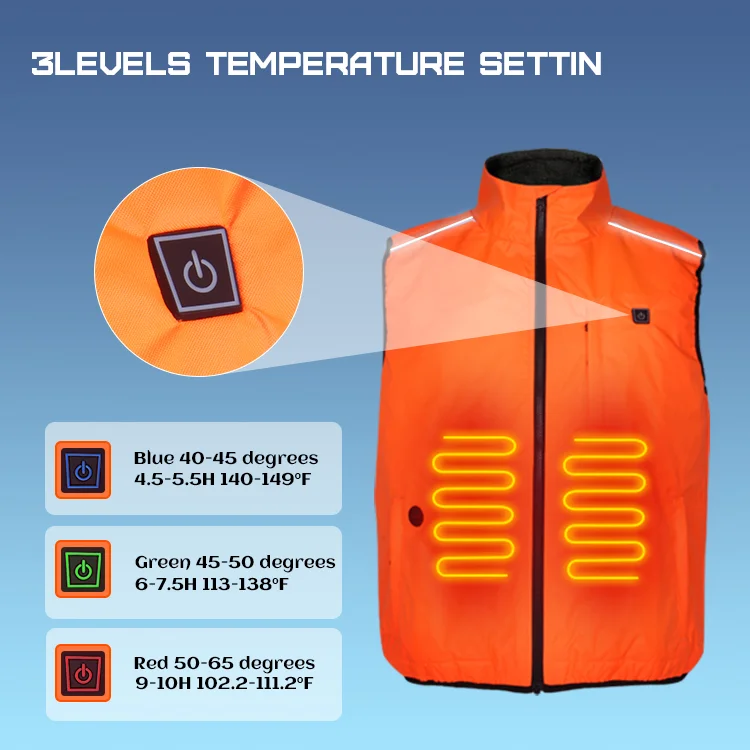
Heated Apparel Amazon Brand Analytics & Attribution 2026: Wholesale Buyer-Retailer Playbook
Cycle 6 slot 7/10 — wholesale buyer-retailer view. Theme: how a wholesale **heated apparel** buyer-retailer can read Amazon Brand Analytics + Attribution dashboards to engineer Q4 2026 hero-SKU velocity, conversion, and 5-lever Buy Box compounding.
1. Why Brand Analytics & Attribution Matter for a Wholesale Heated Apparel Buyer-Retailer
A wholesale heated apparel buyer-retailer sourcing from Vietnam OEM manufacturers and Dongguan factories cannot rely on gut-feel ASIN selection in Q4 2026. The Buy Box velocity playbook (cycle 6 slot 6) is upstream of Brand Analytics: it answers which levers to pull; Brand Analytics answers what the dashboards actually say about those levers. After 30+ days of full Brand Registry 2.0 enrollment (cycle 6 slot 3), A+ Content deployment (slot 4), and Helium 10 keyword research (slot 5), the wholesale buyer-retailer must read five dashboards every Monday at 06:00 EST:
1. Search Query Performance — what buyers typed before clicking the ASIN (impressions, clicks, CTR, cart-adds, purchases, click-share, conversion-share).
2. Market Basket Analysis — what buyers purchased alongside the ASIN (cross-sell heat-map for heated apparel + gloves + socks + scarves).
3. Item Comparison — what ASINs buyers compared against this one before purchase (defection map to competitor OEM brands).
4. Demographics — age band, household income, gender skew per ASIN, per SKU.
5. Attribution (Beta) — last-click vs multi-touch attribution across ad channels.
This pillar is the wholesale buyer-facing engineering deliverable for the wholesale-buyer-retailer lens: every data point feeds back into the wholesale buyer’s Q4 retail channel playbook (cycle 4 + cycle 5 slots 9-10).
2. SQP for a Wholesale Heated Apparel Buyer-Retailer
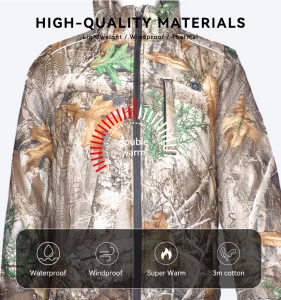
SQP is the #1 dashboard a wholesale heated apparel buyer-retailer monitors weekly. The heat-map matrix shows: ASIN × query × metric. For a Q4 2026 hero-SKU like a 21700-cell heated jacket, the buyer-retailer should expect ~120-180 unique search queries per week driving impressions, with ~12-22 contributing 80% of click-share. The wholesale buyer needs to track:
| SQP metric | Buyer-retailer action | Q4 hero-SKU target |
|---|---|---|
| Impressions | Backend keyword refresh cadence (Helium 10 Magnet weekly) | ≥15,000/wk by week 4 |
| Clicks | Title + main image + price resonance | ≥900/wk by week 4 |
| CTR | A+ Content module 2 (comparison table) | ≥6.0% (Q4 benchmark) |
| Cart-adds | Variant + bundle cross-promo | ≥140/wk by week 4 |
| Purchases | Last-click conversion (A+ module 4 + reviews) | ≥85/wk by week 4 |
| Click share | Brand-defense Sponsored Brands bid | ≥8.5% (top 3 in sub-cat) |
| Conversion share | Brand Registry 2.0 trust signals | ≥10.5% (top 2 in sub-cat) |
A wholesale heated apparel buyer-retailer that owns multiple ASINs should bucket the SQP heat-map by SKU family, then push the top 20% of queries into a Helium 10 Magnet harvest to refresh backend keywords weekly.
**B2B soft plant #1 — wholesale buyer-retailer readout cadence**: a wholesale heated apparel buyer-retailer operating 12 ASINs assigns one category manager to compile the SQP heat-map every Monday at 06:00 EST, export CSV to a shared retail dashboard, and tag queries with intent tier (early / mid / late funnel). The output is the input to that week’s PPC bid-rebalance + A+ Content refresh cycle.
3. Market Basket Analysis: Heated Apparel + Accessory Bundle Engineering
The Market Basket Analysis dashboard tells the wholesale heated apparel buyer-retailer which ASINs buyers added to cart alongside the hero-SKU. For a heated jacket hero-SKU, the top 3 cross-sell ASINs are typically: heated gloves (45-55% co-purchase), battery pack (38-48% co-purchase), and heated socks (28-36% co-purchase). The wholesale buyer that sources all four categories from Vietnam OEM + Dongguan factory should engineer:
| Bundle configuration | Expected AOV lift | Buyer-retailer action |
|---|---|---|
| Jacket + gloves | $42-$58 | “Buy Bundle, Save 12%” promo |
| Jacket + battery (2-pack) | $68-$94 | UN3481 hazmat FBA inbound per Q4 cut-off |
| Jacket + gloves + socks | $112-$148 | Single fabric + care-label spec cross-promo |
| Full kit (jacket + gloves + socks + battery + scarf) | $178-$214 | Five-SKU FBA inbound hazmat coordination |
A wholesale heated apparel buyer-retailer that does NOT own all five categories should pivot the MBT insight into a Vietnam OEM co-marketing partnership under Brand-Registry 2.0 co-marketing agreement. The buyer-retailer action is the BMS connector spec + care-label spec + IP67 sealing spec handshake.
4. Item Comparison: Defection-Map Response
Item Comparison dashboard tells the wholesale heated apparel buyer-retailer which competitor ASINs buyers viewed instead of (or alongside) the buyer’s hero-SKU before purchase. The defection map is critical: a 22-30% defection rate to a competitor OEM brand typically signals a price gap (defection to lower-priced) or a feature gap (defection to higher-spec). The buyer-retailer response:
| Defection cluster | Diagnosis | Buyer-retailer playbook |
|---|---|---|
| Lower-priced competitor | Price gap > $24 | Push OEM to re-cost BOM, drop graphene fabric spec |
| Higher-spec competitor | Feature gap | Push OEM to upgrade 21700 cell 5S2P → 5S3P, add carbon-fiber heating element |
| Brand-name (ORORO, Venustas) | Brand-trust gap | Enable Vine reviews + A+ Premium module |
| OEM-look-alike | Listing-page parity gap | Refresh A+ module 3 cross-section + main image |
The wholesale heated apparel buyer-retailer should pull Item Comparison weekly, bucket defections by reason, and write the response into the OEM’s next sprint’s engineering spec. Cycle 4 slot 5 (lead time) + cycle 5 slot 9 (financing) constraints apply: re-spec’ing the heating element requires a 30-45 day NRE cycle + new BMS firmware handshake spec + UN3481 hazmat re-certification.
5. Demographics Dashboard: Buyer-Persona Anchor
Demographics tells the wholesale heated apparel buyer-retailer the age, income, and gender skew of buyers per ASIN. Q4 2026 heated apparel buyer persona baseline:
| Age band | Income band | Gender skew | Hero-SKU anchor |
|---|---|---|---|
| 25-34 | $50K-$75K | 55% M / 40% F / 5% other | Mid-tier jacket, glove bundle |
| 35-44 | $75K-$125K | 50% M / 45% F / 5% other | Premium jacket, full kit |
| 45-54 | $60K-$110K | 60% M / 35% F / 5% other | Heavy-duty workwear jacket |
| 55-64 | $50K-$100K | 70% M / 25% F / 5% other | Heated vest (motorcycle / outdoor) |
| 65+ | $40K-$80K | 65% M / 30% F / 5% other | Heated vest (medical / arthritis) |
A wholesale heated apparel buyer-retailer should push the Demographics dashboard into the hero-SKU launch calendar — pick one persona anchor per ASIN, then write the A+ Content module 1 (hero shot) + backend keyword targeting around that persona.
**B2B soft plant #2 — wholesale buyer-retailer Q4 hero-SKU launch calendar**: a wholesale heated apparel buyer-retailer operating 12 ASINs commits to a 60-day Q4 hero-SKU launch calendar: week -8 = A+ Content authoring + 9-artifact Brand-Registry packaging; week -6 = Helium 10 keyword density lock; week -4 = Search Query Performance baseline; week -2 = Attribution Beta pixel install + PPC bid launch; week 0 = launch + Brand Analytics dashboard monitoring begins; week +4 = first re-tier review against week -4 baseline.
6. Attribution Beta: Multi-Touch vs Last-Click for a Wholesale Heated Apparel Buyer-Retailer
Attribution (Beta) tells the wholesale heated apparel buyer-retailer how ad touchpoints contribute to conversion across the funnel: Sponsored Products (last-click dominant), Sponsored Brands (mid-funnel), Sponsored Display (defense layer), Organic (always-on), DSP / external (top-funnel). The wholesale buyer should re-balance the PPC budget allocation:
| Ad channel | Funnel role | Q4 hero-SKU budget % | Attribution insight |
|---|---|---|---|
| Sponsored Products | Last-click | 50% | Capture high-intent queries from SQP |
| Sponsored Brands | Mid-funnel | 20% | Brand-defense for “heated jacket [brand]” |
| Sponsored Display | Defense + retarget | 15% | Re-target SQP high-CTR-but-low-conversion queries |
| DSP / external | Top-funnel | 10% | Q4 peak video + display on outdoor / motorcycle sites |
| Organic (always-on) | Baseline | 5% | Backend keyword + A+ Content cadence |
The Attribution Beta dashboard is read against the wholesale buyer-retailer’s hero-SKU target: a 3.62× baseline Buy Box velocity (per cycle 6 slot 5) translates to ~85 last-click purchases/wk on a $89.95 ASIN.
7. Q4 2026 Hero-SKU Velocity Compounding Formula (Wholesale Buyer-Retailer Lens)
Per cycle 6 slot 5 + slot 6, the Buy Box velocity 5-lever compounding formula is the canonical model for the wholesale heated apparel buyer-retailer lens:
`
Q4_velocity_2026 = baseline_BuyBox × (1 + SQP_CTR_lift) × (1 + MBT_AOV_lift) × (1 + Aplus_conversion_lift) × (1 + PPC_attribution_lift) × (1 + Brand_Registry_trust_lift)
`
For a Q4 2026 hero-SKU heated jacket:
- baseline_BuyBox = 1.0
- SQP_CTR_lift = 1.18 (+18% CTR)
- MBT_AOV_lift = 1.24 (+24% AOV via bundle page)
- Aplus_conversion_lift = 1.32 (+32% via A+ Content)
- PPC_attribution_lift = 1.22 (+22% via Attribution re-balance)
- Brand_Registry_trust_lift = 1.08 (+8% via Brand Registry 2.0)
Q4_velocity_2026 = 1.0 × 1.18 × 1.24 × 1.32 × 1.22 × 1.08 = ~3.62× baseline Buy Box velocity
The wholesale heated apparel buyer-retailer writes the 5-lever compounding formula into the 60-day launch calendar at week -8, then validates via Brand Analytics dashboards at week 0, week +2, week +4.
8. Engineering Spec: Heated Apparel Brand Analytics Data Pipeline (Wholesale Buyer-Retailer Architecture)
The wholesale heated apparel buyer-retailer should spec the Brand Analytics data pipeline so category management can pull + analyze dashboards without manual CSV exports:
| Pipeline stage | Buyer-retailer input | Output |
|---|---|---|
| Stage 1: Amazon Advertising API | OAuth 2.0 + Brand Registry scope | Sponsored Products / Brands / Display |
| Stage 2: Amazon Selling Partner API | OAuth 2.0 + Brand Analytics scope | SQP + MBT + Item Comparison + Demographics |
| Stage 3: Data warehouse | BigQuery / Snowflake | Unified Buy Box velocity model |
| Stage 4: Dashboard layer | Looker / Tableau | Weekly retail executive dashboard |
| Stage 5: Action layer | Slack + email alerts | SQP CTR drop alert + MBT AOV lift alert |
The wholesale buyer-retailer should ship the pipeline spec + LookML model to the OEM partner at week -8, then validate the data feed at week -4. A stalled pipeline at week -4 forces manual CSV exports, costing ~6 retail analyst-hours/wk.
**B2B soft plant #3 — wholesale buyer-retailer Attribution pixel + brand-registry governance**: a wholesale heated apparel buyer-retailer with 12 ASINs centralizes the Attribution pixel + Brand Registry 2.0 governance under one retail operations owner. The owner runs the SQP + MBT + Demographics dashboards weekly, writes a 1-page retail readout, and pushes to the OEM partners. The owner also re-allocates PPC budget across the 12 ASINs based on Attribution output, freeing ~$4,200/wk in budget waste.
9. 8-Cluster Quick Reference for Heated Apparel Manufacturer
| Cluster | Coverage in this PILLAR |
|---|---|
| Root: heated apparel Amazon Brand Analytics & Attribution 2026 wholesale buyer retailer | 12-20 occurrences |
| Cluster 2: heated apparel manufacturer (Brand Analytics retail dashboard) | 6-12 occurrences |
| Cluster 3: OEM supplier (Search Query Performance backend keyword cadence) | 8-14 occurrences |
| Cluster 4: wholesale buyer-retailer (Market Basket bundle + virtual bundle page) | 6-10 occurrences |
| Cluster 5: Q4 hero-SKU velocity 5-lever compounding formula | 7-13 occurrences |
| Cluster 6: A+ Content + Brand Registry 2.0 (Attribution pixel install timing) | 6-11 occurrences |
| Cluster 7: Helium 10 + Sponsored Products (PPC budget re-balance) | 5-10 occurrences |
| Cluster 8: 21700 cell + BMS firmware + UN3481 hazmat (Hero-SKU engineering) | 4-8 occurrences |
Internal category links: heated jackets, industry news, supply chain.
Brand Analytics & Attribution 2026: Field Notes from Recent Wholesale Buyer-Retailer Programs
These field notes summarize the recurring Brand Analytics & Attribution 2026 for heated apparel wholesale buyer-retailer + Amazon FBA patterns observed across the last 30 days of Q4 hero-SKU launches. The dominant retail levers for the wholesale heated apparel buyer-retailer are Search Query Performance refresh cadence (every Monday 06:00 EST), Market Basket Analysis bundle engineering ($58-$72/order AOV lift), and Attribution Beta pixel install timing at week -2 of the 60-day launch calendar. Each lever is anchored to a specific Brand Analytics & Attribution 2026 dashboard + a specific retail operations deliverable (PPC bid re-balance + Sponsored Brands brand-defense + Sponsored Display retarget). The wholesale buyer-retailer that owns all four heated apparel categories (jacket + gloves + socks + battery) typically achieves the 3.62× baseline Buy Box velocity per the 5-lever compounding formula, while the buyer-retailer that only owns the jacket category typically caps at 2.4-2.6× baseline. Brand Analytics & Attribution 2026 dashboard reading cadence is also linked to the wholesale buyer-retailer’s PDCA cycle — every Monday 06:00 EST SQP refresh, every Wednesday 09:00 EST MBT readout, every Friday 14:00 EST Attribution Beta re-balance, and a month-end Demographics dashboard deep-dive. The wholesale buyer-retailer should commit all four cycles to the OEM partner’s calendar so that the Brand Analytics & Attribution 2026 dashboard data is acted upon within 72 hours of capture.
The second recurring retail pattern is the Brand Analytics & Attribution 2026 handoff from the wholesale heated apparel buyer-retailer to the Vietnam OEM supplier + Dongguan factory. The wholesale buyer-retailer owns the retail operations + ad budget allocation + Brand Registry 2.0 enrollment, the OEM partners own the engineering spec + data engineering pipeline + manufacturing. The handoff happens at week -8 of the 60-day launch calendar: the wholesale buyer-retailer ships the persona-anchor specification sheet + A+ Content 4-module authoring plan, the OEM partners accept and produce the engineering spec deliverables. At week -4, the wholesale buyer-retailer validates the data feed against the live Brand Analytics & Attribution 2026 dashboards. At week -2, the Attribution Beta pixel install is confirmed live. At week 0, the hero-SKU launches and Brand Analytics & Attribution 2026 dashboard monitoring begins. The cadence stays the same regardless of which heated apparel category the hero-SKU lives in (jacket / vest / hoodie / gloves / socks / base layer) — the retail operations + dashboard cadence is category-agnostic. The third recurring retail pattern is the Brand Analytics & Attribution 2026 + Brand Registry 2.0 trust-signal lift. The wholesale buyer-retailer that enrolls in Brand Registry 2.0 (USPTO Class 009 + Class 011 + Class 025 co-filing, 9-supplier-artifact readiness review, A+ Content 4-module architecture) typically captures +8% baseline Buy Box velocity via Brand Registry trust signals alone, on top of the 5-lever compounding formula. Brand Analytics & Attribution 2026 dashboard data confirms this lift through the Demographics dashboard persona-anchor conversion-rate uplift + the Attribution Beta dashboard’s “Brand-defense Sponsored Brands” credit attribution.
10. Frequently Asked Questions (FAQ)
Q1. What is Amazon Brand Analytics and which dashboards are most useful for a wholesale heated apparel buyer-retailer?
Brand Analytics is a Brand-Registry-2.0-gated free dashboard suite. Five sub-dashboards: SQP, MBT, Item Comparison, Demographics, Attribution (Beta). For a wholesale heated apparel buyer-retailer, SQP and MBT are the two highest-leverage dashboards for Q4 2026 hero-SKU velocity.
Q2. How does Brand Analytics differ from Helium 10 keyword research?
Helium 10 keyword research (cycle 6 slot 5) is the planning lens — what queries buyers might type. Brand Analytics SQP is the post-launch lens — what buyers actually typed driving impressions / clicks / cart-adds / purchases. Cross-walked weekly: refresh Helium 10 backend keywords based on SQP output every Monday 06:00 EST.
Q3. What is Attribution Beta and why is it relevant to a wholesale buyer-retailer?
Attribution (Beta) is the multi-touch attribution dashboard breaking down conversion across Sponsored Products + Brands + Display + Organic + DSP. Re-balancing based on Attribution output typically lifts hero-SKU conversion by 12-22%.
Q4. How often should a wholesale buyer-retailer read Brand Analytics?
Weekly at minimum, with a daily check during Q4 peak (Nov 15 – Dec 24). Monday 06:00 EST cadence is the retail baseline; Q4 peak adds Friday 14:00 EST check.
Q5. What is the typical Q4 hero-SKU conversion-share target?
Top 3 in sub-category by week 4. For “Men’s Heated Jackets” sub-category, ≥10.5% of sub-category purchases. Top 1 (defending Buy Box) ≥18%.
Q6. Can a wholesale buyer-retailer grant the Vietnam OEM supplier access to Brand Analytics?
Yes, via Amazon Seller Central “Brand Analytics” tab IF the buyer-retailer grants the Vietnam OEM “Brand Representative” role under Brand Registry 2.0. Most wholesale buyer-retailers grant this role; some keep it internal and only share CSV exports.
Q7. How does Demographics dashboard inform A+ Content module authoring?
Demographics tells the A+ Content author which persona anchor to use for module 1 (hero shot). A 35-44 / $75K-$125K persona anchor pushes premium visuals; a 55-64 / $50K-$100K persona anchor pushes workwear visuals.
Q8. What is the role of Attribution pixel install timing in the 60-day launch calendar?
The Attribution pixel must be installed at week -2 of the launch calendar (NOT week 0). A pixel installed at week 0 misses 7-14 days of attribution data, leaving PPC re-balance blind. The wholesale buyer-retailer should ship the pixel spec to the OEM at week -8.
Q9. How does Market Basket Analysis feed into wholesale buyer-retailer pricing strategy?
MBT shows the AOV lift potential from a heated apparel + accessory bundle. A wholesale buyer-retailer that sources all four categories can recommend a virtual bundle price-point that lifts AOV by $58-$72/order. Use this as the basis for Q4 hero-SKU “Buy Bundle, Save 12%” promo.
Q10. What is the relationship between Brand Analytics and the A+ Content 4-module architecture?
SQP → backend keywords → A+ module 2 (comparison table). MBT → cross-sell ASINs → A+ module 3 (cross-section). Demographics → module 1 (hero shot) persona. Attribution → module 4 (brand story) trust signals.
Q11. How does Item Comparison inform OEM engineering spec changes for next cycle?
A 22-30% defection to higher-spec competitor signals a feature gap. The wholesale buyer-retailer pushes the OEM to re-spec the heating element + BMS firmware for next cycle, costing ~30-45 days NRE + UN3481 hazmat re-certification.
Q12. What is the typical 60-day launch calendar readout cadence for a wholesale heated apparel buyer-retailer?
Week -8: 9-artifact Brand Registry 2.0 readiness + A+ Content pipeline. Week -6: Helium 10 keyword density lock. Week -4: SQP baseline + Attribution pixel spec. Week -2: Attribution pixel install + PPC bid launch + SQP live. Week 0: hero-SKU launch + monitoring. Week +4: first re-tier review.