Wholesale Heated Apparel Digital Product Passport Service Provider 2026: the Buyer Acceptance Binder
If you buy heated apparel in volume into the EU, the digital product passport is no longer your supplier’s IT problem, it is your acceptance file. As a wholesale heated apparel digital product passport service provider across a heated-apparel factory network, we run nine checks against a supplier’s passport set before a purchase order is signed, three claims to reject in writing, five questions that expose an incomplete file, and a per-unit reserve so a late rejection is funded by the order.
What the buyer is actually signing for
The frame is Regulation (EU) 2024/1781 on ecodesign for sustainable products. Article 9(1) says a product may only be placed on the market or put into service once a digital product passport is available in accordance with the applicable delegated acts adopted under Article 4 and with Articles 10 and 11, and that its data must be accurate, complete and up to date. No textile or apparel delegated act has been adopted, and no service provider act either.
| Layer | What the Regulation fixes now | Buyer action |
|---|---|---|
| Market access | Article 9(1) ties placing on the market to a passport | Put it in the purchase order |
| Data quality | Article 9(1) requires accurate, complete data | Name one data owner and update path |
| Specification | Article 9(2)(a) to (i) hands data, carrier, layout, access, lifetime to the act | Demand a field map, not a finished file |
| Scope and timing | Article 9(4) and Recital 35 allow exemptions; Article 4(4) sets 18 months minimum | Build to a twelve-month buffer |
Today’s exposure is documentary, not legal. A brand-owner audit, a 3PL inbound AQL sample or an Amazon EU listing check asks for the same evidence a market surveillance authority asks for. The data set is not yours to design, so a supplier showing you a final passport format has guessed.
What a wholesale heated apparel digital product passport service provider can promise today
Any claim that a passport file is ESPR certified today is marketing, not compliance. Article 11 only empowers the Commission to set provider requirements and, where appropriate, a certification scheme, and nothing is in force for apparel.
We publish a wholesale heated apparel digital product passport service provider manufacturer capability statement per plant, and the same working file serves your own label or a wholesale heated apparel digital product passport service provider oem programme. Nobody can promise the detail yet: Article 9(2)(b) to (i) hands the carrier, layout, passport level, access and availability period to the delegated act.
Article 11(d): the link rule is how you inherit a chain
Article 11(d) is the most useful line in this trade for a buyer: where a new digital product passport is created for a product that already has one, the new passport must be linked to the original passport or passports. That is what lets you inherit a chain when a supplier changes, when the price is renegotiated, or when a factory closes and the file moves to the next plant. Article 11(e) adds continuity after an insolvency, a liquidation or a cessation of activity.
| Chain event | What Article 11 requires | Buyer evidence |
|---|---|---|
| Supplier changes | New passport linked to the original, Article 11(d) | Link identifiers in the handover pack |
| Factory closes | Passport stays available after cessation, Article 11(e) | Continuity clause and back-up location |
| File moves plant | Storage by the creator or a service provider, Article 11(c) | Issuer statement and hosting agreement |
| Price renegotiated | Data stays accurate and up to date, Article 9(1) | Dated diff against last season |
We quote a fixed $2,100 to link and transfer one style family, and $11,600 when the handover spans two factories, because the second half is mapping the unique facility identifier of each plant against the units already shipped. A $0.83 per unit passport acceptance reserve, which is $4,150 on a 5,000-unit order, funds that work, so a supplier who cannot produce the map has started a new chain rather than inherited one.
Article 11(b): free and easy access, tested on your own file
Article 11(b) lists who may read a passport: customers, manufacturers, importers, distributors, dealers, professional repairers, independent operators, refurbishers, remanufacturers, recyclers, market surveillance authorities, customs authorities, civil society organisations, trade unions and other relevant actors. All get free of charge and easy access, with scope set by the applicable delegated act, which does not exist yet.
So the access list in your supply agreement is the only access list you have. We price that mapping at a fixed $1,450 per supplier: a reader account per nominated entity, a scope sheet per actor class, and a test read from a buyer account the supplier does not control. A $2,300 back-up site audit for the supplier’s passport hosting closes the loop on host and back-up location.
Hosting, back-up copy hosting and the no-reuse clause

Article 11(c) puts storage with the economic operator responsible for creating the passport or with a digital product passport service provider. Article 11(g) requires data authentication, reliability and integrity, and Article 11(h) requires a high level of security and privacy. Recital 38 adds the practical instruction: the economic operator placing the product on the market should make a back-up copy available through an independent third-party service provider.
Ask two questions. Who is the issuing agency for this style, in the sense of the party that created the record under Article 11(c), and which host stores it? Does that host have a commercial relationship with the factory that would disappear if the factory stopped trading? The reuse limit sits in the Article 11 service-provider paragraph rather than inside point (h), but buyers here call the combined rule the article 11(h) no-reuse clause: the host may store and process the record, and may not sell, reuse or process the data beyond what the service needs, unless that use is specifically agreed with the economic operator placing the product on the market.
| Check on the host | Ask for | Red flag |
|---|---|---|
| Independent of the factory | A back-up copy hosting confirmation in writing | The host invoices the factory only |
| Named issuer | A statement naming the creating operator | “Our partner handles it” |
| No reuse | A signed no-reuse clause | A host that advertises your data |
| Continuity | A named back-up location and key holder | Nothing survives the factory |
Article 15 and Article 13(1): the customs gate
Article 13(1) requires the Commission to set up a digital registry by 19 July 2026 storing at least the unique identifiers and, for goods intended for release for free circulation, the commodity code. The economic operator placing the product on the market uploads the data under Article 13(4), and under Article 13(5) the registry returns a unique registration identifier.
Article 15(1) then requires anyone placing a covered product under release for free circulation to provide that identifier to customs, and Article 15(2) allows release only after the identifier and the commodity code match the registry. The first duty applies from the moment the registry is operational, the electronic check from the moment the interconnection is operational, and Article 15(3) puts that interconnection within four years of the entry into force of the implementing act referred to in Article 13(5). A clean release is not proof of compliance, so it does not close your file.
| Field | Where it comes from | Buyer action |
|---|---|---|
| Unique registration identifier | Article 13(5), returned by the registry | Never accept a supplier’s own passport number |
| Commodity code | Article 13(1), for free-circulation goods | Match the invoice code to the built unit |
| Product identifier and carrier | Article 10(a) and (b) | Confirm the carrier is on the goods |
| Reader entitlement | Article 11(b) | Write it into the supply agreement |
| Release evidence | Article 15(1) and (2) | Keep the identifier with the entry file |
The nine-check buyer acceptance binder for a wholesale heated apparel digital product passport service provider
This is a document check, not a legal opinion, because the delegated acts do not exist and an opinion would be fiction. Run it before the purchase order, not after the first rejection notice. The failures cluster: weak link history under checks 4 and 9, a host that is really the factory under check 6, and an identifier printed on the carton rather than on the garment under check 1.
| Check | What we verify | Evidence and action on failure |
|---|---|---|
| 1. Carrier present | Carrier and product identifier on the goods | Tagged-unit photo; reject at 3PL intake |
| 2. Independent read | We open it without a supplier login | Buyer reader log; hold the purchase order |
| 3. Issuer named | Creator and host both identified | Issuer statement; escalate to procurement |
| 4. Chain linked | Every earlier passport linked, Article 11(d) | Link identifiers; freeze the changeover |
| 5. Data current | Record accurate and up to date, Article 9(1) | Dated diff; requote the unit |
| Check | What we verify | Evidence and action on failure |
|---|---|---|
| 6. Host independent | Host outside the factory’s billing, Recital 38 | Hosting confirmation; trigger the change clause |
| 7. No reuse | Host will not sell or reuse your data | Signed no-reuse clause; escalate to legal |
| 8. Facility traced | Unique facility identifier maps to the plant | Facility register; hold any re-labelling |
| 9. Continuity | Record survives insolvency, Article 11(e) | Continuity clause; go or no-go |
Three supplier claims to reject in writing
Every supplier conversation ends with a claim that sounds like compliance and is not. Do not argue it in a meeting. Put the answer in an email and attach it to the purchase order, so the claim becomes a documented supplier position rather than a memory.
Here is what the rejection work costs. A one-off $7,400 buyer acceptance binder build covers the nine checks across a heated-apparel range and produces the sheet your 3PL and your brand auditor can read. We run a 60-day acceptance calendar per programme, and where that calendar is followed, a 12 percent first-pass intake rejection rate comes down to under 4 percent. Those are the numbers a wholesale heated apparel digital product passport service provider wholesale desk quotes by style family, not by customer.
| The claim | Why it fails | What to ask instead |
|---|---|---|
| “We are an ESPR certified provider” | No service provider act or scheme is in force; Article 11 only empowers one | Which instrument, issued by whom, in writing |
| “We will finalise it after the act” | Data, carrier, layout, access and lifetime come from the Article 4 act | A build to the shape of Articles 10 and 11 |
| “We manage all access to your data” | Article 11(b) gives buyers and refurbishers access by their rights | The access matrix plus the no-reuse clause |
Five questions that expose an incomplete passport file
These five do more work than any certificate, because a supplier can produce a certificate but cannot answer these without a working file. Send them in writing, one message, and ask for answers that name documents.
1. Who is the issuing agency for this style, and where is the record hosted? A named entity and a named host, both in the contract.
2. Show the link between the earlier passport and the current one. A working link, not a handover note.
3. Which unique facility identifier is on this unit, and does it match the plant that built it? A register extract plus the unit’s identifier.
4. Give a refurbisher a reader account on a refurbishment batch. A working login with the right scope.
5. If your host disappears, where is my copy and who holds the keys? A named back-up location and a named key holder.
Recital 17: second-hand, refurbished and remanufactured stock
Recital 17 is the honest anchor for anyone trading pre-owned or rebuilt heated apparel. Second-hand products, in particular products that undergo refurbishment or repair, originating from within the Union are not new products and can circulate without needing to comply with the delegated acts setting ecodesign requirements that have entered into force after their placing on the market. Remanufactured products are considered new products, and they will be subject to ecodesign requirements if they fall within the scope of a delegated act.
| Channel | Status under Recital 17 | Passport consequence |
|---|---|---|
| New stock from the factory | New product, in scope once an act covers the group | Full passport under Article 9 |
| Second-hand from outside the Union | The recital speaks to Union-origin goods | Do not assume an exemption |
| Refurbished Union-origin second-hand | Not new products | No new ecodesign passport trigger |
| Remanufactured | Considered new products, subject to ecodesign | Full passport from remanufacture |
Because Article 11(b) names refurbishers, remanufacturers and recyclers as actors with free and easy access by their rights, a buyer running a refurbishment line needs that entitlement in the supply agreement now, because the refurbisher, not the importer, will face the second-hand buyer who asks for the record.
Money: the per-unit reserve and the 60-day acceptance calendar
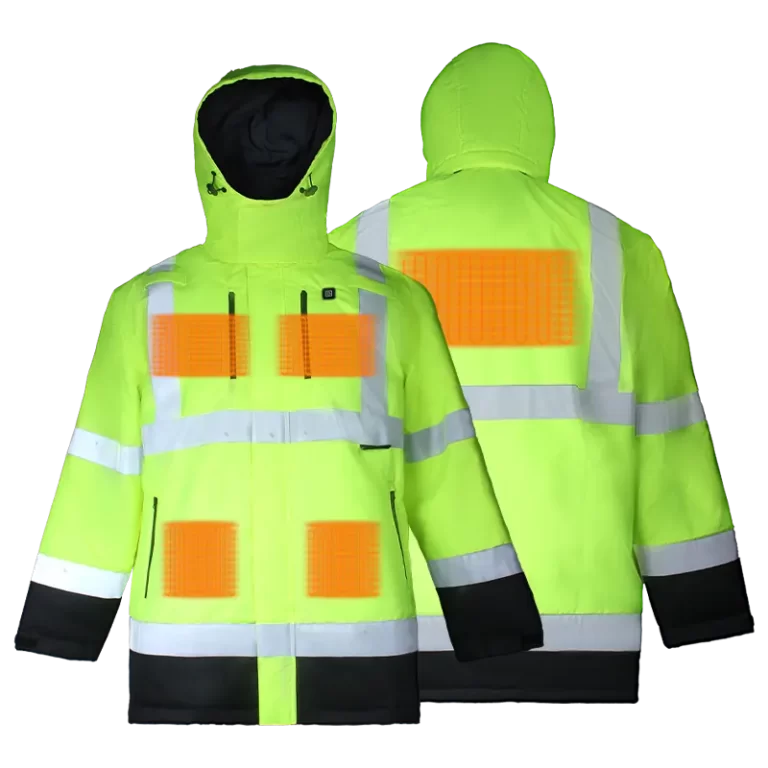
Landed cost on a heated jacket in our book runs FOB $28.40, CIF $31.13, DAP $35.73 and DDP-FBA $36.81. A $0.83 per unit passport acceptance reserve is 2.9 percent of FOB and 2.3 percent of DAP, small enough to hide inside a buy and large enough to be the whole cost of a rebuild when a unique facility identifier turns out to be wrong on a 5,000-unit order, where $4,150 of rework is simply absorbed.
The calendar matters as much as the rate. Where the 60-day acceptance calendar is followed, a 12 percent first-pass intake rejection rate comes down to under 4 percent. Take that to a finance director: the reserve is not a compliance cost, it is the difference between a container that passes the Amazon EU listing check first time and one that sits in a 3PL yard while a link identifier is chased.
What to ask your supplier
Send this section to your supplier’s compliance contact and require a written answer against every line, with the document named. We keep current commentary in heated apparel industry news and operational notes on supply chain and compliance. Seven asks: name the issuing agency and the host, show the link history, produce the field map, confirm the unique facility identifier of the plant, confirm the back-up copy location, sign the no-reuse clause, and confirm who uploads to the registry.
What is a wholesale heated apparel digital product passport service provider?
It is the party that builds, stores or hosts the passport for a product group, working to the framework set by Regulation (EU) 2024/1781 while the delegated acts remain to be adopted.
Has a textile or apparel digital product passport delegated act been adopted?
No, no textile or apparel delegated act under Article 4 of Regulation (EU) 2024/1781 has been adopted, and no service provider act has been adopted either.
What does Article 11(d) require when a supplier changes?
The new passport must be linked to the original passport or passports, which is how a buyer inherits a chain.
Who is entitled to access a digital product passport?
Article 11(b) gives buyers, refurbishers, remanufacturers, recyclers, market surveillance authorities and customs authorities free of charge and easy access, with scope set by the delegated act.
What is back-up copy hosting in practice?
It means the economic operator placing the product on the market keeps a copy with an independent third-party service provider, as Recital 38 expects, so the record outlives a factory failure.
What must a buyer give customs?
Under Article 15(1) anyone placing a covered product under release for free circulation must provide the unique registration identifier issued under Article 13(5), from the moment the registry is operational.
Why does the commodity code matter to a buyer?
Article 13(1) requires the registry to store the commodity code for goods intended for release for free circulation, and Article 15(2) allows release only once the code and identifier match.
Can a passport host use my data for something else?
No, Article 11 says a service provider may not sell, reuse or process the data beyond what the storing or processing service needs, unless that use is specifically agreed with the economic operator placing the product on the market.
Are refurbished and remanufactured jackets treated the same way?
No, Recital 17 says Union-origin second-hand goods, including those undergoing refurbishment or repair, are not new products, while remanufactured products are considered new products and fall under ecodesign requirements if in scope.
Does a supplier need a certificate today?
No, Article 11 only empowers the Commission to set requirements for service providers and, where appropriate, a certification scheme, and no such scheme is in force for apparel.
How much should a buyer reserve per unit?
A reserve of $0.83 per unit, which is $4,150 on a 5,000-unit order, covers identifier verification, back-up copy hosting and re-issuing a file when a link or facility identifier is wrong.
What does a buyer do on day one?
Put the nine checks into the purchase order, make the supplier name the issuing agency and the host in writing, and carry a per-unit reserve so a late rejection is funded rather than disputed.