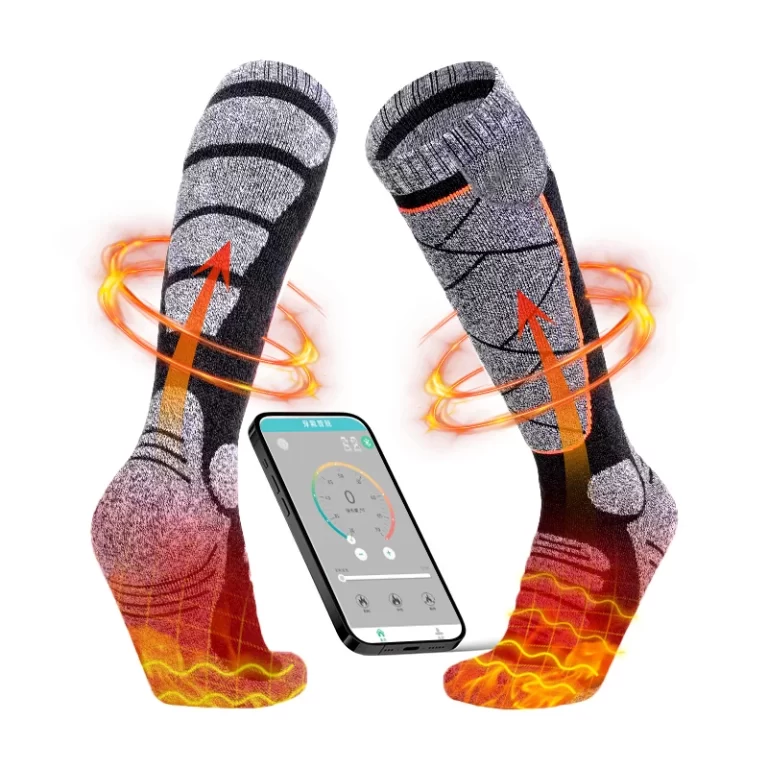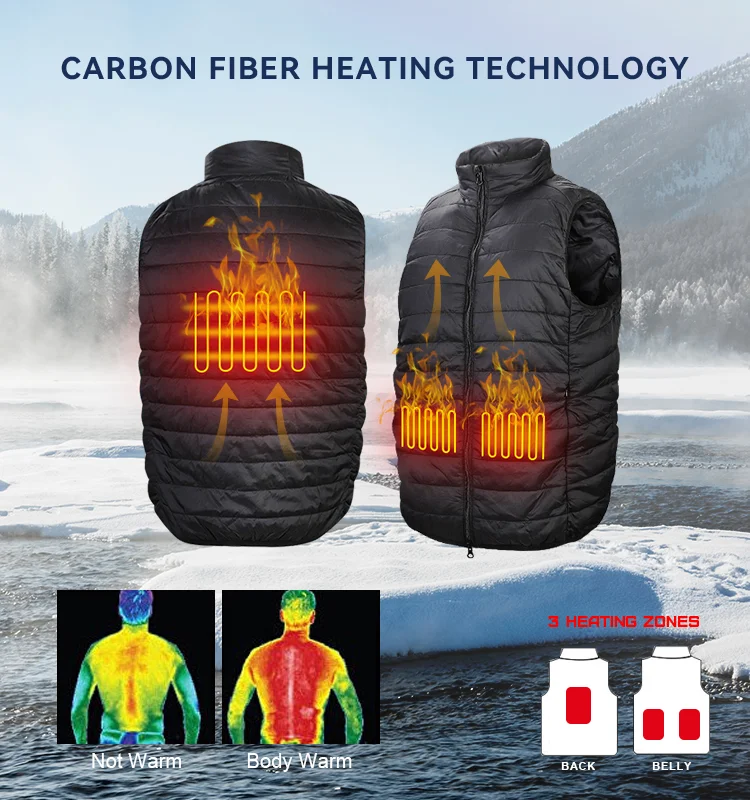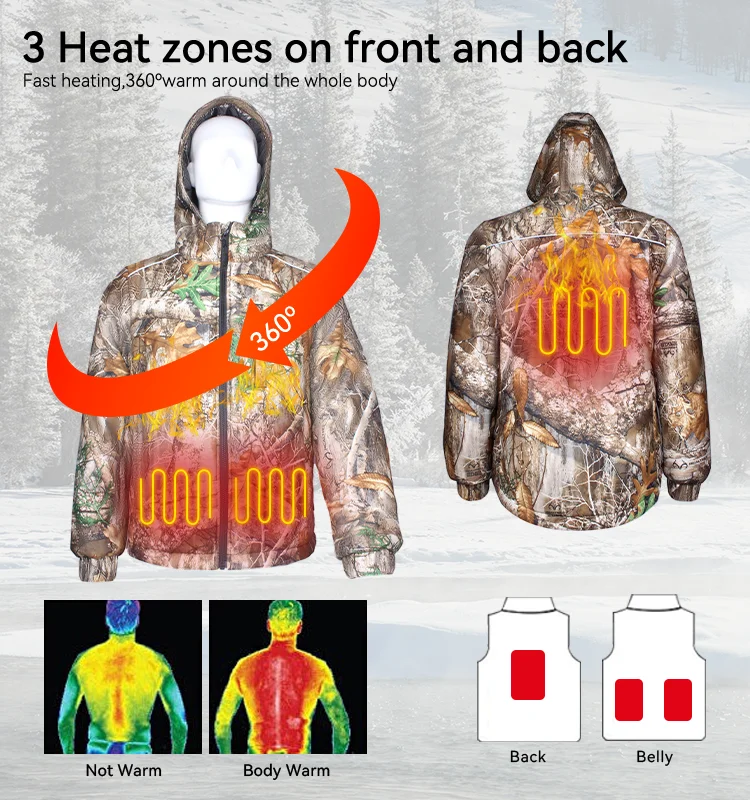
Wholesale Heated Apparel Digital Product Passport Customs Readiness 2026: the Buyer Acceptance Binder for EU Release for Free Circulation
EU customs authorities will start checking one number against one database before a heated garment crosses the border. Article 15(1) of the EU Ecodesign for Sustainable Products Regulation requires anyone placing a covered product under the customs procedure release for free circulation to provide or make available the unique registration identifier issued by the Article 13 registry. Article 15(2) adds the commodity code to the pair that customs must verify. For a wholesale buyer or Amazon EU brand owner, that turns digital product passport work from a marketing deliverable into a landed-cost input you need to price before the purchase order, not after the container is stuck at Rotterdam.
Why buyers now need customs readiness evidence before the PO
A passport program that stops at the factory door will not clear a container. The question for a category buyer is narrow: when the broker asks for a number that ties this shipment to a record the EU holds, what do you hand over? Article 9(1) already sets the direction of travel, requiring that products can only be placed on the market or put into service if a digital product passport is available in accordance with the applicable delegated acts and with Articles 10 and 11. The passport data must be accurate, complete and up to date.
The honest position for any buyer in late 2026 is that no textile or apparel delegated act has been adopted yet, so the product-group-specific duties are conditional rather than live. What is live is the framework, and a supplier who understands the framework will hand you a clean export file; a supplier who does not will hand you a PDF brochure and a promise. This is the wholesale heated apparel digital product passport customs readiness conversation, and it belongs inside the buying cycle, because the evidence you cannot get before the PO is evidence you cannot get before the container. A sourcing lead who wants wholesale heated apparel digital product passport customs readiness manufacturer capability on paper is really asking whether the supplier controls the identifier chain end to end, and a buyer weighing wholesale heated apparel digital product passport customs readiness oem options against a distributor offer is really asking who absorbs the refused-upload risk. A wholesale heated apparel digital product passport customs readiness wholesale programme is a supplier-side claim, and this binder is how you turn it into evidence you can sign. The wider EU framework context sits in our heated apparel industry news category and in our supply chain category.
| Buyer evidence | What it proves | Buyer gate |
|---|---|---|
| Unique registration identifier | Registry issued number for the shipment | Must match registry record |
| Commodity code | Tariff classification tied to the goods | Must match registry record |
| Registry upload receipt | Operator uploaded data per Article 13(4) | Required before shipment |
| Passport field extract | Annex III field set for the product group | Conditional on delegated act |
What Article 15 requires at the border
The Article 15 release for free circulation check is a two-number test, and it lands on the importer rather than on the factory. Article 15(1) sets the duty and its timing in one sentence: any person intending to place a product covered by a delegated act adopted pursuant to Article 4 under the customs procedure release for free circulation shall provide or make available to customs authorities the unique registration identifier referred to in Article 13(5). The first subparagraph applies from the moment the registry is operational, and Article 13(1) requires the Commission to set up that registry by 19 July 2026.
Article 15(2) is the operational half. Customs authorities may release a product for free circulation only after having verified as a minimum that the unique registration identifier and the commodity code correspond to the data stored in the registry, and that verification shall take place electronically and automatically via the interconnection referred to in paragraph 3, applying from the moment that interconnection is operational. Article 15(2) closes with the sentence every buyer should memorise: the release for free circulation shall not be deemed to be proof of compliance with this Regulation or other Union law.
| Paragraph | What it requires | When it bites |
|---|---|---|
| Article 15(1) | Provide the Article 13(5) identifier | From registry operational |
| Article 15(2) | Verify identifier plus commodity code | From interconnection operational |
| Article 15(3) | Registry linked to EU CSW-CERTEX | Within four years |
| Article 15(4) | Passport data used for risk management | Once data is stored |
| Article 15(5) | Customs Code and Reg. 2019/1020 unaffected | Always |
The identifier and commodity code pair your supplier must supply
The pair is deceptively simple and operationally expensive. The unique registration identifier comes from Article 13(5), where the registry automatically communicates it to the economic operator upon the upload of the data referred to in paragraphs 1 and 2. The commodity code is stored in the same registry for products intended to be placed under the customs procedure release for free circulation, per Article 13(1).
For a wholesale buyer, the acceptance test is whether your supplier can produce both numbers for the exact lot you are buying, plus the underlying identifier hierarchy. Article 12(1) requires the unique operator identifiers and unique facility identifiers to comply with the standards referred to in Annex III or equivalent European or international standards, until the references of harmonised standards are published in the Official Journal. Recital 36 describes why: unique identification is a fundamental element as regards enabling traceability across the supply chain.
| Field | Supplied by | What the buyer checks |
|---|---|---|
| Unique registration identifier | Registry, via operator | Matches registry entry |
| Commodity code | Supplier, per SKU | Matches registry entry |
| Unique product identifier | Operator, per unit or batch | Traceable to the lot |
| Unique operator identifier | Economic operator | Legal entity match |
| Unique facility identifier | Manufacturing site | Site of production match |
Article 9(4): the product group exemption claim to interrogate
The Article 9(4) product group exemption is the escape hatch, and it is where supplier marketing goes wrong. The Commission may exempt product groups from the requirement to have a digital product passport where technical specifications of the digital product passport are not available in relation to the essential requirements included in Articles 10 and 11, or where other Union law includes a system for the digital provision of information related to a product group which the Commission considers achieves the objectives referred to in Article 9(3), points (a) and (b). Recital 35 explains the intent: to not unnecessarily delay the setting of ecodesign requirements other than those concerning the digital product passport.
The buyer trap is a supplier presenting Article 9(4) as a permanent exemption for heated apparel. Nothing in the Regulation exempts heated apparel specifically, and the exemption is discretionary, product-group scoped and granted through delegated acts that have not been adopted. A legitimate Article 9(4) claim reads as conditional on a delegated act, and identifies the technical specification gap it relies on.
| Claim as stated | What it actually means | Buyer action |
|---|---|---|
| Exempt under Article 9(4) | Exemption is product-group scoped | Ask which product group |
| No delegated act, so no duty | Framework still shapes evidence | Ask for conditional readiness |
| Existing EU system satisfies 9(4)(b) | Commission must so consider | Ask for the assessment |
Article 13(5): what the registry proves and what it does not

Article 13(5) is the paragraph that ends a certain class of supplier claim. Upon the upload of the data referred to in Article 13(1) and 13(2), the registry shall automatically communicate to the economic operator a unique registration identifier associated with the unique identifiers uploaded for a specific product. That communication by the registry shall not be deemed to be proof of compliance with this Regulation or other Union law.
So the registry number is a routing and verification token, not a certificate. Article 15(2) says the same thing from the customs side: release for free circulation shall not be deemed to be proof of compliance. Article 13(4) puts the upload duty on the economic operator placing the product on the market, and Article 13(3) makes the Commission the controller of the registry under Regulation (EU) 2018/1725.
| Registry fact | What it establishes | What it does not establish |
|---|---|---|
| Identifier issued | Data was uploaded | Product is compliant |
| Commodity code stored | Tariff data is on record | Tariff code is correct |
| Article 13(4) upload done | Operator discharged its duty | Duty discharged correctly |
| Identifier returned | Registry is live | Customs will release |
The four-year interconnection runway and what it means for landed cost
Article 15(3) requires the Commission to interconnect the registry with the EU Customs Single Window Certificates Exchange System, enabling the automated exchange of information with the national customs systems through the EU Single Window Environment for Customs established by Regulation (EU) 2022/2399. That interconnection shall be operational within four years of the date of entry into force of the implementing act referred to in Article 13(5). Recital 44 frames the same architecture from the enforcement side.
That runway is a planning gift for a buyer, not a reason to wait. Recital 45 states that the data included in the digital product passport are intended to allow customs authorities to enhance and facilitate risk management and enable the controls at the border to be better targeted, and Article 15(4) lets the Commission and customs authorities retrieve and use passport and registry data for their duties under Union law, including risk management under Regulation (EU) No 952/2013. Your compliance reserve should therefore be sized against the possibility that the electronic check lands early.
| Horizon | Milestone | Buyer posture |
|---|---|---|
| Today | Registry operating, no interconnection | Require the evidence anyway |
| Year one | Article 13(5) implementing act in force | Re-test supplier evidence |
| Year four | Interconnection operational | Expect automated verification |
| Ongoing | Risk-management use under Article 15(4) | Keep data auditable |
Building the acceptance binder into your buying process
A buyer acceptance binder is cheaper than a demurrage dispute. Recital 38 explains the architecture behind the back-up copy: the economic operator placing the product on the market should make available a back-up copy of the digital product passport through a digital product passport service provider that is an independent third party. Article 10(4) makes that a duty, and Article 11(h) constrains what such a provider may do with the data, including the bar on selling, reusing or processing the data beyond what is necessary for the provision of the services, unless specifically agreed.
For heated apparel buyers the practical reserve has three layers: a documentation line of $0.83 per unit across the order, $4,150 per 5,000-unit order for the acceptance evidence and testing budget, and $7,400 one-time for the buyer acceptance setup that turns supplier claims into a signed worksheet. The third layer is the one that pays for itself, because it converts a legal argument into a gate you can enforce.
| Binder step | Evidence requested | Reject if |
|---|---|---|
| Identifier and code | Both numbers per lot | Either is missing |
| Registry upload proof | Operator upload receipt | Upload not evidenced |
| Article 9(4) review | Conditional exemption memo | Claim is unconditional |
| Back-up copy route | Third-party provider named | Operator holds sole copy |
| Field extract | Annex III data set | Model-level only, no batch link |
Article 4(3) and Article 4(4): the 18-month transition every delegated act carries

Two paragraphs of Article 4 govern how fast any of this lands. Article 4(3) states that the empowerment referred to in paragraph 1 shall not include the possibility of adopting a delegated act that establishes that no ecodesign requirements are necessary for a product group. Article 4(4) requires the Commission to provide economic operators with sufficient time to comply, particularly taking into account the needs of SMEs, including microenterprises, and states that the date of application of a delegated act shall not be earlier than 18 months from its entry into force.
That 18-month floor is the most useful planning fact in the Regulation for a wholesale buyer. It means a product group cannot be switched on overnight, and it means the evidence set you collect now should be designed to survive at least one delegated act cycle. Article 9(2)(i) adds the durability dimension: the delegated acts will set the period during which the passport is to remain available, which shall correspond to at least the expected lifetime of a specific product. A buyer asking for a two-year data retention promise is asking for less than the framework contemplates.
| Provision | What it constrains | Planning use |
|---|---|---|
| Article 4(3) | No “no requirements” act | Exemptions are scoped, not total |
| Article 4(4) | 18-month minimum transition | Build a staged evidence plan |
| Article 9(2)(i) | Availability period | Demand lifetime-scale retention |
| Article 11(h) | Provider reuse limits | Check the back-up route |
Three supplier claims to reject in writing
Supplier assertions about passport readiness are cheap to make and expensive to inherit. The first to reject is that a unique registration identifier proves compliance, because Article 13(5) states plainly that the registry communication shall not be deemed to be proof of compliance, and Article 15(2) repeats it from the customs side. The second is that no delegated act means no obligation; the framework in Articles 9, 10, 11, 13 and 15 already determines what evidence will be needed, and Article 4(4) guarantees a transition window rather than an amnesty. The third is that an Article 9(4) exemption covers heated apparel, which no adopted act has established.
| Supplier claim | Why it fails | Put it in writing |
|---|---|---|
| Registry identifier proves compliance | Article 13(5) and 15(2) | Cite both paragraphs |
| No delegated act, no obligation | Framework already fixes the evidence | Cite Articles 9 and 13 |
| Heated apparel is exempt | No product-group act adopted | Cite Article 9(4) |
Frequently asked questions
Does a unique registration identifier prove my heated apparel is compliant?
No, because Article 13(5) states that the registry communication shall not be deemed to be proof of compliance with this Regulation or other Union law.
What exactly must be presented to EU customs at release for free circulation?
Article 15(1) requires the unique registration identifier referred to in Article 13(5), and Article 15(2) adds the commodity code to the verified pair.
When does the automatic electronic verification start?
Article 15(2) applies from the moment the Article 15(3) interconnection is operational, which shall be within four years of the entry into force of the Article 13(5) implementing act.
Is heated apparel exempt from the digital product passport under Article 9(4)?
No product-group exemption has been adopted, so any exemption claim from a supplier is conditional rather than established.
Who must upload the passport data to the registry?
Article 13(4) places that duty on the economic operator placing the product on the market or putting it into service.
Does releasing goods for free circulation prove compliance?
Article 15(2) states expressly that the release for free circulation shall not be deemed to be proof of compliance with this Regulation or other Union law.
How long must passport data be retained?
Article 9(2)(i) points to the period set in delegated acts, which shall correspond to at least the expected lifetime of a specific product.
Can the supplier keep the only copy of the passport?
Article 10(4) requires a back-up copy through a digital product passport service provider, and Recital 38 describes that provider as an independent third party.
What can a passport service provider do with our data?
Article 11(h) bars selling, reusing or processing the data beyond what is necessary for the providing services, unless specifically agreed with the economic operator.
How much transition time will suppliers get?
Article 4(4) requires sufficient time for compliance, with special regard for SMEs, and sets 18 months from entry into force as the earliest possible application date.
What should a buyer put in the purchase order?
An evidence clause requiring the unique registration identifier and commodity code per lot, a registry upload receipt, and written confirmation of the back-up copy route.
Is there an apparel passport certification scheme today?
No, because the CELLAR register shows no delegated act based on the Regulation, so the certification and register mechanisms remain framework provisions rather than live schemes.