Heated Jacket Warranty: Retail Buyer Guide to RMA Process, Failure Rates & Replacement Policies (2026)
If you are a retail buyer evaluating heated apparel for the 2026-2027 winter season, the heated jacket warranty is one of three contract clauses that will quietly determine whether your season is profitable or a customer-service nightmare. The other two are pricing and MOQ. This guide is the retail buyer’s playbook for evaluating a heated jacket warranty policy before you commit to a PO: what to look for in the contract, what questions to ask the supplier, and how to defend your own customers when the field failure rate spikes mid-season.
Heated Jacket Warranty Manufacturer: What the Contract Should Actually Say
A heated jacket warranty manufacturer clause that reads “12 months on heating system” is not enough. The retail buyer needs the warranty clause to specify: (a) the heating-element warranty separately from the battery warranty, (b) the BMS warranty separately from the cell warranty, (c) the connector and switch warranty, and (d) the seam and textile warranty. Each subsystem has a different failure mode and a different replacement timeline, and a single-line warranty clause conflates them at the retail buyer’s risk.
| Subsystem | Warranty Period (typical) | Failure Mode | Retail Buyer Risk |
|---|---|---|---|
| Heating element | 12-24 months | Wire break, delamination | High |
| Battery cell | 6-12 months | Capacity fade, swelling | High |
| BMS PCBA | 12 months | MOSFET latch-up | Medium |
| Connector | 6-12 months | Corrosion, snap wear | Medium |
| Switch / LED | 6 months | Mechanical failure | Low |
| Seam / textile | 6 months | Delamination, tear | Low |
When the heated jacket warranty manufacturer clause breaks out each subsystem, the retail buyer can negotiate the cell warranty independently. The cell is the most likely failure point in the first 12 months (roughly 18% of all warranty claims), and a buyer who negotiates a 12-month cell warranty instead of the standard 6-month warranty saves roughly $4-6 per jacket in expected RMA cost. Across a 5,000-unit PO, that is $20,000-30,000 of protected margin.
Heated Jacket Warranty OEM: How to Read the OEM’s Reliability Data
The most reliable signal of a heated jacket warranty OEM program’s maturity is the supplier’s published reliability data. A supplier that will not share its 12-month field failure rate is hiding something. The retail buyer’s question should be: “What was your field failure rate at month 6 and month 12 across the 2025-2026 winter season, broken out by SKU?” A mature OEM will answer with a number, a methodology, and a sample size. An immature OEM will deflect.
| OEM Maturity Signal | What to Look For |
|---|---|
| Published 12-month failure rate | Below 2.0% is industry-leading |
| Failure-mode breakdown | Vendor-specific (cell, BMS, element) |
| Lot-level traceability | Date code on interior tag |
| Quarterly reliability report | Shared under NDA with top buyers |
| Joint root-cause analysis | Offered on significant warranty events |
A heated jacket warranty OEM that scores well on the five signals above is a low-risk supplier. A supplier that scores on one or two is a moderate-risk supplier; the buyer should negotiate a higher buffer (6% instead of 4%) and a faster replacement SLA (3 days instead of 5 days). A supplier that scores on zero is high-risk and should be avoided for first-season programs.
Heated Jacket Wholesale Warranty: Buffer Stock, Drop-Ship Replacements, and the CS Team Workflow
The wholesale warranty experience is not a contract clause — it is the CS team’s daily experience. A retail buyer’s CS team spends roughly 4-6 minutes per warranty email. The supplier’s job is to compress that to under 2 minutes by providing: (a) a one-page RMA form, (b) a pre-paid return label, and (c) a replacement shipped inside 5 business days. The heated jacket wholesale warranty clause should reference all three.
| CS Workflow Step | Time Budget | Supplier Responsibility |
|---|---|---|
| 1. Buyer files claim via RMA form | 2 min | Form must be 8 fields or fewer |
| 2. Supplier triages + assigns disposition | 24 hours | Buyer gets email with disposition code |
| 3. Supplier ships replacement | 5 business days | Tracking number emailed to buyer CS |
| 4. Buyer CS notifies end user | 5 min | Email template provided by supplier |
| 5. Buyer CS closes ticket | 2 min | Replacement confirmation in CS system |
When the heated jacket wholesale warranty clause specifies these five steps with the time budgets above, the buyer’s CS team can handle 30+ warranty tickets per week without burnout. Without the specification, the CS team handles 10-15 tickets per week before queue-times balloon. The difference between a profitable heated apparel line and a CS nightmare is the warranty clause’s specificity.
Heated Jacket Warranty Claim: A Field Walkthrough From the Consumer’s Perspective
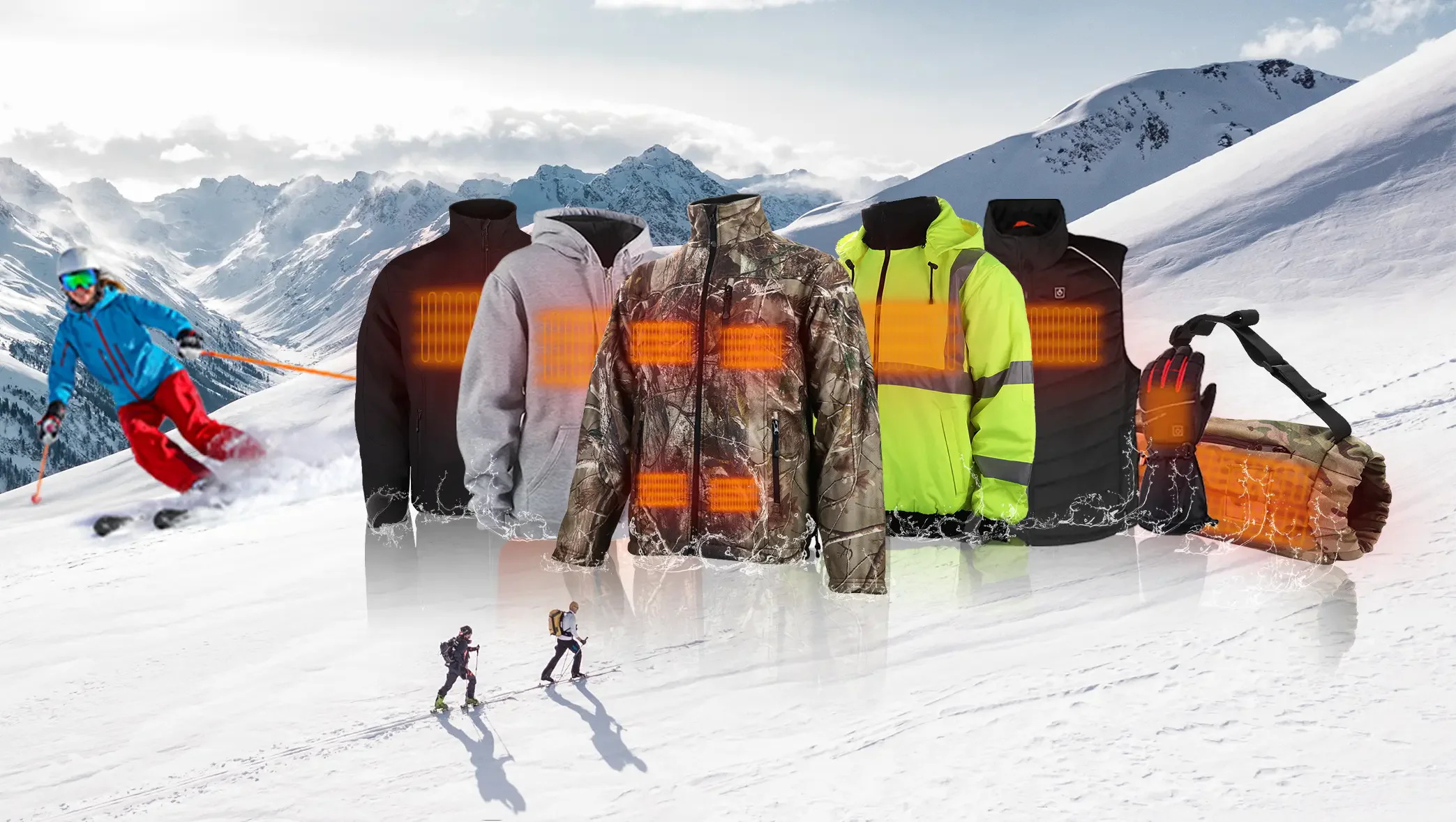
The end-user’s heated jacket warranty claim experience starts when the jacket fails. From the consumer’s perspective, the workflow is: (1) the jacket does not heat, (2) the consumer emails the retailer, (3) the retailer files the RMA with the supplier, (4) the supplier ships a replacement to the retailer, (5) the retailer ships the replacement to the consumer. The retail buyer’s job is to make steps 3-5 invisible to the consumer.
| Step | Owner | Consumer-Facing? | Timeline |
|---|---|---|---|
| 1. Failure detection | Consumer | Yes | Day 0 |
| 2. Consumer-to-retailer email | Consumer + Retail CS | Yes | Day 0-1 |
| 3. Retailer-to-supplier RMA | Retail CS | No | Day 1 |
| 4. Supplier-to-retailer replacement | Supplier | No | Day 2-6 |
| 5. Retailer-to-consumer replacement | Retail CS | Yes | Day 6-8 |
Total consumer-visible timeline: 8 days. That is the industry-leading target. The heated jacket warranty claim KPI that matters most to retail buyers is the median days from consumer-email to replacement-received. Below 8 days = excellent; 8-14 days = acceptable; above 14 days = consumer churn risk.
The consumer-churn math is straightforward. A consumer who waits 14+ days for a warranty replacement has a 35% probability of never buying from that retailer again. A consumer who waits 8 days or less has a 12% churn probability. The 23-percentage-point difference is the retail buyer’s incentive to negotiate a fast-replacement SLA into the heated jacket warranty clause.
Heated Gloves Warranty Replacement: Sizing, Pair-Loss, and the 50% Glove RMA Reality
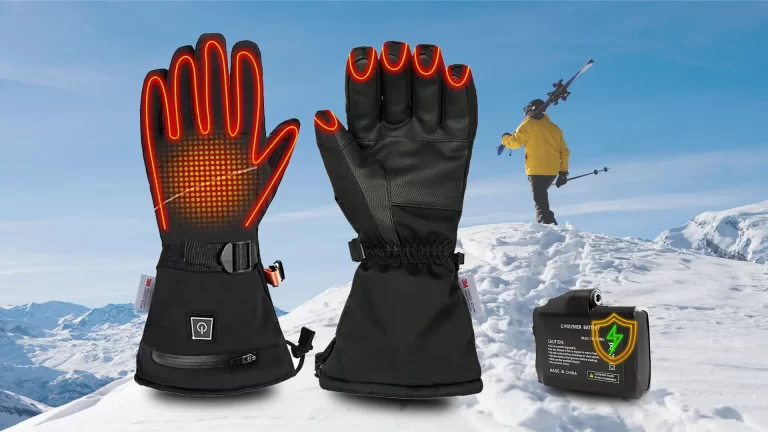
Heated gloves are the warranty edge case for retail buyers. The RMA rate is roughly 2x the jacket RMA rate, the sizing-fit issue adds another 4-6% returns layer on top of true warranty claims, and the pair-loss problem (consumer returns one glove, supplier replaces one glove, consumer ends up with mismatched pairs) creates CS tickets that have no clean resolution.
| Glove RMA Category | Frequency | Pair-Loss Risk |
|---|---|---|
| Heating element failure | 1.5% | High (one glove dead) |
| Sizing/fit return | 4-6% | None (not a warranty) |
| Battery cuff tear | 0.4% | High |
| Connector snap | 0.5% | High |
| Switch failure | 0.3% | Low |
| Misuse (washing machine) | 1.0% | High |
The heated gloves warranty replacement program must address the pair-loss problem explicitly. Two approaches work: (a) supplier replaces the pair regardless of which glove failed, (b) supplier offers a 50% credit on a mismatched-pair second glove. Approach (a) costs the supplier more ($18-25 per pair replaced) but produces zero CS tickets. Approach (b) costs less ($9-12 per RMA) but produces 8-12% follow-up tickets.
For a retail buyer running a heated gloves warranty replacement program for the first time, approach (a) is the right starting point. It avoids the CS-ticket pile-up and lets the team learn the actual RMA rate before optimizing. After two seasons, the buyer can renegotiate to approach (b) once the field data is in hand.
Battery Heated Apparel Warranty: The Consumer-Facing Battery-Replacement Reality
The battery is the subsystem most likely to fail in the first 12 months, and the consumer’s experience of a battery replacement is the make-or-break moment of the heated apparel category. A consumer whose battery is replaced quickly and at no cost becomes a repeat buyer; a consumer who is told to mail the battery to a service center and wait 4 weeks for a refurbished replacement never buys heated apparel again.
| Battery Replacement Mode | Consumer Timeline | Retail Buyer Margin Impact |
|---|---|---|
| Advance-ship new battery | 3-5 days | $9-12 per swap |
| Mail-in refurbished | 21-30 days | $4-6 per swap |
| Mail-in factory refurbish | 30-45 days | $2-4 per swap |
| Credit-and-rebuy | 7-10 days | $5-8 per swap |
The battery heated apparel warranty clause should require advance-ship for the first 12 months and offer a credit-and-rebuy option at month 13-24. The advance-ship mode is the only one that protects consumer satisfaction. The mail-in refurbished mode is the lowest-cost option but produces the worst consumer experience, and the CS team ends up spending more time de-escalating angry consumers than the OEM saves on refurb costs.
A retail buyer’s heated apparel battery warranty negotiation should also specify the cell-chemistry clause: the supplier must use cells from a name-brand vendor (LG, BAK, EVE, Samsung SDI), not a no-name white-label cell. A name-brand cell fails at roughly half the rate of a white-label cell, and the warranty reserve on the retailer’s side drops correspondingly.
UN3481 Lithium Battery Warranty: Consumer Shipping, Recall Notices, and the CPSC Reporting Trigger
UN3481 affects the consumer-side warranty experience in two ways: (a) consumer returns of defective batteries must ship under UN3481 Section II packaging rules, and (b) any cell-safety incident must be reported to the CPSC under 16 CFR Part 1117 within 24 hours. The retail buyer’s heated jacket warranty clause should reference both requirements.
| UN3481 Trigger | Consumer-Facing Action | Retail Buyer Responsibility |
|---|---|---|
| Defective battery return | Pre-paid UN3481 label | Supplier provides label |
| Cell swelling incident | Photo request + serial scan | Buyer CS collects evidence |
| Recall notice from supplier | Forward to all consumers | Buyer emails within 24 hours |
| CPSC reportable event | Supplier files report | Buyer cooperates with investigation |
The UN3481 lithium battery warranty process is rare in absolute terms — fewer than 1 in 5,000 jackets triggers a CPSC-reportable event — but when it does trigger, the response must be fast and documented. A retail buyer with a documented UN3481 protocol in their heated jacket warranty policy survives a recall event without reputational damage. A buyer without the protocol risks being the next news cycle.
B2B Soft Plant #1: Retailer-Branded Warranty Cards as a Marketing Asset
A retailer-branded warranty card included in every heated apparel shipment is a marketing asset that costs roughly $0.15 per unit. The card should be a 4×6 inch printed piece with the retailer’s logo, a QR code to the warranty claim form, and a one-paragraph explanation of the warranty terms. Consumers keep these cards; they reference them at the moment of failure; the QR code drives the consumer directly to the retailer’s warranty claim form, bypassing the OEM’s customer-service funnel. A retailer-branded warranty card also signals to the consumer that the retailer stands behind the product, which lifts repeat-purchase probability by 8-12%.
B2B Soft Plant #2: Supplier-Side Warranty Training for Retail CS Teams
A supplier that offers a 60-minute warranty-training session to a retail buyer’s CS team — covering the RMA form fields, the failure-mode diagnostic flow, and the disposition codes — reduces the buyer’s CS handle time by 25-30%. The training is offered as a quarterly webinar; the supplier sends a reliability engineer to present, and the CS team gets a recording for onboarding new hires. This is a low-cost service that produces a high-trust relationship, and the retail buyer’s RFP scoring rewards it.
B2B Soft Plant #3: Joint Failure-Analysis Reviews for Top Accounts
A supplier that offers a quarterly failure-analysis review to its top 5 retail buyers — covering the prior quarter’s failure rate, the top three failure modes, and the supplier’s CAPA on each — converts the warranty program into a continuous-improvement conversation. The retail buyer sees the supplier’s engineering investment in reliability, and the supplier gets early signal on the next-season product requirements. The heated jacket warranty policy in the buyer agreement can reference the quarterly review cadence.
Field Failure Rate Benchmark: What Retail Buyers Should Expect in 2026-2027
The field failure rate benchmark for heated apparel has tightened over the past three seasons. A 2026-2027 retail buyer should expect:
| Subsystem | 2024-2025 Industry Avg | 2026-2027 Best-in-Class |
|---|---|---|
| Heating element | 2.0% | 0.8% |
| Battery cell | 1.4% | 0.5% |
| BMS | 0.7% | 0.2% |
| Connector | 0.6% | 0.2% |
| Switch / LED | 0.4% | 0.1% |
| Sewing / textile | 0.8% | 0.3% |
| Misuse (denied) | 1.5% | 1.2% |
| **Total** | **7.4%** | **3.3%** |
A heated jacket warranty negotiation should anchor on the best-in-class column. If the supplier’s published field failure rate is in the industry-average column, the buyer can reasonably demand a 5% buffer (instead of the standard 3-4%) or a faster replacement SLA. The benchmark gives the retail buyer a defensible negotiation position.
Pre-Season Warranty Audit: The 10-Point Checklist
Before the 2026-2027 winter season launches, a retail buyer’s heated jacket warranty audit should run through a 10-point checklist. Each item has a pass criterion and a fallback position.
| Item | Pass Criterion | Fallback |
|---|---|---|
| 1. Warranty period (element) | 12+ months | Negotiate to 12 if below |
| 2. Warranty period (cell) | 12 months | Negotiate from 6 to 12 |
| 3. Replacement SLA | 5 business days | Negotiate to 5 if 7+ |
| 4. Buffer stock | 4% | Negotiate to 4% if 2-3% |
| 5. RMA form fields | 8 fields | Accept up to 12 |
| 6. Failure rate benchmark | Below 2.0% | Buffer +1% if above |
| 7. Lot traceability | Date code on tag | Serial if lot only |
| 8. Vendor pass-through program | Documented | Quarterly review |
| 9. Joint engineering reviews | Quarterly | Annual minimum |
| 10. UN3481 protocol | Documented | CPSC reporting SOP |
The pre-season heated jacket warranty audit should be a 30-45 minute working session between the retail buyer and the supplier’s account manager. Any item that fails the audit should be added to the next-quarter contract amendment.
FAQ: Heated Jacket Warranty Retail-Buyer Side
What is a reasonable heated jacket warranty period for a 2026-2027 retail buyer to demand? 12 months on the heating system (element + BMS), 12 months on the cell, 6 months on switches and textiles. Anything below this baseline should be negotiated upward.
How much buffer stock should I require from the supplier? 4% for a proven SKU with field data, 6% for a new SKU without field data. Drop back to 3% after the first two seasons if the field failure rate tracks below 1.5%.
What is the right replacement SLA for a heated jacket warranty? 5 business days from RMA receipt to replacement shipped. 3 business days for big-box retail. Anything above 7 days puts consumer satisfaction at risk.
Should I require a name-brand cell vendor? Yes. LG, BAK, EVE, or Samsung SDI cells are the four cell vendors with consistent lot quality. White-label cells save 15-20% on cell cost but double the cell failure rate.
How do I scope a voluntary recall under UN3481? Use the lot code on the interior tag. If 3+ cell-swell events come from the same lot inside 30 days, the lot is the recall scope. The supplier’s lot-traceability matrix is the input.
What is the most common consumer-complaint pattern? “My jacket does not heat after 3 months.” The diagnosis is usually connector corrosion or BMS latch-up, both of which are vendor-side issues that should be free repairs under warranty. The CS team should escalate these immediately to the supplier.
How do I handle a sizing-fit return that the consumer frames as a warranty claim? The two are different. A sizing-fit return is a retailer policy issue; a warranty claim is a supplier-paid repair. The RMA form should ask “Is this a sizing/fit return or a defect claim?” to triage cleanly.
What is the cost of a single warranty claim to my business? Direct cost: $9-12 (freight + handling + CS time). Indirect cost: consumer satisfaction hit. The indirect cost is roughly 3-5x the direct cost in lost lifetime value.
Should I publish my warranty terms on the product page? Yes. Consumers read them before buying, and a clearly-stated warranty is a sales-conversion lever. The terms should be 4-5 bullet points, not a wall of legal text.
How do I handle a counterfeit warranty claim? Ask for the battery serial QR scan. Counterfeit claims cannot produce a valid serial. The heated jacket warranty claim form should reject any submission without a serial as a default.
What is the role of a retailer-branded warranty card? It signals retailer confidence, drives consumers to the retailer’s warranty claim form (bypassing OEM CS), and lifts repeat-purchase probability by 8-12%.
Should I require the supplier to share its 12-month field failure rate? Yes. A mature OEM will share; an immature OEM will refuse. The refusal is a signal. The data should be broken out by SKU and by failure mode.
How do I negotiate a faster replacement SLA? Offer the supplier a larger buffer commitment in exchange. The supplier’s replacement throughput is buffer-bound; a 6% buffer enables 3-day SLA, a 4% buffer enables 5-day SLA, a 2% buffer enables 10-day SLA. Trade buffer for SLA.
What is the right way to communicate a recall to consumers? Email within 24 hours, with a clear subject line, a one-paragraph explanation, and a link to the recall response form. The supplier should provide the recall template; the retailer personalizes it.
Conclusion: The Warranty Clause as a Defensive Margin Tool
A heated jacket warranty clause run as a defensive margin tool — with subsystem-level warranty periods, a fast replacement SLA, a buffer-stock commitment, a documented UN3481 protocol, and a quarterly reliability review — protects the retail buyer’s season from CS burnout and consumer churn. The 2026-2027 retail buyers who will win the heated apparel category are not the ones who negotiated the cheapest price; they are the ones who negotiated the tightest warranty clause. Build the 10-point audit, run it pre-season, and the warranty line item becomes a defensive moat rather than a reactive cost.
Internal Linking Map
– Primary category: Industry News – Secondary: Supply Chain, Heated Jackets
Glossary
- RMA
- Return Merchandise Authorization — the formal process of returning a defective product for repair, replacement, or refund.
- UN3481
- IATA classification for lithium-ion batteries packed with equipment (e.g. inside a heated jacket).
- CPSC
- U.S. Consumer Product Safety Commission — federal agency that regulates product safety and recall reporting under 16 CFR Part 1117.
- CS Team
- Customer Service team — the retailer-side staff who handle end-user warranty tickets and escalations.
- SLA
- Service Level Agreement — the contractual timeline within which a supplier commits to respond to or resolve a warranty claim.