Wholesale Heated Apparel ESPR Economic Operator Information Obligations 2026: the Buyer Acceptance Binder for Article 36 Disclosure
Regulation (EU) 2024/1781 was adopted on 13 June 2024 and has been in force since 18 July 2024, and it is the framework that every future ecodesign delegated act will fill in. That distinction matters more than it sounds, because no delegated act covering textiles, apparel or heated apparel has been adopted, so every duty described below is conditional on an act that does not yet exist. Article 36 information obligations of economic operators, Article 37 monitoring and reporting obligations of economic operators and Article 38 requirements on supply chain actors all switch on only when a product is covered by a delegated act adopted pursuant to Article 4. For a wholesale buying desk that is good news: the rules are published, the acts are not, and there is still time to build the paper trail.
What a wholesale buyer should ask a supplier about Article 36
Article 36(1) requires that a product covered by a delegated act adopted pursuant to Article 4 and sold by distance selling shows clearly and visibly the manufacturer’s name, registered trade name or registered trade mark plus postal and electronic address, the Union-established economic operator’s contact details where the manufacturer sits outside the Union, and information identifying the product including a picture. You buy on a marketplace and resell on your own shelves, so you sit on both sides of it. Three briefs drive the work: wholesale heated apparel espr economic operator information obligations manufacturer capability, wholesale heated apparel espr economic operator information obligations oem, and wholesale heated apparel espr economic operator information obligations wholesale.
| Disclosure element | What you ask | Evidence you request | |
|---|---|---|---|
| Manufacturer identity | Who makes this, and where? | Registered trade name, postal and electronic address | |
| Union operator contact | Who answers inside the EU? | Name, postal, electronic address, telephone number | |
| Product identification | Which exact model is this? | Picture, product type, other product identifier | |
| Page visibility | Is it visible at a glance? | Dated screenshot of the live offer page |
The distance-selling product offer: what has to be visible on the page
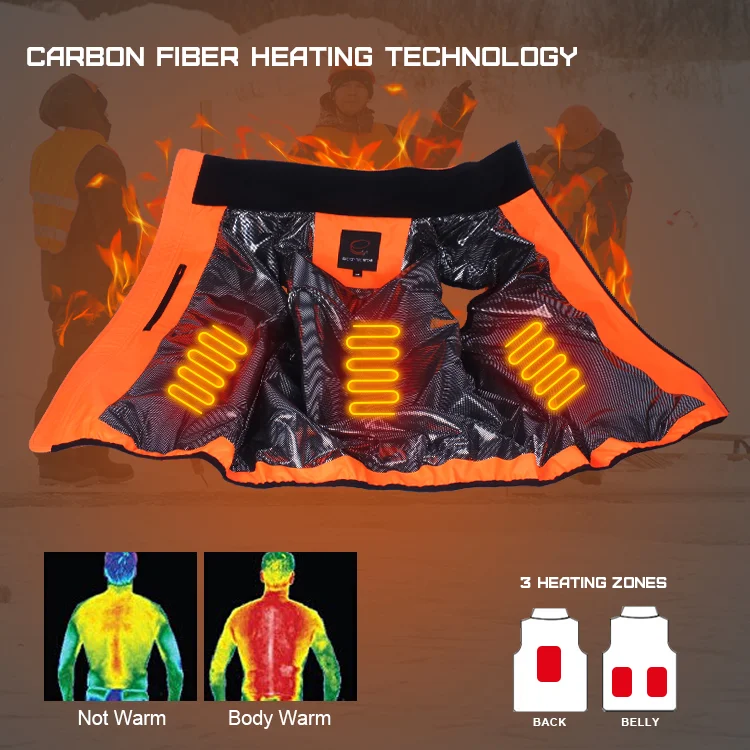
The test in Article 36(1) is that the offer provides the information clearly and visibly, which makes this a page-design problem rather than a paperwork problem. On a heated apparel listing that carries size runs, battery chemistry and colour options, the manufacturer identity block usually ends up in a collapsed specification table where nobody sees it. Rebuilding the offer so the identity block, the Union operator contact and the model identifier sit above the fold, with a picture matching the model you are actually buying, is unglamorous work. Budget $0.83 per unit for that rebuild across the line and treat it as a one-off template change.
| Page element | Where it belongs | Why buyers care | |
|---|---|---|---|
| Manufacturer identity block | Above the fold | One click to a contact | |
| Union operator details | Beside the brand block | EU authority contact | |
| Product picture | Main gallery | Confirms the exact model | |
| Model identifier | Specification table | Links page to records |
The 10-year retention period as a supplier diligence question
Article 36(2) requires operators to give the market surveillance authority the name of any operator that supplied them with a covered product and the name of any operator they supplied such products to, with quantities and exact models, for 10 years after they were supplied with those products and for 10 years after they supplied them, unless a delegated act specifies a different period. That 10-year retention period makes a supplier’s record-keeping your problem too, because the evidence outlives the invoice. Reconstructing ten years of model-level history for one order line is not trivial. Model $4,150 per 5,000-unit order as the administrative cost of that reconstruction and use it in the supplier conversation as the reason to demand a searchable record set now.
| Record set | Article 36(2) asks for | Your diligence question | |
|---|---|---|---|
| Upstream suppliers | Names of suppliers | Who supplied these units? | |
| Downstream customers | Names of recipients | Who received them? | |
| Quantities and models | Quantities, exact models | Which models, how many? | |
| Retention period | 10 years both directions | Is it searchable today? |
Article 36(2): the 15-day market surveillance response window
The same paragraph sets the clock: the information shall be provided in paper or electronic form within 15 days of receipt of a request by the market surveillance authority. Fifteen days is tight for a business tracing a model back through tiers of wholesalers, agents and freight partners, and tighter for a distributor who bought on a forward contract and holds no volume history of its own. Ask your supplier to describe the retrieval route rather than the retention promise: who fields the request, which system holds the data, who signs the export, and how a weekend is handled.
| Request element | Deadline | What you verify | |
|---|---|---|---|
| Upstream operator names | 15 days | Named record owner | |
| Downstream operator names | 15 days | Model-level export | |
| Format | Paper or electronic | Both channels tested | |
| Trigger | Reasoned request | Known process documented |
Article 37: what monitoring and reporting evidence should reach a buyer
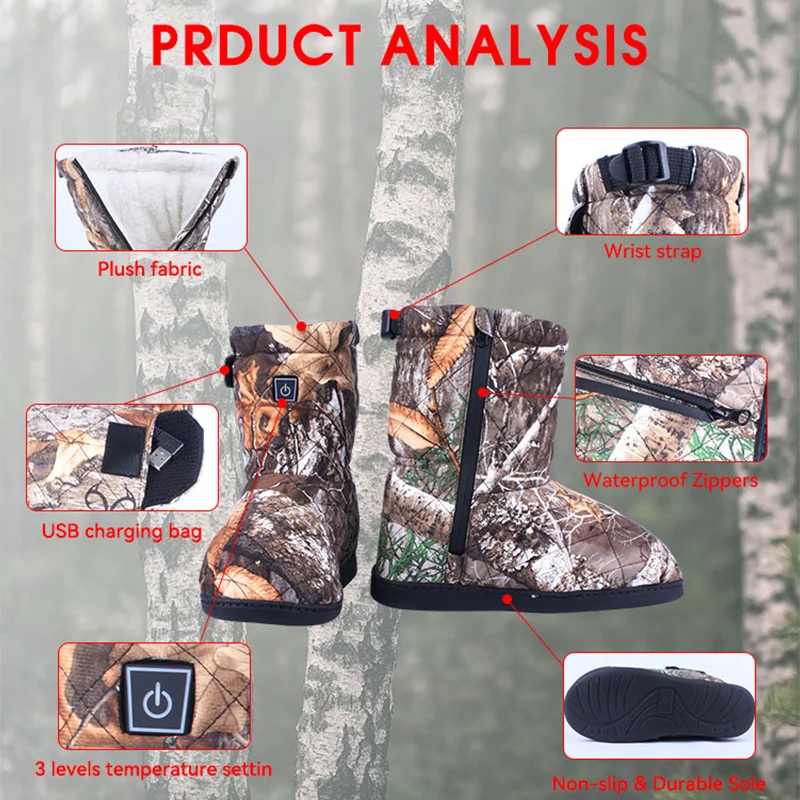
Article 37 covers what the Commission may require when it needs to know what is on the market and how products perform in use. Paragraph 1 allows requirements for information on quantities placed on the market or put into service, differentiated per product model, while the Commission must weigh the availability of evidence on market penetration, the need to avoid a disproportionate administrative burden for economic operators, in particular for SMEs, and the usefulness and proportionality of the requirement. Paragraphs 2 to 7 address non-personal in-use data, explicit end-user consent, at least annual reporting and aggregated datasets. Paragraph 2 lists four criteria the Commission must respect before it can require a product to measure its own energy use or performance while in use: the usefulness of in-use data for end users, the technical feasibility of recording it, the need to avoid a disproportionate administrative burden for economic operators, in particular for SMEs, and the need to ensure that no data allowing the identification of individuals, or allowing the inference of individuals’ behaviour, is collected. Paragraph 5 lets a delegated act require collection of non-personal in-use data where it can be accessed remotely via the internet and the end user has given explicit consent, together with reporting to the Commission at least once a year, including where available the model identification number registered in the product database referred to in Article 12(1) of Regulation (EU) 2017/1369. For a heated apparel buyer this matters in a specific way: a battery heated jacket that reports run time to an app is already generating in-use data, so the question for your supplier is not whether such data exists but whether it has been designed so that it can be exported without identifying the wearer. None of it is active for apparel today.
| Article 37 element | What the framework says | Buyer implication | |
|---|---|---|---|
| Quantity information | Differentiated per product model | Model-level sales data must exist | |
| Reporting frequency | The Commission specifies it | Annual reporting is possible | |
| In-use data | Non-personal, explicit consent | No personal data on jackets | |
| Commission criteria | Avoid disproportionate burden | Small orders stay realistic |
Article 38: pulling supplier records from the chain
Article 38 requirements on supply chain actors applies only when a delegated act says so. When it does, supply chain actors shall provide, upon request and free of charge, manufacturers, notified bodies and competent national authorities with available relevant information related to the products they supply; allow manufacturers to assess those products and give access to relevant documents or facilities; and enable authorities to verify the accuracy of that information. For a buyer this is the clause that decides whether your own distributors can answer a regulator as well as they answer you. Our supply chain coverage tracks how those duties travel through partner networks.
| Article 38 duty | Who must comply | Your test | |
|---|---|---|---|
| Provide information | Supply chain actors | Free, prompt, in writing | |
| Allow manufacturer assessment | Manufacturers | Access to documents or facilities | |
| Enable verification | Notified bodies, authorities | Records match reality | |
| Activation | Only when a delegated act says so | Nothing applies yet today |
Building the buyer acceptance binder for Article 36 disclosure
Build the binder as a four-part folder per supplier per season: a signed manufacturer identity declaration matching what the offer page shows, a model-level record attestation naming upstream and downstream counterparties and their retention practice, a market-surveillance runbook naming who answers a request within the 15-day window, and an Article 38 access undertaking from every distributor in the chain. Store it beside the contract, not in an inbox. Budget $7,400 one-time buyer acceptance setup for the template, the page rebuild work and the onboarding conversations, then re-score each supplier every season.
| Binder section | Contents | Owner | |
|---|---|---|---|
| Identity declaration | Manufacturer and EU operator details | Supplier | |
| Record attestation | Upstream and downstream counterparties | Supplier | |
| Response runbook | Named contact, 15-day route | Supplier | |
| Chain undertaking | Article 38 access commitments | Distributor |
Acceptance scoring: how to weight a supplier’s operator disclosure file

Score the file rather than the promise, and weight what is hard to fake: a registered trade name and postal address that resolve to a real legal entity, a model-level sales history that reconciles to the invoices you hold, a named contact with cover for a 15-day request, and a signed Article 38 access clause from each distributor. Treat page visibility and document formatting as supporting evidence rather than a pass. If a supplier scores below threshold, do not drop the line: require a corrective plan with a date and re-test after the next shipment lands.
| Criterion | Weight | Pass evidence | |
|---|---|---|---|
| Identity traceability | 30% | Address resolves to a legal entity | |
| Record retention | 25% | Model-level export on request | |
| Response readiness | 20% | Named contact with cover | |
| Chain access | 15% | Signed Article 38 undertaking | |
| Page visibility | 10% | Live listing check passed |
The cost of getting this right before the delegated act lands
Regulation (EU) 2024/1781 has been in force since 18 July 2024, Article 4(7) provides that the first delegated act shall not enter into force before 19 July 2025, and Article 4(4) provides that a delegated act’s date of application shall not be earlier than 18 months from its entry into force. No textile or apparel delegated act has been adopted, so no product group you buy today is covered and no certification scheme, issuing-body register or service-provider whitelist is in force for apparel. The framework is published and the acts are not. Our heated apparel industry news follows the product groups moving toward a delegated act.
| Timing anchor | What the framework says | Buyer implication | |
|---|---|---|---|
| Entry into force | 18 July 2024 | Framework already applies | |
| First delegated act | Not before 19 July 2025 | Acts still pending | |
| Application date | 18 months after entry into force | Long runway for suppliers | |
| SME needs | Sufficient time to comply | Small suppliers get more time |
Frequently asked questions
These answers describe the framework as adopted. Every duty that touches a real order still depends on a delegated act covering that product group, and none has been adopted for textiles or apparel.
Does the ESPR already cover heated apparel sold wholesale?
No delegated act covering textiles or apparel has been adopted, so the Article 36, Article 37 and Article 38 duties are not triggered for heated apparel today.
What does Article 36 information obligations of economic operators actually require?
It requires distance-selling product offers to show manufacturer identity, Union-established operator contact details and product identification once a delegated act covers that product group.
Is the 10-year retention period already binding on my suppliers?
The Article 36(2) retention duty attaches to products covered by a delegated act adopted pursuant to Article 4, so it remains conditional until such an act exists.
What should I request before placing a repeat order?
Ask for the manufacturer identity block, the Union-established operator details, a model-level record attestation and a named contact for market surveillance requests.
Why should I care about Article 37 monitoring and reporting obligations of economic operators?
Article 37 allows the Commission to require model-level quantity information and non-personal in-use data, so suppliers need data systems that survive a future reporting request.
What does Article 38 requirements on supply chain actors mean for a distributor?
When a delegated act says so, supply chain actors must hand over relevant information free of charge, allow manufacturer assessment and let authorities verify their records.
Who should own the acceptance binder inside my business?
Give it to the category buyer, with your compliance manager approving the identity and record questions added to each supplier contract.
How do I score a supplier with a thin disclosure file?
Weight identity traceability and model-level record retention highest, and treat a missing named response contact as a conditional approval rather than a rejection.
What is the 15-day window in Article 36(2)?
Economic operators must provide the requested information in paper or electronic form within 15 days of receiving a request from the market surveillance authority.
Should I demand a certification mark or a service-provider register today?
No, because no textile delegated act exists, so no ecodesign certification scheme, issuing-body register or service-provider whitelist is in force for this product group.
When would the first delegated act reach my business?
Article 4(7) prevents the first delegated act entering into force before 19 July 2025, and Article 4(4) sets at least 18 months before it applies.
What actually changes in a heated apparel listing?
The offer page gains a visible manufacturer identity block, a Union-established operator contact, a product picture and a clear model identifier.