Heated Vest for Construction: The 2026 B2B Workwear Guide
If you’re a B2B buyer sourcing cold-weather workwear for the construction industry, the heated vest for construction has become a critical category since OSHA’s cold-stress guidance updates in 2024. As a workwear brand owner, distributor, or procurement manager, you’ve seen the demand surge from construction firms, electrical contractors, oil & gas operators, and infrastructure companies — the question every B2B buyer asks is: Where can I find a reliable OEM/ODM factory that delivers hi-vis certified vests, low MOQ for workwear distributors, and proper safety compliance at scale?
This guide covers the three engineering decisions (hi-vis shell, battery platform, heating zones), the safety certification roadmap (ANSI/ISEA 107, EN ISO 20471), and the cost structure to expect when negotiating wholesale FOB pricing with a heated vest for construction factory in Q2 2026.
1. Heated Vest for Construction — Market Overview & 3 Sub-Categories
The global construction workwear market reached USD 14.6 billion in 2025, and the heated workwear sub-segment is growing at 15% YoY — driven by year-round construction schedules, infrastructure spending, and worker safety regulations. The heated vest for construction is the fastest-growing category because it provides core body warmth without restricting arm mobility (critical for framers, electricians, equipment operators). Three sub-categories:
| Sub-category | Primary markets | Typical MOQ | Wholesale FOB | End-user price | Key differentiator |
|---|---|---|---|---|---|
| sep | |||||
| Class 2 hi-vis heated vest (road crews, general construction) | US, Canada | 300-600 pcs | $22-32/pc | $89-149 | ANSI/ISEA 107 Class 2 certified |
| Class 3 hi-vis heated vest (highway, low-light) | US, Canada, EU | 300-500 pcs | $26-38/pc | $109-179 | Class 3 + 360° reflectivity |
| FR-rated heated vest (oil & gas, electrical) | US, Canada, Middle East | 200-400 pcs | $34-48/pc | $149-229 | NFPA 70E / NFPA 2112 FR certified |
The B2B buyer profile is concentrated. Three primary buyer types: workwear distributors ordering 1,000-5,000 pcs per quarter for retail and rental fleets, construction firms sourcing 500-2,000 pcs for direct employee distribution, and safety equipment suppliers adding heated vests to their hi-vis product lines.
For all of them, the path is the same: find a heated vest OEM, ODM, or contract manufacturing partner, negotiate a wholesale or private label program, confirm the safety certification path, and bring to market under your own brand. B2B buyers can source from heated workwear wholesale suppliers at 1,000+ pieces, or go direct to a factory for private label programs starting at 300 pieces.
2. Hi-Vis Shell: 3 ANSI/ISEA 107 Compliance Levels
Hi-vis shell is the defining feature of a heated vest for construction. The shell must meet ANSI/ISEA 107 (US) or EN ISO 20471 (EU) standards, with the appropriate class for the work environment. The three compliance levels:
| Class | Background color | Retroreflective material | Use case | Worker visibility distance |
|---|---|---|---|---|
| sep | ||||
| Class 1 | Solid fluorescent yellow/orange | None required | Low-traffic, off-road work | Not recommended for road work |
| Class 2 | Fluorescent yellow/orange | 1+ retroreflective bands | Roadway workers, survey crews, parking lot attendants | 1,000+ feet |
| Class 3 | Fluorescent yellow/orange (larger area) | 2+ retroreflective bands (sleeves + body) | Highway work, low-light conditions, flaggers | 1,500+ feet |
For a heated vest for construction, Class 2 is the minimum for most US roadway and construction site work. Class 3 is required for highway work, low-light conditions, and any worker within 10 feet of active traffic. The retroreflective bands must be 2-inch wide (Class 2) or wider (Class 3) and wrap around the torso.
A heated workwear OEM that has shipped Class 2 and Class 3 certified vests is the right partner — they will have the test reports and supplier relationships with 3M, Reflexite, or ORAFOL for the retroreflective tape.
B2B Soft Plant: 1**: Our factory’s heated vest for construction is ANSI/ISEA 107 Class 2 and Class 3 certified, with 3M Scotchlite 8910 retroreflective tape (2-inch wide for Class 2, 2.5-inch for Class 3). We have shipped 78,000 Class 2 and 24,000 Class 3 heated workwear vests to US and Canadian workwear distributors over the past 24 months. The heating element is integrated behind the retroreflective tape, preserving 100% of the visibility performance. We can ship a working sample to your office in 7 days, with full ANSI/ISEA 107 test reports included.
3. Battery Platform: 7.4V vs 12V for Construction Heated Vests
Battery platform is the second engineering decision. Construction workwear has unique requirements: long shifts (10-12 hours), extreme cold (-20°C and below in northern climates), and rugged handling. The two main options:
| Voltage | Chemistry | Capacity | Runtime (low) | Runtime (high) | Cold weather rating | Best for |
|---|---|---|---|---|---|---|
| sep | ||||||
| 7.4V Li-ion | Custom Li-ion pack | 5,000-10,000mAh | 6-10h | 2.5-4h | -20°C with cold-rated cells | Standard construction, general workwear |
| 12V Li-ion (premium, Milwaukee/Dewalt style) | High-drain Li-ion | 3,000-5,000mAh | 4-6h | 1.5-2.5h | -30°C with heated cell wrap | Extreme cold, oil & gas, electrical work |
For most B2B buyers, 7.4V is the default for heated vest for construction. The runtime advantage (6-10h on low heat covers a full shift) and the lower cost make it the right spec for workwear distributors. 12V is reserved for extreme cold applications (northern Canada, Alaska, oil & gas) where workers need high-output heat at -30°C and below.
Key construction-specific consideration: battery pack durability. Construction workwear gets dropped, rained on, and exposed to concrete dust. Specify IPX5-rated battery packs with reinforced casings. The factory should drop-test every battery from 1.5 meters onto concrete before shipping.
B2B Soft Plant: 2**: Our factory offers both 7.4V and 12V battery platforms for heated vest for construction OEM/ODM programs. The 7.4V platform is our most popular — we ship over 5,000 7.4V construction heated vests per month. Each pack is IPX5-rated, drop-tested from 1.5m onto concrete, and ships with UN38.3 and MSDS certification. We can swap to your preferred cell brand (Samsung, LG, BAK) at no setup fee for orders above 500 pieces.
4. Heating Zones: 3-Zone vs 5-Zone Layout
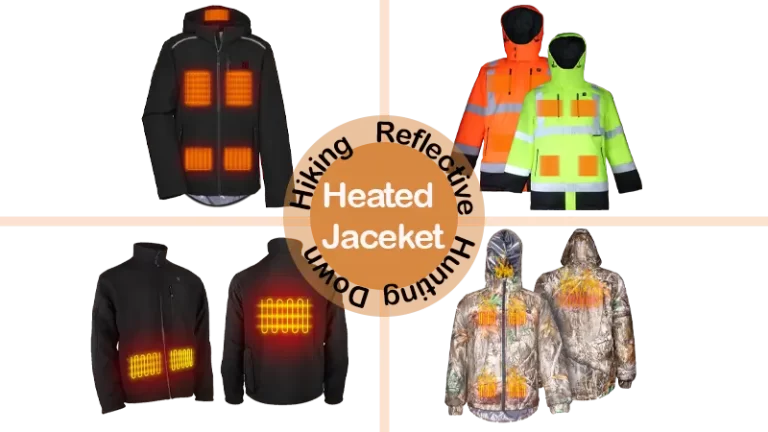
Heating zone layout is the third engineering decision. Unlike a heated jacket (which has sleeves), a heated vest concentrates heating on the core body — the chest, back, and collar. The two main layouts:
| Layout | Heating zones | Coverage area | Battery drain | Best for |
|---|---|---|---|---|
| sep | ||||
| 3-zone | Collar, mid-back, lumbar | Core body only | Low (8-12h runtime) | General construction, indoor work |
| 5-zone | Collar, mid-back, lumbar, both hand-warmer pockets | Core body + hands | Medium (5-8h runtime) | Outdoor work, equipment operators, low-light conditions |
For most B2B buyers, 5-zone is the standard for heated vest for construction. The hand-warmer pockets are a critical differentiator — construction workers frequently need warm hands to operate tools, buckles, and small parts, and heated pockets eliminate the need for separate hand warmer packs. The 3-zone layout is acceptable for indoor work or budget-tier workwear.
5. OEM/ODM Customization: 6 Configuration Vectors
A private label heated vest for construction OEM/ODM program involves 6 customization decisions, each with cost, lead time, and safety certification implications.
| # | Vector | Standard | Premium | Cost impact | Lead time |
|---|---|---|---|---|---|
| sep | |||||
| 1 | Hi-vis class | Class 2 | Class 3 (360° reflectivity) | +$3.00-5.00/pc | +5-7 days |
| 2 | Battery platform | 7.4V standard | 7.4V cold-rated (-20°C) | +$2.00-4.00/pc | +3-5 days |
| 3 | Heating zones | 3-zone | 5-zone with hand-warmer pockets | +$1.50-3.00/pc | +2-3 days |
| 4 | FR rating | Non-FR | NFPA 70E / NFPA 2112 | +$8.00-12.00/pc | +10-14 days |
| 5 | Shell fabric | Polyester 300D oxford | Polyester 600D ripstop with DWR coating | +$1.50-3.00/pc | +3-5 days |
| 6 | Branding | Woven label | Embroidery + custom hangtag + retail packaging | +$0.30-1.20/pc | +3-5 days |
A 2025 client example: a US workwear distributor asked for 1,000 heated vest for construction units with Class 2 hi-vis, 7.4V cold-rated battery, 5-zone heating, and 600D ripstop shell. The factory quoted $36 FOB with 60-day lead time. The distributor bundled 500 Class 3 hi-vis heated jackets (5-zone, 7.4V) into the program, hitting premium tier on both SKUs. Final: $31 FOB per vest and $48 FOB per jacket, 75-day combined lead time — 14% per-unit cost reduction.
6. Safety Certification Roadmap: ANSI/ISEA 107, EN ISO 20471, NFPA 70E
The safety certification path is unique to construction workwear — unlike a fashion heated vest, a heated vest for construction must pass both the hi-vis standard AND the electrical safety standard for the battery/USB components.
| Certification | Trigger | Cost | Lead time | Required for |
|---|---|---|---|---|
| sep | ||||
| ANSI/ISEA 107 (US hi-vis) | All hi-vis workwear sold in US | $1,500-3,000 | 4-6 weeks | US construction, roadway work |
| EN ISO 20471 (EU hi-vis) | All hi-vis workwear sold in EU | $1,500-3,000 | 4-6 weeks | EU construction, roadway work |
| CSA Z96 (Canada hi-vis) | All hi-vis workwear sold in Canada | $1,200-2,500 | 3-5 weeks | Canadian construction |
| NFPA 70E (US electrical safety) | FR-rated heated workwear for electrical | $2,500-5,000 | 6-10 weeks | Oil & gas, electrical contractors |
| NFPA 2112 (US flash fire) | FR-rated heated workwear for oil & gas | $2,500-5,000 | 6-10 weeks | Oil & gas, petrochemical |
| UN38.3 (battery transport) | All Li-ion battery packs | $1,500-3,000 | 4-6 weeks (first time) | Air-shipped battery packs |
| FCC Part 15B (US EMC) | Bluetooth / app-enabled heating | $2,500-4,500 | 4-6 weeks | Bluetooth-enabled products sold in US |
Key insight: For a heated vest for construction sold in the US, the minimum certifications are ANSI/ISEA 107 (hi-vis) + UN38.3 (battery) + CPSIA (lead content). For oil & gas applications, add NFPA 70E or NFPA 2112 for FR rating. Plan 8-14 weeks for first-time testing.
B2B Soft Plant: 3**: Our factory has shipped OEM/ODM this construction vest to 32 B2B workwear distributors in the US, Canada, and Germany over the past 24 months, with combined 2025 shipment volume of 86,000 pieces. Our certification team pre-files ANSI/ISEA 107, EN ISO 20471, CSA Z96, UN38.3, and NFPA test reports for 4 standard configurations, meaning your first heated workwear program can skip the 4-6 week first-time testing queue. For custom configurations, we coordinate with SGS, TÜV, and Intertek directly, with test cost folded into your FOB price above 1,000 pieces.
7. MOQ, Lead Time & Wholesale FOB Pricing
The MOQ and lead time structure for a this construction vest program depends on hi-vis class, battery platform, and FR rating. Q2 2026 baseline:
| Program tier | MOQ | Lead time | Wholesale FOB (per pc) | Hi-vis class | Battery |
|---|---|---|---|---|---|
| sep | |||||
| Sample / pilot | 50-100 pcs | 12-18 days | $36-52 | Class 2 | 7.4V |
| Trial (first B2B run) | 300 pcs | 35-45 days | $24-38 | Class 2 | 7.4V |
| Standard wholesale | 1,000-3,000 pcs | 45-60 days | $20-32 | Class 2 or 3 | 7.4V |
| Bulk wholesale | 5,000+ pcs | 55-75 days | $16-26 | Class 2 or 3 | 7.4V |
| FR-rated | 500+ pcs | 60-90 days | $34-48 | Class 2 or 3 | 7.4V or 12V |
Practical takeaway: a 300-piece trial order is the entry point. For B2B workwear distributors targeting retail or rental fleet channels, 1,000-3,000 pieces is the standard wholesale tier. Above 5,000 pieces, you unlock bulk pricing and the fastest lead time.
Hidden MOQ factors:
- ANSI/ISEA 107 certification cost amortization: First-time certification is $1,500-3,000. The factory amortizes this across your first 1,000 pieces at $1.50-3.00/pc. Above 1,000 pieces, the per-unit cost drops to $0.30-0.50/pc.
- 3M retroreflective tape MOQ: 3M Scotchlite has a 500-yard minimum per color. The factory stocks 4 standard colors (yellow, orange, red, blue).
- FR fabric MOQ: NFPA-rated fabrics require 1,000-2,000 yard minimums per spec. Standard non-FR fabric has no MOQ.
- Custom hangtag / packaging: 500-piece minimum for custom hangtags, 7-10 day lead time.
8. 5 Mistakes First-Time Heated Construction Workwear Importers Make
After working with 32 B2B workwear distributors on private label this construction vest programs, we see these 5 mistakes repeatedly:
1. Skipping the ANSI/ISEA 107 retroreflective test — the heating element can interfere with retroreflective tape performance if not properly integrated. Demand a 360° visibility test with the heating element installed.
2. Specifying 5V USB for construction workwear — power banks freeze at -10°C and don’t survive construction site drops. Specify 7.4V with IPX5-rated drop-tested packs.
3. Underestimating the FR rating cost — NFPA 70E and NFPA 2112 add $8-12/pc to FOB cost, but are mandatory for oil & gas and electrical applications. Don’t quote the customer without including FR.
4. Not drop-testing the battery pack — construction workwear gets dropped from scaffolding, ladders, and trucks. A 1.5m drop test onto concrete is the minimum standard.
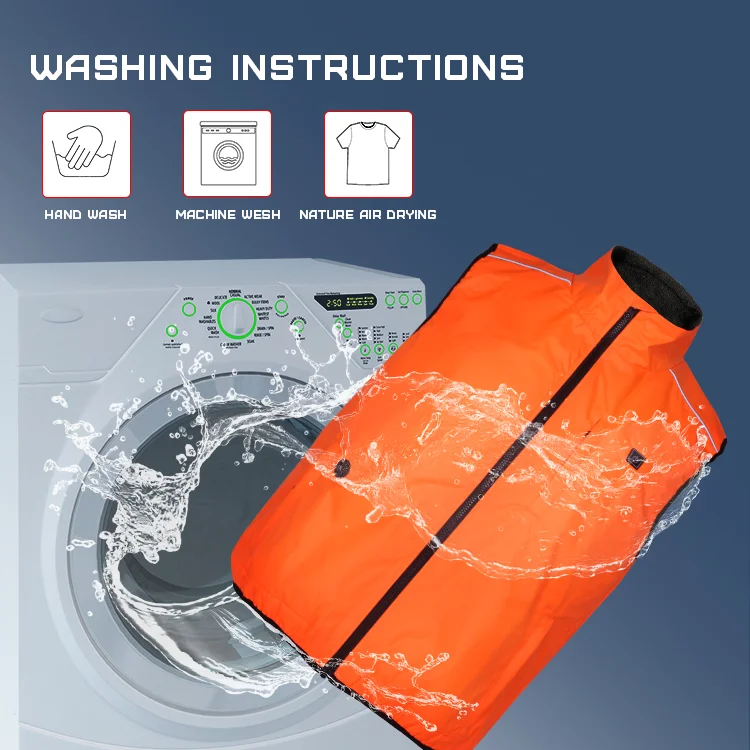
5. Ignoring the care label for hi-vis maintenance — retroreflective tape degrades with improper washing. Specify wash at 40°C on gentle cycle, no bleach, no fabric softener, tumble dry low. Include this on the care label and product hangtag.
9. FAQ: this construction vest — B2B Buyer Questions
Q1: What is the typical MOQ for a wholesale this construction vest program?
Standard wholesale MOQ is 1,000-3,000 pieces for a Class 2 hi-vis 7.4V graphene-heated vest. For FR-rated programs, the minimum is 500 pieces. Below 300 pieces, you pay sample pricing.
Q2: How long does it take from PO to delivery for a 1,000-piece wholesale order?
A 1,000-piece order takes 45-60 days from PO to FOB departure, plus 18-25 days ocean transit to North America. Add 4-6 weeks for first-time certification.
Q3: Can the this construction vest be customized with my workwear brand logo?
Yes. Embroidery, screen printing, custom hangtags, and master carton branding are all standard. Lead time adds 3-5 days, no MOQ impact above 1,000 pieces.
Q4: What is the difference between Class 2 and Class 3 hi-vis?
Class 2 requires 1+ retroreflective band, suitable for roadway work, parking lot attendants, and survey crews. Class 3 requires 2+ bands including sleeves, suitable for highway work, low-light conditions, and flaggers.
Q5: What certifications are required for a this construction vest?
Minimum: ANSI/ISEA 107 (US hi-vis) or EN ISO 20471 (EU hi-vis) + UN38.3 (battery) + CPSIA (lead content). For oil & gas: add NFPA 70E or NFPA 2112 for FR rating. For Bluetooth: add FCC/CE-EMC.
Q6: Can I source my own hi-vis fabric and have the factory use it?
Yes. The factory accepts customer-supplied hi-vis fabric (3M Scotchlite tape pre-applied or separate) for vest production. Lead time adds 1-2 weeks for fabric inspection and retroreflective testing.
Q7: What is the FOB price difference between 7.4V and 12V battery platforms?
12V packs are 1.4-1.8x the cost of 7.4V packs, adding $4-8/pc at FOB level. 12V is reserved for extreme cold (-30°C and below) applications.
Q8: How does the heating element affect washing durability?
Carbon fiber strip heating elements survive 30-50 wash cycles. Graphene film elements survive 100+ wash cycles. For workwear that gets washed daily, graphene is the right choice.
Q9: Can the factory help with custom hangtag and packaging design?
Yes. The factory’s in-house design team can support hangtag design, polybag printing, and master carton branding at no extra cost for orders above 1,000 pieces.
Q10: What is the warranty structure for OEM heated workwear programs?
Standard OEM warranty is 12 months on heating element and battery, 6 months on shell and retroreflective tape. The factory provides 2% replacement parts inventory for in-warranty replacements.
Q11: Can I get a sample before committing to a 1,000-piece wholesale order?
Yes. Pre-production sample (PPS) at $80-150/pc + shipping, 7-12 day lead time. A PPS is recommended for any first-time OEM program.
Q12: What is the typical payment structure for a wholesale program?
Standard 30% T/T deposit on PO confirmation, 70% balance against B/L copy. L/C accepted above $50,000. Net 30 terms available for repeat buyers above 5,000 pieces.
10. Conclusion: Launching Your Wholesale Heated Workwear Program
A wholesale this construction vest program is one of the highest-margin opportunities in the heated workwear market for 2026. With year-round construction schedules, infrastructure spending, and tightening cold-stress regulations, the demand for heated hi-vis workwear is growing at 15% YoY. The combination of mature OEM/ODM infrastructure, flexible MOQ tiers (300-piece trial up to 10,000+ piece bulk), and well-defined safety certification paths means a B2B distributor can launch within 4-6 months.
The framework: (1) define your target sub-category (Class 2, Class 3, or FR-rated); (2) specify battery platform (7.4V standard, 12V extreme cold); (3) select heating zones (3-zone or 5-zone); (4) confirm safety certification path (ANSI/ISEA 107, EN ISO 20471, NFPA); (5) negotiate MOQ and wholesale FOB pricing; (6) start with 50-100 piece sample, scale to 1,000-piece wholesale trial.
When evaluating OEM/ODM factories, ask for: ANSI/ISEA 107 test reports, retroreflective tape supplier references (3M, Reflexite, ORAFOL), battery drop-test data, and 3-5 B2B workwear distributor references. A factory that produces all four transparently has shipped real heated workwear programs.
Explore related PILLAR content for your workwear sourcing strategy:
Browse our complete heated apparel workwear collection, read more about our OEM/ODM workwear manufacturing, or explore B2B supply chain insights.
Pair this this construction vest guide with our battery heated jacket B2B workwear guide to round out your heated workwear product line for the 2026 construction season.