EU Battery Regulation (EU) 2023/1542 for Heated Apparel: The Acceptance Binder an Amazon EU Brand Owner Demands from Suppliers
A garment being textile does not put it outside the EU Battery Regulation. A sealed, hand-carried pouch of lithium cells is a portable battery under Article 3, and that classification drives what Amazon EU accepts at FBA inbound, what your packaging team prints, and what a German marketplace demands as producer evidence. This is the buyer-side standard: what we require before a PO is released, and which four supplier claims we send back.
1. Article 3: What a Heated Garment Pack Actually Is
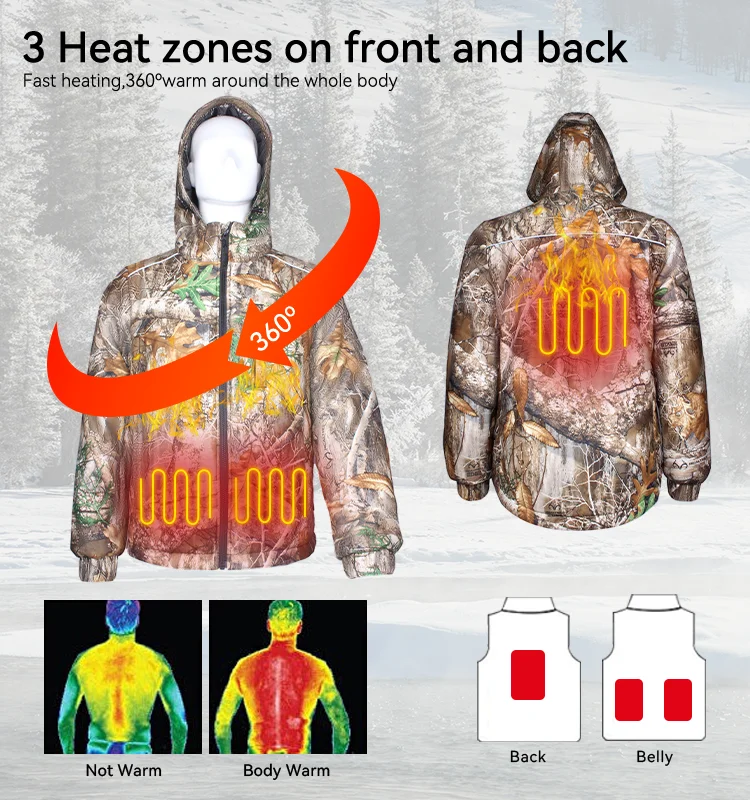
Article 3 defines a portable battery as sealed, five kilograms or less, and designed to be carried by the end user. A heated-jacket pack runs 50 g to 400 g, so mass is never the close call and there is no consumer-electronics exemption to argue.
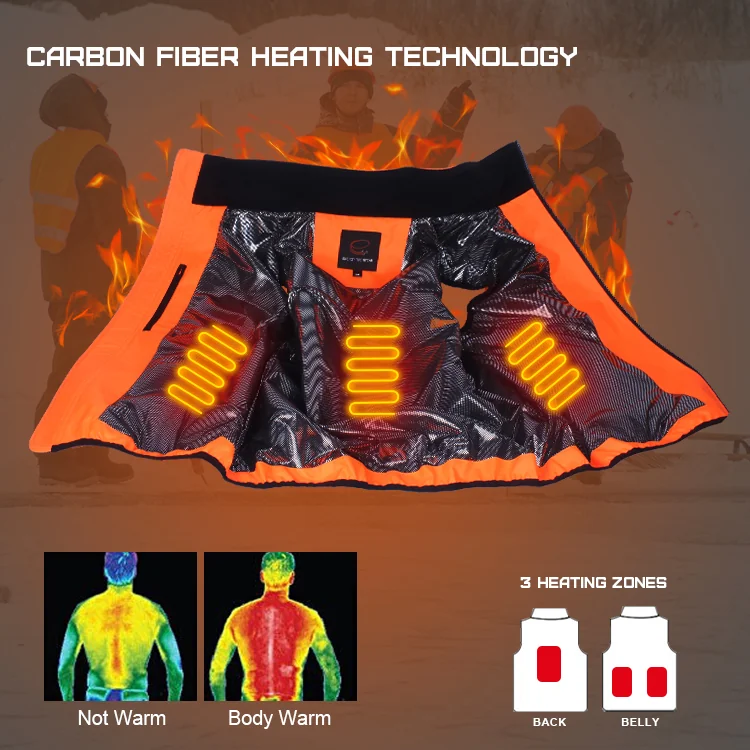
The live decision is the second half of that definition set: batteries incorporated into a device carry the same obligations plus the removability duty arriving in 2027. Clip-in module or laminate-sealed film is a compliance decision, not a factory preference.
| Component | Regulated as | Buyer confirms |
|---|---|---|
| Li-ion pack, 7.4 V / 2,000–6,000 mAh | Portable battery (Art. 3) | Sealed, hand-carried, far under 5 kg |
| Pack hard-wired into a zip pocket | Battery in a device | Art. 11 removability exposure |
| Pack bonded into a vest liner | Portable battery | Mass stated per variant |
| 30 W USB wall charger in the box | EEE under WEEE | WEEE registration at sale |
| Textile controller and harness | Not a battery | No EPR category; keep off filings |
| Spare pack in the retail box | Portable battery on market | Art. 13 label on every pack |
| Replacement cell as an accessory | Portable battery | Only list with an Art. 8 pack |
Cell choice feeds this: 21700 packs run 60–75 day lead times against 45–55 days for 18650. Plan the 5,000-unit lot against whichever cell your compliance file already covers.
2. Article 47: Why Buyers File Nothing
Article 47 due diligence has applied since 18 August 2025, but only to industrial batteries above 2 kWh, EV batteries, and portable batteries above 5 kg. A heated-garment pack is far below that.
Stated plainly: as importer and Amazon EU brand owner you file no Art. 47 statements. A supplier asking you to sign one for a garment pack is working from a recycled template. Reject it and ask for the Art. 8 statement instead.
3. Article 8: The Cascade That Actually Lands on the Brand Owner
Article 8 is the provision that reaches you. When you place a battery on the market, the information your supplier is obliged to hold must come downstream: chemistry, mass, model, conformity route, end-of-life handling. Later obligations add carbon-footprint and recycled-content declarations whose delegated acts are pending.
The buyer-side move is contractual: put a named Art. 8 information schedule into the purchase agreement with a delivery deadline. No schedule, no PO.
| Art. 8 data item | Supplier delivers | Buyer uses it for |
|---|---|---|
| Chemistry, mass, voltage, capacity | Cell datasheet, pack BOM | Listing attribute accuracy |
| Conformity route, test evidence | EU DoC; IEC 62133-2:2017+AMD1:2021 | Amazon product-safety file |
| Transport classification | UN 38.3 summary; UN3481 SoC ≤ 30% | FBA inbound acceptance |
| North America evidence | UL 2054 / UL 1642 reports | Not an EU gate |
| Carbon-footprint declaration | Supplier declaration, act pending | File it; no gate today |
| Recycled-content statement | Supplier statement, act pending | Sign no 2028 guarantee |
| End-of-life handling note | Removal procedure sheet | Art. 11 readiness |
4. Article 11: Removability and the 18 February 2027 Gate
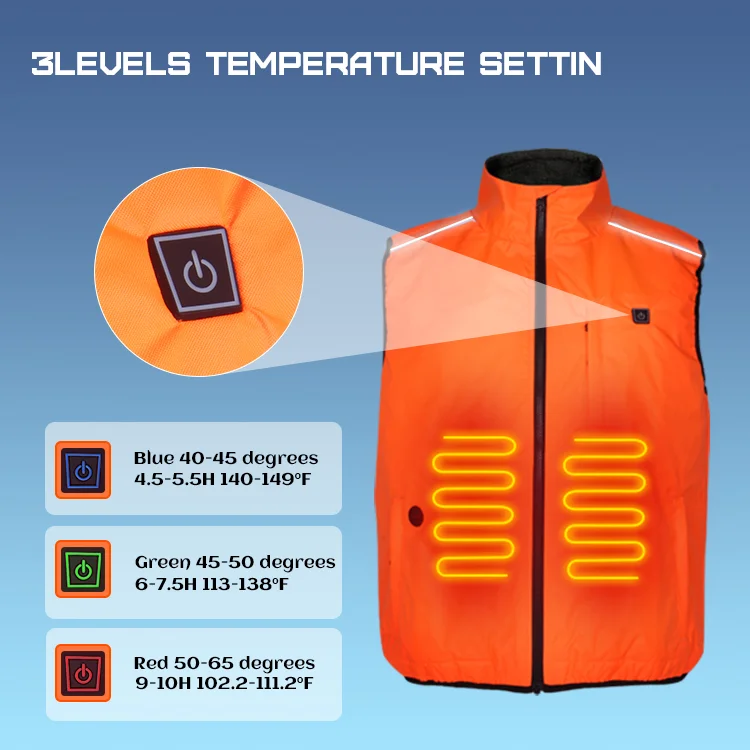
From 18 February 2027, portable batteries in appliances must be removable and replaceable by the end user. That is a hard design gate for heated apparel: a laminate-sealed pack inside a vest liner has to become a module reachable from inside the pocket.
Work it backwards from a 60-day Q4 hero-SKU calendar: a hero launching 90 days before 18 February 2027 cannot be re-tooled in time. Ask in writing whether the pack is removable without cutting, whether a tool is needed, and whether the spare pack can be listed as an accessory.
5. Article 13: Labelling and Packaging You Can Buy Today
Article 13 governs label content and packaging markings. The delegated act fixing the design is pending, so buying to unfixed artwork is how listings get stranded. The stable core today: CE mark, manufacturer identity, nominal voltage, capacity, chemistry, the crossed-out bin and separate-collection marks.
Amazon’s product-safety enforcement is the practical deadline — see our battery regulation tracking for what shifts when.
| Date | Obligation | Buyer action |
|---|---|---|
| 31 Dec 2023 | Portable collection target 45% | Priced into national EPR weights |
| 18 Aug 2025 | Art. 47, batteries over threshold only | Confirm packs under 5 kg; file nothing |
| 18 Feb 2026 | Art. 13 labelling and packaging | Verify date; re-proof artwork |
| 18 Feb 2027 | Art. 11 removability; passport classes | Re-tool hero; no passport needed |
| 31 Dec 2027 | Portable collection target 51% | Re-price EPR fees per market |
| 18 Aug 2028 | Recycled-content minimums | Act pending; sign nothing firm |
| 31 Dec 2030 | Portable collection target 63% | Model into next cost ladder |
6. The Acceptance Binder
Eight documents, in order. A missing item stops the clock, not the call.
| # | Document | Anchor | Reject if |
|---|---|---|---|
| 1 | EU declaration of conformity, pack | Art. 8 chain | No IEC 62133-2:2017+AMD1:2021 report |
| 2 | UN 38.3 test summary | Transport | A “compliant” letter, no summary |
| 3 | Datasheet with finished-pack mass | Art. 3 | Assembled mass missing |
| 4 | Signed Art. 8 information schedule | Art. 8 | Free-text spec sheet substituted |
| 5 | Removability engineering note | Art. 11 | “Pack is glued in” |
| 6 | Print-ready label artwork file | Art. 13 | Chemistry or voltage omitted |
| 7 | Factory QMS certificate | Chain | Expired or wrong site |
| 8 | EPR scope confirmation per market | National EPR | Supplier assumes it’s yours |
7. EPR and Separate Collection in DE, FR, IT and ES
The Regulation sets collection outcomes; producer responsibility runs through separate national schemes. Registration is per market and per category, and Amazon blocks the offer rather than warning you first. Registration in one country does not cover another, and that drift surfaces as supply chain exposure three weeks before launch.
| Market | Battery registration | Charger / WEEE | Approval | Common failure |
|---|---|---|---|---|
| Germany | Stiftung EAR scheme | EAR WEEE | 4–6 weeks | Wrong category filed |
| France | Éco-organisme, battery stream | Éco-organisme, EEE | 5–8 weeks | EEE line omitted for charger |
| Italy | Consortium battery channel | EEE consortium | 6–10 weeks | Quota not in seller name |
| Spain | Registered battery manager | WEEE manager | 5–8 weeks | Per-marketplace gap |
| Netherlands | Government-approved scheme | WEEE registration | 4–6 weeks | Battery and EEE crossed |
| Poland | BDO battery entry | BDO EEE entry | 4–7 weeks | Number not on offer |
| Sweden | Circular producer return | EEE return | 6–9 weeks | Supplier registered the brand |
8. What Compliance Costs Per Unit
Our model reserves $0.83 per unit above factory cost — 2.9% of a $28.40 FOB base, and the number most often argued down by suppliers who never costed the audit trail.
| Line | $/unit | Covers |
|---|---|---|
| OEM programme | $0.42 | Factory QA, audit hours, inspection |
| Engineering | $0.10 | Art. 11 re-tool, label artwork, revision control |
| Battery share | $0.31 | Cells, packs, UN 38.3, IEC 62133-2 |
| Compliance sub-total | $0.83 | Booked against the PO |
| Memo: RMA reserve, 2.8% of FOB | $0.80 | Separate; never folded into $0.83 |
| Memo: Q4 channel reserve | $6.00 | Returns, storage, co-op, stranded, RTV |
| Memo: UN3481 SoC ≤ 30% inbound | $0.00 | Process control, not unit cost |
The $0.31 battery share is the line worth pressing. On a 5,000-unit lot it is $1,550 — enough to fund a second pack revision when Art. 11 forces one, and the reason the reserve stays a named line rather than a percentage in the FOB price.
9. Landed Cost, Cell Choice and the Warranty Reserve
The four-tier ladder is what gets signed, with compliance a separate line so it survives cost review.
| Tier | $/unit | Buys |
|---|---|---|
| FOB factory | $28.40 | Ex-works cost, compliance excluded |
| CIF | $31.13 | Freight and marine insurance |
| DAP | $35.73 | Delivered, EU duty unpaid |
| DDP-FBA | $36.81 | Duty, customs, prep, FBA inbound |
| Plus compliance reserve | $0.83 | Per-unit paper cost |
| Plus RMA reserve, 2.8% of FOB | $0.80 | Warranty and returns cover |
| Fully loaded planning unit | $38.44 | The season planning number |
The 2.8% RMA reserve is argued hardest because it sits outside the $0.83 and the factory conversation. It is not a failure-rate forecast; it funds the pack-swap stream that Art. 11 removability creates once end users swap cells themselves.
10. Deadlines Against a 60-Day Launch
| Day | Action | Gate |
|---|---|---|
| T-60 | Lock hero SKU; request binder | One binder, not two quotes |
| T-52 | Binder review | Missing Art. 8 schedule removes supplier |
| T-45 | Lab evidence, cell lead time | 21700 at 60–75 d decides date |
| T-30 | EPR filings per market | Approval runs 4–10 weeks |
| T-15 | Art. 13 artwork proofed | Print release |
| T-7 | UN3481 SoC ≤ 30% confirmed | FBA receiving window |
| T-0 | 5,000-unit lot received | PO close, reserves booked |
11. Four Supplier Claims to Reject in Writing
- **”You must file Article 47 statements.”** Thresholds are industrial above 2 kWh, EV, and portable above 5 kg. A garment pack is none of them.
- **”Your pack needs a battery passport from 2027.”** Passport classes are LMT, industrial above 2 kWh and EV batteries.
- **”We guarantee your 2028 recycled content.”** The delegated act is pending; nobody guarantees a number that does not exist.
- **”Our CE certificate covers your listing.”** Your declaration of conformity is your legal instrument.
12. Sign-Off Checklist for the Next 5,000-Unit Lot
Eight documents in the binder; EPR live in every market you list; artwork proved against the Art. 13 core set; cell lead time booked; UN3481 SoC at or below 30% on the inbound; $0.83 compliance reserve and the 2.8% RMA reserve on separate lines. On the listing, keep the eight-cluster, 32-keyword structure at 1.4–1.8% density. If that is green, the PO goes out.
Summary
Article 3 puts heated-garment packs inside the EU Battery Regulation as portable batteries. Article 47 does not reach you, and you should reject claims that it does. Article 8 is the duty that lands on the brand owner, Article 11 forces a design change by 18 February 2027, and Article 13 governs labelling and packaging. Amazon EU enforcement and national EPR in DE, FR, IT and ES set the deadlines. Cost it explicitly: $0.83 per unit on a $28.40 FOB base, with the RMA reserve separate.
13. Frequently Asked Questions
1. Does my heated-jacket battery pack need an Article 47 due diligence statement?
No. Article 47 covers industrial batteries above 2 kWh, EV batteries and portable batteries above 5 kg, applying since 18 August 2025. A garment pack is far below it.
2. When do battery passports apply?
From 18 February 2027, for LMT, industrial above 2 kWh and EV batteries. Heated-garment packs are not in them.
3. What is the end-user removability deadline?
18 February 2027. Portable batteries in appliances must be removable and replaceable, so a heat-vest pack cannot stay laminated in the liner.
4. Which tests do we require from a heated-apparel supplier?
UN 38.3 transport test summary and an IEC 62133-2:2017+AMD1:2021 report behind the EU declaration of conformity; UL 2054 or UL 1642 only for North America.
5. Does the charger need its own EPR registration?
Yes. A mains charger is electrical equipment under WEEE, registered separately from the battery.
6. What is the state-of-charge limit for FBA inbound?
UN3481 lithium-ion shipments should enter at or below 30% state of charge — a process control rather than a cost line, but it constrains the shipping window.
7. How much should compliance cost per unit?
Our model is $0.83: $0.42 OEM, $0.10 engineering, $0.31 battery share. Suppliers quoting materially below that never costed the audit trail.
8. Why is the RMA reserve separate from the compliance reserve?
It is 2.8% of FOB, $0.80 on a $28.40 base, funding returns and warranty handling. Folding it into the $0.83 hides both.
9. Can I sign a supplier guarantee on 2028 recycled content?
No. The delegated act setting recycled-content minimums is pending, and 18 August 2028 is only the application date. Take a statement, not a guarantee.
10. Which markets require battery producer registration before I list?
Germany, France, Italy, Spain, the Netherlands, Poland and Sweden run separate schemes with 4–10 week approval, per market and category.
11. How long before a Q4 hero launch do I start?
Sixty days. File EPR at T-30 because approval takes 4–10 weeks, and check cell lead times at T-45: 21700 runs 60–75 days against 18650’s 45–55.
12. What happens if the label artwork is wrong at print release?
The listing is exposed at FBA receiving and marketplace review, and re-proofing a 5,000-unit lot mid-season costs more than a week of review — what the $0.10 line funds.