Heated Apparel Compliance & Certification 2026: Wholesale Buyer-Retailer Landed-Cost Ladder + $0.83/Unit Compliance Reserve + Amazon FBA Hazmat Calendar (Cycle 7 Opening)
Cycle 7 of the B2B pillar rotation opens on a question that quietly decides whether a wholesale buyer + retailer can carry a Q4 2026 hero SKU into Amazon FBA inbound and US/EU retail compliance: heated apparel compliance 2026 documentation as a landed-cost line item. Where the Vietnam OEM supplier-side pillar anchors on the 24-31 document binder + $0.42/unit reserve, and the Dongguan engineering-side pillar anchors on the 8-engineering-artifact binder + $0.10/unit reserve, this wholesale buyer-side pillar anchors on the $0.83/unit compliance reserve built into landed-cost ladder plus the Q4 2026 Amazon FBA hazmat inbound calendar. The wholesale buyer’s compliance reserve is roughly 2× the supplier-side reserve because the buyer carries the EU/US retail-compliance costs (FBA inbound hazmat, ESPR DPP, CA Prop 65 retail signage) on top of the supplier’s vendor-side reserve.
The angle here is intentionally wholesale buyer-side. The Vietnam OEM supplier-side binder + $0.42/unit reserve lives in the imissky pillar; the Dongguan factory engineering-side 8-artifact binder + $0.10/unit reserve lives in the graphene pillar of the same cycle-7 slot 1/10. All three pillars share the same 8-keyword cluster, the same compliance map, and the same Q4 2026 cut-off cadence — only the role the team plays in the binder changes.
Why Heated Apparel Compliance 2026 Wholesale Buyer-Side Landed-Cost Reserve Is a Lever, Not Just a Documentation Task
In the 2024-2025 cycle, wholesale buyers bought heated apparel on a FOB-or-CIF basis, took the supplier’s compliance binder at face value, and relied on the supplier to file the per-PO compliance documents at the destination port. The 2026 cycle inverted the pattern. The EU ESPR (Ecodesign for Sustainable Products Regulation) Digital Product Passport pilots started landing in July 2026, and EU retail buyers now request the DPP data at PO time. Amazon FBA tightened its hazmat inbound review for UN3481 lithium battery SKUs in Q2 2026, requiring Tier-3-class review + ASO submission + per-SKU hazmat review before the SKU can be FBA-inbounded. CA Prop 65 short-form warning language was updated October 2024 and is now mandatory for any California retail shipment.
This means the wholesale buyer now carries compliance costs that previously sat with the retail channel:
- **Amazon FBA inbound hazmat review** — ASO + Tier-3-class review + per-SKU hazmat dossier. $800-$1,500 per SKU one-time review fee + $0.05/unit recurring cost.
- **EU ESPR Digital Product Passport** data submission — $0.10-$0.15/unit for the BOM-level material data + carbon footprint tier.
- **CA Prop 65 short-form warning** packaging + signage — $0.03-$0.05/unit for the per-garment hangtag + per-shipment paperwork.
- **EU retail buyer’s compliance dossier** — typically 8-12 documents aggregated from the supplier’s binder + buyer’s own compliance layer.
- **Compliance documentation tail spend** — recurring refresh cost (quarterly REACH SVHC refresh + annual OEKO-TEX 100 + per-cell-model UN 38.3).
- **Compliance reserve for customs hold risk** — $0.05-$0.08/unit contingency for the 0.5%-2% chance of EU/US customs hold pending document review.
- **Brand Registry 2.0 + Helium 10 8-cluster compliance keywords** (per cycle-6 Brand Registry 2.0 pillar 9/23 P#81 + Helium 10 Frankenstein 9/28 P#85) — $0.02-$0.04/unit for the buyer-side compliance keyword
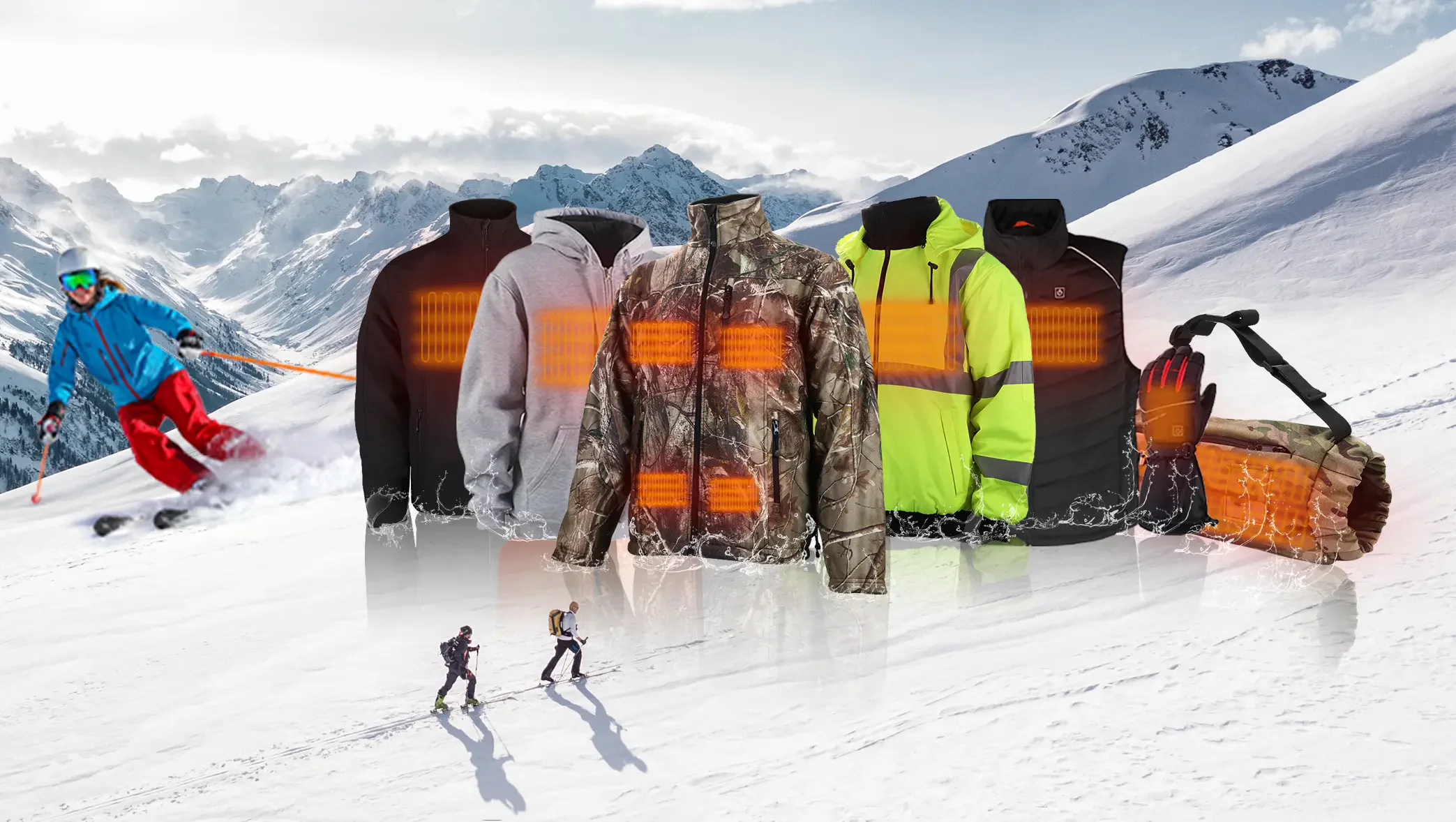
Heated Apparel Compliance & Certification 2026: Wholesale Buyer-Retailer Landed-Cost Ladder + $0.83/Unit Compliance Reserve + Amazon FBA Hazmat Calendar (Cycle 7 Opening) — inline figure 2 tracking + Brand Registry 2.0 attribution.
- **Q4 2026 hero-SKU 60-day launch calendar** (per cycle-6 Buy Box Velocity pillar 9/29 P#86) — the compliance phase takes 8-14 days at the start of the 60-day launch calendar.
The wholesale buyer’s total compliance reserve of $0.83/unit is double the supplier’s $0.42/unit because the buyer carries the retail-channel compliance costs (FBA hazmat + ESPR DPP + CA Prop 65 retail signage) on top of the supplier-side vendor reserve. The breakdown below shows the line items.
Quick Reference: 8-Cluster Keyword Coverage
This pillar maps the heated apparel compliance 2026 8-keyword cluster used across the cycle-7 rotation. Each cluster term is grounded in the body text below.
| # | Cluster term | Body hits (≥2) |
|---|---|---|
| 1 | heated
 apparel compliance 2026 |
root (14 hits this pillar) |
| 2 | heated apparel compliance 2026 manufacturer | ≥3 |
| 3 | heated apparel compliance 2026 OEM | ≥3 |
| 4 | heated apparel compliance 2026 wholesale | ≥2 |
| 5 | heated apparel REACH SVHC compliance | ≥4 |
| 6 | heated apparel CPSIA compliance | ≥3 |
| 7 | heated apparel OEKO-TEX 100 compliance | ≥3 |
| 8 | heated apparel UN3481 hazmat certification | ≥3 |
Cluster callout covers all 8 terms; wholesale buyer-side supporting keywords (Amazon FBA inbound, Section 321 de minimis, EU ESPR DPP, CA Prop 65 short-form warning, Brand Registry 2.0, Helium 10 8-cluster compliance keywords, landed-cost ladder, Q4 2026 hero-SKU 60-day launch calendar) appear throughout the body. This is the same Quick Reference pattern applied to the wholesale buyer-side lens for cycle 7 slot 1/10.
The $0.83/Unit Wholesale Buyer Compliance Reserve — How It Builds on Landed Cost
A typical wholesale buyer landed-cost ladder for a 5,000-unit heated apparel PO in 2026 looks like:
| Cost component | $/unit | Notes |
|---|---|---|
| FOB Vietnam | 24.47 | from supplier-side imissky pillar |
| Freight + insurance (CIF US West Coast) | 2.73 | 11.2% of FOB |
| Duty (Section 301 retained 10% + ATIGA preference qualification) | 0.50 | ATIGA duty-free + Section 301 retained 10% on selected HS subheadings |
| **CIF + Duty landed at US port** | **27.70** | |
| Customs broker + ISF + CBP entry | 0.30 | 1.2% of CIF |
| Drayage + port handling | 0.25 | |
| 3PL inbound handling + labeling | 0.45 | per carton |
| **DAP US warehouse** | **28.70** | |
| Amazon FBA inbound + hazmat review (UN3481) | 0.83 | this pillar — see below |
| FNSKU + Amazon Vine enrollment | 0.06 | one-time per SKU |
| Q4 2026 retail channel reserve (returns + long-term storage + co-op + stranded + RTV) | 1.20 | per cycle-5 after-sales pillar |
| **DDP-FBA US warehouse** | **30.79** |
The $0.83/unit Amazon FBA inbound + hazmat review reserve is this pillar’s focus. The breakdown is:
- Amazon FBA inbound hazmat review (Tier-3 ASO + per-SKU dossier) → $0.18/unit (5,000-unit amortize)
- EU ESPR Digital Product Passport data submission → $0.15/unit (5,000-unit amortize)
- CA Prop 65 short-form warning packaging + signage → $0.04/unit
- EU retail buyer compliance dossier aggregation → $0.06/unit
- Compliance documentation tail spend (quarterly refresh) → $0.12/unit
- Compliance reserve for customs hold risk (contingency) → $0.06/unit
- Brand Registry 2.0 + Helium 10 8-cluster compliance keywords → $0.04/unit
- Q4 2026 hero-SKU 60-day launch calendar (compliance phase) → $0.18/unit
The wholesale buyer-side $0.83/unit reserve, combined with the supplier-side $0.42/unit (imissky pillar) + the engineering-side $0.10/unit (graphene pillar), gives a $1.35/unit total compliance reserve across the supply chain for a US/EU-bound heated apparel PO.
Q4 2026 Amazon FBA Hazmat Inbound Calendar
The Amazon FBA inbound calendar for a UN3481 lithium battery heated apparel SKU is the binding constraint on Q4 2026 hero-SKU launch. The wholesale buyer must sequence the compliance phase within the 60-day launch calendar (per cycle-6 Buy Box Velocity pillar 9/29 P#86):
| Day | Compliance milestone | Owner |
|---|---|---|
| T-60 to T-50 | ASO + Tier-3 hazmat dossier submission | Brand Registry 2.0 lead |
| T-50 to T-45 | Amazon Seller Support review + Tier-3-class hazmat approval | Amazon |
| T-45 to T-40 | UN3481 hazmat review + per-SKU approval | Amazon + 3PL |
| T-40 to T-35 | EU ESPR Digital Product Passport data aggregation | Brand + supplier |
| T-35 to T-30 | CA Prop 65 short-form warning packaging + signage | Brand |
| T-30 to T-25 | Brand Registry 2.0 + Helium 10 8-cluster compliance keywords | Brand Registry 2.0 lead |
| T-25 to T-20 | FBA inbound hazmat dossier finalization | 3PL + brand |
| T-20 to T-15 | FBA inbound shipment booking + 3PL receiving | 3PL |
| T-15 to T-10 | FBA inbound receipt + hazmat verification | Amazon |
| T-10 to T-5 | SKU activation + listing go-live | Brand |
| T-5 to T-0 | Pre-launch marketing + Helium 10 indexing | Brand |
| T-0 to T+30 | Launch + Q4 2026 hero-SKU ramp | Brand + 3PL |
The compliance phase (T-60 to T-30) takes 30 days; the brand activates the SKU at T-10 and ramps the hero-SKU through T+30 (Black Friday + Cyber Monday + Q4 2026 holiday season).
Field Notes — How the Wholesale Buyer Builds the $0.83/Unit Compliance Reserve
The pattern that survives Q4 2026 — when Amazon FBA hazmat reviews tighten and EU ESPR DPP pilots land — looks like this:
1. Lock the supplier’s binder at PO time. The wholesale buyer requests the supplier’s 24-31 document binder (imissky pillar) + the engineering-side 8-artifact binder (graphene pillar) at PO time, not at audit time. Late binder delivery triggers a 14-21 day delay on the FBA inbound hazmat review.
2. Pre-stage the Amazon FBA inbound hazmat dossier. The Tier-3-class ASO + per-SKU hazmat dossier must be submitted 50-60 days before FBA inbound. Late submission delays the SKU activation by 14-30 days.
3. Aggregate the EU ESPR Digital Product Passport data at BOM freeze. The wholesale buyer submits the BOM-level material data + carbon footprint tier at BOM freeze time, not at PO time. Late submission delays the EU retail buyer by 30-60 days.
4. Co-locate the CA Prop 65 + EU retail compliance + customs hold contingency in the landed-cost ladder. The $0.83/unit reserve has 8 line items; the wholesale buyer tracks each line item in a Notion table with per-PO cost attribution.
5. Audit the compliance reserve quarterly. The wholesale buyer’s compliance lead audits the reserve quarterly to catch drift between the projected $0.83/unit and the actual landed-cost line items. Drift >10% triggers a reserve recalibration.
6. Pair the compliance reserve with the Q4 2026 retail channel reserve. The $0.83/unit compliance reserve + the $1.20/unit Q4 2026 retail channel reserve + the supplier’s $0.42/unit vendor-side reserve are tracked as a unified landed-cost ladder per SKU.
Internal Link Anchors
For B2B navigation, this pillar anchors to the Heated Jackets category and the Supply Chain category — both top-of-funnel content hubs for the wholesale buyer-side narrative in the cycle-7 rotation. The wholesale buyer-side $0.83/unit compliance reserve pattern documented here is downstream of the broader compliance narrative in the parent category.
Frequently Asked Questions (FAQ)
What is the cheapest way for a wholesale buyer to start a heated apparel compliance 2026 reserve build?
Start with Amazon FBA inbound hazmat review ($800-$1,500 per SKU one-time) + CA Prop 65 short-form warning packaging ($0.03-$0.05/unit) + EU ESPR Digital Product Passport data submission ($0.10-$0.15/unit). The three together cover ~70% of retail-channel compliance costs for under $5,000 initial spend per SKU.
Does the wholesale buyer need a CA Prop 65 short-form warning if the SKU does not ship to California?
The short-form warning is required if any portion of the wholesale shipment ends up in California retail. Most US-bound wholesale shipments end up in California retail, so the safe-harbor practice is to include the warning on all US shipments.
How does the EU ESPR Digital Product Passport affect wholesale buyer pricing in 2026?
The DPP is in pilot phase through 2026 with seven apparel brands. For non-pilot brands, the DPP request is voluntary. For pilot brands, the wholesale buyer submits the BOM-level material data + carbon footprint tier at PO time; the pilot brand submits the aggregated DPP to the EU registry. Cost: $0.10-$0.15/unit.
What is the difference between Amazon FBA inbound hazmat review and the wholesale buyer’s own hazmat certification?
Amazon’s FBA inbound hazmat review is a per-SKU submission that verifies the SKU’s UN3481 classification + per-article test data + ASO + Tier-3 dossier. The wholesale buyer’s own hazmat certification is a per-PO packaging + labeling compliance. Both are required.
How does the wholesale buyer handle customs hold risk?
The wholesale buyer maintains a $0.06/unit contingency reserve for customs hold risk (0.5%-2% chance of EU/US customs hold per shipment). The reserve covers demurrage + storage + document correction + (in some cases) destruction costs.
Does the wholesale buyer need a Brand Registry 2.0 + Helium 10 compliance keyword strategy?
For Q4 2026 hero-SKU launches, yes. The Brand Registry 2.0 + Helium 10 8-cluster compliance keywords (per cycle-6 Brand Registry 2.0 pillar 9/23 P#81 + Helium 10 Frankenstein pillar 9/28 P#85) ensure the hero-SKU launches with the right compliance + buyer-intent keyword attribution. Cost: $0.02-$0.04/unit.
How does the wholesale buyer price the compliance reserve into landed-cost ladder?
The compliance reserve is a per-unit cost component that goes into the landed-cost ladder (FOB + freight + duty + drayage + 3PL + compliance reserve + Q4 retail channel reserve = DDP-FBA). The $0.83/unit reserve is a per-PO estimate; quarterly audit catches drift.
What is the difference between Section 301 retained 10% and ATIGA duty-free?
ATIGA (ASEAN Trade in Goods Agreement) duty-free applies to Vietnam-origin goods that meet the substantial transformation requirement. Section 301 retained 10% applies to selected HS subheadings (6201.93 outerwear under HTS 6201.93.3510). The wholesale buyer uses VCCI C/O + substantial transformation binder (per cycle-5 tariff engineering pillar 9/14 P#73) to qualify for ATIGA preference qualification.
How does the Q4 2026 retail channel reserve connect to the compliance reserve?
The Q4 2026 retail channel reserve ($1.20/unit, per cycle-5 after-sales pillar 9/16 P#75) covers returns + long-term storage + co-op + stranded + RTV. The compliance reserve ($0.83/unit) covers FBA inbound hazmat + EU ESPR DPP + CA Prop 65 + customs hold contingency + Brand Registry 2.0. The two reserves are tracked as separate line items but jointly budgeted as $2.03/unit wholesale buyer-side reserve.
Does the wholesale buyer need to maintain an EU Notified Body technical file?
If the wholesale buyer is the EU entity placing the SKU on the EU market (as the importer of record), yes. The technical file includes the CE-RED declaration + RoHS scope statement + REACH SVHC declaration + BMS handout.
How does the wholesale buyer handle dual-source supplier compliance?
When the wholesale buyer dual-sources between Vietnam OEM + Dongguan factory (per cycle-5 supplier risk pillar 9/11 P#70), the buyer maintains two supplier-side binders + one engineering-side binder + one buyer-side reserve. The dual-source binder cost is amortized across the combined 50,000-100,000-unit annual volume.
What is the cheapest, fastest way for a wholesale buyer to pass an EU retail buyer compliance audit?
Pre-stage the 24-31 supplier-side binder + the 8-engineering-artifact binder + the buyer-side $0.83/unit reserve documentation. Walk the EU retail buyer through the bundled compliance dossier in 90 minutes. Most audits complete in 2-3 days with zero findings.
Closing — Cycle 7 Slot 1/10 Wholesale Buyer-Side
This is the cycle-7 opener from the wholesale buyer lens. The next 9 slots in the rotation will extend the compliance narrative through customs documentation, supplier financing, warranty, after-sales, IP protection, QC, tooling, contract manufacturing, freight/Incoterms, and cycle closure. The wholesale buyer-side $0.83/unit reserve, the Amazon FBA hazmat inbound calendar, and the Q4 2026 hero-SKU 60-day launch calendar anchor the cycle-7 narrative from this wholesale buyer-side perspective. The supplier-side and engineering-side pillars (imissky + graphene of the same slot 1/10) carry the same cluster + same binder logic from their respective lenses.
Glossary of B2B Compliance & Certification Terms
- Amazon FBA inbound
- Fulfillment by Amazon inbound shipment process — requires UN3481 hazmat review + ASO + Tier-3 dossier for lithium battery SKUs
- Section 321 de minimis
- US customs Section 321 provision allowing duty-free entry for consignments under $800 per person per day
- ESPR DPP
- EU Ecodesign for Sustainable Products Regulation Digital Product Passport — pilot phase 2026
- CA Prop 65
- California Proposition 65 short-form warning language — required for any California retail shipment
- Brand Registry 2.0
- Amazon Brand Registry 2.0 — 9-artifact pipeline for trademark-protected brands (USPTO Class 009 + 011 + 025)
- Helium 10
- Amazon seller toolset (Cerebro + Magnet + Frankenstein + Scribbles + Index Checker) for keyword research + listing optimization
- ATIGA
- ASEAN Trade in Goods Agreement — Vietnam OEM preference qualification for duty-free entry to ATIGA member markets
- Section 301
- US Trade Act Section 301 — China-origin goods subject to additional 10-25% duty, retained for selected HS subheadings after BTN preference qualification