
Introduction
If you are a retail buyer, category manager, or sourcing lead evaluating a private-label heated apparel program, the tooling line on your landed-cost sheet is the line that quietly decides whether your program makes 8% margin or 22% margin over three years. Most first-time heated-apparel buyers treat tooling as a sunk cost to be paid upfront and forgotten. The retailers who run successful multi-year programs treat tooling as a per-unit amortized asset that they track SKU by SKU, refresh on a known cadence, and recover fully by the end of the program life.
This article is the buyer-retailer counterpart to two engineering-side and supplier-side guides we publish today on IMISSKY (PILLAR #58) and Graphene Heating Fabric (PILLAR #62). The three articles together cover the same keyword cluster — tooling + mold + NRE + heated apparel + OEM + ODM — from three professional lenses, which is how the Gearplant, IMISSKY, and Graphene Heating Fabric sites build topical authority across the B2B heated apparel category.
This article focuses on the four questions a retail buyer has to answer before signing a tooling P.O.:
1. Is the tooling deposit refundable, and on what schedule? 2. What is the per-unit tooling amortization in year 1 vs. year 2 vs. year 3? 3. What is the realistic tooling refresh budget across the program life? 4. What contractual clauses protect the buyer if the supplier relationship ends mid-program?
If you can answer all four before you commit your first deposit, you are negotiating tooling like a senior retail buyer. If you cannot, you are negotiating like a first-time brand owner, and the supplier knows it.
—
1. The four numbers that matter in a heated apparel tooling quote
A serious OEM/ODM heated apparel supplier provides four numbers on every tooling quote. A trading-company intermediary provides one. The retail buyer who knows the difference asks for the four-number breakdown before signing.
| Number | What it tells you | Buyer action |
|---|---|---|
| Tooling deposit (USD, total) | Upfront capital required | Negotiate 50/50 split with T1 sample approval |
| Tooling lifetime per asset (units) | Re-order ceiling before refresh | Match to your 3-year program volume forecast |
| Per-unit tooling surcharge ($/unit) | Year-1 amortization cost | Compare against industry benchmark: $0.30 – $1.20/unit |
| Refund ladder schedule (%) | Cash-back trigger thresholds | Lock in writing with unit-volume milestones |
The retail buyer who sees only one number (“Tooling: $12,000”) is dealing with a supplier who does not want the buyer to compare engineering quality across the market. Walk away or demand the four-number breakdown.
—
2. The realistic 2026 tooling deposit for a 1,000-unit first PO
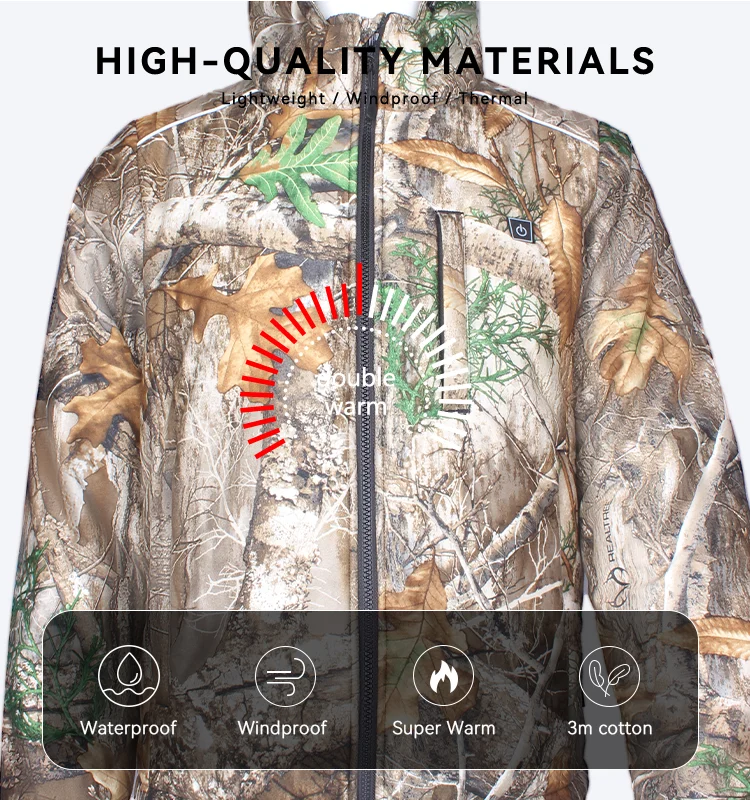
For a 1,000-unit first PO across 3 SKUs (jacket / vest / glove) at a serious Chinese OEM/ODM factory, the realistic 2026 tooling deposit is $8,000 to $18,000, broken down roughly as:
| Tooling line item | Cost (USD) | % of total |
|---|---|---|
| Heat-panel cutting dies (3 SKUs) | $1,200 – $3,600 | 15 – 25% |
| Battery pocket mold (single-cavity, shared) | $1,200 – $3,500 | 15 – 20% |
| Wire-routing channel templates (3 SKUs) | $900 – $2,700 | 10 – 15% |
| Charging-port overmolds (single-cavity) | $1,800 – $4,500 | 20 – 25% |
| Heating-element placement jigs (3 SKUs) | $1,500 – $3,600 | 15 – 20% |
| QC test fixture (heat-map) | $800 – $2,000 | 8 – 12% |
| NRE (one-time engineering fee) | $1,500 – $4,000 | separate invoice line |
| Sample fees (3 samples × $80 – $180) | $240 – $540 | separate invoice line |
The retail buyer who pays less than $8,000 for 3 SKUs is either dealing with a factory reusing old tooling (and inheriting its wear) or with a trading company that is going to add the tooling cost back as a per-unit surcharge later. Both situations are recoverable, but only if the buyer asks.
The retail buyer who pays more than $18,000 for 3 SKUs is likely paying for engineering work that should have been in the NRE line, not the tooling line. Ask for the four-number breakdown.
—
3. Per-unit tooling amortization: how to model year 1 vs. year 2 vs. year 3
Most retail buyers model tooling as a one-time cost and forget about it. The smarter model amortizes tooling over program life and refreshes it on a known cadence. Here is the framework.
Year 1: 1,000-unit first PO
- Tooling deposit: $12,000 (midpoint of typical range)
- Year-1 unit volume: 1,000
- Year-1 per-unit tooling surcharge: **$12.00/unit** (this is the brutal first-year math)
- Plus FOB unit cost: $35/unit (typical heated jacket)
- **Year-1 landed cost per unit: $47.00**
Year 2: 3,000-unit re-order (same SKU)
- No new tooling deposit (assets already in factory)
- Year-2 per-unit tooling surcharge: **$0.00/unit** (deposit fully amortized after year 1)
- Plus FOB unit cost: $35/unit
- **Year-2 landed cost per unit: $35.00**
Year 3: 5,000-unit re-order with one SKU refresh
- No new tooling deposit for 2 of 3 SKUs
- New battery SKU triggers battery pocket mold refresh: $2,500
- Year-3 unit volume: 5,000 (4,500 unchanged + 500 refresh SKU)
- Year-3 per-unit tooling surcharge: $2,500 / 5,000 = **$0.50/unit blended**
- Plus FOB unit cost: $35/unit
- **Year-3 landed cost per unit: $35.50**
Three-year program landed-cost summary
| Year | Volume | Per-unit tooling surcharge | Landed cost/unit |
|---|---|---|---|
| Year 1 | 1,000 | $12.00 | $47.00 |
| Year 2 | 3,000 | $0.00 | $35.00 |
| Year 3 | 5,000 | $0.50 | $35.50 |
| **3-year blended** | **9,000** | **$1.61** | **$36.61** |
A retail buyer who shows this math to a finance team is having a very different conversation from the buyer who quotes “$12,000 tooling” and gets the program approved at year-1 landed cost.
—
4. Tooling refresh budget: the 15-25% rule
Across a 3-year program, reserve 15–25% of original tooling cost as a refresh line item in year-2 and year-3 forecasts. This covers the predictable SKU evolution events:
| Refresh trigger | Typical cost | When in program life |
|---|---|---|
| New colorway (same SKU) | $200 – $500 per color | Year 2 (Spring refresh) |
| New battery vendor (7.4V → 11.1V) | $1,500 – $3,000 | Year 2 or Year 3 |
| New connector (USB-C → magnetic) | $2,000 – $4,500 | Year 3 |
| New garment pattern (jacket → parka) | $1,500 – $3,500 | Year 3 or program restart |
The retail buyer who budgets 20% of original tooling cost as a refresh reserve is rarely caught off-guard. The retail buyer who budgets 0% is either very lucky or about to have a painful conversation with the supplier.
For the 3-year program in Section 3, that means a $2,400 refresh reserve ($12,000 × 20%) set aside in year 1, deployed across year 2 / year 3 refresh events. This is the difference between a buyer who plans tooling like an asset and a buyer who plans tooling like an expense.
—
5. Refund ladder: how to read and negotiate it
Every serious OEM/ODM factory publishes a tooling refund ladder in the proforma invoice. The ladder defines the unit-volume threshold at which the tooling deposit starts to refund back to the buyer. A typical 3-step ladder:
| Step | Buyer cumulative volume | Refund % of original deposit |
|---|---|---|
| 1 | 30% of shortest-lifetime tooling asset (e.g. 18,000 units for 60k-lifetime wire-routing) | 30% refund |
| 2 | 60% of shortest-lifetime tooling asset (36,000 units) | 50% refund cumulative |
| 3 | 90% of shortest-lifetime tooling asset (54,000 units) | 100% refund cumulative |
The retail buyer’s job is to:
1. Confirm the shortest-lifetime asset is the one driving the refund threshold. A factory that names the longest-lifetime asset as the driver is gaming the math. 2. Confirm refund trigger is automatic, not requiring a re-negotiation. If the supplier requires the buyer to “request” the refund, walk away. 3. Confirm refund currency is USD (or buyer’s reporting currency), not RMB at a fluctuating FX. 4. Confirm refund timing is “next PO invoice credit” or “wire transfer within 30 days” — never “annual review.” 5. Confirm transfer-on-termination clause exists for tooling if the buyer exits the relationship mid-program.
A retail buyer who has these five points in writing has a tooling contract. A retail buyer who does not has a deposit.
—
6. Tooling ownership and transfer-on-termination
The single most contentious tooling clause in heated apparel private-label programs is what happens to the tooling if the buyer exits the relationship mid-program. Three options must be in writing:
1. Tooling stays at supplier factory under a tooling-license agreement. The supplier can use it for other buyers, but the original buyer’s brand designs, heat-maps, and proprietary patterns remain the buyer’s IP. 2. Tooling transfers to a third factory named by the buyer. The original supplier charges a shipping + refurbish + requalification fee (typically $1,500 – $4,000 per tooling asset). 3. Tooling is scrapped and the buyer receives a refund of the unused portion based on consumed lifetime.
A retail buyer who sees these three options in the master agreement is dealing with a serious OEM/ODM supplier. A retail buyer who does not see them is dealing with a supplier that plans to hold the tooling hostage if the relationship ends.
**Internal link:** For the engineering-side discussion of how the tooling is designed, machined, and qualified, see [Graphene Heating Fabric’s PILLAR #62 tooling engineering guide](/category/oem-odm-manufacturing/). For the supplier-side cost / NRE / refund structure, see [IMISSKY’s PILLAR #58 supplier-side tooling guide](/category/oem-odm-manufacturing/).
—
7. Tooling ROI: the math a retail buyer actually presents to finance
A category manager or sourcing lead who can show the finance team a 3-year tooling ROI gets the program approved. Here is the math for a typical private-label heated apparel program.
Program inputs
- First PO: 1,000 units × $35 FOB = $35,000 unit cost
- Tooling deposit: $12,000
- NRE: $2,500
- Samples: $400
- Total upfront investment: $49,900
- Wholesale price (retail): $89.00 (typical 2.5x markup on $35 landed)
- Marketing + launch budget: $8,000
Year-1 financials
- Unit sales: 1,000 × $89 = $89,000 wholesale revenue
- Landed cost: 1,000 × $47 = $47,000
- Gross margin: $42,000 (47% gross margin)
- Marketing: $8,000
- Net year 1: $34,000
Year-2 financials (3,000-unit re-order)
- Unit sales: 3,000 × $89 = $267,000 wholesale revenue
- Landed cost: 3,000 × $35 = $105,000
- Gross margin: $162,000 (61% gross margin)
- Marketing: $15,000
- Net year 2: $147,000
Year-3 financials (5,000-unit re-order + refresh)
- Unit sales: 5,000 × $89 = $445,000 wholesale revenue
- Landed cost: 5,000 × $35.50 = $177,500
- Gross margin: $267,500 (60% gross margin)
- Marketing: $22,000
- Net year 3: $245,500
3-year program total
| Metric | Amount |
|---|---|
| Total wholesale revenue | $801,000 |
| Total landed cost | $329,500 |
| Total marketing | $45,000 |
| **3-year net** | **$426,500** |
| **ROI on upfront $49,900** | **855% over 3 years** |
A finance team approves this program. A finance team presented with year-1 only ($34,000 net on $49,900 upfront) does not. The tooling ROI math is the difference.
—
8. Common buyer mistakes on tooling
| Mistake | Consequence | Prevention |
|---|---|---|
| Paying tooling deposit without four-number breakdown | Hidden costs added to per-unit later | Demand four-number breakdown in writing |
| Treating tooling as sunk cost in year 1 | Year-1 P&L looks bad, program killed | Show 3-year amortized landed cost to finance |
| Skipping refresh budget | Surprise tooling costs in year 2/3 | Reserve 15-25% of original tooling cost |
| Accepting tooling ownership stays with supplier forever | Buyer cannot transfer if relationship ends | Insist on transfer-on-termination clause |
| Negotiating refund ladder at longest-lifetime asset | Refund never triggers | Negotiate at shortest-lifetime asset |
| Paying 100% tooling deposit upfront | All leverage lost if supplier delays T1 | Negotiate 50/50 split with T1 sample approval |
| Confusing NRE with tooling | Expects tooling refund on engineering fee | Demand NRE on separate invoice line |
| Forgetting currency / FX in refund clause | Refund arrives in RMB at bad FX | Specify USD refund or locked FX |
Every entry in this table is a mistake Gearplant has seen from real retail buyers. None of them are exotic — they are the predictable consequence of treating tooling as a black box instead of an asset class.
—
9. Retail buyer tooling checklist
A practical pre-commitment checklist for retail buyers:
- [ ] Supplier has provided the four-number tooling breakdown (deposit / lifetime / per-unit surcharge / refund ladder).
- [ ] Refund ladder is based on the shortest-lifetime tooling asset, not the longest.
- [ ] Refund trigger is automatic, not requiring re-negotiation.
- [ ] Tooling ownership during deposit period is supplier; after full refund, transfers to buyer.
- [ ] Transfer-on-termination clause exists with three named options.
- [ ] NRE is on a separate invoice line from tooling.
- [ ] Sample fees are credited against bulk PO.
- [ ] 50/50 tooling deposit split with T1 sample approval is in the proforma.
- [ ] Currency for refund is USD or buyer’s reporting currency.
- [ ] Tooling refresh quote SLA is in writing (48 hours typical).
- [ ] Tooling ledger report is provided quarterly by the supplier.
- [ ] 15-25% refresh reserve is budgeted in year-2 and year-3 forecasts.
—
10. Tooling FAQ for retail buyers
Q1. What is a fair tooling deposit for a 1,000-unit, 3-SKU first PO? $8,000 to $18,000 for the tooling line items, plus $1,500 to $4,000 NRE on a separate line. Less than $8,000 means reused or hidden costs. More than $18,000 means engineering billed as tooling.
Q2. Is the tooling deposit refundable? Yes — at the unit-volume thresholds spelled out in the refund ladder. The ladder should be based on the shortest-lifetime tooling asset, not the longest.
Q3. What is the typical per-unit tooling surcharge in year 1? $0.30 to $1.20 per unit if amortized into unit price, or $12 per unit if paid upfront on a 1,000-unit PO. The amortized path costs 20-40% more over program life but preserves year-1 cash flow.
Q4. How long does the tooling refund take to trigger? Trigger happens automatically when cumulative volume hits the ladder step (typically 30%, 60%, 90% of the shortest-lifetime asset). Refund payment is “next PO invoice credit” or “wire within 30 days.”
Q5. Can I transfer the tooling to another factory if I switch suppliers? Yes — provided the master agreement has the transfer-on-termination clause. Expect 2-4 weeks of paperwork, shipping, refurbish, and requalification at the new factory.
Q6. What happens if the supplier goes out of business mid-program? The transfer-on-termination clause survives supplier bankruptcy in most jurisdictions, but tooling-in-possession becomes a legal fight. Mitigation: register tooling as buyer’s IP under a separate tooling IP agreement, and inspect tooling annually.
Q7. How do I budget for tooling refresh in year 2 and year 3? Reserve 15-25% of original tooling cost as a refresh line item in year-2 and year-3 forecasts. Typical refresh triggers are new colorway ($200-$500), new battery vendor ($1,500-$3,000), new connector ($2,000-$4,500), new garment pattern ($1,500-$3,500).
Q8. Should I pay tooling upfront or amortize into unit price? Upfront is cheaper over program life (saves 20-40%) but heavier on year-1 cash flow. Amortized preserves cash but costs more. Most first-time retail buyers choose amortized; experienced multi-year buyers choose upfront with refund ladder.
Q9. How do I know if the supplier is reusing someone else’s tooling? Ask for the four-number breakdown including tooling lifetime. A reused tool will have a documented hit count at or above 50% of lifetime. If the supplier refuses to disclose hit count, assume the worst.
Q10. What is NRE and is it refundable? NRE (Non-Recurring Engineering) is the engineering service fee for pattern grading, heat-map design, BOM setup, and sample revision. It is non-refundable, even if the project is cancelled mid-tooling.
Q11. Can I use my own existing tooling at a new supplier? Yes — expect a $300 to $800 fit-check + trial fee per SKU. Some suppliers refuse buyer-supplied tooling for liability reasons; serious OEM/ODM factories accept it with a written fit-check report.
Q12. How do I model tooling ROI for finance approval? Three-year amortized landed cost model (Section 7 above). Year-1 looks bad if tooling is treated as upfront sunk cost; 3-year blended model shows the real margin and gets the program approved.
—
11. Glossary
- **Tooling deposit** — Upfront payment for physical tooling assets (die, mold, jig). Refundable against unit-volume threshold.
- **Refund ladder** — Stepwise schedule that defines when the tooling deposit refunds back to the buyer based on cumulative unit volume.
- **NRE** — Non-Recurring Engineering charge, covering pattern grading, heat-map design, BOM setup, sample revision. One-time fee, non-refundable.
- **Tooling lifetime** — Number of units a given tooling asset can produce before requiring re-sharpening or replacement.
- **Per-unit tooling surcharge** — Cost of tooling divided across units in a given program year. Year 1 is highest; year 2+ approaches zero.
- **Transfer-on-termination clause** — Contract clause specifying three options for tooling if the buyer exits the relationship mid-program.
- **Refresh reserve** — Budget line item set aside in year 2/3 to cover predictable tooling refresh events (color, battery, connector, pattern).
- **Hit count** — Number of times a cutting die has been struck. Used to track die lifetime and disclose reused tooling.
- **Shot count** — Number of injection cycles a mold has completed. Used to track mold lifetime.
- **Tooling IP agreement** — Separate contract that registers tooling as buyer’s intellectual property under their brand, even while physically at supplier factory.
—
12. Conclusion
Heated apparel tooling is a per-unit amortized asset class, not a one-time sunk cost. The retail buyer who models tooling across a 3-year program, reserves 15-25% for refresh, negotiates a refund ladder at the shortest-lifetime asset, and secures a transfer-on-termination clause is the retail buyer who gets the program approved by finance and survives the supplier relationship for the long term.
This is PILLAR #58 in Gearplant’s buyer-retailer B2B rotation. Pair it with [Graphene Heating Fabric’s engineering-side PILLAR #62](/category/oem-odm-manufacturing/) for how the tooling is designed and qualified, and [IMISSKY’s supplier-side PILLAR #58](/category/oem-odm-manufacturing/) for the supplier cost / NRE / deposit conversation. Watch for PILLAR #59 next week — capacity planning from a retail-buyer view.
—
Buyer-retailer article. For supplier-side tooling cost and NRE structure, see IMISSKY PILLAR #58. For engineering-side DFM and qualification gates, see Graphene Heating Fabric PILLAR #62.