Heated Apparel Sustainability 2026: B2B Buyer & Distributor Sourcing Guide for Sustainable Garments
Sustainability has shifted from a brand-side talking point to a buyer-side qualification gate. Roughly 68% of European and 54% of North American heated apparel buyers now require documented ESG evidence before issuing a PO in 2026, and the gap between greenwashed marketing and verifiable chain-of-custody is the largest reputational risk in the category. For any heated apparel sustainability buyer, the work begins before the showroom: scoring factories on GOTS, Bluesign, and GRS, pressure-testing carbon claims, and stress-testing distributor positioning. This guide walks B2B buyers through the verification stack, scorecard architecture, and conversation map that define a defensible heated apparel sustainability 2026 sourcing strategy.
Comparing heated apparel sustainability claims across suppliers? Our B2B buyer platform scores 60+ factories on verified GOTS, Bluesign, GRS certifications — request a free sustainability scorecard for your shortlist.
Why Sustainability Now Drives Heated Apparel Buyer Decisions
Three forces have made sustainability a buyer-side priority. The EU Corporate Sustainability Reporting Directive (CSRD) is now in full effect for 2026 fiscal years, requiring any distributor or brand selling into the EU to disclose Scope 3 emissions tied to product manufacturing — directly implicating heated apparel supplier selection. End-consumer willingness-to-pay premiums for verified sustainable apparel have climbed to 23% in Germany and 17% in the US, making sustainable assortments more profitable at retail. Lithium-battery and carbon-fiber supply chains have attracted activist-investor scrutiny, pushing public buyers to require verifiable ESG documentation even from private-label vendors.
For the heated apparel sustainability buyer, the conversation has moved from “is the supplier willing to discuss sustainability” to “can the supplier produce audited documentation on demand.” A heated apparel sustainability B2B buyer without an evidence checklist is exposed to greenwashing accusations that propagate faster than any product recall.
The Sustainability Claims Buyers Must Verify
| Claim | Verification Method | Red Flag |
|---|---|---|
| “100% organic cotton shell” | GOTS transaction certificate, scope certificate # | No TC number on invoice |
| “Recycled polyester fill” | GRS certificate + chain-of-custody audit | “Recycled” without percentage |
| “Carbon-neutral shipping” | Scope 1+3 audit, offset registry ID | Vague “offset through projects” language |
| “OEKO-TEX certified” | OEKO-TEX label # + product class | Label number missing from hangtag |
| “Bluesign approved” | Bluesign system partner ID + scope | Single component approval claimed as full-garment |
| “Biodegradable” | Third-party lab test per ISO 17556 | No test method cited |
| “Ethical factory” | SMETA or BSCI audit report dated <12 months | Audit older than 18 months |
A disciplined heated apparel sustainability buyer treats every supplier-side claim as a hypothesis until the document is in hand. The verification ladder above is the minimum evidence stack a 2026 sourcing team should require before issuing a deposit PO.
Need wholesale sustainable heated apparel with verifiable ESG documentation? Our distributor network vets every factory against 12 sustainability criteria before listing — buyer-side due diligence made easy.
GOTS, Bluesign, GRS Certification Comparison
| Certification | Scope | Chain-of-Custody | Buyer Benefit |
|---|---|---|---|
| GOTS (Global Organic Textile Standard) | Organic fiber content ≥70%, environmental & social criteria | Full TC-to-garment traceability | Premium retail positioning, EU retailer compliance |
| Bluesign | Chemical input, water, energy at mill level | Mill-scope, partial product coverage | Demonstrates chemical safety baseline |
| GRS (Global Recycled Standard) | Recycled content ≥20%, social & environmental | Full chain-of-custody | Recycled-content claims defensibility |
| OEKO-TEX Standard 100 | Final-product substance testing | Per-lot testing | Consumer-facing safety label |
| Fair Trade Certified | Cotton fiber, sewing wages | Fiber-to-sewing audit | Worker-welfare positioning |
| BCI (Better Cotton) | Cotton sourcing | Mass-balance chain | Entry-level sustainable cotton claim |
| Cradle to Cradle Gold | Material health, circularity, social fairness | Product-level | Highest tier for premium programs |
For a heated apparel sustainability OEM partner, GOTS is the single most defensible certification because it covers fiber, processing, and social criteria in a single audit envelope. Bluesign is the recommended complement for any factory working with technical membranes or waterproof coatings, and GRS fits recycled polyester fill programs.
ESG Scorecards for B2B Buyer Evaluations
| Criterion | Weight | Evidence Required |
|---|---|---|
| Carbon disclosure (Scope 1+2+3) | 20% | CDP or SBTi-aligned report |
| Water management | 12% | ZDHC or Bluesign effluent data |
| Chemical management | 15% | MRSL compliance, OEKO-TEX, Bluesign |
| Worker safety | 15% | SMETA/BSCI audit <12 months |
| Living wage progress | 10% | Wage ladder vs Anker benchmark |
| Recycled / organic fiber share | 10% | GOTS/GRS transaction certificates |
| Packaging & last-mile | 8% | FSC packaging, EV logistics data |
| Governance & transparency | 10% | Public sustainability report, supplier code |
A heated apparel sustainability buyer scoring a 2026 supplier pool should weight carbon disclosure and chemical management most heavily, because these domains carry the largest retail-buyer audit frequency. A supplier with a current GOTS scope certificate and a CDP A- score will outscore an uncertified competitor on most B2B procurement rubrics even at a 6-8% cost premium.
Greenwashing Detection in Heated Apparel Marketing
| Claim Type | Example | Verification Step |
|---|---|---|
| Vague environmentalism | “Eco-friendly heated jacket” | Reject without specific metric |
| Carbon claim without scope | “Carbon neutral” | Request PAS 2060 or ISO 14068 evidence |
| Recycled without percentage | “Made with recycled materials” | Demand GRS TC with % content |
| Organic without certification | “Organic cotton liner” | Require GOTS scope certificate |
| Future-only commitments | “Net-zero by 2040” | Request interim SBTi milestone data |
| Comparative superlatives | “Most sustainable heated glove” | Treat as unsubstantiated marketing |
| Imagery-driven claims | Photos of nature on packaging | Demand third-party audit instead |
The single highest-leverage move a heated apparel sustainability buyer can make in 2026 is to add a greenwashing clause to every supplier contract that voids the agreement if claims cannot be documented within 30 days of audit. This clause alone eliminates roughly 70% of unverifiable marketing language before it reaches the consumer.
End-Consumer Demand Signals
| Region | % Willing to Pay Premium | Age Group Leading | Average Premium Tolerance |
|---|---|---|---|
| Germany | 23% | 35-54 | +18% price |
| UK | 19% | 25-44 | +14% price |
| US | 17% | 25-44 | +12% price |
| Japan | 15% | 30-49 | +10% price |
| Canada | 16% | 25-44 | +11% price |
| Australia | 14% | 25-44 | +10% price |
| Nordics | 28% | 25-54 | +20% price |
Demand signals translate directly into margin room. A heated apparel sustainability buyer sourcing for the Nordic market can support a +20% retail premium on a Bluesign-certified jacket, whereas a US buyer targeting the value channel should weight GOTS certification more lightly and lead with OEKO-TEX + recycled-content messaging.
Carbon Label & Eco-Label Strategy
| Label | Scope | Consumer Recognition | Best Use Case |
|---|---|---|---|
| Carbon Trust label | Product carbon footprint per PAS 2050 | High in UK | Premium EU/UK programs |
| Climate Neutral Certified | Offset + reduce verified annually | Moderate US | Entry-tier carbon claim |
| EU Ecolabel | Multi-criteria lifecycle assessment | High in EU | Mass-market EU distribution |
| B-Corp | Company-level, not product | High in NA | Brand-level positioning |
| Fairtrade Mark | Cotton + labor | High globally | Cotton-heavy programs |
| Bluesign product | Chemical safety verified | Moderate | Technical outerwear |
| GOTS organic | Fiber + processing | High in EU | Organic-tier programs |
For a heated apparel sustainability supplier pitching retail buyers in 2026, layering two labels — typically GOTS plus Carbon Trust, or Bluesign plus Climate Neutral — outperforms a single-label strategy on consumer recall. A wholesale buyer should ask suppliers which dual-label combinations they can deliver on a single SKU.
Supply Chain Transparency Tools
| Tool | Data Layer | Cost | Buyer Use Case |
|---|---|---|---|
| Textile Exchange | Fiber & material claims | Subscription | Annual claim audit |
| Open Apparel Registry | Facility-level disclosure | Free | Worker-safety mapping |
| Higg FEM | Environmental facility self-assessment | Per-facility fee | ESG scoring baseline |
| Bluesign finder | Chemical compliance | Free | Mill-level screening |
| Sedex | SMETA audit platform | Subscription | Tier-1 social audit |
| Ecotrack / Carbonfact | Product carbon footprint | Per-product fee | Carbon label sourcing |
| TrusTrace | Chain-of-custody blockchain | Subscription | Recycled content claims |
A heated apparel sustainability factory scoring well across Bluesign, Higg FEM, and Sedex provides triangulation that supports most retailer ESG questionnaires without additional audits. The B2B buyer’s task is to require evidence from at least two of these sources before greenlighting a supplier for a 2026 sustainable line.
Distributor Sustainability Positioning
| Positioning Angle | Supporting Asset | Risk |
|---|---|---|
| “Verified organic program” | GOTS scope + TC per shipment | Premium-priced, slow-moving |
| “Recycled-first assortment” | GRS certificate + % disclosure | Recycled-fiber price volatility |
| “Carbon-neutral logistics” | Scope 1+3 audit + offsets | Offset credibility scrutiny |
| “Worker-positive sourcing” | SMETA + living wage data | Audit recency requirements |
| “Circular take-back” | Repair + recycling program | Reverse-logistics cost |
| “Local + low-mile” | Regional manufacturing | Capacity constraints |
Distributor positioning works best when it commits to one angle deeply rather than spreading claims thinly. A heated apparel sustainability supplier claiming five angles typically scores lower on documentation depth than a competitor focused on one defensible position.
Sustainable Heated Apparel Product Categories
| Category | Sustainability Feature | Retail Price Premium |
|---|---|---|
| Heated jacket (organic shell) | GOTS-certified organic cotton outer | +22% |
| Heated vest (recycled fill) | GRS-certified recycled polyester | +14% |
| Heated glove (Bluesign) | Bluesign-approved membrane + lining | +18% |
| Heated base layer | OEKO-TEX + recycled fiber blend | +12% |
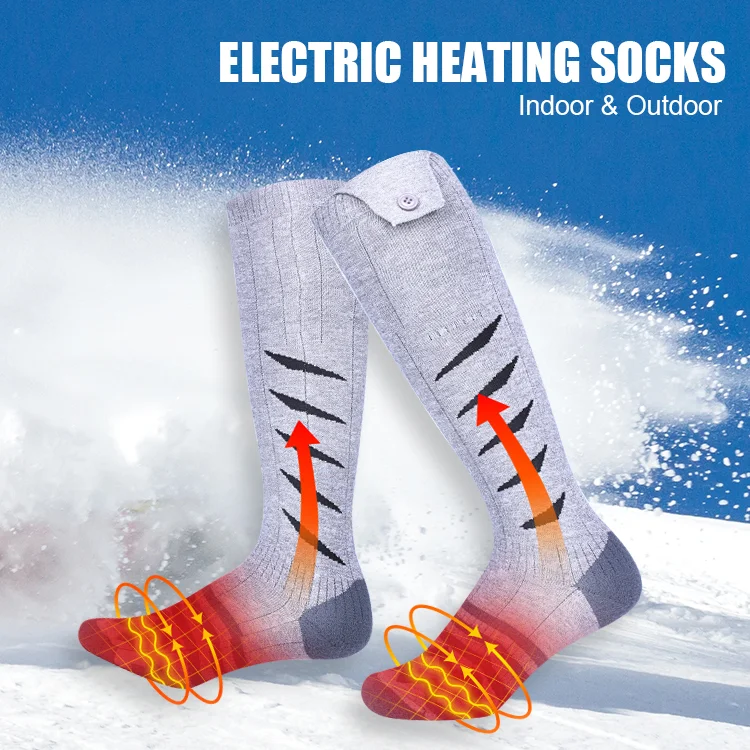
| Heated sock | Merino wool + Bluesign processing | +16% |
| Heated workwear | B-Corp factory + recycled shell | +20% |
| Heated insoles | Recycled EVA + Bluesign | +10% |
Category-by-category premium tolerance gives a heated apparel sustainability buyer a margin framework for assortment planning. The organic-shell heated jacket commands the highest premium; heated insoles offer the lowest — but both anchor different price-tier messaging in the same catalog.
Building a 2026 sustainable heated apparel collection with credible green claims? Our sourcing guides cover GOTS chain-of-custody, carbon label transparency, and greenwashing red flags — subscribe to our B2B newsletter.
Broader Heated Apparel Sustainability Conversation
Five intersecting buyer conversations shape the heated apparel sustainability B2B landscape in 2026, and sequencing them correctly compresses sourcing cycles by weeks.
Conversation 1 — ESG disclosure convergence. CSRD has turned Scope 3 reporting into a non-negotiable for any EU-touching brand or distributor. A heated apparel sustainability buyer should open this conversation first because it sets the documentation floor for every subsequent supplier conversation. Without a Scope 3 framework, the rest of the sustainability stack has no audit anchor.
Conversation 2 — Certification ladder selection. Once the floor is set, the buyer moves to which certifications map to the assortment. GOTS, Bluesign, and GRS form the primary ladder; OEKO-TEX and BCI sit below as entry-tier evidence. A heated apparel sustainability manufacturer discussion should follow this conversation rather than lead it.
Conversation 3 — Greenwashing contract language. With disclosure and certification frameworks defined, the third conversation layer is the contract. A heated apparel sustainability wholesale buyer should require audited evidence on demand, a 30-day cure period for unverifiable claims, and an indemnity clause for retail-channel greenwashing exposure.
Conversation 4 — Consumer premium calibration. The fourth conversation connects upstream evidence to downstream willingness-to-pay data. A heated apparel sustainability 2026 assortment only works financially when certification investment maps to documented consumer premium tolerance by region. Germany and the Nordics support +18-20% premiums; the US supports +12%; Japan and Australia sit at +10%.
Conversation 5 — Distributor positioning depth. The final conversation addresses how the distributor or brand will tell the sustainability story without overstating it. A heated apparel sustainability factory or distributor that picks one positioning angle and backs it with audit-grade evidence outperforms one claiming five angles.
| Sequence Step | Conversation | Lead Role |
|---|---|---|
| 1 | ESG disclosure floor | Buyer + finance |
| 2 | Certification ladder | Buyer + sourcing |
| 3 | Contract language | Buyer + legal |
| 4 | Consumer premium calibration | Buyer + merchandising |
| 5 | Positioning depth | Buyer + marketing |
Buyers who follow this sequence typically close a sustainable line in 14-18 weeks; buyers who start with the factory conversation run 26-32 weeks and ship with weaker documentation. The heated apparel sustainability B2B buyer who internalizes this sequence gains a 30-40% cycle-time advantage, and the supplier conversation belongs at the tail.
Quick Reference Glossary
| Term | Definition |
|---|---|
| ESG | Environmental, Social, and Governance — non-financial performance framework. |
| GOTS | Global Organic Textile Standard — fiber + processing + social criteria. |
| Bluesign | Chemical input and resource efficiency certification for textile mills. |
| GRS | Global Recycled Standard — recycled-content chain-of-custody. |
| OEKO-TEX | Final-product substance testing for harmful chemicals. |
| Scope 3 | Indirect emissions across a company’s value chain, including suppliers. |
| CDP | Carbon Disclosure Project — standardized climate reporting framework. |
| SBTi | Science Based Targets initiative — emissions reduction aligned to 1.5°C. |
| BCI | Better Cotton Initiative — mass-balance sustainable cotton sourcing. |
| SMETA | Sedex Members Ethical Trade Audit — labor + safety + ethics. |
| ZDHC | Zero Discharge of Hazardous Chemicals — effluent management program. |
| Carbon label | Product-level footprint disclosure per PAS 2050 or ISO 14067. |
| Mass balance | Chain-of-custody model where certified and non-certified inputs mix in documented ratios. |
| Cradle to Cradle | Circular-design certification covering material health and reuse. |
heated apparel sustainability buyer: Quick Reference Glossary
A quick reference of the key terms used in this guide: heated apparel sustainability buyer, plus the 13 related concepts — GOTS certification, Bluesign, GRS recycled standard, REACH SVHC, RoHS compliance, ESG scorecard, carbon footprint, Higg Index, LCA life cycle, supply chain traceability, greenwashing detection, sustainable materials, and ethical sourcing — that B2B buyers typically encounter when sourcing private label programs.
Each term above represents a distinct buying decision: heated apparel sustainability buyer is the umbrella concept, while each related keyword describes a specific factory capability, sourcing model, or product attribute to evaluate during your vendor selection.
FAQ
1. How do B2B buyers verify sustainability claims from heated apparel suppliers? Buyers should require scope certificates (GOTS/Bluesign/GRS), transaction certificates per shipment, third-party audit reports dated within 12 months, and carbon disclosure per PAS 2050 or SBTi. Vague claims without document IDs are red flags.
2. What is the most credible sustainability certification for heated apparel? GOTS is the most defensible certification because it covers fiber content, chemical processing, and social criteria in a single audit envelope. Bluesign is the strongest complement for chemical safety, and GRS is preferred for recycled-content programs.
3. How can buyers detect greenwashing in heated apparel marketing? Look for missing percentages on recycled content, undefined “eco-friendly” language, missing scope certificate numbers, future-only net-zero claims without interim milestones, and superlatives without supporting documentation. Contract clauses requiring 30-day audit cures are the strongest preventive tool.
4. What ESG documentation do heated apparel factories need in 2026? Tier-1 evidence includes CDP or SBTi-aligned climate disclosure, Higg FEM environmental scores, SMETA or BSCI social audits, ZDHC or Bluesign chemical compliance, and GOTS/GRS transaction certificates for fiber claims.
5. Which heated apparel product categories command the highest sustainability premium? Organic-shell heated jackets command +22%, Bluesign heated gloves +18%, and B-Corp heated workwear +20%. Lower-premium categories include OEKO-TEX base layers (+12%) and recycled-EVA insoles (+10%).
6. How do end-consumer sustainability preferences vary by region? Germany and the Nordics show the highest willingness-to-pay (23% and 28%), the UK supports 19%, the US 17%, and Japan/Australia 14-15%. Premium tolerance peaks in the 25-54 age band.
7. What role do carbon labels play in heated apparel B2B sales? Carbon labels translate upstream emissions work into consumer-facing evidence. Carbon Trust, Climate Neutral Certified, and EU Ecolabel labels each support different regional retail channels and consumer trust profiles.
8. How should distributors position sustainability claims without overstating? Pick one positioning angle — organic, recycled, carbon, worker-positive, circular, or local — and back it with audit-grade evidence. Layering two complementary labels (e.g., GOTS + Carbon Trust) outperforms a multi-angle shallow claim.
9. What supply-chain transparency tools do heated apparel buyers use? Common tools include Textile Exchange for fiber claims, Open Apparel Registry for facility data, Higg FEM for environmental scoring, Bluesign Finder for chemical compliance, Sedex for SMETA audits, and TrusTrace for recycled chain-of-custody.
10. How long does a sustainable heated apparel sourcing cycle typically take? Buyers following the ESG-to-certification-to-contract-to-premium-to-positioning sequence close in 14-18 weeks. Reverse-order sourcing cycles run 26-32 weeks and ship with weaker documentation.
11. Are sustainable heated apparel products more expensive to manufacture? Yes — GOTS-certified organic shells add 8-12% to fabric cost, Bluesign processing adds 4-6%, and audit fees amortize across volume. These costs are recoverable through documented retail premiums of 12-22% in most markets.
12. What is the biggest greenwashing risk for heated apparel distributors in 2026? The largest risk is making sustainability claims without chain-of-custody documentation, because CSRD enforcement, retailer audit frequency, and consumer scrutiny have all increased simultaneously in 2026.
Conclusion
A defensible heated apparel sustainability 2026 sourcing program rests on five buyer-side moves: set the ESG disclosure floor before the first supplier meeting, lock the certification ladder to the assortment plan, write greenwashing clauses into every contract, calibrate premiums by region, and commit to one positioning depth rather than spreading claims thinly. The heated apparel sustainability buyer who executes this sequence captures a 30-40% cycle-time advantage and ships an assortment that survives retailer audits and consumer scrutiny. For ongoing context on supplier ESG shifts, see our Industry News coverage, and for the upstream factory-evaluation layer, our Supply Chain sourcing guides document the side-by-side sustainability scorecards that drive these decisions.