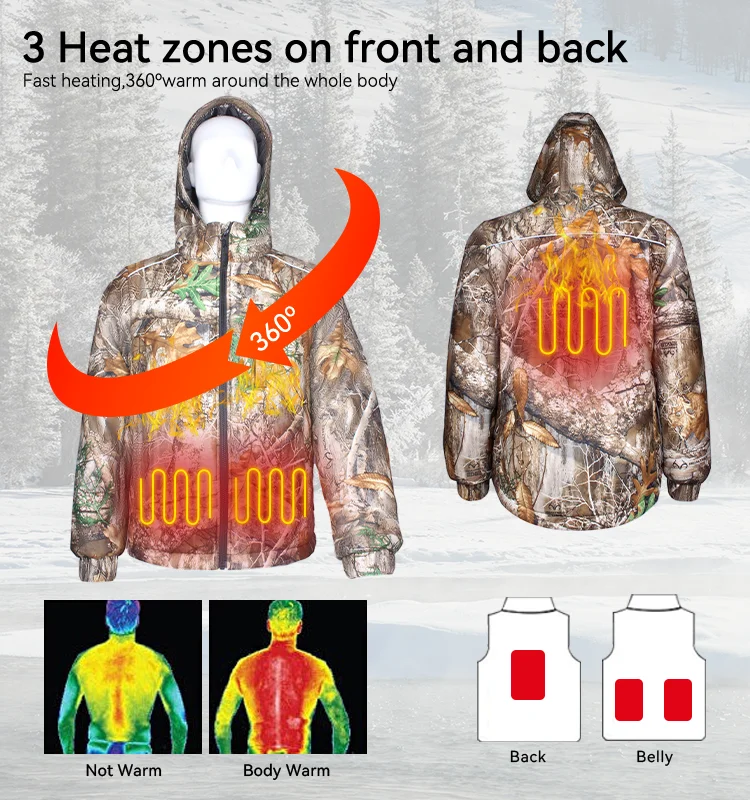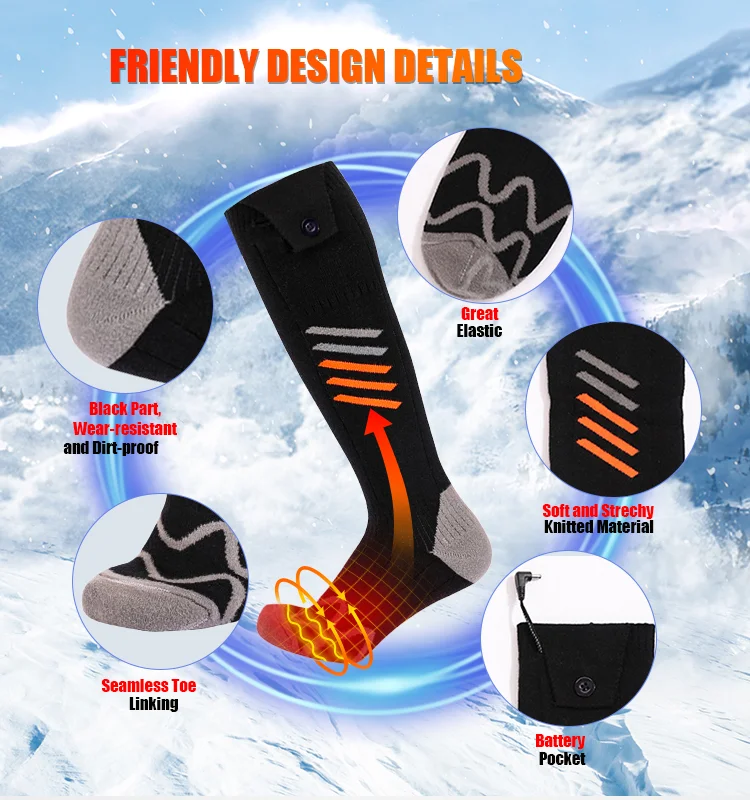
Sourcing the best electric heated jacket supply chain in 2026 is no longer about finding the lowest FOB price. It is about landing the right combination of origin, tariff exposure, documentation depth, and quality repeatability on a single PO. This B2B buyer’s guide walks sourcing managers, private-label brand owners, and procurement leads at outdoor, workwear, hunting, and motorsports brands through a defensible shortlist process for battery heated apparel.
We cover what “best” actually means on a supply-chain axis, the three origin options that dominate 2026, the documentation a serious heated jacket factory should hand you before the first PO, and the most common ways B2B buyers lose money on heated apparel programs. We close with five operator-grade FAQs and a pre-RFQ checklist you can paste into your next sourcing brief.
When a B2B buyer searches for the best electric heated jacket supply chain, they are usually past the “what is a heated jacket” stage. They are weighing which factory can actually ship private-label heated jackets in volume, which origin absorbs the next tariff shock, and which supplier’s quality system survives a 500-piece pre-shipment inspection. This guide walks through exactly that decision tree, and it is written for sourcing managers, private-label brand owners, and procurement leads at outdoor, workwear, hunting, and motorsports brands who need a defensible shortlist, not a glossy catalog.
Below you will find a working definition of what “best” means on a supply-chain axis, the three origin options that dominate the 2026 heated apparel market, the documentation a serious factory should hand you before the first PO, and the most common ways B2B buyers lose money on heated apparel sourcing. We close with five operator-grade FAQs and a checklist you can paste into your next request for quotation.
What “Best” Actually Means on a Heated Jacket Supply Chain
Most heated jacket content online talks about battery life, carbon-fiber elements, and DWR coatings. Useful, but it is the consumer lens. On a B2B axis, the best supply chain for electric heated jackets is the one that scores well on five operational metrics at the same time:
The Five B2B Supply-Chain Metrics That Matter
1. Lead time reliability — measured as on-time-shipment rate across the last four quarters, not the brochure number. 2. Cost stability — the supplier’s exposure to lithium battery freight, heating element pricing, and cotton or polyester base-fabric volatility. 3. Documentation depth — CE, UKCA, FCC, UN38.3 for batteries, REACH, California Prop 65, and the test reports dated within the last 12 months. 4. Tariff resilience — the ability to shift HS-code exposure or country of origin without breaking your landed cost. 5. QC repeatability — a documented AQL plan, an in-house lab for heating-element burn-in cycles, and a named QA contact.
Why Heated Apparel Is a Regulated Electronic Product
A factory that wins on one or two of those but loses on the others is a “good-enough” supplier, not a true supply-chain partner. The distinction matters because heated apparel is one of the few apparel categories where the battery pack turns the garment into a regulated electronic product, and most sourcing teams underestimate how that single fact changes the supplier’s risk profile. Buyers comparing options should treat the documentation stack as a hard gate, not a nice-to-have.
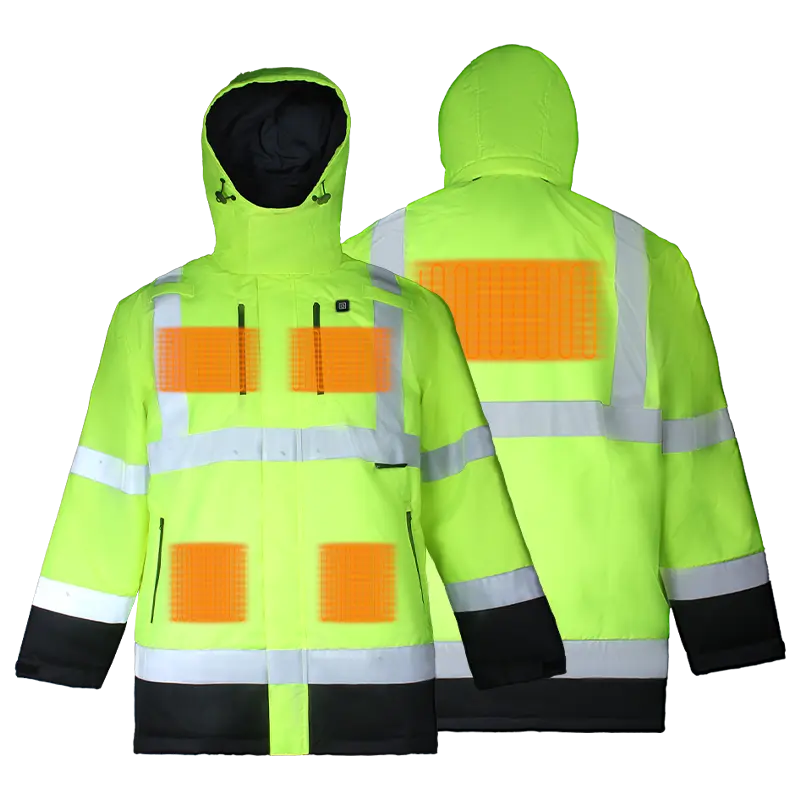
The Three Origins That Define the 2026 Heated Jacket Supply Chain
Sourcing managers in 2026 are typically choosing between China, Vietnam, and a smaller but growing cluster of South and Southeast Asian countries. The choice is rarely about unit price alone; it is about landed cost, tariff treatment, and the maturity of the local heating-element and lithium battery ecosystem.
China: The Reference Origin for Heated Apparel Manufacturing
China remains the reference origin for the best electric heated jacket supply chain. The cluster around Guangdong, Jiangsu, and Zhejiang produces roughly two-thirds of global heated apparel volume and is the only origin where you can source graphene heating fabric, carbon-fiber elements, and integrated battery packs from a single supplier base. The downside is tariff exposure: Section 301 duties on heated apparel entering the United States have moved repeatedly since 2018, and the 2025 escalation cycle added another 10 to 25 percentage points depending on HS code. Lead times are typically 35 to 55 days for FCL orders once artwork is locked, which remains competitive for any serious B2B program.
Vietnam: The Tariff-Buffer Origin in the Heated Apparel Supply Chain
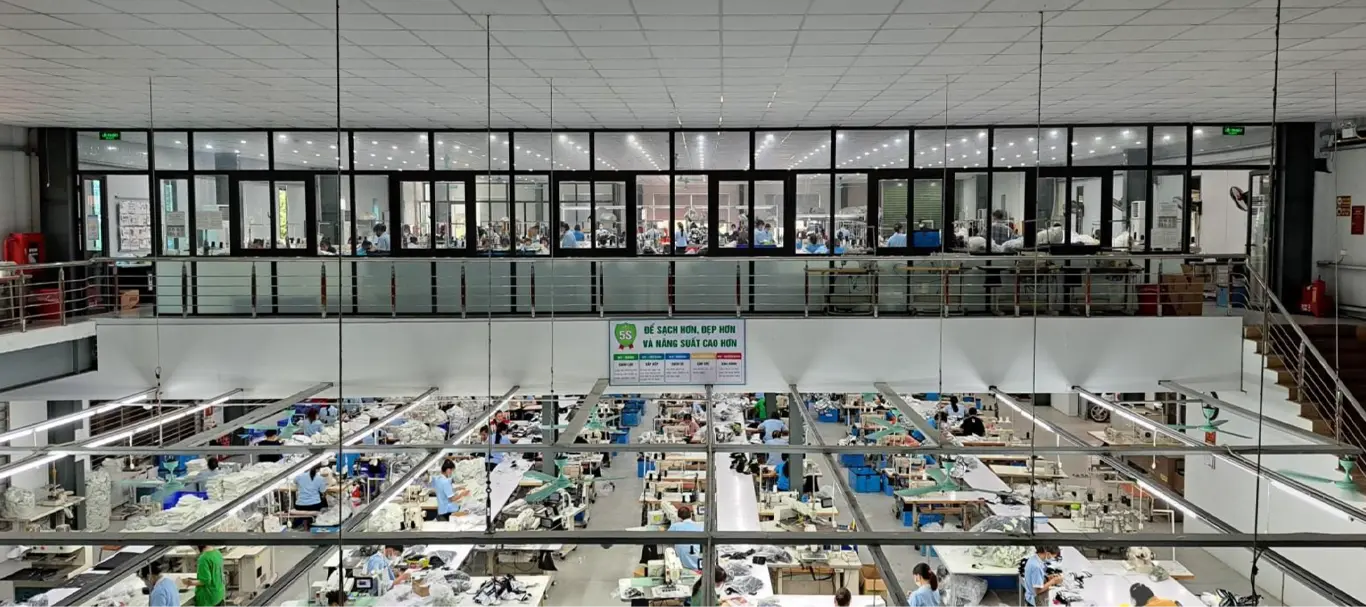
Vietnam has emerged as the practical second pillar of the best electric heated jacket supply chain for North American buyers. The country does not yet have a deep heating-element ecosystem of its own — most graphene and carbon-fiber components still arrive from China as semi-finished input — but it has scale in cut-and-sew, a maturing lithium battery assembly sector, and preferential tariff treatment under multiple frameworks. For U.S. importers, this means a meaningfully lower duty line for the finished garment than direct-from-China in the current cycle, though rules-of-origin audits have tightened and “substantial transformation” is no longer a rubber-stamp label. A serious Vietnamese factory will hand you a yarn-forward and cut-forward origin declaration, not a generic “Made in Vietnam” stamp.
Bangladesh, Indonesia, and the Tier-2 Heated Apparel Cluster
A smaller share of 2026 heated jacket volume comes from Bangladesh, Indonesia, and a handful of other Asian origins. Pricing is competitive, but the heating-element and battery supply chain is thin, and most tier-2 factories in these origins still act as cut-and-sew partners for a Chinese or Vietnamese component supplier. They are useful for capacity overflow, not for a primary supply-chain strategy. If a tier-2 supplier tells you they own the heating-element production in-house, ask for a video tour of the lamination line and a bill of materials broken to the component level.
How to Read a Factory’s Documentation Stack
A factory’s documentation stack tells you more about whether they belong in a buyer’s shortlist for the top electric heated jacket supply chain than any sample. The minimum stack, dated within the last 12 months, looks like this:
The Five-Category Documentation Checklist
– Battery pack: UN38.3 (mandatory for air freight), MSDS, IEC 62133, and a 1.2 m drop-test report. – Heating element: a continuous-run burn-in report (typically 500 hours minimum for carbon-fiber, 1,000 hours for graphene), plus an insulation-resistance test. – Garment: OEKO-TEX Standard 100 for the shell and lining, REACH SVHC screening for any printed logo or trims, and California Prop 65 compliance for the U.S. market. – Electromagnetic: FCC Part 15B for the United States, CE-RED for Europe, and RCM for Australia. – Origin and trade: a signed declaration of origin, a manufacturing-flow chart, and a yarn-forward origin trail if you are claiming a tariff preference.
The Five-Business-Day Test
If a supplier cannot produce all five categories within five business days, they are not ready for a 1,000-piece pilot, and they are definitely not ready for a 50,000-piece program. For reference, the U.S. Consumer Product Safety Commission maintains a public database of battery-related recalls that any sourcing manager should bookmark before evaluating a new factory.
Tariff and Trade Considerations for the 2026 Cycle
Tariff is the single most volatile variable in the best electric heated jacket supply chain right now. Two operational notes from the 2025–2026 cycle that buyers often miss:
HS-Code Classification Is Not Settled for Heated Apparel
First, HS-code classification for heated apparel is not settled. Some heated jackets are classified under 6201 (men’s woven outerwear), others under 6210 (garments with plastics or rubberized fabric), and a small but growing share lands under 8516 (electric heating apparatus) because of the integrated battery system. The classification your customs broker uses drives the duty line, and reclassification mid-shipment is expensive. Lock the HS code with your broker before issuing the purchase order, not after the first container is on the water.
Rules-of-Origin Audits Have Tightened for Non-China Origins
Second, the rules-of-origin audit for non-China origins has tightened. A heated jacket cut and sewn in Vietnam from Chinese heating elements is not automatically “Vietnamese origin” for tariff purposes. Customs in the United States and the European Union are asking for substantial-transformation evidence, meaning a real change in tariff heading at the finished-goods stage, supported by bill of materials, production-flow charts, and a defensible value-add calculation. A factory that has already prepared this documentation is worth a premium; a factory that has not is a future customs problem. For buyers mapping the long-term tariff landscape, the U.S. International Trade Commission publishes research that is worth a 30-minute read before any sourcing commitment, and the World Trade Organization’s Technical Information on Rules of Origin is the reference document your customs broker should be working from.
The Five Operator-Grade FAQs About Heated Jacket Sourcing
1. What is the realistic minimum order quantity for a private-label heated jacket?
For a custom fabric, color, and logo program, 300 to 500 pieces per style per color is the working minimum in 2026. Some Vietnamese and Chinese factories will accept 200 pieces for a stock-fabric private label, but anything below that is effectively a sample run, and unit pricing is not representative of a production run.
2. How long does a full production cycle take from purchase order to delivery?
For a 1,000-piece heated jacket order at a Chinese or Vietnamese factory, plan for 45 to 60 days of production plus 25 to 35 days of ocean transit to a U.S. West Coast port. Air freight cuts transit to 5 to 7 days but is rarely economical above 300 pieces given battery-classification air-freight surcharges.
3. Can a supplier source both the heating element and the battery pack in-house?
The strongest factories in the best electric heated jacket supply chain do, but it is the exception, not the rule. Most suppliers assemble the battery pack in-house from sourced 18650 or 21700 cells and either laminate heating elements in-house or buy them from a dedicated graphene or carbon-fiber supplier. Ask for a bill of materials broken to the component level, not a generic “in-house production” claim.
4. What quality tests should I require before shipment?
At minimum: an AQL 2.5 general inspection on finished goods, a 100 percent battery function and capacity test, a heating-element continuity test, a 30-minute full-power burn-in on a 5 percent sample of finished garments, and a water-resistance spot check on any jacket with an IP-rated heating zone. Insist on the burn-in, as it is the single most predictive test for in-field failures.
5. How do I protect my IP when sourcing private-label heated jackets?
Three layers. First, a signed NNN agreement (Non-disclosure, Non-use, Non-circumvention) under the supplier’s home jurisdiction before any artwork or tech-pack is shared. Second, a tooling and mold ownership clause that names your company as the owner of any custom tooling. Third, a registered trademark in the supplier’s home country plus, where the supplier has cross-border operations, in their secondary manufacturing jurisdictions. None of these are optional in a serious private-label program.
A Pre-RFQ Checklist You Can Use Tomorrow
Paste this list into your next sourcing brief:
The Sourcing Brief — Required Fields
– [ ] Origin preferred (China, Vietnam, or other) and tariff model already run by your customs broker – [ ] Target FOB price band and target landed cost band – [ ] Battery certification stack required (UN38.3, IEC 62133, FCC, CE-RED) – [ ] Heating-element technology preference (carbon-fiber, graphene, or wire) – [ ] Documentation deadline (full stack within 5 business days of request) – [ ] Pilot quantity (300 to 500 pieces) and pilot AQL plan (2.5) – [ ] IP package (NNN, tooling ownership, trademark filings) – [ ] Substantial-transformation package if sourcing outside China – [ ] Reference customers in your category with at least 12 months of shipment history – [ ] Escalation path for in-field failures and a clear RMA process
How to Score the Responses
A useful filter: weight the five operational metrics from the second section of this article, score each supplier response 1 to 5, and discard any supplier that scores below 3 on documentation depth or tariff resilience. That single filter separates the best electric heated jacket supply chain partners from the catalog resellers.
Where Gearplant Fits in the Heated Jacket Supply Chain
What We Build and Where
Gearplant works with brand owners, importers, and private-label operators who need a defensible partner on the best electric heated jacket supply chain, not a catalog reseller. Our production base spans China and Vietnam, our documentation stack is built to the standards above, and our team can hand you a bill-of-materials-level quotation within five business days. If you are scoping a heated jacket program for the 2026/27 winter season, the fastest way to compare options is a 30-minute sourcing call.
How to Start
A practical first step: send us your target landed cost band, your top three target retail price points, and the certifications your market requires. We will come back with a sourcing matrix in five business days that maps the trade-offs across China, Vietnam, and tier-2 origins. Buyers who walk through that matrix usually end the call with a clear shortlist and a defended decision.
—
📌 About the Author This article is published by the Gearplant editorial team. Gearplant is a B2B manufacturer focused on heated apparel — product, application, and supply-chain guidance for brand owners and procurement teams.
🔗 Related Reading