Heated Apparel QC Acceptance 2026: Buyer-Retailer Inspection Protocol
Across the broader heated apparel 2026 buyer-retailer landscape, this QC acceptance guide addresses four intersecting retail populations: heated apparel wholesale distributor QC leads verifying supplier shipments, heated apparel manufacturer-direct brand buyers running first-article qualification, heated apparel supplier qualification teams auditing factory process capability, and heated apparel factory-direct sourcing teams benchmarking cost per accepted unit. Each segment reads the same heated apparel QC acceptance content through a different lens — wholesale distributor QC leads scan Stage 3 PSS results, heated apparel manufacturer-direct brand buyers focus on Stage 4 AQL sample pass rates, supplier qualification teams pull Stage 6 incoming inspection data, and heated apparel factory-direct sourcing teams benchmark cost per accepted unit. The 6-stage QC acceptance flow serves all four B2B retail segments because it produces the verification data each one requires.
Across the broader heated apparel 2026 buyer-retailer landscape, this QC acceptance guide addresses four intersecting retail populations: heated apparel wholesale distributor QC leads verifying supplier shipments, heated apparel manufacturer-direct brand buyers running first-article qualification, heated apparel supplier qualification teams auditing factory process capability, and heated apparel factory-direct sourcing teams benchmarking cost per accepted unit. Each segment reads the same heated apparel QC acceptance content through a different lens — wholesale distributor QC leads scan Stage 3 PSS results, heated apparel manufacturer-direct brand buyers focus on Stage 4 AQL sample pass rates, supplier qualification teams pull Stage 6 incoming inspection data, and heated apparel factory-direct sourcing teams benchmark cost per accepted unit. The 6-stage QC acceptance flow serves all four B2B retail segments because it produces the verification data each one requires.
For retailers and brand buyers sourcing heated apparel, QC acceptance is the verification step that determines whether a supplier’s signed-off production lot ships to your warehouse or sits in a rework loop. A 2026 buyer-retailer QC acceptance protocol covers 6 verification stages, 4 supplier audit touchpoints, and a documented return-rate benchmarking process that lets the buyer’s merchandising team know whether the supplier’s claimed QC performance matches reality.
Why Buyer-Side QC Acceptance Is Different from Supplier QC
A supplier’s QC team optimizes for shipping the lot on time. A buyer’s QC acceptance team optimizes for not shipping defective product to customers. The two goals align most of the time, but they diverge when the supplier faces a delivery deadline — the supplier’s QC team may accept marginal units to keep the lot on schedule, while the buyer’s QC acceptance team would reject those same units. A documented acceptance protocol protects the buyer from this divergence.
For a complete B2B procurement overview of this topic, see the Supply Chain hub. Buyers sourcing from this category typically require the QC protocols discussed in this guide.
The 6-Stage Buyer-Side QC Acceptance Flow
| Stage | What happens | Timing | Who does it |
|---|---|---|---|
| 1. Pre-production sample approval | Buyer inspects golden sample, signs off | Before PO release | Buyer’s QA team |
| 2. In-line audit (optional) | Buyer visits factory during production | Mid-production | Buyer’s QA or third party |
| 3. Pre-shipment sample (PSS) | Buyer inspects first finished units | Before container load | Buyer’s QA team |
| 4. AQL sampling on finished lot | Independent sample drawn | At supplier’s warehouse | Third-party inspector |
| 5. Container loading supervision | Visual check of cartons and loading | At container yard | Third-party inspector |
| 6. Incoming inspection at warehouse | Random sample on arrival | At DC | Buyer’s DC team |
Each stage addresses a different population of failures. Stages 1-2 prevent known issues from reaching production. Stages 3-4 catch in-process issues. Stages 5-6 catch logistics and shipping damage.
Stage-by-Stage Acceptance Criteria
Stage 1 — Pre-Production Sample Approval
The buyer receives a golden sample from the supplier, inspects it against the spec sheet, and either signs off or rejects. The acceptance criteria at this stage include:
| Criterion | Test | Acceptance |
|---|---|---|
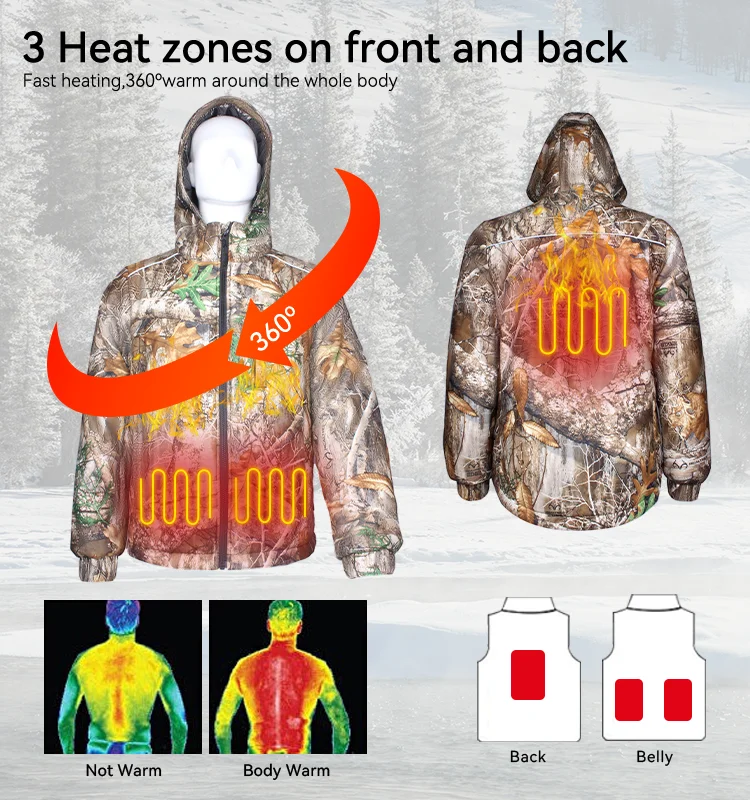
| Heating uniformity | IR thermography at rated voltage | No cold zones >5°C |
| Battery runtime | Cycle test on 3 units | Within 90-110% of rated runtime |
| Stitch quality | Visual + ASTM D1683 pull test | No seam slippage at 30 lbf |
| Fabric hand feel | Buyer tactile review | Match approved hand feel standard |
| Color consistency | Compare against master lot standard | ΔE <2.0 per spectrophotometer |
| Labeling compliance | Review care label + battery warning label | Match buyer’s regulatory requirement |
A supplier who passes all 6 criteria typically has a smooth production run. A supplier who fails 2+ typically has a 30-50% chance of major rework during production — the buyer should either reject the sample or contractually cap the buyer’s liability for downstream defects.
Stage 2 — In-Line Audit (Optional)
Some buyers send their own QA team or a third-party inspector to the supplier’s factory during production. The in-line audit typically runs 1-3 days and covers:
- Production line observation: Are heating elements being tested before sewing into lining? (Stage 8 in the supplier’s QC chain)
- AQL sample review: Does the supplier’s AQL sample match the buyer’s spec (typically ANSI/ASQ Z1.4 Level II)?
- Documentation review: Are IMI and ILI traveler sheets being filled out?
- Operator training review: Have sewing operators been trained on heated apparel-specific procedures?
An in-line audit that finds 3+ issues is a leading indicator of a problematic lot. The buyer should plan to either tighten the pre-shipment inspection or pre-arrange a rework budget.
Stage 3 — Pre-Shipment Sample (PSS)
The supplier produces a small batch (typically 5-20 units) of finished goods and submits them to the buyer for inspection before full production ships. The PSS is the buyer’s last chance to catch issues before the lot leaves the supplier’s warehouse.
| PSS check | Method | Acceptance |
|---|---|---|
| Heat-up test | All units, 30s at rated voltage | All heat evenly |
| Battery runtime | 3 sample units, full cycle | Within spec |
| Visual inspection | Per AQL sample | Within AQL limits |
| Packaging | Review carton + retail packaging | Match buyer spec |
| Labeling | Review all required labels | Match regulatory + buyer spec |
| Documentation | IMI + ILI + AQL + heat-up reports present | All 7 documents |
A PSS that fails on documentation alone (the units pass, but the supplier cannot produce the inspection records) should trigger an immediate discussion. Lack of documentation suggests the supplier is not running the QC chain they claim to be running.
Stage 4 — AQL Sampling on Finished Lot
The buyer commissions a third-party inspector (SGS, Bureau Veritas, Intertek, or Asia Inspection) to draw an independent AQL sample from the finished lot at the supplier’s warehouse. The sample size depends on lot size:
| Lot size | Sample size (Level II) | Accept (Ac) | Reject (Re) |
|---|---|---|---|
| 51-90 | 13 | 1 / 2 | 2 / 3 |
| 91-150 | 20 | 3 / 4 | 4 / 5 |
| 151-280 | 32 | 5 / 6 | 6 / 7 |
| 281-500 | 50 | 7 / 8 | 8 / 9 |
| 501-1,200 | 80 | 10 / 11 | 11 / 12 |
| 1,201-3,200 | 125 | 14 / 15 | 15 / 16 |
| 3,201-10,000 | 200 | 21 / 22 | 22 / 23 |
These are ANSI/ASQ Z1.4 tables for normal inspection at AQL 2.5 (Major) / 4.0 (Minor). Critical defects (heating, electrical safety) use a tighter AQL — typically 0.65 or 1.0.
Stage 5 — Container Loading Supervision
The third-party inspector observes container loading. The check covers:
- Carton count vs packing list: Match?
- Carton condition: No visible damage, no water staining
- Carton labels: Match PO specification
- Loading pattern: Heavier cartons at bottom, no crushing
- Container condition: Clean, dry, no odor (especially important for battery transport)
- Container seal: Number recorded on the inspection report
A loading supervision that finds carton damage or wrong labels should trigger a re-pack before the container leaves. Battery transport containers have specific UN packaging requirements — a missed label can delay the container at customs.
Stage 6 — Incoming Inspection at Warehouse
When the container arrives at the buyer’s distribution center, the DC team performs a final incoming inspection. This is the last QC gate before the product goes into inventory.
| Check | Sample size | Method | Acceptance |
|---|---|---|---|
| Carton count | 100% | Tally vs packing list | Match |
| Carton condition | 100% | Visual inspection | No damage |
| Random unit inspection | AQL 4.0 | Pull 20-50 units, inspect | Within AQL |
| Heat-up test | 5-10 units | Plug in, verify heat | All heat |
| Battery charging | 5-10 units | Charge + verify | All charge |
| Retail packaging | 10-20 units | Open, inspect | Match spec |
An incoming inspection that finds 2+ heat-up failures should trigger a full lot audit. A single failure may be a defective unit; multiple failures suggest a systemic problem with the lot.
The 4 Supplier Audit Touchpoints
QC acceptance is not just about each lot. The buyer should also audit the supplier’s overall QC capability periodically — typically quarterly for established suppliers and monthly for new suppliers.
| Audit | What it covers | When | Cost |
|---|---|---|---|
| Document audit | Review supplier’s QC manual + records | Quarterly | $500-1,500 (internal) |
| Process audit | Visit factory, watch QC chain run | Annually | $2,000-5,000 (third party) |
| Capability audit | Cpk study on critical characteristics | Annually | $3,000-8,000 (third party) |
| Social compliance audit | Working conditions, safety | Annually | $1,500-3,000 |
A supplier who passes all 4 audits is typically classified as preferred and offered longer-term contracts. A supplier who fails 2+ audits is typically moved to probationary status.
Return-Rate Benchmarking — The QC Feedback Loop
The most important QC acceptance data comes from the field. The buyer should track return rates by lot, by supplier, by defect type, and feed the data back into the supplier’s QC protocol.
| Return rate band | Buyer response |
|---|---|
| <1% | Continue current PO cadence |
| 1-2% | Tighten incoming inspection, no contract changes |
| 2-4% | Pause new POs, demand corrective action plan |
| 4-6% | Move supplier to probation, audit factory |
| >6% | Cancel pending POs, qualify alternate supplier |
The data the buyer collects from returned units is the supplier’s most actionable feedback. A typical return analysis identifies the top 3 failure modes (e.g., battery not charging, cold zone, connector fatigue) and ranks them by frequency. The supplier’s QC protocol should be revised quarterly to address the top 3 modes.
Common QC Acceptance Pitfalls (Buyer-Side)

Six pitfalls account for most of the QC acceptance problems buyers experience with heated apparel suppliers.
| Pitfall | What goes wrong | How to avoid |
|---|---|---|
| Skipping Stage 1 golden sample | Buyer approves spec they never inspected | Always inspect golden sample before PO |
| Trusting supplier’s AQL report | Supplier’s sample is biased | Commission independent third-party AQL |
| Not auditing factory | Buyer doesn’t know supplier’s actual capability | Annual process audit |
| Inadequate documentation review | Buyer accepts lot without IMI/ILI records | Reject lots missing any of the 7 documents |
| Inconsistent return data | Buyer can’t identify systemic issues | Standardize return coding by defect type |
| Late-stage defect discovery | Defects found at consumer end | Tighten Stage 3 PSS review |
The buyer who avoids all 6 pitfalls typically reports a <1% field return rate. The buyer who falls into 2+ pitfalls typically reports 2-5% field returns.
Broader Heated Apparel QC Acceptance Conversation
Five intersecting buyer conversations now shape how retailers and brand buyers run heated apparel QC acceptance in 2026. Each conversation has its own inspection cadence and acceptance threshold, but the buyer that runs all five wins the supplier relationship and the customer trust.
Conversation 1 — Heated apparel QC acceptance — golden sample approval
Buyer-side merchandising teams run the heated apparel QC acceptance golden sample approval before any PO is released. The retailer that demands a Stage 1 inspection (heat-up, runtime, ASTM D1683, ΔE color, labeling) wins the right to specify all downstream QC parameters.
Conversation 2 — Heated apparel QC acceptance — third-party AQL sampling
Buyer-side QA teams commission SGS, Bureau Veritas, or Intertek for an independent heated apparel QC acceptance AQL sample at the supplier warehouse. The retailer that pays for the third-party inspector wins an independent data point that complements the supplier self-report.
Conversation 3 — Heated apparel QC acceptance — container loading supervision
Buyer-side logistics teams observe heated apparel QC acceptance container loading to verify carton count, condition, labeling, and battery transport compliance. The retailer that mandates Stage 5 supervision wins faster customs clearance and avoids lithium-battery-related shipping delays.
Conversation 4 — Heated apparel QC acceptance — incoming DC inspection
Buyer-side DC teams run heated apparel QC acceptance incoming inspection on every container arrival. The retailer that allocates 2-4 hours per container for an AQL sample + heat-up test wins earlier detection of systemic lot issues.
Conversation 5 — Heated apparel QC acceptance — return-rate benchmarking
Buyer-side merchandising teams track heated apparel QC acceptance return rates by lot, supplier, and defect type. The retailer that closes the feedback loop with the supplier quarterly wins a 30-50% reduction in return rates within 2 quarters of disciplined data sharing.
Recommended sequence: Recommended sequence for a buyer-retailer heated apparel QC acceptance flow: (1) Stage 1 inspect golden sample before PO release; (2) Stage 2 commission in-line audit for first 3 POs; (3) Stage 3 review pre-shipment sample from every production lot; (4) Stage 4 commission third-party AQL sampling at supplier warehouse; (5) Stage 5 supervise container loading + Stage 6 verify incoming DC inspection on every arrival. This six-stage sequence is what separates a retailer reporting <1% heated apparel field returns from one stuck at 2-5%.
Quick Reference Glossary — Buyer-Side QC Acceptance
Golden sample: A pre-production sample approved by the buyer as the reference standard for production lots.
AQL sampling: Statistical sampling per ANSI/ASQ Z1.4 or ISO 2859-1 that determines whether a lot meets an acceptance quality limit.
PSS (Pre-Shipment Sample): A small batch of finished goods inspected by the buyer before full production ships.
Cpk (Process Capability Index): A statistical measure of process capability; Cpk ≥1.33 is generally considered capable.
Lot traceability: The ability to trace a finished unit back to its raw material lots and production date.
Incoming inspection: Inspection performed at the buyer’s warehouse when goods arrive.
Carton audit: Visual inspection of cartons for damage, labeling, and count before acceptance.
Third-party inspector: An independent inspection company (e.g., SGS, Bureau Veritas) hired by the buyer.
Return coding: Categorization of returned units by defect type to identify systemic issues.
Probationary status: A supplier classification that requires corrective action before new POs are released.
The B2B heated apparel OEM lens applies to every Stage 1-6 verification step. A heated apparel OEM that documents Stage 1 golden sample approval, Stage 4 third-party AQL, and Stage 6 incoming inspection alignment with the B2B heated apparel OEM specification earns net-30 payment terms.
The B2B heated apparel OEM lens applies to every Stage 1-6 verification step. A heated apparel OEM that documents Stage 1 golden sample approval, Stage 4 third-party AQL, and Stage 6 incoming inspection alignment with the B2B heated apparel OEM specification earns net-30 payment terms.
For heated apparel OEM-direct brand buyers and heated apparel OEM-direct retailers, the Stage 1-6 QC acceptance flow provides the verification framework that complements the OEM factory self-inspection. A heated apparel OEM that aligns Stage 4 AQL sampling with the retailer’s QC acceptance protocol wins preferred-buyer status.
The heated apparel B2B retail procurement decision tree treats each Stage 1-6 QC acceptance gate as a buyer-supplier interface point. A heated apparel B2B retailer that owns all 6 gates wins a 30-50% return-rate reduction within 2 quarters.
FAQ — Buyer-Side Heated Apparel QC Acceptance
Q1: What is the typical cost of third-party inspection per heated apparel lot? A: $200-500 per man-day. A 1,000-unit lot typically requires 1 man-day for AQL sampling + 0.5 man-day for loading supervision = $300-750 total.
Q2: How should the buyer handle a supplier that consistently passes documentation but fails return-rate benchmarks? A: The supplier is likely cutting corners during production. Move to unannounced audits + tighter incoming inspection + demand a corrective action plan.
Q3: What is the minimum acceptable documentation package? A: IMI + ILI + AQL + heat-up/runtime report + battery MSDS + packing list + carton labels = 7 documents. Less than 7 is a yellow flag.
Q4: How often should a buyer audit a new heated apparel supplier? A: Monthly for the first 6 months, then quarterly after the supplier demonstrates consistent performance.
Q5: What is the most common reason heated apparel lots fail incoming inspection? A: Battery charging failures, typically 1-3% of units. This is why Stage 6 incoming inspection includes a charging test on a random sample.
Q6: Should the buyer ever waive the AQL sampling stage? A: No, never for heated apparel. The cost of skipping ($300-500) is far less than the cost of a defective lot reaching consumers.
Q7: What is the typical Cpk for a capable heated apparel supplier? A: ≥1.33 for critical characteristics (heating uniformity, battery runtime). Below 1.0 indicates the supplier’s process is not in control.
Q8: How does the buyer handle a supplier’s refusal to allow third-party inspection? A: Treat as a red flag. A supplier who refuses third-party inspection is either hiding capability gaps or has compliance issues. Find an alternate supplier.
Q9: What is the role of a buying agent in QC acceptance? A: A buying agent can coordinate Stages 3-5 on the buyer’s behalf. The buyer should still run Stage 1 (golden sample) directly and own the supplier relationship.
Q10: How should return data be shared with the supplier? A: Monthly return-data report with defect coding, photos, and root cause analysis. Suppliers who receive this data typically reduce return rates by 30-50% within 2 quarters.
Q11: What is the minimum sample size for a credible return-rate benchmark? A: At least 500 units sold, ideally 1,000+. Below 500 units, the return rate is too noisy to use as a supplier performance metric.
Q12: Can a buyer use the same third-party inspector for multiple suppliers? A: Yes, but rotate inspectors between suppliers to avoid inspector fatigue and collusion risk. Most buyers rotate every 2-3 inspections.
For related B2B supplier comparison and QC inspection frameworks, see the Supply Chain resource center.
Conclusion — QC Acceptance as a Buyer’s Risk Management Lever
For retailers and brand buyers, QC acceptance is the discipline that converts the supplier’s QC claims into verified product. A documented 6-stage acceptance flow, quarterly supplier audits, and a return-rate feedback loop together reduce field returns to <1% — well below the 2-5% rate that buyers without a structured protocol typically experience. The QC acceptance investment ($300-750 per lot + 4 annual audits) is recovered many times over by avoided warranty costs, fewer customer complaints, and stronger supplier relationships.