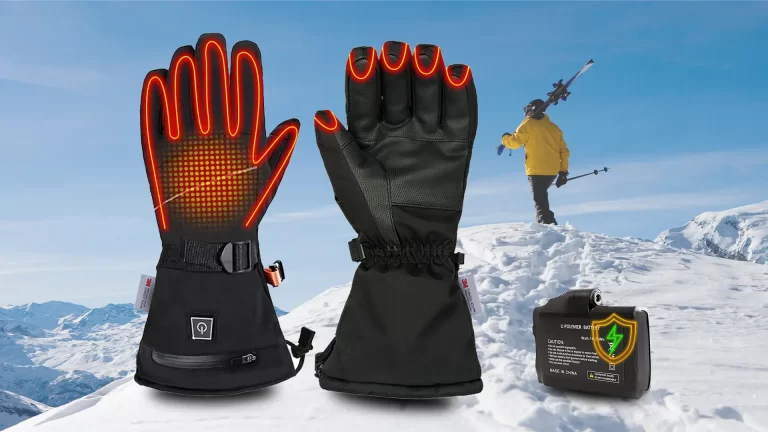
Wholesale Heated Apparel Battery Charging 2026: the Buyer Acceptance Binder for Charger Safety and Runtime Claims
The charger is the part of a heated apparel order that buyers forget to specify and suppliers forget to quote. By the time a warehouse tries to charge a carton of packs at 9 A from a 2 A adapter, the runtime claim is already live on your listing and the returns file is already open. For wholesale programmes this guide sets out the acceptance file a buyer should be able to hold in one place before the first container is booked: what a checkable charging time looks like, which charger document proves what, and how to stop a supplier’s charging claim and a supplier’s runtime claim from drifting apart. For wider context see our heated apparel industry news and supply chain references.
1. Why The Charger Moved Into The Purchase Order
Three things changed in the same eighteen months, and together they moved the charger out of the carton and into the purchase order. First, the charge itself became a regulated act: Regulation (EU) 2023/988 on general product safety, applicable since 13 December 2024, treats the charger as part of the product you must be able to show is safe. Second, the pack it charges is governed by Regulation (EU) 2023/1542 on batteries, and Article 8 of that regulation requires charging information to reach the user rather than sit in a factory file. Third, a commercial change landed on 13 June 2026, when the Unfair Commercial Practices Directive 2005/29/EC ceased to apply and Directive (EU) 2024/825 took over, tightening how a runtime or charging claim is judged.
For a wholesale buyer the practical effect is that “battery included” is no longer a complete line item. You are buying a charging system, and the three common supply arrangements carry very different delivery risk. Every heated apparel battery charging programme that treats the charger as an unspecified accessory inherits the same three questions.
| Supply arrangement | Buyer risk at delivery | What to specify |
|---|---|---|
| Pack only, no adapter | Customer owns the charging problem | Minimum adapter profile |
| Charger included, fixed plug | Wrong-market plug returns | Plug type per destination |
| Charger included, regional set | Higher unit cost, lowest returns | Plug family per destination |
The arrangement that produces the most support contacts is not the cheapest one. It is the one nobody wrote down. A wholesale heated apparel battery charging programme that fixes the arrangement in the purchase order removes that failure mode before the first shipment.
2. The Three Supplier Claims You Should Answer In Writing
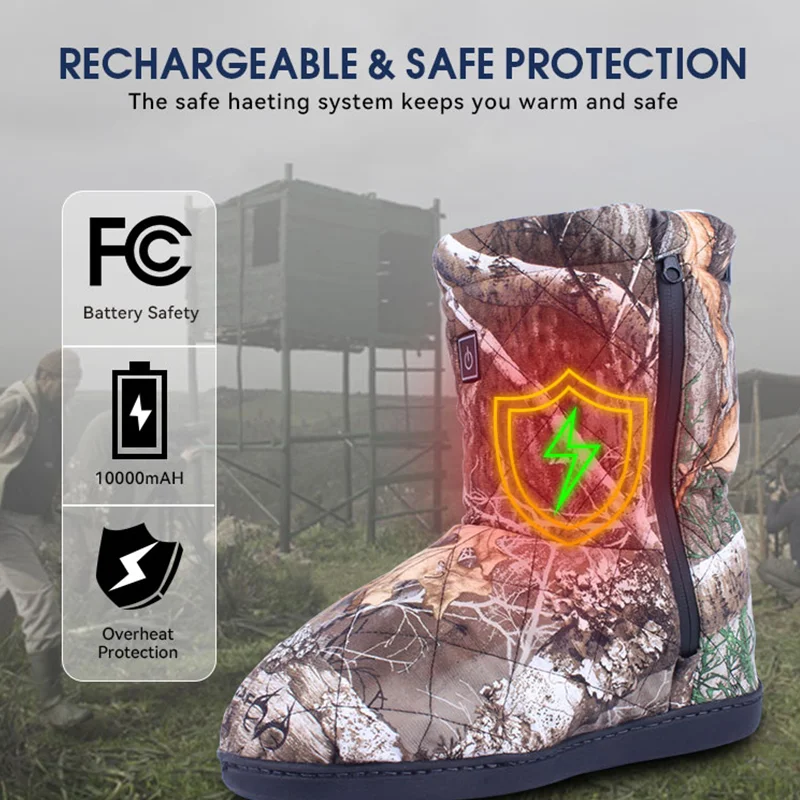
Most heated apparel battery charging problems at wholesale volume are not hardware failures. They are communication failures that arrive as a claim on a listing. A supplier that writes “charges in 2 hours” has made a claim about a charger you did not order, in an ambient you did not specify. The cure is boring: ask the three questions in writing before the purchase order is signed, and put the answers into the acceptance binder.
| Supplier claim | What it hides | The question to put in writing |
|---|---|---|
| “Charges in 2 hours” | No charge rate, no ambient | At what rate, at what ambient temperature? |
| “USB-C fast charge” | Current profile never stated | Which current profile is the port rated for? |
| “Comes with a charger” | Adapter outside the pack file | Which document covers the adapter we ship? |
A heated apparel battery charging OEM that answers all three in one reply has already done most of the work for you, because the answers are the first three tabs of the binder. A heated apparel battery charging manufacturer that treats the file as optional is the one that will cost you a container.
The cost of asking is small and the cost of not asking is not. A wholesale compliance reserve of $0.83 per unit covers the charger qualification, the cold-charge validation, the artwork and label approval and the ten-year file retention. On a 5,000-unit order that is $4,150, which is less than the value of a single returned carton of packs and far less than a suspended listing.
3. The Buyer Acceptance Binder: Nine Documents You Should Be Able To Hold
A buyer acceptance binder is not a document you request once. It is a nine-tab folder you expect to be able to produce on demand, per shipment, per programme. The tab order below follows the order in which you will need them: what the charger is, how it was validated, what it proves, how packs are traced back to it, and what you are allowed to say about it.
| Document | What it must contain | Buyer gate |
|---|---|---|
| Charger specification sheet | Input range, output profile, connector | Matches the order |
| Charging protocol validation | Rate, cutoff, temperature behaviour | One pack architecture covered |
| Declaration of conformity | Low Voltage Directive route used | Current and in scope |
| EMC test report | Emissions and immunity | Same charger part number |
| UL 1642 report | Adapter safety, if a US market | Same adapter as shipped |
| UL 2054 report | Pack safety, if a US market | Same cell lot family |
| UN 38.3 test summary | Transport classification | Present for sea and air |
| Pack and charger lot traceability | Heat lot to work order to pack to charger | Every pack resolves |
| Artwork approval sheet | Frozen label and manual wording | Signed by both sides |
The ninth tab is the one most files are missing. A supplier who can trace every shipped pack to a cell lot and a charger lot, and who can show you the artwork sheet that froze the label wording, has given you the two artefacts that make a claim defensible after the fact. A supplier who cannot has given you a brochure.
4. What A Checkable Charging Time Claim Must Specify
Charging time is not a property of the pack alone, and that is why an unqualified number is unusable. Four inputs decide it, and every published figure has to carry all four. Charge rate is the largest lever: a 5,000 mAh pack at 0.5C takes roughly 2.5 hours, and the same pack at 0.1C takes about 12 hours. Cutoff behaviour is the second, because a pack that stops at 4.15 V per cell stores around 8% more usable energy than one that stops at 4.05 V. Ambient temperature is the third, since charging a lithium-ion pack below 0 °C risks plating and therefore needs either a warm-store instruction or a slowed charge rule. The connector profile is the fourth, because a USB-C port advertising a 3 A profile and one delivering 500 mA are six times apart.
| Charging input | Reference assumption | Why it moves the claim |
|---|---|---|
| Charge rate | 0.5C typical, 0.1C cold | 2.5 h versus 12 h |
| Cutoff voltage | 4.15 V per cell | About 20% stored energy |
| Ambient temperature | 25 °C standard, 0 °C inhibited | Up to four times slower |
| Connector profile | USB-C 3 A or USB-A 500 mA | Six times current difference |
A heated apparel battery charging protocol that states all four inputs is worth more than a marketing claim that states one of them, because you can reproduce it on a bench and a buyer can repeat it on a kitchen table. That is the difference between a heated apparel battery charging claim and a heated apparel battery charging condition. A heated apparel battery charging time figure without the rate is not a number at all; it is a promise.
5. Runtime Claims That Survive A Charger Change
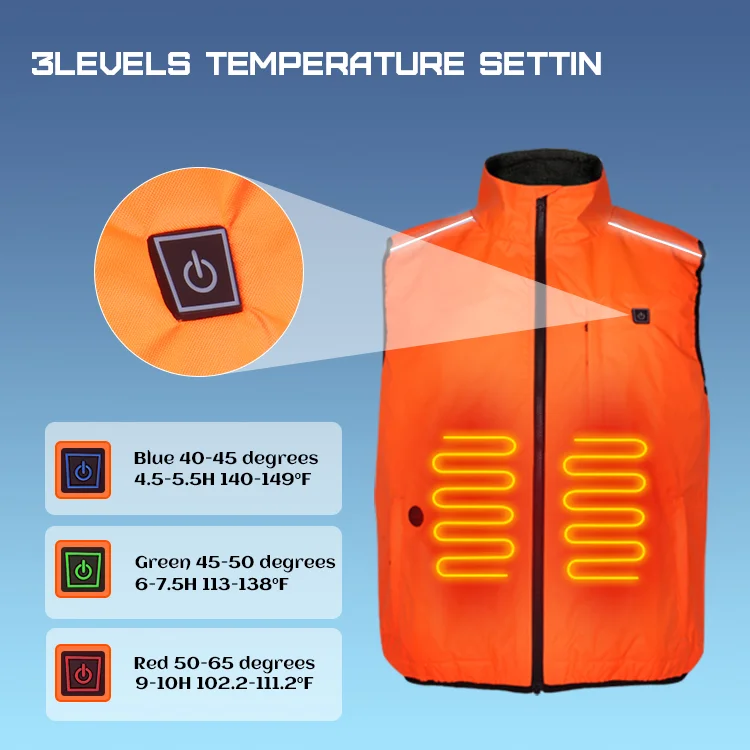
Runtime and charging time are one claim split in two, and they fail together. The cutoff voltage the charger enforces sets the usable energy, and the usable energy sets the runtime you may advertise. The table below assumes an 11.1 V nominal, 5,000 mAh pack with a 3 A USB-C supply, and it is deliberately boring: the charging column does not move across heating tiers, because the pack charges faster than the element consumes it in any tier.
| Heating tier | Element draw | Time to full at 0.5C | Cold charge at 0.1C |
|---|---|---|---|
| High | 12 W | 2 h 30 m | 11 h 40 m |
| Medium | 9 W | 2 h 30 m | 11 h 40 m |
| Low | 6 W | 2 h 30 m | 11 h 40 m |
| Eco | 3 W | 2 h 30 m | 11 h 40 m |
The interesting line is the last column. A cold-charge rule is a heated apparel battery charging safety decision before it is a scheduling decision, because a pack that is inhibited at 0 °C and then shipped to a northern distribution centre in January is a pack that arrives flat.
6. Charger Safety Documents And What Each One Actually Proves
Five documents cover the charger and the pack, and they prove different things, which is exactly why substituting one for another is so common and so costly. UL 2054 covers the battery pack itself. UL 1642 covers the USB power adapter, and in practice this is where most field failures originate. IEC 62368-1 is the safety standard that the Low Voltage Directive conformity assessment leans on for consumer accessories, and it is the reference most European buyers ask for. UN 38.3 covers transport of the pack rather than the charger, and it is still the document carriers and FBA inbound ask for.
| Document | Covers | Who asks for it |
|---|---|---|
| UL 2054 | Battery pack | US buyers and retailers |
| UL 1642 | USB power adapter | US carriers and Amazon |
| IEC 62368-1 | Charger safety conformity | EU buyers under the LVD |
| UN 38.3 | Pack transport | Carriers and FBA inbound |
| EMC test report | Charger emissions | EU technical file |
Read the middle column before you ask for anything. A heated apparel battery charging safety file is assembled from five separate scopes, and a supplier who sends you UL 2054 when you asked about the adapter has answered a question you did not ask.
7. Article 8 And The Information Cascade On Your Listing
Article 8 of the Batteries Regulation is the provision that turns internal test records into user-facing obligations, and it is where a wholesale buyer becomes directly responsible. Capacity, runtime, charging time, cycle life, warranty terms and safety information must reach the user through the manual, the product label and the listing. For a private label programme this means the instruction leaflet, the sewn-in care label, the product listing and the print artwork are all regulated deliverables with an approval date on them.
| Information item | Where it must appear | Who signs it off |
|---|---|---|
| Charging time and charge rate | Manual and listing | Engineering |
| Charge-inhibit temperature | Label and manual | Engineering |
| Charger part number | Artwork and listing | Sourcing |
| Safety and disposal text | Label and manual | Compliance |
| Cycle life figure | Listing and manual | Quality |
The line that costs buyers money is the one that arrives late. A heated apparel battery charging temperature instruction that is missing from the artwork sheet means the label ships without it, and the listing says something the manual does not.
Quantify that exposure rather than arguing about it. An RMA reserve of 2.8% of order value, roughly $4,000 on a 5,000-unit order, is the realistic cost of packs that arrive flat because nobody wrote the charge-inhibit rule down.
8. Common Charger Directive 2022/2380 And The December 2026 Report
Directive (EU) 2022/2380 on common chargers for radio equipment requires the Commission to request harmonised standards for charging interfaces and charging communication protocols by 28 December 2024, and to report to the European Parliament and the Council on the impact of radio equipment sold without any charging device or cables by 28 December 2026. Heated apparel packs are not radio equipment, so the directive does not bind them directly. It still shapes the market, and it will shape your supplier’s roadmap.
| Question | Answer for wholesale buyers |
|---|---|
| Does the directive bind apparel packs | No, it covers radio equipment |
| Why it still matters | Buyers assume USB-C parity |
| Practical answer | Standardise on USB-C, publish the profile |
| Watch item | Commission report due 28 December 2026 |
A heated apparel battery charging specification that names USB-C and publishes the current profile is future-proof against that report, and it is the only heated apparel battery charging line a buyer can hold a supplier to. One that names a barrel connector or a proprietary protocol is not, and the cost of changing it later is a tooling change you would rather not fund in Q1.
9. A 60-Day Buyer Acceptance Calendar
The binder is easiest to build backwards from the booking date. This calendar runs from T-60 to T-3 and assumes you want the file complete before the container is loaded, not after it arrives.
| Timing | Action | Buyer artefact |
|---|---|---|
| T-60 | Issue the nine-tab request list | Buyer request email |
| T-52 | Receive charger spec and validation | Tabs 1 and 2 |
| T-45 | Receive conformity and EMC reports | Tabs 3 and 4 |
| T-38 | Receive UN 38.3 summary | Tab 7 |
| T-30 | Freeze artwork wording with supplier | Tab 9 |
| T-20 | Confirm lot traceability chain | Tab 8 |
| T-14 | Approve listing charge wording | Tab 5 |
| T-7 | Sample test on arrival plan | Test record |
| T-3 | Sign acceptance, release booking | Acceptance sheet |
Two of these dates are non-negotiable. T-30 is the artwork freeze, because a charging instruction that changes after print costs a reprint, and T-3 is the acceptance signature, because a binder accepted after the container has sailed is not a control.
Every heated apparel battery charging wholesale programme should be able to name the exact charger part number in the binder, because that is the document that makes the rest of the file checkable.
10. Frequently Asked Questions
Does the Common Charger Directive apply to heated apparel battery packs?
No, because it covers radio equipment, and heated apparel packs are not radio equipment.
What charger should a wholesale heated apparel pack ship with?
A USB-C adapter meeting a published current profile, because that matches what buyers now assume.
How long does a 5,000 mAh pack take to charge?
About 2.5 hours at 0.5C and about 12 hours at 0.1C in cold conditions.
Can a heated apparel pack be charged below 0 °C?
Not without slowing the rate, because charging a cold lithium-ion pack risks plating, so a 0.1C rule is needed.
Which standard applies to the charger itself?
IEC 62368-1 for European conformity, with UL 1642 for the adapter and UL 2054 for the pack for US buyers.
Does the battery regulation require charging instructions?
Yes, Article 8 requires charging information to reach the user through the manual, label and listing.
How much should a wholesale buyer reserve per unit for charger compliance?
About $0.83 per unit, which is $4,150 on a 5,000-unit order.
Does a charger failure void the CE technical file?
It can, because the file must cover the charger as part of the product, so a failed unit triggers a reassessment.
Can the same charger be used for several heated apparel models?
Yes, if the voltage, current and connector match, since validation is per pack architecture and charger part number.
Does the charger change the runtime I can advertise?
Yes, because the cutoff voltage the charger sets determines the usable energy the pack holds.
Do I need UL 1642 for a European-only sale?
Not legally, but most EU carriers and Amazon listings still request it alongside the IEC 62368-1 report.
What should the label say about charging?
The charge rate, the cutoff behaviour, the charge-inhibit temperature and the charger part number.
Who owns the charger test data?
The buyer owns the file it funds, while the factory retains the raw data and certifies it for ten years.
What does a third-party conformity route add to a 5,000-unit lot?
About $11,600 when the technical file needs an external route rather than self-declaration.
When should the acceptance binder be signed?
At T-3, before the container is booked, so the file covers the shipment it governs.