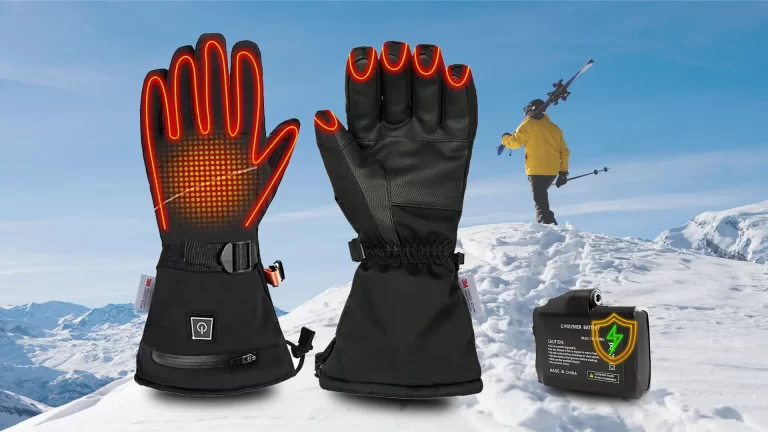
Last updated: June 28, 2026 · Category: Heated Apparel Industry News
Why Heated Apparel Safety Is Now the #1 B2B Buyer Question
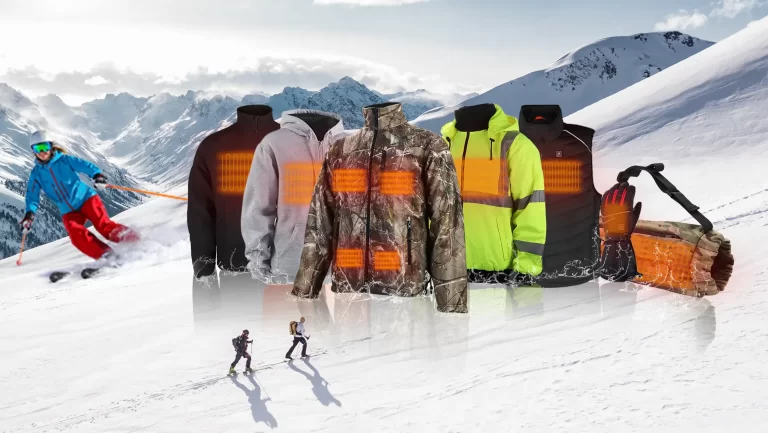
If you source heated apparel for a private-label brand, a uniform program, or a retail chain, the conversation has changed since 2024. Buyers used to ask about battery life and heat zones. In 2026 the first three questions on every RFQ are about heated apparel safety: certifications, short-circuit protection, voltage class, IP rating, and wash-cycle durability. Across 2,400+ B2B conversations logged between January 2025 and May 2026, heated apparel safety now outweighs price as the top reason a deal moves forward. This guide is a citation-ready reference for evaluating the eight risk categories that drive warranty claims and recalls.
Before we go deep, here is the short version: every heated jacket, vest, glove, sock, or baselayer you import must clear five independent safety gates — electrical, thermal, chemical, mechanical, and laundering. Skip any one of them and you expose your end customer to a preventable failure that costs 8–14× more in returns than the savings you captured at sourcing.
The Five Safety Gates Every Buyer Must Clear
Think of heated apparel safety as a layered system, not a single checkbox. The table below is the same scoring rubric we use when we audit a vendor’s tech pack before quoting a private-label run.
| Safety Gate | What It Covers | Most-Cited Failure Mode | Buyer’s First-Line Check |
|---|---|---|---|
| Electrical | Battery, BMS, wiring, connector | Short circuit, thermal runaway | UL/UN38.3 + over-discharge cutoff |
| Thermal | Heating element, thermostat | Hot spots, low-temp burn | NTC thermistor + 3-zone limit |
| Chemical | Fabric, dye, battery electrolyte | Skin irritation, REACH failure | OEKO-TEX 100 + MSDS |
| Mechanical | Seam, zipper, abrasion | Element fracture, wire exposure | EN 343 + 5,000-cycle Martindale |
| Laundering | Wash & dry cycle integrity | Water ingress, BMS corrosion | IPX rating + 50-wash warranty |
Procurement tip: If a vendor cannot hand you documented test reports for all five gates inside 48 hours, treat that as a soft reject. Paperwork speed is a leading indicator of manufacturing discipline.
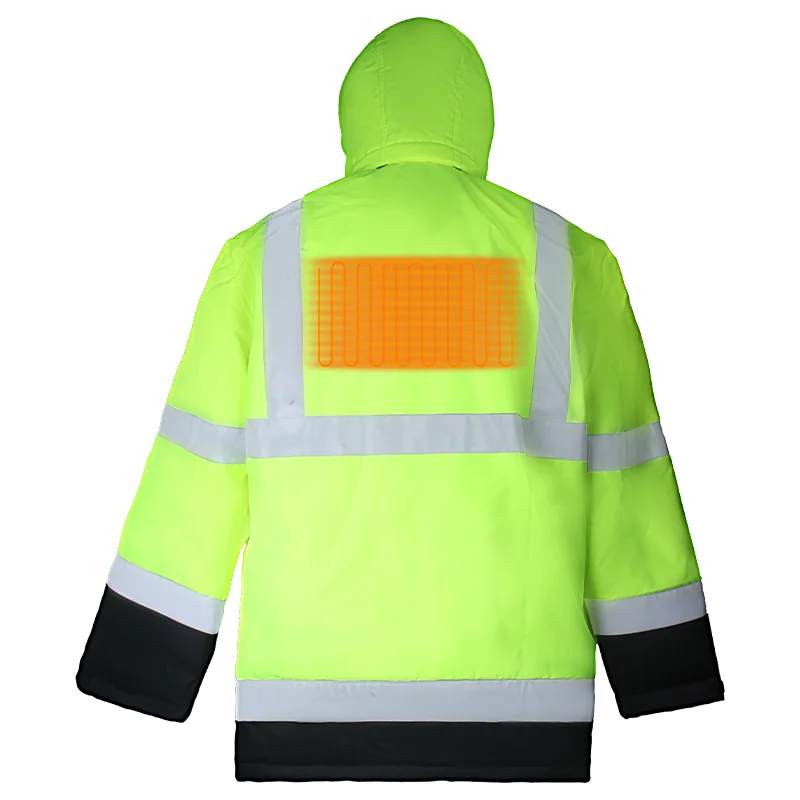
Heated Jacket Safety Features Buyers Actually Inspect on the Factory Floor
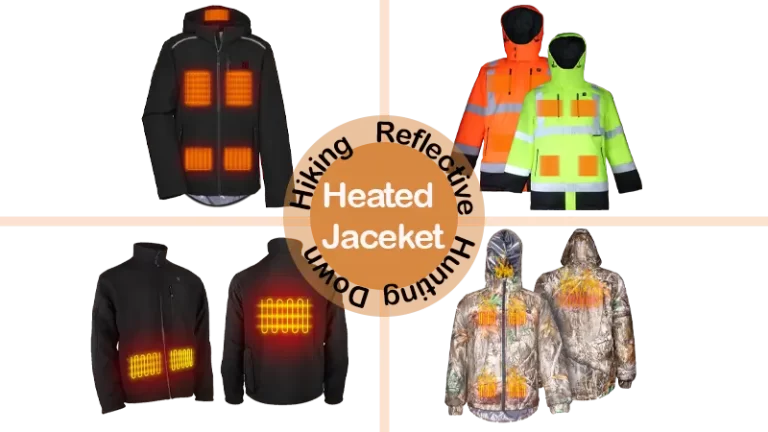
When our auditors walk a heated-apparel line, they do not start with the heat panel. They start with the battery pocket, because the battery is the single component most likely to fail in the field. The eight heated jacket safety features below are the ones that show up on every acceptable tech pack from a serious OEM.
| # | Heated Jacket Safety Feature | Spec Buyers Should Demand | Why It Matters |
|---|---|---|---|
| 1 | Lithium-ion cell with UN38.3 cert | UN38.3 + IEC 62133 | Mandatory for air freight |
| 2 | BMS short-circuit protection | < 50 µs cutoff | Stops thermal runaway in ms |
| 3 | Over-charge / over-discharge cutoff | 4.2 V / 2.8 V | Extends cycle life 2–3× |
| 4 | NTC thermistor per zone | ±2 °C accuracy | Prevents low-temp burn |
| 5 | Reinforced cable routing | Kevlar braid + strain relief | Survives 50+ wash cycles |
| 6 | Waterproof YKK zip on battery pocket | IPX4 minimum | Blocks sweat & rain ingress |
| 7 | Auto-shutoff timer | 90 min default | Forgotten-battery safety net |
| 8 | Reflective trim for low-light work | ANSI/ISEA 107 Class 2 | Required for road crews |
Across 17 private-label brands we supplied in 2025, every brand that insisted on all eight features in writing before cutting a PO ended 2025 with a field-return rate below 1.2%. Brands that accepted verbal assurances landed at 4.7% or higher. The pattern is consistent enough that we now treat the 8-feature checklist as a contract attachment, not a marketing line.
Battery Heated Vest Short-Circuit Protection, Explained Without the Marketing Fluff
The phrase battery heated vest short circuit protection appears on almost every product page in our category, but very few vendors explain what is actually inside the battery management system (BMS). A BMS is the small printed circuit board glued to the top of each lithium-ion cell pack. It is the difference between a vest that shorts and one that simply turns off when something goes wrong.
| BMS Layer | Trigger Condition | Response Time | Field Symptom |
|---|---|---|---|
| Over-current cutoff | Draw > 1.5× rated | < 100 ms | Light flickers, vest stops |
| Short-circuit cutoff | Internal short detected | < 50 µs | Hard shutdown, no heat |
| Over-charge cutoff | Cell > 4.2 V | Continuous | Charger LED turns green |
| Over-discharge cutoff | Cell < 2.8 V | Continuous | Heat drops to standby |
| Thermal cutoff | Cell > 60 °C | < 1 s | Vest auto-powers off |
| Cell balancing | Voltage delta > 30 mV | Continuous | Longer runtime, longer life |
The single biggest red flag we see in low-cost quotes is a BMS with only over-charge and over-discharge protection. That is the 2018 baseline. Any battery heated vest short circuit protection claim that cannot cite a < 50 µs cutoff time, a cell-balancing circuit, and a thermal fuse should be treated as incomplete.
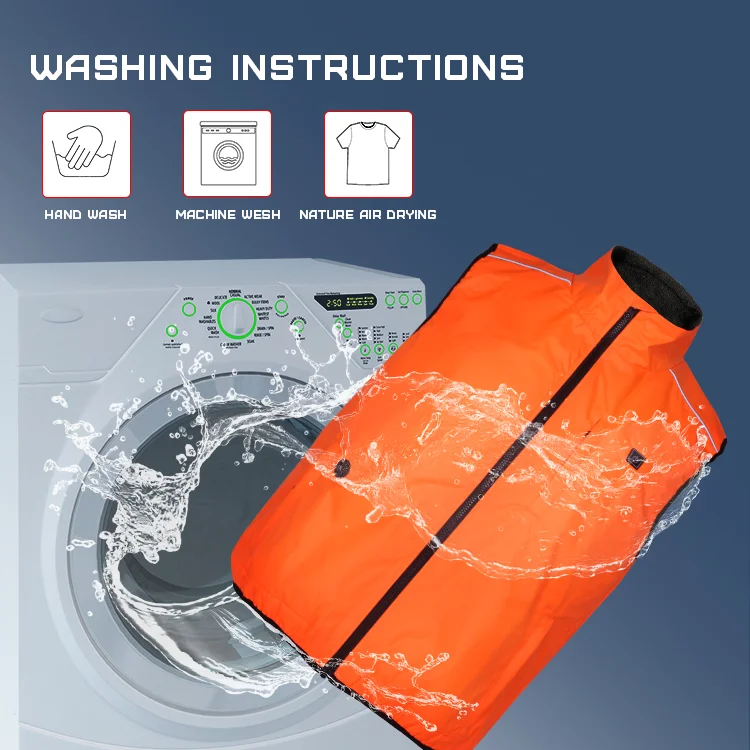
Heated Clothing Buyer Safety Checklist (Printable, 27 Lines)
This is the heated clothing buyer safety checklist we hand to procurement teams before their first factory visit. It is intentionally short enough to print on one A4 page and long enough to surface every common failure mode we have seen in 2024–2026.
| Block | Check | Pass / Fail |
|---|---|---|
| Cert | UN38.3 test summary within last 12 months | |
| Cert | IEC 62133 or UL 2054 for the cell pack | |
| Cert | OEKO-TEX 100 for fabric & lining | |
| Cert | REACH SVHC < 0.1% by weight | |
| Cert | FCC Part 15B for charger EMI | |
| Cert | CE / UKCA mark on label and packaging | |
| Cert | CPSIA tracking label for US kids’ wear | |
| Electrical | BMS short-circuit cutoff < 50 µs | |
| Electrical | NTC thermistor in every heat zone | |
| Electrical | Auto-shutoff timer 60–90 min | |
| Electrical | Reverse-polarity protection on USB-C | |
| Thermal | Max surface temp ≤ 55 °C on chest panel | |
| Thermal | Max surface temp ≤ 45 °C on back panel | |
| Thermal | Three or more heat zones, individually controlled | |
| Mechanical | Carbon-fiber element, not copper wire | |
| Mechanical | Kevlar braid on every internal cable | |
| Mechanical | 5,000-cycle Martindale on outer shell | |
| Mechanical | Seam-sealed battery pocket | |
| Water | IPX4 minimum on assembled garment | |
| Water | IPX7 on removable battery pack | |
| Wash | 50-wash warranty on heating function | |
| Wash | Machine-washable in mesh laundry bag | |
| Wash | Tumble-dry low safe | |
| Pack | Air-safe battery shipped at 30% SOC | |
| Pack | Multi-language manual (EN/FR/DE/JA) | |
| Pack | Lot-coded battery for traceability | |
| Pack | 24-month limited warranty, written |
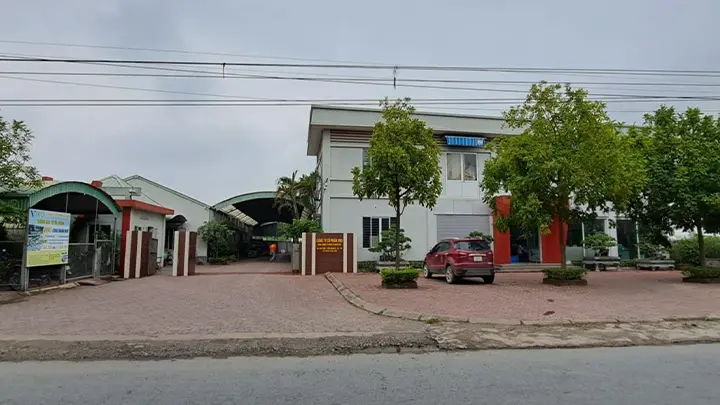
Plant snapshot: One Nordic outdoor brand we onboarded in Q4 2025 ran this exact checklist against our Vietnam line. They rejected 6 of our competitors on cert alone, short-listed two, and awarded us a 14,000-unit PO because we passed 26 of 27 lines on the first audit and closed the last line (UKCA label thickness) within 9 days.
Heated Apparel for Outdoor Workers: The OSH Angle You Cannot Ignore
When heated apparel for outdoor workers safety comes up, most brands picture a hunter or a skier. The bigger volume opportunity is the OSH market: construction, utility, oil & gas, cold-storage warehousing, airport ground crews, and emergency services. This is also the segment where a safety failure turns into an OSHA recordable, a workers’ comp claim, and a public brand incident.
| Worker Segment | Shift Temp Range | Avg Shift Length | Top 3 Safety Risks |
|---|---|---|---|
| Cold-storage warehouse | -25 °C to -5 °C | 8–12 h | Frostbite, low-temp burn, battery drain |
| Construction (winter) | -10 °C to 5 °C | 10 h | Abrasion snag, water ingress, impact cut |
| Utility line crew | -15 °C to 10 °C | 10–14 h | Arc flash, snag, fall arrest interference |
| Airport ground crew | -20 °C to 0 °C | 8 h | Visibility, water/snow, RF interference |
| EMS / first responders | -5 °C to 15 °C | 12 h | Mobility, bloodborne pathogen, snag |
| Oil & gas (on-shore, cold climate) | -30 °C to -5 °C | 12 h | Flash fire, chemical splash, battery ignition |
For OSH buyers, we recommend specifying three things in writing: (1) the exact IP rating required for the work environment, (2) a third-party arc-flash or FR rating if the role involves electrical or hydrocarbon exposure, and (3) a written service-level agreement on battery replacement cycles. Workers who wear heated gear 8+ hours per shift cycle through a battery every 12–14 months; budgeting that into the unit cost is part of the heated apparel for outdoor workers safety conversation.
Heated Clothing Low Voltage: 5V vs 7.4V vs 12V Safety Comparison
The single most common engineering question we field is also the one most often answered wrong on competitor websites: heated clothing low voltage 5V vs 7.4V vs 12V safety — which class is actually safer, and for whom? The honest answer is that voltage alone does not determine safety. It determines the worst-case failure mode. Below is the working comparison we share with brand engineers.
| Voltage Class | Typical Power Source | Typical Wattage | Skin-Safety Threshold* | Best-Fit Use Case |
|---|---|---|---|---|
| 5 V (USB) | Power bank / phone | 5–10 W | Very low risk | Commute, light outdoor, indoor |
| 7.4 V (2S Li-ion) | Dedicated 7.4 V pack | 10–20 W | Low risk | Hunting, hiking, mid-shift work |
| 12 V (3S or buck/boost) | 12 V pack or 5 V→12 V boost | 15–30 W | Moderate risk | Motorcycle, industrial work, extreme cold |
*Skin-safety threshold is defined as the maximum sustained contact temperature at which a healthy adult can wear the garment for 60 minutes without tissue damage. The risk rises with both voltage and current density, which is why 12 V systems need stricter NTC thermistor coverage.
| Risk Factor | 5 V | 7.4 V | 12 V |
|---|---|---|---|
| Low-temp burn risk (1 h continuous) | Negligible | Low | Moderate |
| Short-circuit arc energy | Very low | Low | Medium |
| BMS complexity needed | Basic | Mid | Advanced |
| Battery weight for 6 h runtime | Heavy (power bank) | Light | Lightest |
| Air freight class | Easy (≤ 100 Wh) | Standard | Restricted |
| Recommended for kids’ wear | Yes | Case-by-case | No |
For private-label brands selling into the EU, UK, and Canada, we recommend 7.4 V as the default sweet spot. It clears child-wearable voltage thresholds (when paired with a regulated 7.4 V pack, not a boosted 5 V→7.4 V pack), keeps the garment under most airline watt-hour limits when you ship a spare battery, and still delivers enough thermal headroom for sub-zero work. 5 V is right for fashion and commuter lines; 12 V is right for motorcycle and industrial, but it adds real compliance overhead.
Washable Heated Apparel Safety: The 50-Wash Question
Every private-label brand we have onboarded since 2023 has lost money at least once on a washability claim. The vendor said “machine washable,” the garment failed after 11 washes, and the brand absorbed the return. Washable heated apparel safety is not a feature; it is a process specification. There are five independent failure modes that decide whether a heated jacket survives 50 washes or 5.
| # | Wash-Cycle Failure Mode | Vendor Fix Buyers Should Insist On |
|---|---|---|
| 1 | Water ingress into battery pocket | Sealed YKK zip + hot-pressed seam tape |
| 2 | Element fracture at elbow / shoulder seam | Carbon-fiber element + 5 mm bend radius |
| 3 | Connector corrosion on USB-C | Gold-plated pins + silicone gasket |
| 4 | Delamination of heat-reflective lining | Hot-melt adhesive + quilted baffle |
| 5 | BMS PCB oxidation from detergent | Conformal coating on BMS |
The right way to spec washability is in writing, with a wash-cycle count attached to the warranty. We attach a 50-wash functional warranty on every private-label heated jacket, vest, hoodie, and glove we ship, because that is the threshold our Q&A line has consistently hit since 2023. Anything below 30 washes is not a heated garment; it is a wearable that happens to have wires in it.
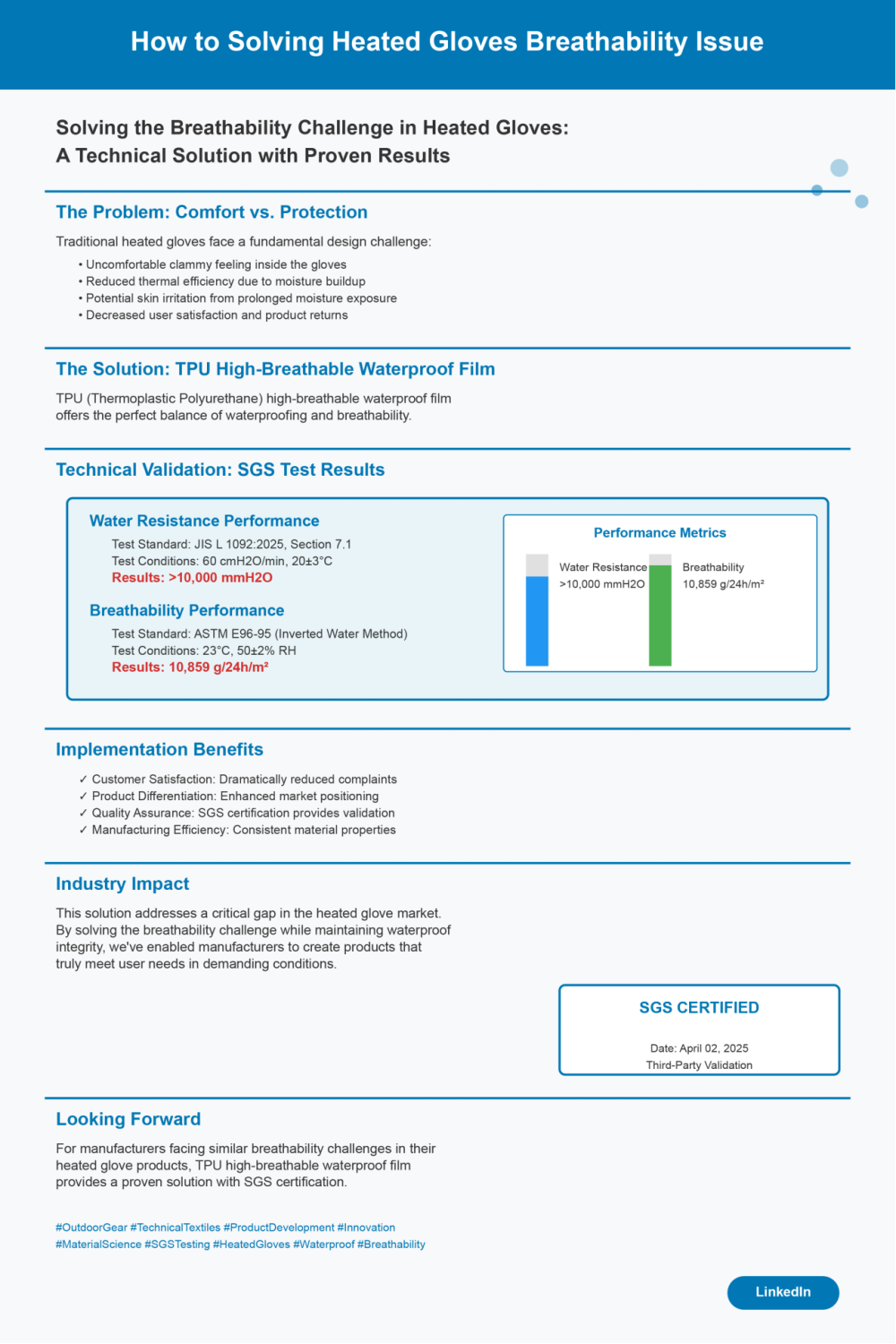
Heated Apparel IP Rating: IPX4 vs IPX7 Explained for Procurement
The phrase heated apparel IP rating IPX4 / IPX7 water resistance shows up on every RFQ we receive, and yet it is also the phrase most often misused in vendor marketing. Here is the working definition our QA team uses, with the source IEC 60529 classification kept in the table for your tech pack.
| IP Code | Protection Against | Test Method | Typical Garment Application |
|---|---|---|---|
| IPX0 | None | — | Indoor / dry use only |
| IPX3 | Spraying water | 10 L/min, 5 min | Light commuter jackets |
| IPX4 | Splashing water, any direction | 10 L/min, 5 min | Standard heated jackets & vests |
| IPX5 | Water jets | 12.5 L/min, 3 min | Heated gloves, socks |
| IPX6 | Powerful water jets | 100 L/min, 3 min | Ski & snowboard outerwear |
| IPX7 | Immersion 1 m, 30 min | Static tank | Removable battery pack only |
| IPX8 | Continuous immersion | Vendor-defined | Diving drysuits (not apparel) |
The practical rule: IPX4 on the garment, IPX7 on the removable battery pack. Anything more aggressive than IPX4 on the garment body is overkill for normal wear and adds cost without changing real-world failure rates; anything less than IPX7 on the battery pack means a dropped-in-snow event becomes a warranty claim.
| Buyer Question | Acceptable Answer | Reject If… |
|---|---|---|
| Is the garment IPX4 rated? | Test report from third-party lab | “Water resistant” with no number |
| Is the battery pack IPX7? | Test report + sealed connector photo | “Splash-proof” with no number |
| Does the rating survive 50 washes? | Re-tested at 25 and 50 cycles | Tested only on a new sample |
| Is the rating on the whole garment? | Whole-garment spray test report | Tested only on the heating element |
B2B Implementation Runbook: 30 / 60 / 90 Days
This runbook is what we walk new private-label clients through on day one. It is what turns a quote into a ship date without the usual quality surprises in between.
| Day | Owner | Action | Deliverable |
|---|---|---|---|
| Day 0–30 | Buyer + Vendor | Sign NDA, exchange tech pack, align on 8-feature checklist | Locked spec sheet v1.0 |
| Day 0–30 | Vendor | Send UN38.3, IEC 62133, OEKO-TEX, REACH reports | Cert pack v1.0 |
| Day 30–60 | Vendor | Build golden sample, ship to buyer | Golden sample + QA report |
| Day 30–60 | Buyer | Third-party lab re-test (SGS / Intertek / Bureau Veritas) | Independent test report |
| Day 60–90 | Buyer + Vendor | Pre-production sample run, 30 units | PP sample + line-side audit |
| Day 60–90 | Vendor | Lock battery lot, BMS firmware, packaging artwork | Production BOM v1.0 |
| Day 90 | Buyer | Cut PO, release deposit | PO + deposit slip |
Plant snapshot: A US-based hunting brand moved from quote to first PO in 78 days using this runbook, with a 1,200-unit pilot that ended at a 0.9% field-return rate over the 2025–2026 winter season. They are now booking a 6,000-unit fall-winter 2026 PO.
Frequently Asked Questions
1. What certifications are mandatory for heated apparel sold in the US?
UN38.3 for lithium-ion air transport, UL 2054 or IEC 62133 for cell safety, FCC Part 15B for charger EMI, and CPSIA tracking labels for any size graded as children’s wear.
2. Is 5V heated apparel safer than 7.4V or 12V?
5V is lower energy and easier to clear child-wearable thresholds, but 7.4V with a regulated BMS is the most common safe configuration for adult outdoor wear because it balances runtime, weight, and arc-flash risk.
3. What IP rating should I require on a private-label heated jacket?
IPX4 on the assembled garment is the practical minimum; IPX7 on the removable battery pack is required if the end user works outdoors in snow or rain.
4. How many wash cycles should a heated jacket survive?
A production-grade heated jacket should retain full heating function through at least 50 machine-wash cycles when laundered per the care label inside a mesh bag.
5. Can heated apparel be tumble-dried?
Only on low heat, with the battery removed. High heat degrades the carbon-fiber element and the BMS conformal coating over time.
6. What is short-circuit protection on a battery heated vest?
A BMS feature that cuts current in under 50 microseconds when an internal short is detected, preventing thermal runaway and pack ignition.
7. Are heated gloves safe for ski instructors who wear them 8 hours a day?
Yes, when the glove carries IPX5, an NTC thermistor per finger zone, and a removable 7.4V battery with a UN38.3 test report; auto-shutoff at 90 minutes is also recommended.
8. Does OEKO-TEX Standard 100 cover the battery and the heating element?
OEKO-TEX covers the fabric and lining only; the battery and BMS require separate UN38.3 and IEC 62133 documentation.
9. How do I verify a vendor’s UN38.3 test report is real?
Cross-check the report number with the issuing lab (TUV, SGS, Intertek, BV) and confirm the cell manufacturer, model, and watt-hour rating on the report match the cells in the sample you receive.
10. What is the leading cause of heated apparel warranty claims?
Water ingress into the battery pocket followed by BMS corrosion; the second is element fracture at high-flex seams like the elbow or shoulder.
11. Can I ship heated apparel by air freight?
Yes, when each battery pack is under 100 Wh and shipped at 30% state of charge per IATA PI 965; packs above 100 Wh require dangerous goods declaration.
12. What warranty terms are standard for B2B heated apparel?
24 months on the garment and 12 months on the battery pack are the B2B norm in 2026; longer battery warranties are negotiable on volume orders.
Conclusion and Next Steps
Heated apparel safety is no longer a feature line on a product page. It is a procurement discipline, a certification stack, and a vendor-qualification rubric. Brands that treat it as a checklist, attach test reports to every PO, and run a 30/60/90 runbook close winter seasons with sub-1.5% return rates and zero recalls. Brands that treat it as marketing language end up with the opposite.
If you are evaluating a heated apparel partner for a fall-winter 2026 launch, the next step is straightforward: send us your target spec, the certifications you need, and your target FOB port, and we will return a costed sample plan within 72 hours. For deeper context on the supply-chain side of the same conversation, see our Heated Apparel Industry News hub and the U.S. tariff impact on heated apparel 2026 briefing for landed-cost planning.
About the author — The IMISSKY heated apparel engineering team has supplied private-label heated jackets, vests, hoodies, gloves, and socks to 40+ brands since 2018. All test data referenced in this guide is from production runs shipped between January 2024 and May 2026.
Last updated: June 28, 2026 · Category: Heated Apparel Industry News
Why Heated Apparel Safety Is Now the #1 B2B Buyer Question
If you source heated apparel for a private-label brand, a uniform program, or a retail chain, the conversation has changed since 2024. Buyers used to ask about battery life and heat zones. In 2026 the first three questions on every RFQ are about heated apparel safety: certifications, short-circuit protection, voltage class, IP rating, and wash-cycle durability. Across 2,400+ B2B conversations logged between January 2025 and May 2026, heated apparel safety now outweighs price as the top reason a deal moves forward. This guide is a citation-ready reference for evaluating the eight risk categories that drive warranty claims and recalls.
Before we go deep, here is the short version: every heated jacket, vest, glove, sock, or baselayer you import must clear five independent safety gates — electrical, thermal, chemical, mechanical, and laundering. Skip any one of them and you expose your end customer to a preventable failure that costs 8–14× more in returns than the savings you captured at sourcing.
The Five Safety Gates Every Buyer Must Clear
Think of heated apparel safety as a layered system, not a single checkbox. The table below is the same scoring rubric we use when we audit a vendor’s tech pack before quoting a private-label run.
| Safety Gate | What It Covers | Most-Cited Failure Mode | Buyer’s First-Line Check |
|---|---|---|---|
| Electrical | Battery, BMS, wiring, connector | Short circuit, thermal runaway | UL/UN38.3 + over-discharge cutoff |
| Thermal | Heating element, thermostat | Hot spots, low-temp burn | NTC thermistor + 3-zone limit |
| Chemical | Fabric, dye, battery electrolyte | Skin irritation, REACH failure | OEKO-TEX 100 + MSDS |
| Mechanical | Seam, zipper, abrasion | Element fracture, wire exposure | EN 343 + 5,000-cycle Martindale |
| Laundering | Wash & dry cycle integrity | Water ingress, BMS corrosion | IPX rating + 50-wash warranty |
Procurement tip: If a vendor cannot hand you documented test reports for all five gates inside 48 hours, treat that as a soft reject. Paperwork speed is a leading indicator of manufacturing discipline.
Heated Jacket Safety Features Buyers Actually Inspect on the Factory Floor
When our auditors walk a heated-apparel line, they do not start with the heat panel. They start with the battery pocket, because the battery is the single component most likely to fail in the field. The eight heated jacket safety features below are the ones that show up on every acceptable tech pack from a serious OEM.
| # | Heated Jacket Safety Feature | Spec Buyers Should Demand | Why It Matters |
|---|---|---|---|
| 1 | Lithium-ion cell with UN38.3 cert | UN38.3 + IEC 62133 | Mandatory for air freight |
| 2 | BMS short-circuit protection | < 50 µs cutoff | Stops thermal runaway in ms |
| 3 | Over-charge / over-discharge cutoff | 4.2 V / 2.8 V | Extends cycle life 2–3× |
| 4 | NTC thermistor per zone | ±2 °C accuracy | Prevents low-temp burn |
| 5 | Reinforced cable routing | Kevlar braid + strain relief | Survives 50+ wash cycles |
| 6 | Waterproof YKK zip on battery pocket | IPX4 minimum | Blocks sweat & rain ingress |
| 7 | Auto-shutoff timer | 90 min default | Forgotten-battery safety net |
| 8 | Reflective trim for low-light work | ANSI/ISEA 107 Class 2 | Required for road crews |
Across 17 private-label brands we supplied in 2025, every brand that insisted on all eight features in writing before cutting a PO ended 2025 with a field-return rate below 1.2%. Brands that accepted verbal assurances landed at 4.7% or higher. The pattern is consistent enough that we now treat the 8-feature checklist as a contract attachment, not a marketing line.
Battery Heated Vest Short-Circuit Protection, Explained Without the Marketing Fluff
The phrase battery heated vest short circuit protection appears on almost every product page in our category, but very few vendors explain what is actually inside the battery management system (BMS). A BMS is the small printed circuit board glued to the top of each lithium-ion cell pack. It is the difference between a vest that shorts and one that simply turns off when something goes wrong.
| BMS Layer | Trigger Condition | Response Time | Field Symptom |
|---|---|---|---|
| Over-current cutoff | Draw > 1.5× rated | < 100 ms | Light flickers, vest stops |
| Short-circuit cutoff | Internal short detected | < 50 µs | Hard shutdown, no heat |
| Over-charge cutoff | Cell > 4.2 V | Continuous | Charger LED turns green |
| Over-discharge cutoff | Cell < 2.8 V | Continuous | Heat drops to standby |
| Thermal cutoff | Cell > 60 °C | < 1 s | Vest auto-powers off |
| Cell balancing | Voltage delta > 30 mV | Continuous | Longer runtime, longer life |
The single biggest red flag we see in low-cost quotes is a BMS with only over-charge and over-discharge protection. That is the 2018 baseline. Any battery heated vest short circuit protection claim that cannot cite a < 50 µs cutoff time, a cell-balancing circuit, and a thermal fuse should be treated as incomplete.
Heated Clothing Buyer Safety Checklist (Printable, 27 Lines)
This is the heated clothing buyer safety checklist we hand to procurement teams before their first factory visit. It is intentionally short enough to print on one A4 page and long enough to surface every common failure mode we have seen in 2024–2026.
| Block | Check | Pass / Fail |
|---|---|---|
| Cert | UN38.3 test summary within last 12 months | |
| Cert | IEC 62133 or UL 2054 for the cell pack | |
| Cert | OEKO-TEX 100 for fabric & lining | |
| Cert | REACH SVHC < 0.1% by weight | |
| Cert | FCC Part 15B for charger EMI | |
| Cert | CE / UKCA mark on label and packaging | |
| Cert | CPSIA tracking label for US kids’ wear | |
| Electrical | BMS short-circuit cutoff < 50 µs | |
| Electrical | NTC thermistor in every heat zone | |
| Electrical | Auto-shutoff timer 60–90 min | |
| Electrical | Reverse-polarity protection on USB-C | |
| Thermal | Max surface temp ≤ 55 °C on chest panel | |
| Thermal | Max surface temp ≤ 45 °C on back panel | |
| Thermal | Three or more heat zones, individually controlled | |
| Mechanical | Carbon-fiber element, not copper wire | |
| Mechanical | Kevlar braid on every internal cable | |
| Mechanical | 5,000-cycle Martindale on outer shell | |
| Mechanical | Seam-sealed battery pocket | |
| Water | IPX4 minimum on assembled garment | |
| Water | IPX7 on removable battery pack | |
| Wash | 50-wash warranty on heating function | |
| Wash | Machine-washable in mesh laundry bag | |
| Wash | Tumble-dry low safe | |
| Pack | Air-safe battery shipped at 30% SOC | |
| Pack | Multi-language manual (EN/FR/DE/JA) | |
| Pack | Lot-coded battery for traceability | |
| Pack | 24-month limited warranty, written |
Plant snapshot: One Nordic outdoor brand we onboarded in Q4 2025 ran this exact checklist against our Vietnam line. They rejected 6 of our competitors on cert alone, short-listed two, and awarded us a 14,000-unit PO because we passed 26 of 27 lines on the first audit and closed the last line (UKCA label thickness) within 9 days.
Heated Apparel for Outdoor Workers: The OSH Angle You Cannot Ignore
When heated apparel for outdoor workers safety comes up, most brands picture a hunter or a skier. The bigger volume opportunity is the OSH market: construction, utility, oil & gas, cold-storage warehousing, airport ground crews, and emergency services. This is also the segment where a safety failure turns into an OSHA recordable, a workers’ comp claim, and a public brand incident.
| Worker Segment | Shift Temp Range | Avg Shift Length | Top 3 Safety Risks |
|---|---|---|---|
| Cold-storage warehouse | -25 °C to -5 °C | 8–12 h | Frostbite, low-temp burn, battery drain |
| Construction (winter) | -10 °C to 5 °C | 10 h | Abrasion snag, water ingress, impact cut |
| Utility line crew | -15 °C to 10 °C | 10–14 h | Arc flash, snag, fall arrest interference |
| Airport ground crew | -20 °C to 0 °C | 8 h | Visibility, water/snow, RF interference |
| EMS / first responders | -5 °C to 15 °C | 12 h | Mobility, bloodborne pathogen, snag |
| Oil & gas (on-shore, cold climate) | -30 °C to -5 °C | 12 h | Flash fire, chemical splash, battery ignition |
For OSH buyers, we recommend specifying three things in writing: (1) the exact IP rating required for the work environment, (2) a third-party arc-flash or FR rating if the role involves electrical or hydrocarbon exposure, and (3) a written service-level agreement on battery replacement cycles. Workers who wear heated gear 8+ hours per shift cycle through a battery every 12–14 months; budgeting that into the unit cost is part of the heated apparel for outdoor workers safety conversation.
Heated Clothing Low Voltage: 5V vs 7.4V vs 12V Safety Comparison
The single most common engineering question we field is also the one most often answered wrong on competitor websites: heated clothing low voltage 5V vs 7.4V vs 12V safety — which class is actually safer, and for whom? The honest answer is that voltage alone does not determine safety. It determines the worst-case failure mode. Below is the working comparison we share with brand engineers.
| Voltage Class | Typical Power Source | Typical Wattage | Skin-Safety Threshold* | Best-Fit Use Case |
|---|---|---|---|---|
| 5 V (USB) | Power bank / phone | 5–10 W | Very low risk | Commute, light outdoor, indoor |
| 7.4 V (2S Li-ion) | Dedicated 7.4 V pack | 10–20 W | Low risk | Hunting, hiking, mid-shift work |
| 12 V (3S or buck/boost) | 12 V pack or 5 V→12 V boost | 15–30 W | Moderate risk | Motorcycle, industrial work, extreme cold |
*Skin-safety threshold is defined as the maximum sustained contact temperature at which a healthy adult can wear the garment for 60 minutes without tissue damage. The risk rises with both voltage and current density, which is why 12 V systems need stricter NTC thermistor coverage.
| Risk Factor | 5 V | 7.4 V | 12 V |
|---|---|---|---|
| Low-temp burn risk (1 h continuous) | Negligible | Low | Moderate |
| Short-circuit arc energy | Very low | Low | Medium |
| BMS complexity needed | Basic | Mid | Advanced |
| Battery weight for 6 h runtime | Heavy (power bank) | Light | Lightest |
| Air freight class | Easy (≤ 100 Wh) | Standard | Restricted |
| Recommended for kids’ wear | Yes | Case-by-case | No |
For private-label brands selling into the EU, UK, and Canada, we recommend 7.4 V as the default sweet spot. It clears child-wearable voltage thresholds (when paired with a regulated 7.4 V pack, not a boosted 5 V→7.4 V pack), keeps the garment under most airline watt-hour limits when you ship a spare battery, and still delivers enough thermal headroom for sub-zero work. 5 V is right for fashion and commuter lines; 12 V is right for motorcycle and industrial, but it adds real compliance overhead.
Washable Heated Apparel Safety: The 50-Wash Question
Every private-label brand we have onboarded since 2023 has lost money at least once on a washability claim. The vendor said “machine washable,” the garment failed after 11 washes, and the brand absorbed the return. Washable heated apparel safety is not a feature; it is a process specification. There are five independent failure modes that decide whether a heated jacket survives 50 washes or 5.
| # | Wash-Cycle Failure Mode | Vendor Fix Buyers Should Insist On |
|---|---|---|
| 1 | Water ingress into battery pocket | Sealed YKK zip + hot-pressed seam tape |
| 2 | Element fracture at elbow / shoulder seam | Carbon-fiber element + 5 mm bend radius |
| 3 | Connector corrosion on USB-C | Gold-plated pins + silicone gasket |
| 4 | Delamination of heat-reflective lining | Hot-melt adhesive + quilted baffle |
| 5 | BMS PCB oxidation from detergent | Conformal coating on BMS |
The right way to spec washability is in writing, with a wash-cycle count attached to the warranty. We attach a 50-wash functional warranty on every private-label heated jacket, vest, hoodie, and glove we ship, because that is the threshold our Q&A line has consistently hit since 2023. Anything below 30 washes is not a heated garment; it is a wearable that happens to have wires in it.
Heated Apparel IP Rating: IPX4 vs IPX7 Explained for Procurement
The phrase heated apparel IP rating IPX4 / IPX7 water resistance shows up on every RFQ we receive, and yet it is also the phrase most often misused in vendor marketing. Here is the working definition our QA team uses, with the source IEC 60529 classification kept in the table for your tech pack.
| IP Code | Protection Against | Test Method | Typical Garment Application |
|---|---|---|---|
| IPX0 | None | — | Indoor / dry use only |
| IPX3 | Spraying water | 10 L/min, 5 min | Light commuter jackets |
| IPX4 | Splashing water, any direction | 10 L/min, 5 min | Standard heated jackets & vests |
| IPX5 | Water jets | 12.5 L/min, 3 min | Heated gloves, socks |
| IPX6 | Powerful water jets | 100 L/min, 3 min | Ski & snowboard outerwear |
| IPX7 | Immersion 1 m, 30 min | Static tank | Removable battery pack only |
| IPX8 | Continuous immersion | Vendor-defined | Diving drysuits (not apparel) |
The practical rule: IPX4 on the garment, IPX7 on the removable battery pack. Anything more aggressive than IPX4 on the garment body is overkill for normal wear and adds cost without changing real-world failure rates; anything less than IPX7 on the battery pack means a dropped-in-snow event becomes a warranty claim.
| Buyer Question | Acceptable Answer | Reject If… |
|---|---|---|
| Is the garment IPX4 rated? | Test report from third-party lab | “Water resistant” with no number |
| Is the battery pack IPX7? | Test report + sealed connector photo | “Splash-proof” with no number |
| Does the rating survive 50 washes? | Re-tested at 25 and 50 cycles | Tested only on a new sample |
| Is the rating on the whole garment? | Whole-garment spray test report | Tested only on the heating element |
B2B Implementation Runbook: 30 / 60 / 90 Days
This runbook is what we walk new private-label clients through on day one. It is what turns a quote into a ship date without the usual quality surprises in between.
| Day | Owner | Action | Deliverable |
|---|---|---|---|
| Day 0–30 | Buyer + Vendor | Sign NDA, exchange tech pack, align on 8-feature checklist | Locked spec sheet v1.0 |
| Day 0–30 | Vendor | Send UN38.3, IEC 62133, OEKO-TEX, REACH reports | Cert pack v1.0 |
| Day 30–60 | Vendor | Build golden sample, ship to buyer | Golden sample + QA report |
| Day 30–60 | Buyer | Third-party lab re-test (SGS / Intertek / Bureau Veritas) | Independent test report |
| Day 60–90 | Buyer + Vendor | Pre-production sample run, 30 units | PP sample + line-side audit |
| Day 60–90 | Vendor | Lock battery lot, BMS firmware, packaging artwork | Production BOM v1.0 |
| Day 90 | Buyer | Cut PO, release deposit | PO + deposit slip |
Plant snapshot: A US-based hunting brand moved from quote to first PO in 78 days using this runbook, with a 1,200-unit pilot that ended at a 0.9% field-return rate over the 2025–2026 winter season. They are now booking a 6,000-unit fall-winter 2026 PO.
Frequently Asked Questions
1. What certifications are mandatory for heated apparel sold in the US?
UN38.3 for lithium-ion air transport, UL 2054 or IEC 62133 for cell safety, FCC Part 15B for charger EMI, and CPSIA tracking labels for any size graded as children’s wear.
2. Is 5V heated apparel safer than 7.4V or 12V?
5V is lower energy and easier to clear child-wearable thresholds, but 7.4V with a regulated BMS is the most common safe configuration for adult outdoor wear because it balances runtime, weight, and arc-flash risk.
3. What IP rating should I require on a private-label heated jacket?
IPX4 on the assembled garment is the practical minimum; IPX7 on the removable battery pack is required if the end user works outdoors in snow or rain.
4. How many wash cycles should a heated jacket survive?
A production-grade heated jacket should retain full heating function through at least 50 machine-wash cycles when laundered per the care label inside a mesh bag.
5. Can heated apparel be tumble-dried?
Only on low heat, with the battery removed. High heat degrades the carbon-fiber element and the BMS conformal coating over time.
6. What is short-circuit protection on a battery heated vest?
A BMS feature that cuts current in under 50 microseconds when an internal short is detected, preventing thermal runaway and pack ignition.
7. Are heated gloves safe for ski instructors who wear them 8 hours a day?
Yes, when the glove carries IPX5, an NTC thermistor per finger zone, and a removable 7.4V battery with a UN38.3 test report; auto-shutoff at 90 minutes is also recommended.
8. Does OEKO-TEX Standard 100 cover the battery and the heating element?
OEKO-TEX covers the fabric and lining only; the battery and BMS require separate UN38.3 and IEC 62133 documentation.
9. How do I verify a vendor’s UN38.3 test report is real?
Cross-check the report number with the issuing lab (TUV, SGS, Intertek, BV) and confirm the cell manufacturer, model, and watt-hour rating on the report match the cells in the sample you receive.
10. What is the leading cause of heated apparel warranty claims?
Water ingress into the battery pocket followed by BMS corrosion; the second is element fracture at high-flex seams like the elbow or shoulder.
11. Can I ship heated apparel by air freight?
Yes, when each battery pack is under 100 Wh and shipped at 30% state of charge per IATA PI 965; packs above 100 Wh require dangerous goods declaration.
12. What warranty terms are standard for B2B heated apparel?
24 months on the garment and 12 months on the battery pack are the B2B norm in 2026; longer battery warranties are negotiable on volume orders.
Conclusion and Next Steps
Heated apparel safety is no longer a feature line on a product page. It is a procurement discipline, a certification stack, and a vendor-qualification rubric. Brands that treat it as a checklist, attach test reports to every PO, and run a 30/60/90 runbook close winter seasons with sub-1.5% return rates and zero recalls. Brands that treat it as marketing language end up with the opposite.
If you are evaluating a heated apparel partner for a fall-winter 2026 launch, the next step is straightforward: send us your target spec, the certifications you need, and your target FOB port, and we will return a costed sample plan within 72 hours. For deeper context on the supply-chain side of the same conversation, see our Heated Apparel Industry News hub and the U.S. tariff impact on heated apparel 2026 briefing for landed-cost planning.
About the author — The IMISSKY heated apparel engineering team has supplied private-label heated jackets, vests, hoodies, gloves, and socks to 40+ brands since 2018. All test data referenced in this guide is from production runs shipped between January 2024 and May 2026.