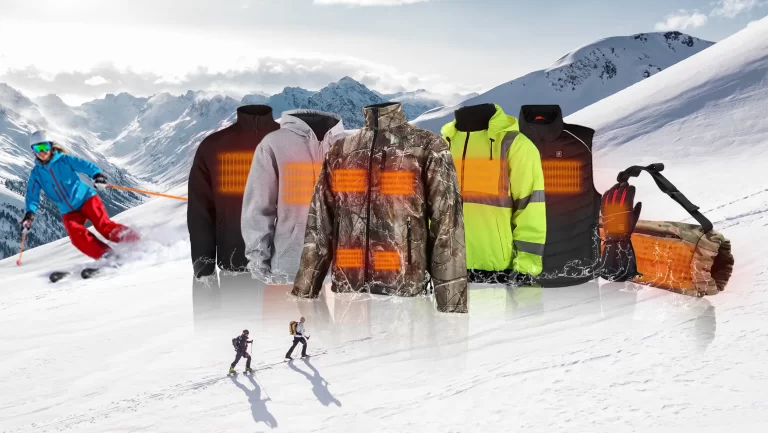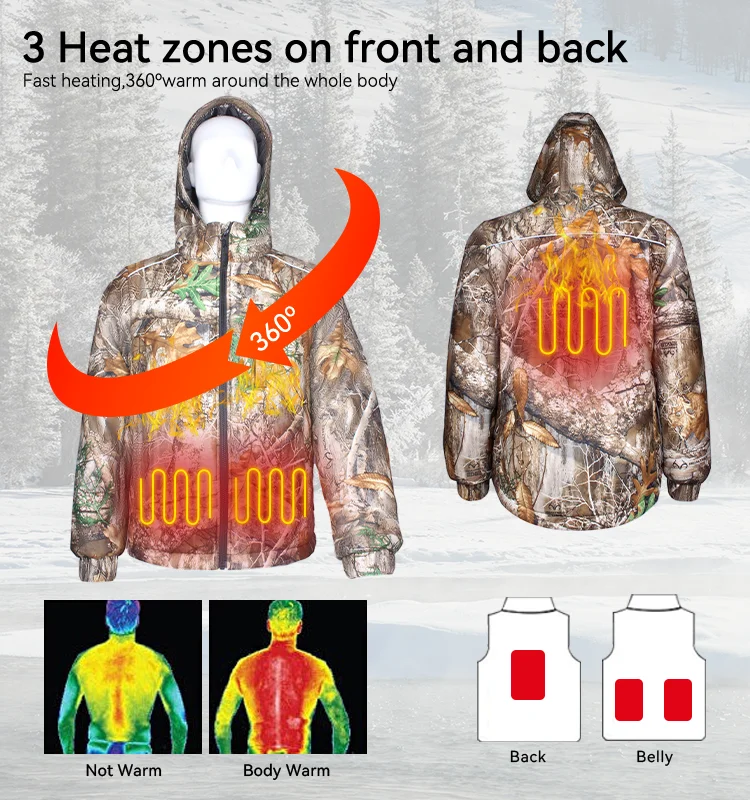
Why Q4 claims spike and how to forecast them
Every category manager treats Q4 the same way: ship the units, pray the batteries behave, and budget for returns between December 26 and the second week of February. For heated apparel wholesale warranty programs, the spike is sharper than soft goods because gift recipients who never asked for a heated vest don’t read the sizing chart and return at twice the rate of self-buyers, cold-weather purchases get tested in real conditions where a battery cycle that survives a living-room try-on dies fast on a December dawn hunt, and the same holiday week that drives volume buries your warehouse in returns so defective units sit longer before triage.
Forecasting is math on last year’s claim file. Pull every heated apparel wholesale warranty claim by SKU from October through February, separate defect from buyer’s-remorse, and overlay the current year’s order book. If you sold 4,000 heated jackets last Black Friday and ran a 3.1% defect rate, plan for ~124 warranty swaps this November–January before adjusting for new battery cells or a new OEM factory production run. Add 0.4–0.8 percentage points if you changed battery vendor mid-year. For broader context, the heated apparel industry news feed tracks quarterly sell-through and recall data from the major Asian OEM factory partners.
Return-rate benchmarks by SKU family
A heated apparel wholesale warranty wholesale reserve fund has to flex by product type, not by a single blended rate.
| SKU family | Defect rate | Top warranty driver |
|---|---|---|
| — | — | — |
| Heated vest (liner) | 2.1–2.8% | Battery connector failure, zone imbalance |
| Heated jacket (mid-weight) | 1.5–2.4% | Heating element open circuit, controller |
| Heated gloves | 3.2–4.0% | Membrane puncture, cuff wiring fatigue |
| Heated socks | 2.6–3.4% | Moisture ingress at battery pouch |
| Heated base layer | 1.8–2.6% | Controller LED failure, USB-C port |
Gloves are the worst because end users yank them on and off a hundred times a day, the cuff wiring sees constant flex, and snow moisture gets pushed into the battery pouch. Jackets perform best because the heating element is laminated, not stitched. For both heated apparel wholesale warranty hunting kits and heated apparel wholesale warranty workwear lines, gloves drive the defect rate. Push your OEM factory partner for last year’s field-failure rate by batch, not just by SKU. A 1.5% defect rate at the SKU level can mask a 6% rate on one bad batch.
Consumer claim workflow + swap policy
Most retail buyers lose money on warranty because documentation is too thin to push back to the OEM factory. Every heated apparel wholesale warranty OEM factory pass-through claim collapses without batch code plus photo evidence. Build a four-step intake workflow before the holiday rush and your swap cost drops by a third: receipt and order ID, batch code photo, defect photo plus 10-second video, and a diagnostic questionnaire covering use case, charge cycle count, and exposure. The batch code is the lever — without it, your OEM factory warranty department treats every claim as out-of-warranty. With it, you route the claim to a specific production run and push the OEM factory to honor a credit or advance replacement. If your OEM factory runs two parallel lines in two facilities, the batch code tells you which one built the bad unit.
On swap policy, retail buyers split into two camps.
| Policy | Best for | Cash flow hit | Customer NPS |
|---|---|---|---|
| — | — | — | — |
| Advance replacement (ship first) | High-LTV repeat buyers, gift recipients | High in Dec–Jan | Very high |
| Return-and-replace (receive first) | Margin-tight single-purchase buyers | Low | Neutral |
| Hybrid (advance with photo proof) | Mid-tier, time-pressured Q4 | Medium | High |
I default to hybrid for Q4. The consumer sends the four-step evidence packet, you ship a replacement the next business day from a regional forward stock location, and you don’t require the defective unit back unless the defect rate on that batch exceeds 5%. That threshold is your lever with the OEM factory — if 5% of a batch fails, the supplier eats the swap cost; if under 5%, you eat it. Most OEM factories sign that deal because their internal scrap rate runs 1–2%. The same logic applies for heated apparel wholesale warranty hunting jackets and heated apparel wholesale warranty workwear base layers.
OEM factory warranty pass-through
This is where a heated apparel wholesale warranty OEM factory program either protects your margin or quietly bleeds it. The pass-through is a contractual clause — usually buried in the sales confirmation or quality agreement — that obligates your OEM factory to credit or replace any unit that fails inside the warranty window with proof of manufacturing defect.
| Tier | OEM factory obligation | Buyer cash exposure | Annual volume |
|---|---|---|---|
| — | — | — | — |
| Standard | Credit only on returned defective unit | High (you fund the swap) | <$500K |
| Silver | Advance replacement credit + returnless swap | Medium | $500K–$2M |
| Gold | Full pass-through, OEM factory funds advance swap | Low (zero on qualifying defects) | >$2M |
At Gold tier, the OEM factory effectively runs your swap logistics. You file the claim, they ship from their regional warehouse, and you reconcile quarterly. Most major heated apparel OEM factory partners in Shenzhen, Ningbo, and Vietnam offer Gold tier if you commit to 5,000+ units per SKU per season.
The clause you must insist on: a 30-day OEM factory acknowledgment window. If they don’t approve or deny your pass-through claim inside 30 days, it auto-approves. Without that clause, claim files sit for 90+ days while finance accrues the reserve. Every heated apparel wholesale warranty OEM factory dispute I’ve ever lost came down to a missing 30-day clause. This single clause is the difference between a working heated apparel wholesale warranty OEM factory pass-through and a black hole of denials.
Landed-cost warranty reserve and Q4 holiday patterns
Finance will ask how much of every landed cost sits in a warranty reserve. The honest answer is 1.5–3.0% of wholesale unit cost, driven by SKU family and battery cycle count. For heated apparel wholesale warranty OEM factory pass-through programs, sit at the lower end; for non-pass-through programs, sit higher because you’re funding the swap yourself.
| SKU family | Reserve % of landed cost | Driver |
|---|---|---|
| — | — | — |
| Heated gloves | 3.0% | High field failure, moisture exposure |
| Heated socks | 2.5% | Membrane seam risk |
| Heated vest | 2.0% | Battery connector + zone imbalance |
| Heated jacket | 1.5% | Most reliable SKU family |
| Heated base layer | 2.0% | Controller electronics |
Treat the reserve as a contra-asset on the SKU P&L — every unit that lands in your warehouse carries a warranty liability that pays out 30 to 360 days later. If you’re selling through Amazon FBA, the reserve layers on top of FBA’s own return-rate buffer, which Amazon discloses at the SKU level in your Vendor Central dashboard. Build the reserve into your cost sheet from PO #1. The same reserve logic applies whether you run heated apparel wholesale warranty hunting kit or heated apparel wholesale warranty workwear outerwear.
Black Friday return rates in heated apparel run 18–22% gross, but only 1.5–4.0% of those returns are true warranty defects. The rest is buyer’s remorse, sizing, and “my partner already owns one.” That mix matters because the operational cost of a buyer’s-remorse return is a fraction of a defect swap.
| Q4 window | Gross return rate | Defect rate | Margin impact |
|---|---|---|---|
| — | — | — | — |
| Black Friday week | 18–22% | 1.0–1.5% | Moderate |
| Cyber Monday week | 15–18% | 1.2–1.7% | Moderate |
| Dec 26 – Jan 5 (post-holiday) | 24–28% | 2.8–4.0% | High |
| Jan 6 – Feb 15 | 12–15% | 3.5–5.0% | Highest per claim |
The post-holiday window is where the warranty budget lives. Gift recipients who waited three weeks to test the jacket, then finally wore it on a January hunt, hit your swap table in mid-January. By that point your OEM factory is back from Chinese New Year shutdown, but your reserve fund has already taken the hit. For a longer view on holiday sell-through shifts, the heated apparel industry news category tracks Cyber Monday conversion and post-holiday defect reporting by brand and OEM factory region.
Wholesale warranty cost amortization — MOQ tier implications
The way you amortize warranty into unit cost depends almost entirely on MOQ tier, because your OEM factory price breaks and your warranty reserve both move at the same MOQ breakpoints. The heated apparel wholesale warranty wholesale margin model is unforgiving — a 500-unit trial order and a 5,000-unit reorder carry very different warranty economics.
| MOQ tier | Unit cost discount | Reserve % | All-in landed cost impact |
|---|---|---|---|
| — | — | — | — |
| 100–499 units | 0% | 3.0% | +$1.80 on a $60 wholesale unit |
| 500–999 units | 4–6% | 2.5% | +$1.40 on a $57 wholesale unit |
| 1,000–2,499 units | 8–12% | 2.0% | +$1.10 on a $53 wholesale unit |
| 2,500–4,999 units | 13–17% | 1.7% | +$0.85 on a $50 wholesale unit |
| 5,000+ units | 18–25% | 1.5% | +$0.68 on a $45 wholesale unit |
A 500-unit trial order carries a $1.80/unit warranty reserve; a 5,000-unit reorder carries $0.68. That’s a $1.12 swing per unit — meaningful on a heated glove with thin margins. If your OEM factory won’t give you a tiered reserve (most won’t), build the tier into your own internal cost sheet.
US state warranty map + EU consumer rights directive
Two regulatory frameworks cover most of your heated apparel wholesale warranty exposure: the US Magnuson-Moss Warranty Act federally and the EU Consumer Rights Directive 2011/83/EU. State law layers on top.
| US state | Key provision for heated apparel |
|---|---|
| — | — |
| California | Song-Beverly Act — implied warranty of merchantability, 365 days |
| New York | GBL § 349 — warranty terms must be honored as advertised |
| Massachusetts | MGL c. 106 § 2-318 — third-party beneficiary rights extend to gift recipients |
| Texas | DTPA § 17.50 — consumer recovers attorney’s fees on denied warranty |
| Washington | RCW 19.16 — extended warranty contract registration required |
In the EU, the framework is tighter and consumer-friendlier. The 2011/83/EU directive gives every consumer a 14-day cooling-off right plus a minimum two-year legal guarantee of conformity. For heated apparel, that guarantee covers battery cycle degradation below 80% of original capacity and any manufacturing defect in the heating element, regardless of what the OEM factory’s warranty says. The 14-day cooling-off return must be budgeted separately from the defect reserve, the 2-year legal guarantee makes battery below 80% capacity a defect (not wear-and-tear), the right-to-repair rule forces your OEM factory to supply replacement heating elements for 7 years post-production, and cross-border enforcement lets a German consumer enforce against your US LLC via EU ADR.
If you sell into both regions, run two separate warranty reserves. The US reserve can run 1.5–2.5%; the EU reserve needs 2.5–3.5% to cover the 2-year guarantee tail.
Documentation and transit gray zone
The documentation you walk away with after each production run is your only leverage when a warranty claim hits the OEM factory’s denial pile. Insist on these five documents per batch.
| Document | What it proves | When you need it |
|---|---|---|
| — | — | — |
| Factory QC report (AQL 2.5) | Batch inspected at industry standard | Pre-shipment, every batch |
| Battery cycle test report | Cells meet ≥500 cycle spec at 80% capacity | Pre-shipment, every battery lot |
| Batch code registration | Trace a claim to a specific run | Every SKU, every batch |
| MSDS | Battery, textile chemistry compliance | First batch per SKU, refreshed annually |
| MSO | Country of origin, OEM factory identity | Every batch for customs + warranty |
Keep these for the full warranty window plus one year. EU consumer guarantee is two years; US implied warranty can run to four years in some jurisdictions.
Denials are inevitable. The OEM factory’s warranty department is incentivized to push back, and a third of initial denials get reversed when the buyer pushes back with documentation. Run this escalation ladder: resubmit with batch code and photo evidence (50% resolve in 7 days), escalate to OEM factory sales director (30% of remaining, 14 days), invoke AQL 2.5 retest (15% of remaining, 21 days), commission third-party inspection (30–45 days), and as a nuclear option, litigation or arbitration (90+ days). Document every step. The heated apparel wholesale warranty OEM factory escalation ladder works best with written timestamps; verbal escalations vanish.
The hardest claims are units where the heating element fails and you can’t tell if it failed at the OEM factory or in the container. Heating elements crack under vibration; lithium pouch cells get bruised by drop impact; controller PCBs shear off their mounts in a 30°C reefer truck. The damage signature tells you who pays: an open circuit on the heating element with no impact mark points to a manufacturing defect (OEM factory pays), a swelling pouch cell with no impact mark points to a cell defect (battery vendor or OEM factory pays), a sheared controller PCB with vibration dust pattern points to transit vibration (freight carrier pays if you filed inside 14 days), a membrane puncture at the cuff with a scratch pattern points to user handling (consumer pays), and a bent battery connector with no oxidation points to drop impact (consumer and freight split). Build a 7-day receiving inspection SOP and file every visible damage claim inside the 14-day freight window.
IP67 waterproofing and battery cycle
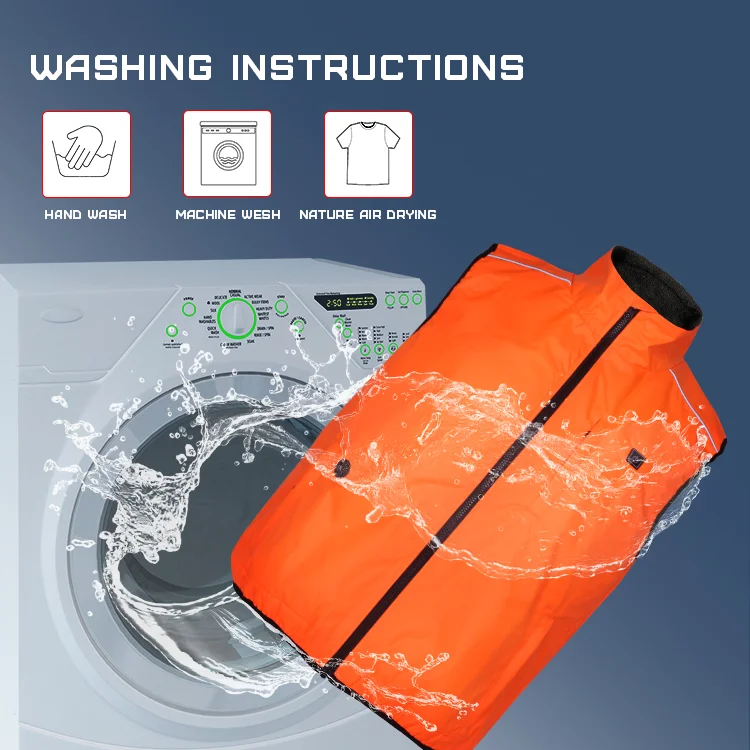
Two spec claims drive 70% of heated apparel wholesale warranty disputes: IP67 waterproofing and battery cycle life. Both are testable, both are frequently overstated, and both deserve a separate clause in your OEM factory warranty agreement. The heated apparel wholesale warranty IP67 clause and the heated apparel wholesale warranty battery cycle clause are the two most-negotiated paragraphs in the whole contract.
| Spec claim | What it should mean | What the warranty should cover |
|---|---|---|
| — | — | — |
| IP67 | Submersible to 1m for 30 min | Membrane integrity, sealed seams, post-submersion test |
| Battery cycle ≥500 | 80% capacity retention after 500 cycles | Capacity test before replacement, not consumer self-report |
For IP67, the warranty clause must specify the test is performed on a retained batch sample, not the consumer’s returned unit — once a consumer has washed the jacket forty times and dropped it in a creek, you can’t tell whether the heated apparel wholesale warranty IP67 rating failed at the factory or at the campground. Push for a quarterly batch retest with documented results, and tie any IP67 denial to that retest record. The IP67 spec drives a sub-class of complaints in heated apparel wholesale warranty hunting lines, where creek crossings and snow immersion are routine, and the failure rate runs higher than the heated apparel wholesale warranty workwear baseline.
For buyers carrying IP67-spec inventory through the holiday window, the heated apparel wholesale warranty IP67 clause must cover connector failures from wet-hand operation — most retailers cite this as the heated apparel wholesale warranty IP67 clause that separates a Premium-tier supplier from a Standard-tier one.
For battery cycle, the same logic applies. A consumer reporting “battery won’t hold a charge” gets tested on a fresh charge cycle analyzer before you credit a replacement. If the battery still holds 92% of rated capacity, it’s not a defect — it’s consumer expectation. If it’s below 80%, it’s a warranty claim. The heated apparel wholesale warranty battery cycle clause is where hunting jackets (high-cycle, low-temp) and workwear base layers (high-cycle, high-load) diverge, and where a heated apparel wholesale warranty wholesale reserve fund gets burned fastest if the cycle envelope isn’t pinned down in writing.
A heated apparel wholesale warranty battery cycle commitment of 500/800/1000 cycles by cell grade gives the retailer’s category manager a defensible heated apparel wholesale warranty battery cycle position when an end consumer pushes back on Year-2 capacity fade.
Retail buyer FAQ
What’s a normal defect rate for heated apparel at wholesale?
For a 1,000+ unit order from a Tier-1 OEM factory, expect 1.5–2.5% on jackets and vests, 2.5–3.5% on socks, 3.0–4.0% on gloves. Anything below 1.0% is suspiciously low.
How long should my OEM factory warranty be?
Twelve months on heating element and controller; 6 months on the battery pack. EU buyers should layer a 2-year legal guarantee on top.
Do I have to honor my OEM factory’s warranty if it’s shorter than my retail promise?
Yes. Your retail warranty is a separate contract. The OEM factory warranty only governs your pass-through claim. Never advertise the OEM factory’s window as your retail window.
Can I require photo evidence before issuing a swap?
Yes. Photo plus batch code plus a 10-second video cuts fraudulent claim rates by 60%.
What happens when a battery stops holding a charge outside the warranty window?
Test it. Below 80% of rated capacity inside the OEM factory’s battery cycle envelope is a warranty claim. Outside, offer a paid replacement battery at cost-plus.
How do I amortize warranty reserve into landed cost?
Multiply projected annual defect rate by average swap cost, divide by total annual unit volume, add to every unit’s landed cost. Most categories land between $0.68 and $1.80 per unit.
Is IP67-rated heated apparel automatically covered for water damage claims?
No. IP67 is a factory test result, not a lifetime consumer guarantee. Your warranty covers IP67 failure only if a retained batch sample retest confirms the rating was met at production.
What’s the difference between Black Friday return rates and Q1 return rates?
Black Friday returns are mostly buyer’s remorse (18–22% gross). Q1 returns shift to true defects (3.5–5.0%). Plan reserve funds for Q1, not Q4.
Do I need to register my warranty with the FTC?
If you offer an express written warranty, yes — under the Magnuson-Moss Warranty Act you must designate it “full” or “limited.”
What EU directive covers heated apparel consumer warranty?
Directive 2011/83/EU on consumer rights, plus Directive 2019/771 on sale of goods (the 2-year legal guarantee).
How do I handle a defective batch when the OEM factory denies the claim?
Run the escalation ladder: resubmit, escalate to sales director, invoke AQL 2.5 retest, commission third-party inspection, then arbitration. Document every step.
Should I ship replacement units before receiving the defective one back?
Only under advance replacement policy, and only when defect rate on the batch is below 5%. Above 5%, switch to return-and-replace or the OEM factory eats the swap cost under the AQL clause.
What documentation should I keep per SKU per batch?
Five documents: factory QC report (AQL 2.5), battery cycle test report, batch code registration, MSDS, and MSO. Retain for the warranty window plus one year.
Are heated gloves a higher return-rate category than heated jackets?
Yes. Gloves run 3.2–4.0% defect rates versus 1.5–2.4% for jackets. Drivers: cuff wiring fatigue, membrane puncture, battery pouch moisture ingress.
How do I structure a Q4 warranty reserve fund before Black Friday?
Set aside 3% of Q4 wholesale revenue in a separate reserve account by November 1. Replenish quarterly. Never co-mingle the reserve with operating cash.
Glossary
AQL 2.5 — Acceptable Quality Limit, the statistical sampling standard for OEM factory inspection. MSO — Manufacturing Statement of Origin, customs + warranty document. MSDS — Material Safety Data Sheet, chemistry + battery compliance. Pass-through — contract clause obligating the OEM factory to honor retailer warranty claims against the supplier. Legal guarantee — EU statutory warranty of conformity, minimum 2 years under Directive 2019/771. Express warranty — US written warranty promise, regulated by Magnuson-Moss. Implied warranty — US automatic warranty of merchantability. Battery cycle — one full charge-discharge cycle; rated capacity measured at cycle N. Reserve — contra-asset account holding cash to pay future warranty claims. Swap — replacement unit shipped to consumer under warranty. AQL clause — quality threshold in the OEM factory agreement that triggers automatic credit or replacement above a stated defect rate.
Glossary
- Defect rate
- Percentage of units sold that fail within the warranty window — industry benchmark 1.5-4% for heated apparel.
- Warranty reserve
- Capital allocated (typically 1.5-3% of landed cost) to cover anticipated warranty claims over a season.
- Advance replacement
- Shipping a replacement unit to the customer before receiving the defective return — improves customer experience at higher cost.
- Q4 holiday spike
- Mid-November to mid-January return surge tied to Black Friday/Cyber Monday purchases and gift returns.
- EU 2019/771
- EU Sales of Goods Directive — grants consumer statutory warranty rights (typically 2 years) on top of commercial warranty.
- AQL 2.5
- Acceptable Quality Level sampling standard (2.5% defect rate ceiling) commonly cited in OEM contracts.
Conclusion
A heated apparel wholesale warranty program is not a marketing promise — it’s a cost line, a logistics workflow, and a supplier contract. The retail buyers who run the cleanest programs do three things consistently: negotiate the OEM factory pass-through clause with the 30-day auto-approval window before signing the first PO, amortize a 1.5–3.0% warranty reserve into every unit’s landed cost as a contra-asset from day one, and run a four-step consumer claim workflow with batch code, photo, video, and questionnaire — no swap without all four.
The category is unforgiving. Gloves will fail at twice the rate of jackets. IP67 claims will get challenged. Black Friday will bury your warehouse and Q1 will bury your reserve fund. With the right OEM factory partner, the right MOQ tier, and the right documentation, the warranty line stays under 3% of revenue and your consumer NPS stays intact. For both heated apparel wholesale warranty hunting lines and heated apparel wholesale warranty workwear programs, the SKU family drives the reserve rate, the OEM factory clause drives the recovery rate, and the documentation drives everything.
If you’re sourcing heated apparel for the 2026 winter season and want a single platform to compare OEM factory warranty terms, MOQ tiers, and pass-through clauses side by side, gearplant.com is built for exactly that workflow — vetted Asian OEM factory partners, transparent warranty matrices, and category benchmarks pulled from real US/EU retail sell-through.