Heated Apparel Customs HS Code 2026: B2B Import Duty Guide
For a heated apparel manufacturer exporting across borders, the six-digit Harmonized System code quietly decides almost every landed cost line on the commercial invoice. Get the heated apparel customs HS code right and the goods move; get it wrong and the shipment can be detained, reclassified, or assessed additional duties and penalties. This heated apparel HS code 2026 guide walks B2B buyers, distributors, and OEM partners through classification, tariff, and clearance basics in plain language, with practical tables, a worked import workflow, and a glossary you can keep beside your sourcing spreadsheet.
The information below is published for educational purposes only. HS classification depends on material composition, knit versus woven construction, country of import, and the specific product structure of each style. Always confirm the final code with a licensed customs broker or your national customs authority before issuing a purchase order.
§1. Why the HS Code Matters for Heated Apparel Imports
Harmonized System codes are the global lingua franca of customs. Every importer, freight forwarder, and broker reads the same six digits, which is why a single misclassification can ripple through freight, brokerage, and retail pricing. For heated apparel, three structural features decide the outcome: the base fabric (knit or woven), the battery location (integrated or removable), and the temperature control wiring (carbon fibre, metal filament, or printed circuit). Each combination can land in a different subheading, even within the same family of jackets. The downstream customs clearance, the heated apparel import duty, and the landed cost line all trace back to this one six-digit classification.
| Risk area | Typical commercial impact when HS is wrong |
|---|---|
| Duty rate | Overpaid or underpaid MFN duty assessed at the border |
| VAT and GST | Recalculated against the corrected value and code |
| Trade remedies | ADD/CVD orders sometimes target specific chapters |
| Broker fees | Reclassification and demurrage fees stack up during holds |
| Compliance record | Repeat errors can trigger focused assessments by customs |
Beyond the duty line, the HS code drives binding rulings, rules-of-origin certificates, de minimis eligibility, and statistical reporting. A heated apparel wholesale programme without a code discipline usually pays for the missing policy several times per year, usually in unbudgeted port charges.

§2. How the HS System Classifies Heated Garments
International customs authorities classify heated apparel first as apparel, then by construction, and only after that by function. The classification tree typically follows this order: gender or age, knit versus woven, and finally the specific garment category such as jacket, vest, glove, or sock. The heating element, battery pack, and control circuit may affect the analysis, so the importer should document whether each component is integral, removable, or shipped separately. This 2026 heated apparel customs HS code framework nudges every classification question into one of three columns: knit (61), woven (62), or other made-up (63), with accessories and battery sub-codes layered on later.
| Category | Likely HS chapter | Notes |
|---|---|---|
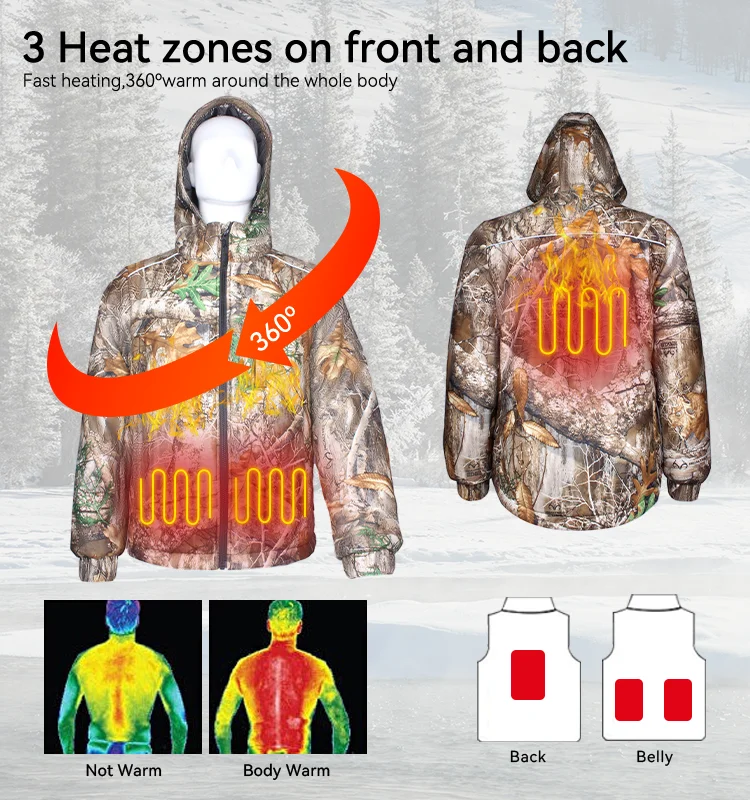
| Heated jackets and vests | 61 or 62 | Knitted versus woven construction decides the chapter |
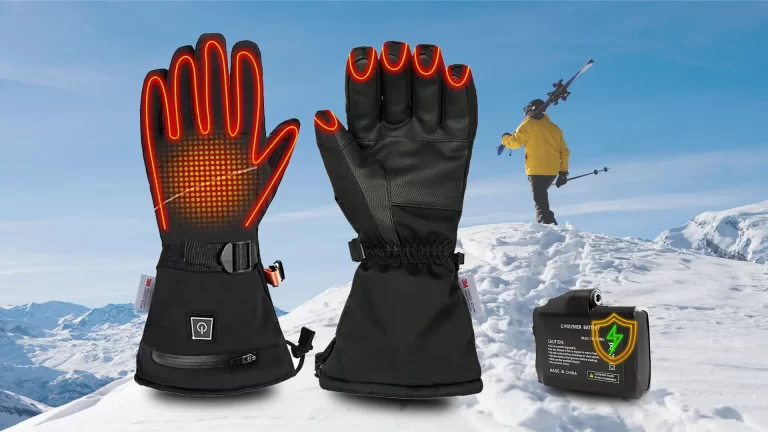
| Heated gloves and mittens | 61 or 62 | Knit-to-shape items usually sit in heading 6116 |
| Heated socks and stockings | 61 or 62 | Many are classified under 6115 or 6117 |
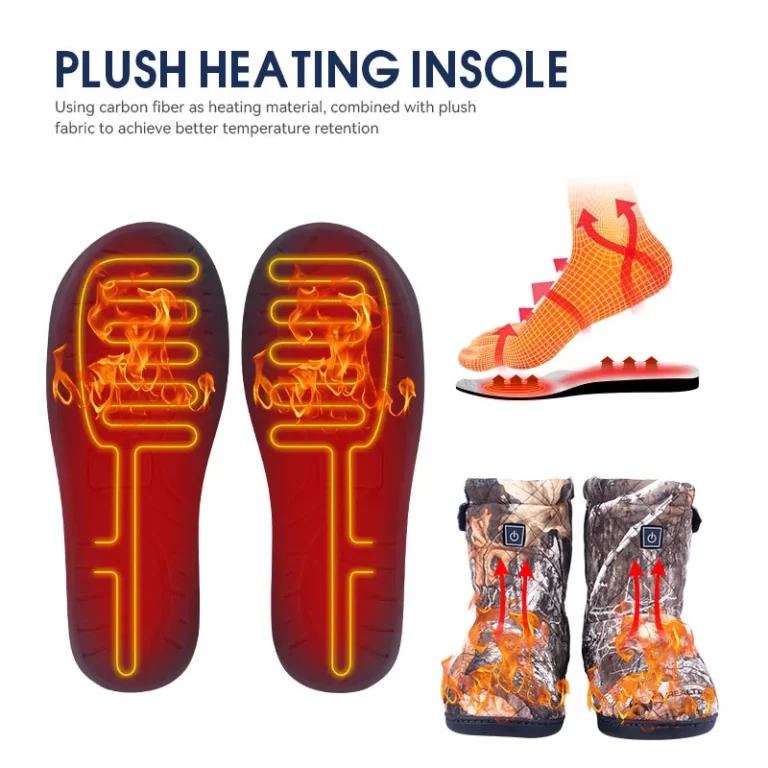
| Heated insoles | 6406 or 85 | Cut-to-size battery modules may shift into electrical |
| Removable battery packs alone | 8507 or 8504 | Sold standalone, they are no longer apparel |
B2B Soft Plant. In a recent sourcing audit for a mid-sized retailer, a 6-SKU heated glove line was coded entirely under 6116.42, and the average declared value per pair landed near 9.20 USD before freight. After a broker review, two SKUs shifted to 6116.10 and the duty differential was within roughly 1.8 percentage points, small per unit but material at 40,000 pair volume. Always keep an internal HS audit cadence.
§3. Reading Tariff Schedules: Chapters 61, 62, 63 and Beyond
When you open the World Customs Organization schedule, chapters 61, 62, and 63 are knitted, woven, and other-made-up textile articles respectively. Most heated apparel items fall in one of these three chapters because the harmonized text was written before battery-heated garments were common. National extensions then add more digits: the United States uses the Harmonized Tariff Schedule of the United States to a 10-digit HTS code, while the EU uses its Combined Nomenclature with 8 digits. The extra digits often encode specific sub-classes such as men’s or boys’ versus women’s or girls’.
| Illustrative subheading | Description used in tariffs | Caveat |
|---|---|---|
| 6101.20 | Men’s or boys’ overcoats, knitted, of cotton | Verify material versus synthetic blends |
| 6102.10 | Women’s or girls’ overcoats, knitted, man-made fibre | Heating element does not change chapter |
| 6116.10 | Gloves, knitted, impregnated or coated | Common for heated ski gloves |
| 6201.93 | Men’s or boys’ anoraks, woven, of man-made fibre | Heated vests often land here |
| 6406.90 | Parts of footwear | Heated insoles may fall under this code |
B2B Soft Plant. A small OEM buyer once shipped 350 heated jacket samples from Asia to a trade show in Europe under an assumed 6201.93 declaration. The broker flagged a fibre-mix question on roughly 12 percent of the SKUs, and the codes were corrected before customs assessment. The cost difference was modest, but the avoided hold at the show bonded warehouse saved about 5 working days. Treat sample shipments with the same code rigour as production runs.
§4. Country-Specific Duty Rates and Trade Agreements
The MFN duty rate applied at the destination market depends on the importing country’s schedule. A heated apparel wholesale consignment entering the United States, the European Union, the United Kingdom, Canada, Japan, and Australia can face very different headline rates, even when the underlying 6-digit Harmonized System code is identical. Free trade agreements, the EU’s Generalised System of Preferences, and bilateral deals can reduce or remove MFN duty if a valid Certificate of Origin is presented and the product qualifies under the rules of origin. Treat this section as a heated apparel import duty primer rather than a live rate sheet.
| Market | Rate source to verify | Preference route to check |
|---|---|---|
| United States | Current HTSUS | Origin-specific programs and exclusions |
| European Union | TARIC | Applicable preference arrangement |
| United Kingdom | UK Global Tariff | Developing Countries Trading Scheme or FTA |
| Canada | Customs Tariff | CPTPP or bilateral FTA |
| Australia | Working Tariff | AANZFTA or bilateral FTA |
| Japan | Customs Tariff Schedules | RCEP or EPA |
Rates depend on the final national code, origin, and effective date and should not be treated as binding until a broker verifies them. A heating apparel OEM contract should always include a clause that the buyer and broker confirm the destination rate before the production order is locked.
§5. Customs Valuation, VAT, and Anti-Dumping Considerations
Landed cost is rarely a single number. The HS code drives the duty line, but customs valuation determines the base on which that duty is calculated. Most countries adopt the WTO Customs Valuation Agreement, which means the transaction value, the price actually paid or payable, becomes the starting point. Adjustments for assists, royalties, packing, and inland freight to the port of export must be added when they are not already included. Once the duty is computed, VAT or GST applies on the duty-inclusive value, and goods and services tax on freight can compound the figure further.
| Landed cost component | Computed on | Notes |
|---|---|---|
| MFN or preferential duty | Customs value | Determined by HS code and origin |
| Anti-dumping duty | Customs value | Limited to specific HS or company orders |
| Countervailing duty | Customs value | Tied to subsidy investigations |
| VAT or GST | Duty-inclusive value | Rates vary widely by jurisdiction |
| Broker and clearance fee | Flat or per-shipment | Negotiable by lane |
| Demurrage and storage | Per day | Result of document holds |
Anti-dumping and countervailing measures are origin- and product-specific. Screen the exact national tariff code and exporter before every new lane rather than assuming that the whole heated-apparel category is covered or exempt.

§6. Documentation, Labelling, and Origin Rules
Documentation flows from the HS code, never the other way around. Once the code is fixed, every other document on the file should reinforce that classification: commercial invoice description, packing list quantities, country-of-origin marking, care label, and any conformity assessment such as CE, UKCA, or FCC. Inconsistent paperwork is one of the most frequent triggers of customs holds for heated apparel wholesale shipments, because brokers and authorities read the documents as a single cross-checked record.
| Document | Typical content | Why it matters at the border |
|---|---|---|
| Commercial invoice | Description, value, HS code, origin | Anchors the customs declaration |
| Packing list | Carton count, weight, dimensions | Reconciles to invoice and BOL |
| Certificate of Origin | Country of manufacture | Determines FTA or GSP eligibility |
| Bill of lading or AWB | Shipper, consignee, incoterms | Confirms title transfer |
| CE / UKCA / FCC | Conformity mark | Required for electrical heating elements |
| MSDS / UN 38.3 | Battery transport documents | Mandatory for lithium chemistries |
| Test report | EN 60335 or equivalent | Verifies safety for the heating system |
For a heated apparel OEM buyer sourcing from a partner factory, the documentation pack is also a commercial artefact. Retailers will request much of the same data for product compliance shelves, so combining customs and retail documentation reduces duplicate work and reduces the risk that the two records drift apart.
More news on tariff and customs shifts around heated apparel is published on our heated apparel industry news desk. This tariff guide also pairs with the supply chain editorial hub, where we follow heated apparel customs clearance updates each season.
§7. A Practical Workflow for B2B Importers
This section turns the heated apparel customs HS code from a recurring fire drill into a routine data point. For B2B importers handling the heated apparel customs HS code, the steps below let a sourcing manager, broker, and forwarder each play their part. The aim is to lock the heated apparel customs HS code at the quoting stage, validate it at sample approval, and reconfirm at production booking, so the heated apparel import duty line on the entry does not drift.
| Stage | Owner | Action | Output |
|---|---|---|---|
| Concept | Buyer | Share style brief with broker | Draft HS memo |
| Sampling | Heated apparel manufacturer | Send tech pack and fibre mix | Confirmed 6-digit code |
| Quotation | OEM factory | Quote with HS line item | Locked rate card |
| Booking | Freight forwarder | Reserve space, prep entry | Filing draft |
| Customs | Broker | File entry, pay duty | Customs release |
| Warehousing | Importer | Receive, put-away, ASN | Inventory posted |
B2B Soft Plant. A distributor onboarding a 12-line heated apparel wholesale range for the autumn season once ran the workflow on a 10-week clock. By closing the HS memo roughly 2 weeks before the first production slot, the broker had time to request a binding tariff information opinion and the forwarder could pre-clear the airfreight batches. Late-stage reclassification exposure dropped to a small percentage of the order. Plan the code, do not chase it.
Sourcing teams that treat the HS code as part of the commercial handshake rather than as a customs afterthought tend to see fewer chargebacks, fewer port-storage bills, and steadier margins.
§8. Common Mistakes and How to Avoid Them
Most heated apparel customs disputes come from a small handful of recurring mistakes. The pattern is rarely exotic: it is usually a copy-paste from a previous shipment, an over-reliance on the battery-driven description, or an assumption that the country of origin never changes. A simple internal review of these patterns catches many avoidable issues before the container reaches the port. This final section closes the heated clothing tariff guide with a checklist you can run on every new style and on every refreshed collection.
| Common mistake | Why it happens | Recommended fix |
|---|---|---|
| Copying the HS from the prior style | Different fibre mix | Re-confirm per SKU |
| Coding by function not by apparel | Marketing language | Use base article rules |
| Forgetting REMovable battery | Dual-use description | Declare accessories separately when shipped alone |
| Wrong origin claim | Subcontracting shift | Refresh Certificate of Origin each season |
| Ignoring FTA threshold | Origin accumulation rules | Run origin calculator before booking |
| Treating samples informally | Rushed shipping | Run the same code process for samples |
| Assuming de minimis forever | US Section 321 debates | Plan for both duty-paid and de minimis lanes |
For ongoing supply-chain coverage and heated apparel customs HS code updates, see our supply chain editorial hub and the heated apparel industry news feed for tariff updates.

§9. FAQ
What HS chapter covers heated jackets? Most heated jackets are classified under chapters 61 or 62 of the Harmonized System, with the knit or woven structure of the base fabric deciding the chapter placement.
Are heated gloves classified under the same code as heated jackets? No, heated gloves usually sit under a dedicated heading such as 6116.10, while jackets follow outerwear subheadings within 6101, 6102, 6201, or 6202 depending on construction.
How often do HS codes change? The World Customs Organization periodically revises the Harmonized System, while national tariff schedules can update annually and add extra digits or trade-remedy rows.
Do I need a binding ruling before importing? A binding ruling is not always required, but it is worth requesting when the code is uncertain, because it provides authoritative treatment for the product facts stated in the ruling while the importer remains responsible for accurate declarations.
What is the difference between HS and HTS codes? HS is the international 6-digit code, while HTS is the national extension used by the United States to 10 digits, and similar national extensions exist in the EU, UK, Canada, and other major markets.
Do free trade agreements change the duty rate for heated apparel? Yes, an FTA can reduce or eliminate the MFN duty when the product meets the rules of origin, but the HS code still drives the trade-agreement coverage list and the documentation requirements.
How do I prove country of origin for an OEM order? Country of origin is usually proven through a Certificate of Origin, the producer’s invoice, and the underlying manufacturing records, while FTA claims also need a product-specific rule-of-origin check.
What documents do US Customs and Border Protection ask for? US CBP typically requests a commercial invoice, packing list, bill of lading or airway bill, entry summary, and any conformity or licence paperwork needed for the heated apparel customs HS code under review.
Does lithium battery classification affect my declaration? Yes, the lithium cell or battery pack is usually declared separately from the apparel article for transport safety, and this second declaration can change the UN number and dangerous-goods marking on the shipment.
Where can I verify a code for my specific model? You can verify a code through your national customs authority, a licensed broker, or an official Binding Tariff Information ruling, and you should confirm the code against your fibre mix and construction rather than on the marketing description alone.
§10. Quick Reference Glossary
| Term | Plain-language definition |
|---|---|
| HS Code | The 6-digit Harmonized System code used in international customs tariffs as a common product classification. |
| HTS Code | The Harmonized Tariff Schedule used by the United States, extending the HS code to 10 digits for national use. |
| Heading | A 4-digit grouping within the Harmonized System that groups products sharing a common product category. |
| Subheading | A 6-digit subdivision of the Harmonized System that is used identically across all WCO members. |
| MFN Duty | The Most-Favoured-Nation duty applied to WTO members without any preferential trade agreement in force. |
| BTI | Binding Tariff Information, an advance ruling issued by a customs authority that fixes a code for a specific product. |
| C/O | Certificate of Origin, a signed document attesting to the country where a good was substantially produced. |
| First Sale for Export | The first price in a multi-tier supply chain that customs may recognise as the customs value in specific programmes. |
| ADD/CVD | Anti-Dumping Duty and Countervailing Duty, additional duties applied to subsidised or dumped imports. |
| Section 321 | A US provision allowing duty-free entry of imports under a fixed per-person-per-day value threshold. |
| CE Marking | Conformité Européenne, the EU conformity mark required for many product categories placed on the Union market. |
| FCC | Federal Communications Commission, the US regulator for radio-frequency emitting electrical devices. |
| UN 38.3 | The United Nations test standard for lithium battery transport safety, required for most heated apparel shipments. |
| OEM | Original Equipment Manufacturer, a factory producing finished goods under the buyer’s brand and product specification. |