If you buy heated apparel for a US or EU retail business in 2026, the quote in front of you is a stack of numbers that almost never line up the way the supplier's PDF suggests. A jacket landing in your store at a $169 MSRP can carry a $32.50 wholesale price, a $42.10 landed cost, a $1.40 battery duty line, and a $58.60 gross margin per unit — and that math depends entirely on which tier you buy at, what HS code your broker files, and whether you accept 30-day or 60-day terms. This guide walks through the heated apparel wholesale pricing 2026 stack the way a buyer's accountant would, line by line, using 2026 tariff schedules, 2026 freight rates, and 2026 payment-term norms as the baseline.
For the supply-chain and freight events shaping those numbers this year, see our supply-chain briefing series and the heated apparel industry news feed.
How the 2026 heated apparel wholesale pricing ladder actually works
Every heated apparel quote in 2026 contains four cost layers that have to be reconciled before a single dollar of margin can be calculated: the factory FOB unit cost, the freight layer (ocean, air, or domestic trucking), the duty layer (textile + battery component), and the warehousing/3PL last-mile layer. The heated apparel wholesale pricing 2026 table below shows how those four layers combine for a representative heated jacket sourced from Vietnam and sold through a US specialty retailer.
| Cost layer | Per-unit cost (USD) | What moves it in 2026 |
|---|
| FOB Vietnam factory | $32.50 | Cotton-poly shell, 7.4V battery, MOQ 500 |
|---|---|---|
| Ocean freight (LCL, US West Coast) | $2.85 | Red Sea diversion costs, +18% YoY |
| Duty — HS 6201 (men's jacket) | $3.25 | 10.0% MFN, Section 301 suspended |
| Duty — HS 8507.60 (Li-ion pack) | $1.40 | 3.4% MFN, separate entry required |
| Warehousing + pick/pack (3PL) | $2.10 | 6% DC rate hike Q1 2026 |
| Retailer landed cost | $42.10 | Baseline before margin |
Once you have a landed cost per unit, every retail decision downstream — MSRP ladder, distributor vs direct tier, markup strategy — flows from that number.
The heated apparel wholesale pricing manufacturer view: OEM cost stacks
Most US retail buyers see only the wholesale line, but the heated apparel wholesale pricing manufacturer view is what determines whether that line is negotiable. A Vietnam OEM running a 500-unit heated jacket run in 2026 carries these direct costs:
| OEM cost component | Per-unit (USD) | % of FOB |
|---|
| Shell fabric + lining | $7.20 | 22.2% |
|---|---|---|
| Heater element + wiring harness | $4.10 | 12.6% |
| 7.4V 5000mAh battery pack | $6.80 | 20.9% |
| Zipper, drawcord, controller | $3.40 | 10.5% |
| Cut, sew, QC labor | $6.50 | 20.0% |
| Factory overhead + margin | $4.50 | 13.8% |
| FOB price | $32.50 | 100% |
When a buyer asks for a 10% discount below this FOB, the factory can typically absorb $1.20–$1.80 by trimming overhead margin. Anything beyond that hits the heater element or the battery — which is where warranty risk starts to climb. A retailer who understands this stack can negotiate intelligently instead of asking for "best price" and walking away confused.
Heated apparel wholesale pricing OEM vs private-label trade-offs
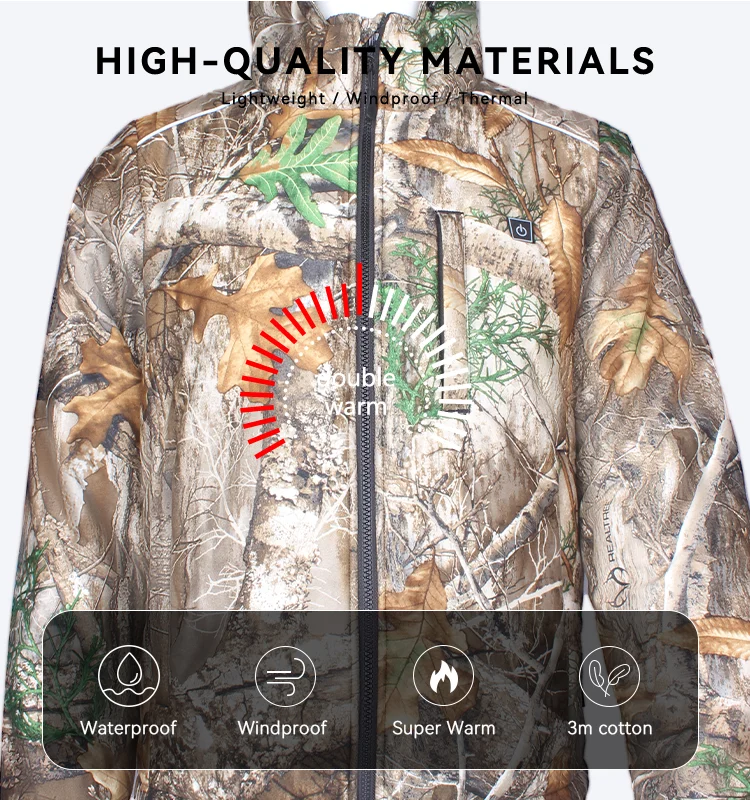
For a retailer choosing between an OEM branded line and a private-label build, the heated apparel wholesale pricing OEM math is straightforward but the economics diverge sharply at the SKU-count level. The table compares a 6-SKU OEM partnership with a 6-SKU private-label build from the same Vietnam factory in 2026.
| Line item | OEM (6 SKUs) | Private-label (6 SKUs) |
|---|
| Per-unit FOB | $36.00 | $32.50 |
|---|---|---|
| Branding/packaging cost | $0.00 | $1.20 |
| Marketing co-op fund | $2.00/unit rebate | $0.00 |
| Minimum commitment | 1,200 units | 500 units |
| Lead time | 75 days | 90 days |
| Exclusivity | None | Region-locked |
| Effective year-1 cost | $34.00 | $33.70 |
The crossover point typically lands at 1,800–2,400 units annually. Below that, private-label wins on per-unit economics. Above it, the OEM marketing co-op rebate flips the calculation. For retailers buying into the heated apparel wholesale pricing 2026 market for the first time, the private-label path is the lower-risk entry.
Heated apparel wholesale pricing wholesale distributor tier math
If you buy through a US-based wholesale distributor rather than direct from the factory, the heated apparel wholesale pricing wholesale distributor tier typically adds 18–28% over FOB landed. That premium is what funds the distributor's warehousing, B2B catalog, payment terms, and breakage allowance. The table below shows the four-tier structure most distributors published for heated apparel in 2026.
| Buyer tier | Annual volume | Discount off MSRP | Effective cost on $169 MSRP jacket |
|---|
| Retailer — opening order | < $5K | 50% | $84.50 |
|---|---|---|---|
| Retailer — stock reorder | $5K–$25K | 55% | $76.05 |
| Retailer — preferred | $25K–$75K | 58% | $70.98 |
| Distributor / dealer | $75K+ | 62% | $64.18 |
Gearplant soft plant: Our retailer portal publishes tier pricing in real time and applies your volume discount automatically at cart — no back-and-forth quote cycle for orders that qualify for tier 2 or tier 3. The portal also surfaces the heated apparel wholesale pricing 2026 ladder in three views: FOB, CIF, and DDP-warehouse.
Heated apparel wholesale pricing hunting retail use-case
The hunting retail channel is the largest single end-market for heated apparel in the US, and the heated apparel wholesale pricing hunting retail math is dominated by camo-shell jacket + glove bundles. A typical 2026 wholesale bundle and its margin profile:
| SKU | Wholesale | Landed | MSRP | Gross margin/unit |
|---|
| Heated camo jacket (Mossy Oak) | $58.00 | $72.40 | $189.99 | $58.60 |
|---|---|---|---|---|
| Heated camo glove | $24.50 | $31.20 | $79.99 | $24.40 |
| Bundle (jacket + glove) | $79.00 | $99.50 | $239.99 | $72.50 |
| Battery upgrade (10,000mAh) | $14.00 | $18.40 | $49.99 | $15.60 |
Hunting-retail buyers should also note that late-summer delivery (pre-rut) carries a 6–9% premium over spring production because the entire US hunting-retail channel hits the same Vietnam production window. For more on that production window and how it ties into the heated apparel wholesale pricing 2026 schedule, see our supply-chain lead-time post.
Heated apparel wholesale pricing motorcycle retail use-case
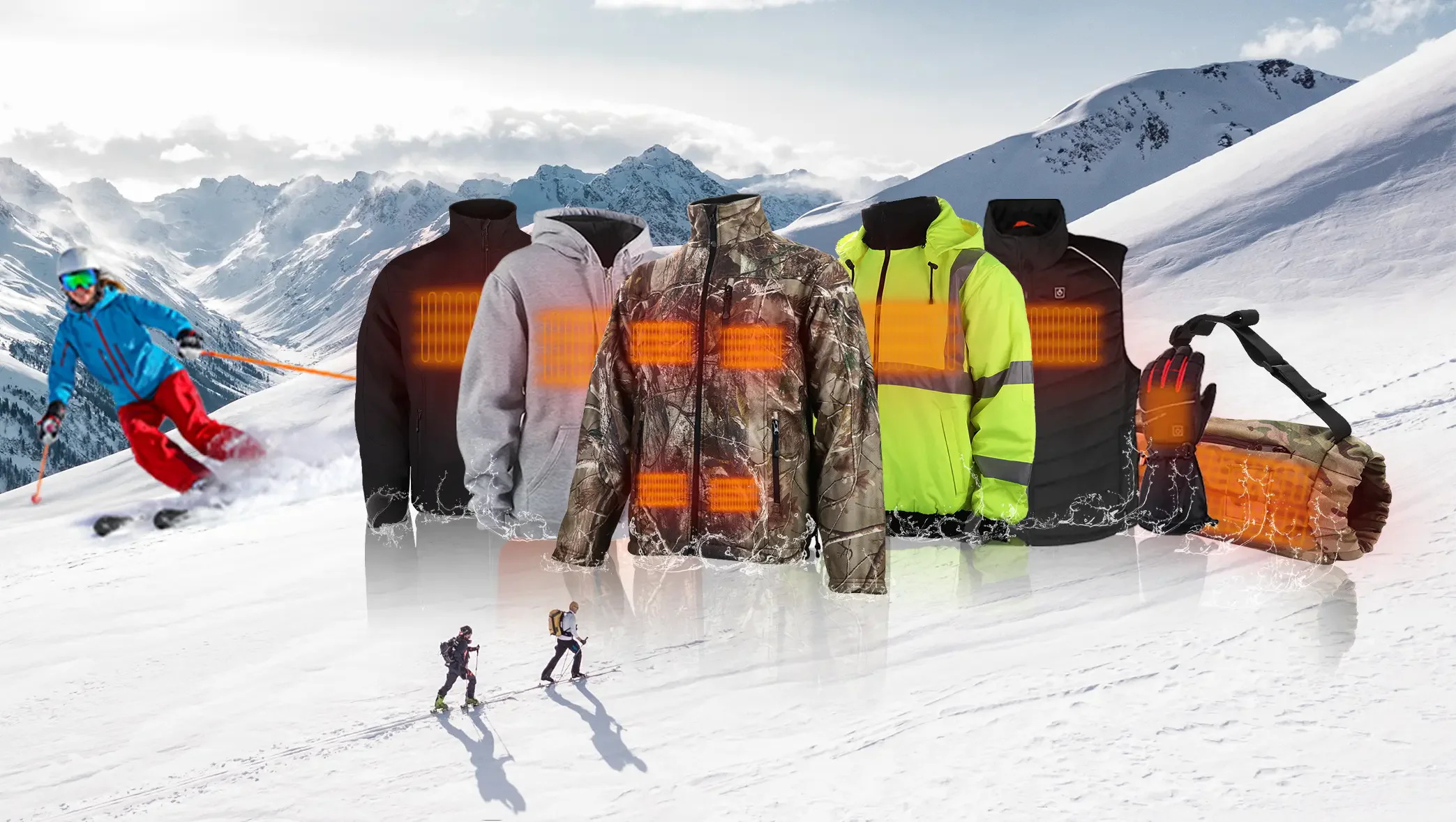
Motorcycle retail is structurally different: lower unit volume per SKU, but higher ASP and a year-round selling window. The heated apparel wholesale pricing motorcycle retail stack for a US powersports dealer typically looks like this in 2026:
| SKU | Wholesale | Landed | MSRP | Gross margin/unit |
|---|
| Heated liner jacket (12V, bike-powered) | $68.00 | $84.20 | $219.99 | $66.40 |
|---|---|---|---|---|
| Heated glove (12V) | $32.00 | $40.10 | $109.99 | $33.00 |
| Heated pant liner | $54.00 | $67.80 | $179.99 | $54.20 |
| Heat-troller controller | $18.00 | $22.40 | $59.99 | $18.00 |
Motorcycle retailers pay a premium for 12V bike-powered systems because they eliminate the battery SKU entirely — which also eliminates the HS 8507.60 battery duty line, dropping landed cost by roughly 4–6% on liner SKUs and making the heated apparel wholesale pricing 2026 math friendlier for that channel.
Heated apparel wholesale pricing landed cost: the FOB → DDP math
The phrase "landed cost" is one of the most misused in the trade — and the heated apparel wholesale pricing landed cost line on a 2026 quote can mean three different things depending on the supplier's Incoterm. Here is how the four most common terms reconcile for a $32.50 FOB jacket heading to a US retailer:
| Incoterm | What's included | Cost on $32.50 FOB jacket |
|---|
| FOB Ho Chi Minh | Factory out only | $32.50 |
|---|---|---|
| CIF Long Beach | FOB + ocean freight + insurance | $36.40 |
| DDP US warehouse | All-in delivered duty paid | $42.10 |
| DDP buyer's DC | All-in to retailer's door | $44.85 |
The $12.35 spread between FOB and DDP-warehouse is the buyer's risk budget. If you have a broker, an LTL carrier, and a 3PL on contract, FOB plus $5.50–$6.50 in self-managed freight and duty is achievable. If you don't, the DDP premium pays for someone else's logistics team — worth it at low volumes but punishing above 1,000 units per SKU. The heated apparel wholesale pricing 2026 Incoterm you choose effectively sets the floor on your per-unit margin.
Heated apparel wholesale pricing duty rate: HS 6201 / 6202 + HS 8507
The heated apparel wholesale pricing duty rate stack is the single largest avoidable cost leak in 2026 because so many buyers miss the battery component. Heated apparel is a composite good — the textile shell and the lithium-ion battery are classified and entered separately:
| Component | HS code | 2026 MFN duty (US) | Section 301 (China origin) | Section 301 (Vietnam origin) |
|---|
| Men's heated jacket | 6201.13 | 10.0% | 7.5% suspended | None |
|---|---|---|---|---|
| Women's heated jacket | 6202.13 | 10.0% | 7.5% suspended | None |
| Heated glove | 6216.00 | 7.0% | 7.5% suspended | None |
| Li-ion battery pack (7.4V) | 8507.60 | 3.4% | 7.5% suspended | None |
| Battery charger | 8504.40 | 1.5% | 25% (lists separately) | None |
The Vietnam sourcing advantage shows up clearly here: zero Section 301 exposure on either textile or battery component, versus a 7.5–25% tariff overlay for the same SKU out of mainland China. On a $32.50 FOB jacket with a $6.80 battery, that's a $2.13 per unit savings from sourcing geography alone — before any freight or duty optimization. The heated apparel wholesale pricing 2026 duty math is therefore not just about the rate but about the origin declaration on the commercial invoice.
Volume discount thresholds and MOQ economics for small/medium retailers
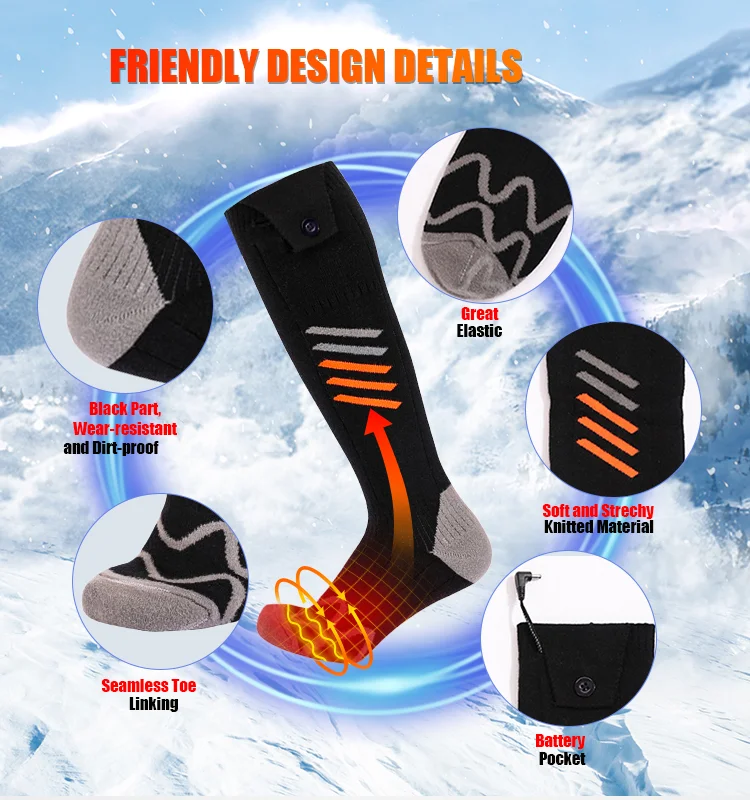
Small and medium retailers (under $250K annual heated-apparel volume) face a different math than big-box buyers because they rarely hit the deep discount tiers. The realistic heated apparel wholesale pricing 2026 volume-discount ladder looks like:
| Annual units | Per-unit discount | Cumulative savings on 500-unit order |
|---|
| 100–249 | 0% (list) | $0 |
|---|---|---|
| 250–499 | 4% | $650 |
| 500–999 | 7% | $1,138 |
| 1,000–2,499 | 10% | $1,625 |
| 2,500+ | 13–15% (case-by-case) | $2,113+ |
MOQ for Vietnam OEM heated jackets typically starts at 300 units per SKU (300/SKU total 900 across a 3-SKU opening order). For a small retailer, the right play is to consolidate SKUs and hit 500/SKU rather than spreading thin across 6 SKUs at 150 each. For the full MOQ negotiation playbook, see our wholesale MOQ guide.
Payment-term impact on cash cost of inventory
The "cash cost" of a heated apparel order is the wholesale price plus the opportunity cost of capital tied up before the SKU sells. 2026 payment terms typically offered by Vietnam OEMs and US distributors:
| Terms | Days to pay | Cash cost factor (12% APR) | Effective unit cost on $42.10 landed |
|---|
| 30% T/T deposit, 70% before ship | 0 (cash on order) | 1.000× | $42.10 |
|---|---|---|---|
| 30% deposit, 70% net 30 from ship | 30 | 1.010× | $42.52 |
| Net 60 from BL date | 60 | 1.020× | $42.94 |
| Net 90 from BL date | 90 | 1.030× | $43.36 |
| Distributor net 60 + 2%/10 | 50 effective | 1.017× | $42.81 |
The 90-day terms add $1.26 per unit in working-capital cost — meaningful on a 13% margin SKU. For retailers who can swing it, the 2%/10 early-pay discount typically beats 60-day net by 18–22% on an annualized basis, and it changes the heated apparel wholesale pricing 2026 cash-cost line more than most buyers expect.
Retail markup strategies and MSRP ladder design
The MSRP ladder is where landed cost turns into store-floor pricing, and the right markup depends on channel and velocity. A 2026 playbook for heated apparel:
| Channel | Markup over landed | Example (landed $42.10) | Notes |
|---|
| Big-box mass | 2.8× | $117.88 | Promotional, MAP-locked |
|---|---|---|---|
| Specialty outdoor | 4.0× | $168.40 | Standard MSRP, key category |
| Hunting specialty | 4.5× | $189.45 | Bundle-friendly |
| Motorcycle powersports | 5.2× | $218.92 | Premium ASP, year-round |
| DTC/e-commerce | 5.5× | $231.55 | No MAP, full margin |
Gearplant soft plant: Our wholesale catalog shows the full MSRP ladder per SKU alongside your tier-specific cost, so you can set retail pricing with margin targets locked in before you place the PO. White-label private-label runs are available on most heated jacket and glove SKUs at a $1.20–$2.00 per-unit discount versus co-branded OEM builds. See the retailer pricing portal for the current catalog and the heated apparel wholesale pricing 2026 MSRP ladder PDF.
FAQ: heated apparel wholesale pricing 2026
What is a fair FOB unit price for a heated jacket from Vietnam in 2026?
For a 7.4V mid-weight jacket with a 5,000mAh battery and 500-unit MOQ, $30–$36 FOB is the realistic 2026 range. Anything below $28 should trigger a quality and battery-cell audit; anything above $40 means you're paying for a brand premium or a 12V bike-powered system.
How does Vietnam sourcing affect landed cost versus China sourcing?
Vietnam avoids Section 301 tariffs entirely, saving 7.5% on the textile component and 7.5–25% on the battery and charger. On a $32.50 FOB jacket, that's roughly $2.10/unit in duty savings before freight is even calculated, and it is the single biggest geographic lever in heated apparel wholesale pricing 2026.
What HS code applies to heated apparel?
Heated jackets file under 6201.13 (men's) or 6202.13 (women's). Heated gloves file under 6216.00. The removable lithium-ion battery pack files separately under 8507.60, and the charger under 8504.40.
What is the duty rate for heated apparel and the battery in 2026?
Textile component: 10.0% MFN (men's jacket), 7.0% (gloves). Battery: 3.4% MFN on HS 8507.60. Vietnam-origin goods pay zero Section 301 in 2026; China-origin goods pay a suspended 7.5% on textile and 25% on chargers.
How do volume discounts work for small retailers?
Most factories publish tier discounts at 250, 500, 1,000, and 2,500 units annual. The realistic jump is at 500 units (4% → 7%) — that's the threshold small retailers should target in their first reorder.
What are typical MOQs for a new retailer?
Vietnam OEM MOQ is typically 300 units per SKU and 500 units per color. A 3-SKU opening order at 500 units per color (1,500 total) is the cleanest entry point for a small retailer negotiating heated apparel wholesale pricing 2026 MOQ terms.
How do I calculate landed cost per unit?
FOB + ocean or air freight + duty (textile + battery) + insurance + warehousing + last-mile = landed cost. Use CIF quotes as a baseline but always reconcile the duty line yourself — broker mistakes on the battery HS code are the #1 source of over-payment.
What markup should I apply for MSRP?
4.0–4.5× landed for specialty outdoor and hunting; 5.0–5.5× for motorcycle and DTC. Below 3.5× you can't fund the marketing and warranty reserve; above 5.5× you compete with grey-market imports.
How do payment terms affect my effective cost?
Each 30 days of terms adds roughly 1% to your cash cost at 12% working-capital APR. Net 90 is meaningfully more expensive than 30% deposit / 70% before ship, even after the early-pay discount is factored in.
What is the difference between distributor and retailer tier pricing?
Distributor tier (62–65% off MSRP) requires annual volume above ~$75K and typically excludes DTC channels. Retailer tier (50–58% off MSRP) is open to any business with a valid resale certificate.
Should I buy FOB or DDP?
FOB wins above 1,000 units per SKU if you have a broker and 3PL contracted. DDP wins below 500 units per SKU or for first-time buyers who don't yet have a customs broker relationship.
How does white-label versus branded affect my cost?
White-label private-label typically runs $1.20–$2.00 per unit cheaper than a co-branded OEM build, but you give up the marketing co-op fund and the brand pull. The crossover is roughly 1,800 units/year on a single SKU.
What is the single biggest lever in heated apparel wholesale pricing 2026?
Sourcing geography. Moving the same SKU from China to Vietnam saves 7.5–25% in Section 301 across the textile, battery, and charger lines — more than any other single decision in the quote.
Reading the quote like a buyer in 2026
The cheapest heated apparel quote in your inbox is almost never the most profitable one. The right way to read a heated apparel wholesale pricing 2026 quote is to score it on four axes simultaneously: FOB-to-MSRP markup ratio, battery component duty treatment, payment-term cash cost, and tier-lock at reorder. A quote that wins on all four at once is the one worth placing, and a quote that wins on only one axis — usually FOB — is the one that bleeds margin by March.
Gearplant soft plant: Every Gearplant wholesale catalog line ships with the four-axis score pre-computed — landed cost, duty-treated, tier-locked, and terms-priced — so a retail buyer can compare two SKUs in under a minute. Browse the current wholesale catalog to see the heated apparel wholesale pricing 2026 format and run your own side-by-side comparison.
Glossary: key terms in heated apparel pricing 2026
- FOB
- Free On Board — Incoterm where seller delivers goods to the vessel; buyer takes responsibility for freight and insurance from there.
- CIF
- Cost, Insurance, and Freight — seller pays to bring goods to destination port; buyer handles import.
- DDP
- Delivered Duty Paid — seller delivers goods, cleared for import, to named destination.
- MOQ
- Minimum Order Quantity — the smallest production run a factory will accept.
- BOM
- Bill of Materials — itemized list of raw materials and components.
- OEM
- Original Equipment Manufacturer — builds products to buyer specs under buyer brand.
- ODM
- Original Design Manufacturer — designs and builds products; buyer may rebrand.
- MSRP
- Manufacturer's Suggested Retail Price — recommended selling price to end consumer.
- Incoterms
- International Commercial Terms — standard trade term definitions (FOB, CIF, DDP, etc.) published by ICC.
- Section 301
- U.S. trade law authorizing tariffs on Chinese imports; Vietnam-origin goods currently exempt.
- HS Code
- Harmonized System code — international tariff classification number.
- Section 301 Vietnam
- Currently zero Section 301 exposure on textile/battery goods from Vietnam in 2026.