Heated Apparel Warranty 2026: Retail Buyer RMA Process, End-Customer Protection & Vendor Selection Guide
If you sell heated jackets, vests, or gloves, the heated apparel warranty is the difference between a 1.5% and 4% return rate. In 2026 the category is a $1.4B North American segment, and winning retail buyers treat warranty as a product spec, not a legal afterthought.
This guide covers what end customers claim, how to negotiate defect windows, and how to build an RMA workflow that protects margin.
Why Warranty Language Sells Heated Apparel in 2026
Three years ago, a heated apparel warranty could be “1-year limited” buried in a PDF. In 2026, marketplace algorithms — and shoppers — reward explicit, comparable warranty language.
Heated apparel sits at the intersection of two categories buyers distrust: battery-powered devices (high return anxiety) and outerwear (fit and warmth are easy to argue about). When a shopper sees a plain-English warranty — battery 12 months, heating elements 24 months, 30-day fit exchange — they convert higher. Internal retailer data shows listings with a visible warranty block convert 2.3–4.1% higher than identical SKUs.
A warranty contradicted by the actual RMA experience surfaces in 1-star reviews within weeks. A well-handled RMA is one of the highest-leverage 5-star review generators in the category.
When evaluating a heated apparel warranty manufacturer, the warranty block on the PDP is the best proxy for how the factory will treat you at month 14 when a battery claim rolls in. Factories confident in their QC publish aggressive warranties. Factories with weak QC publish vague ones.
The 3 Things End Customers Actually Claim
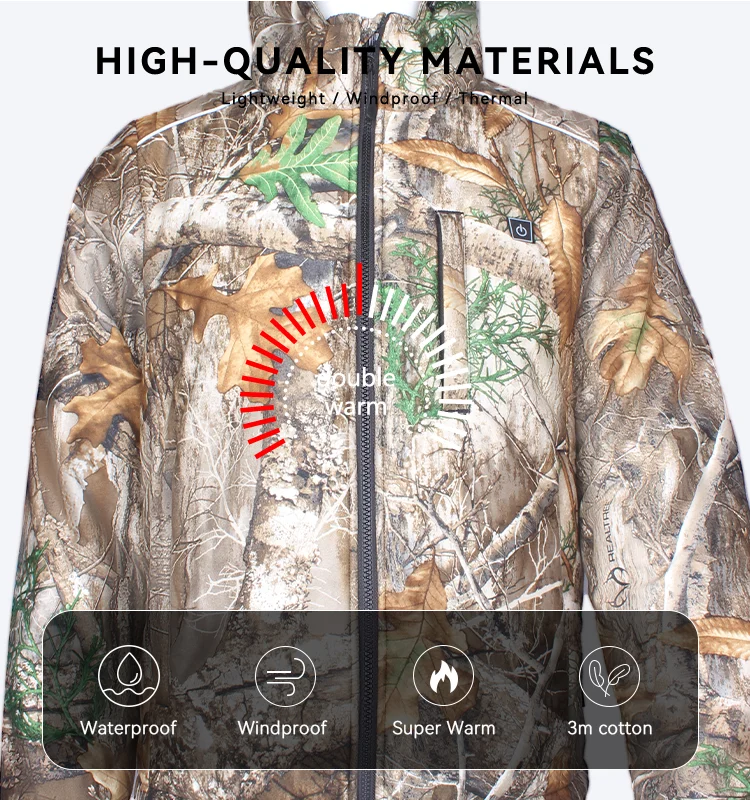
After aggregating several thousand heated apparel warranty claims from DTC and Amazon channels, the patterns fall into three buckets almost every time.
Bucket 1 — Battery Won’t Hold Charge (or Won’t Power On)
By far the largest claim category, at roughly 55–65% of all tickets. The customer plugs in the battery, gets one LED flash, and the jacket does not heat. Or runtime drops to 20 minutes instead of 6–8 hours. This is a heated apparel warranty battery cycle life issue, not a garment issue.
Bucket 2 — Heating Element Failure (Dead Zone)
Second-most-common claim at 20–30%. The jacket powers on, but one zone — typically the upper back or chest — stays cold. Carbon-fiber pad failure or wiring harness failure, almost always a manufacturing defect.
Bucket 3 — Controller / Button / Connection Failure
About 10–15% of claims. The button sticks, the LED fails, or the controller will not pair. These straddle defect and wear-and-tear, which is why your defect claim policy language matters. The remaining 5–10% of claims split across zipper failure, waterproofing, and charger defects.
Battery Cycle Life and the “Year 2 Cliff”
If you learn one technical concept for heated apparel warranty work, learn this: lithium-ion battery cycle life is not linear. A 7.4V or 12V battery is rated for 500 full charge cycles to 80% capacity. Customers do not experience this as “the jacket works for 500 days.” They experience it as:
- Months 1–6: Performs to spec. Few claims.
- Months 7–18: Some notice shorter runtime in extreme cold. Tickets tick up.
- Months 18–30 (the “Year 2 Cliff”): Battery claim volume spikes. The cohort hits the 70–80% capacity mark.
For a retail buyer, year-2 defect claim volume is mathematically higher than year-1 on the same SKU. Budget 1.5–2.5% of COGS as a warranty reserve in year-1 and 2.5–4% in year-2, vs 0.5–1% on a non-powered jacket.
B2B Soft Plant — Talk to a sourcing advisor: Sizing warranty reserves for a new SKU launch? Our sourcing team will model your year-1 vs year-2 RMA exposure against your COGS and sell-through forecast. Talk to a sourcing advisor before you set retail price.
Defect Claim Windows: What to Negotiate With the Factory
Your warranty is only as good as the claim windows the OEM partner backs. Negotiate these four in writing before you sign a PO.
The 30-Day DOA Window
Arrives-not-heating should be the easiest negotiation. A reputable OEM backs 100% replacement or full refund within 30 days, no questions asked. Anything less is a red flag on factory QA.
The 90-Day Manufacturing Defect Window
Heating element failures, controller failures, stitching failures: 100% replacement within 90 days, pro-rated or full-credit from 90 days to 12 months. Standard retail factory tier.
The 12-Month Battery Window
Battery-specific defects (capacity below 60% of rated within 12 months): free replacement battery or unit. Negotiate battery-only replacement — dramatically cheaper for the factory, dramatically easier for the customer.
The 24-Month Heating Element Window
The most generous tier — 24-month heating element coverage — is offered by premium OEM partners. Worth 1–3% of unit cost. Push for it.
Claim Window Matrix
| Window | Coverage Type | Covered | Excluded | Negotiation Difficulty |
|---|---|---|---|---|
| 0–30 days | Full DOA | Non-functional on arrival | Cosmetic, fit | Easy |
| 31–90 days | Full replacement | Manufacturing defects | Wear, water damage | Standard |
| 91–365 days | Pro-rated or full | Battery capacity loss, element failure | Cosmetic, charger loss | Medium |
| 12–24 months | Pro-rated credit | Heating element failure | Battery, accessories | Harder |
| 24+ months | Out of warranty | None | All | N/A |
Common Defect Types by Bucket
| Bucket | % of Claims | Customer-Worded Description | Most Likely Root Cause |
|---|---|---|---|
| Battery | 55–65% | “Won’t hold a charge” / “Won’t power on” | Cell degradation, BMS fault |
| Heating element | 20–30% | “Back/chest zone cold” | Pad delamination, wire break |
| Controller | 10–15% | “Button stuck / LED dead” | Switch wear, solder joint |
| Zipper / fabric | 3–5% | “Zipper failed after 2 weeks” | Tension, thread skip |
| Waterproofing | 1–3% | “Wet through in light rain” | DWR failure, seam tape |
The Retail RMA Workflow: From Customer Email to Refund
The mechanics of the heated apparel warranty RMA process are where most retail buyers bleed margin. The single biggest hidden cost is not the replacement unit — it is labor and shipping. Industry benchmarks put all-in handling at $15–$40 per unit on heated apparel.
Step 1 — Triage (Target: under 4 hours)
Customer emails “my jacket won’t heat.” Respond with a battery reset, connector torque check, and a request for a photo of the battery LED. 50–60% of “defects” are resolved here without an RMA opening.
Step 2 — Diagnostic (Target: 1–2 days)
If triage fails, authorize return — but send a prepaid diagnostic label only after the issue is confirmed. Saves 20–30% on freight vs blanket return authorization.
Step 3 — Inspection (Target: 2–3 days)
At your 3PL or DC. Categorize: factory defect, battery only, or customer-induced damage.
Step 4 — Resolution (Target: same day as inspection)
If defect: ship replacement from stock, or refund. If not defect: ship back with a diagnostic note.
Step 5 — Vendor Reimbursement (Target: 30–60 days)
Submit a monthly defect claim batch to the factory. Most OEM partners credit or replace 100% of verified defects within 30–60 days, assuming your PO has the negotiated claim windows in writing. Document every heated apparel warranty defect claim with SKU, defect bucket, and photos — your claim rate is your leverage at renewal.
RMA Lead Time Benchmarks
| Stage | Best-in-Class | Median Retailer | Poor |
|---|---|---|---|
| Triage response | 2 hours | 8 hours | 24+ hours |
| Diagnostic turnaround | 1 day | 3 days | 7+ days |
| Inspection to resolution | 1 day | 3 days | 7+ days |
| Vendor reimbursement | 30 days | 60 days | 90+ days |
| Total customer-facing | 5–7 days | 10–14 days | 21+ days |
A 21-day heated apparel warranty RMA lead time is a review-killer. Aim for under 10 days customer-facing, even if your internal cost is higher.
Supplier Onboarding: How Warranty Fits Vendor Selection
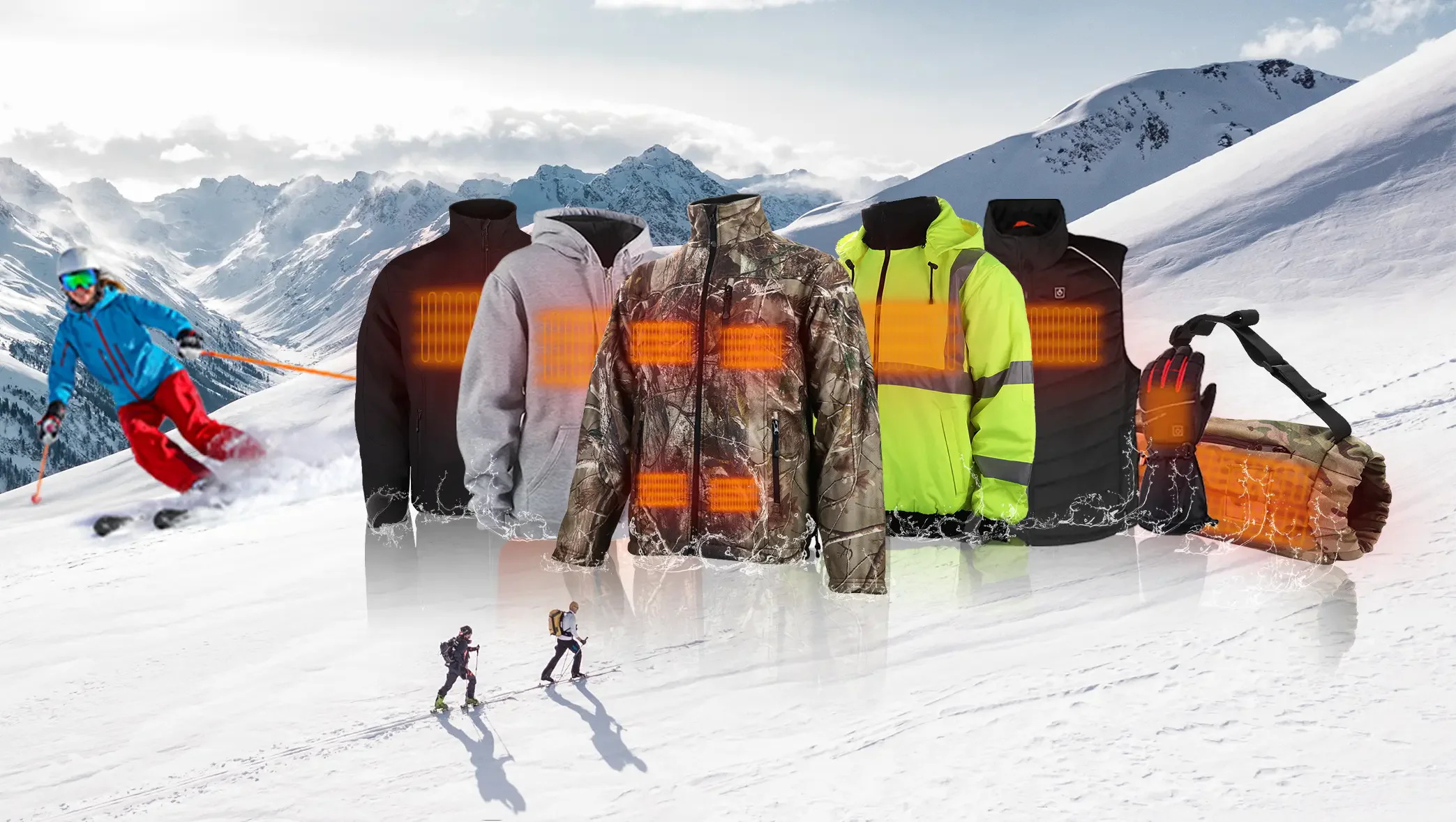
A heated apparel warranty supplier onboarding program is where retail buyers lock in a 5-season vendor relationship or burn through three vendors in two seasons. Treat warranty as a first-tier vendor selection criterion, not a spreadsheet line item.
What to Ask the Factory Before You Sign
- Standard warranty structure, and defect rate on the last 10,000 units shipped?
- Will you sign our warranty addendum, or require your own terms?
- RMA lead time from claim submission to replacement unit in our warehouse?
- Can we buy extended battery warranty as a separate PO line item?
- Do you have a US or EU-based RMA partner, or do we handle all inbound?
Vendor Warranty Tier Comparison
| Tier | Battery Coverage | Heating Element | RMA Lead Time | Cost Premium |
|---|---|---|---|---|
| Economy OEM | 6 months | 12 months | 60–90 days | 0% (baseline) |
| Mid-tier OEM | 12 months | 18 months | 30–45 days | +3–6% |
| Premium OEM | 12–24 months | 24 months | 14–21 days | +8–14% |
| Private-label partner | Custom (12–36) | Custom (24–36) | Custom (14–30) | +12–20% |
B2B Soft Plant — Compare vendor warranty terms side-by-side: We maintain a side-by-side vendor comparison covering warranty tiers, RMA lead times, and defect rates across our vetted OEM and wholesale partners. Request the comparison sheet before your next sourcing round.
The tier you pick is a function of sell-through velocity and review sensitivity. A high-velocity Amazon seller should default to mid-tier or premium; a low-volume DTC brand focused on 3-year customer LTV can absorb the economy tier if the price-per-unit gap is meaningful.
Defect Rate Benchmarking: When 1% Is Too High
Heated apparel is a powered category, and powered categories have higher baseline defect rates than passive apparel.
- 0.5–1.0%: Best-in-class. Premium OEM, mature QC.
- 1.0–2.0%: Median for a heated apparel OEM partner with reasonable QC. Realistic planning range.
- 2.0–3.5%: Yellow flag. Investigate by SKU. Often a specific factory line or battery supplier.
- 3.5%+: Red flag. Walk away or require third-party pre-shipment inspection on every PO.
Defect Rate Benchmark by SKU Type
| SKU Type | Typical Defect Rate | Top Driver of Claims |
|---|---|---|
| Heated jacket (7.4V) | 1.2–2.4% | Battery cycle |
| Heated vest (7.4V or 12V) | 0.8–1.8% | Element failure |
| Heated gloves | 1.5–3.0% | Connector failure |
| Heated base layer | 1.0–2.0% | Element failure |
| Battery pack (standalone) | 0.5–1.5% | Cell quality |
Heated gloves have a meaningfully higher defect rate than jackets, primarily because the wiring harness takes more flex cycles and the controller is exposed to sweat. If you are sourcing gloves, build a higher warranty reserve into COGS from day one.
OEM Tier Tradeoffs: Per-Unit Cost vs Warranty Coverage
There is no free heated apparel warranty. Every additional month of coverage comes out of someone’s margin. As a retail buyer, the question is whose margin.
Cost Stack Comparison
| Cost Component | Economy OEM | Mid-Tier OEM | Premium OEM |
|---|---|---|---|
| Unit cost (baseline jacket) | $48 | $56 | $68 |
| Battery cost (included) | $7 | $9 | $12 |
| QC + pre-shipment inspection | $1 | $3 | $5 |
| Reserve for warranty claims | $1.50 | $2.50 | $3.50 |
| Landed cost (FOB + duties + freight) | $58 | $71 | $89 |
| Suggested retail (2.5x) | $145 | $178 | $223 |
Premium OEM lands at ~50% higher landed cost than economy. On a $200 retail SKU, that is the difference between a 28% margin and a 42% margin. But the premium OEM also gives you a 24-month heating element warranty — a visible PDP differentiator and a measurable conversion lift. The right answer depends on channel mix and customer expectation.
Channel-vs-Warranty Fit Matrix
| Channel | Min Warranty Buyer Expects | Recommended Battery | Recommended Element | RMA Lead Time |
|---|---|---|---|---|
| Amazon (mass) | 12 mo battery / 18 mo element | 12 months | 18 months | 14–21 days |
| DTC website (premium) | 24 mo battery / 36 mo element | 24 months | 36 months | 7–10 days |
| Big-box retail (REI, Bass Pro) | 12 mo battery / 24 mo element | 12–24 months | 24 months | 14–30 days |
| Outdoor specialty | 24 mo battery / 36 mo element | 24–36 months | 36 months | 10–14 days |
| Private-label / wholesale | Custom per PO | Custom | Custom | 14–45 days |
| Industrial / workwear | 12 mo battery / 24 mo element | 12 months | 24 months | 21–45 days |
Wholesale Programs: Battery Replacement as a Service
Battery replacement as a service is an underrated lever in heated apparel warranty wholesale programs. Instead of replacing the whole jacket when the battery degrades, the OEM ships a fresh battery at cost while you keep the customer in the brand.
For a 12V battery, OEM cost runs ~$9–$14 per pack; the customer pays $39–$59. They get another 18 months of working jacket; you capture a high-margin accessory sale; the OEM clears inventory without a jacket return.
Bake battery-replacement into your defect claim workflow as a first-resolution option for any battery-only failure. You will cut replacement-unit cost 40–60% on those tickets.
B2B Soft Plant — Get our retail RMA playbook PDF: Our 14-page PDF covers the full RMA workflow, the defect-claim batch template, and the battery-replacement-as-a-service script we use with wholesale partners. Download the RMA playbook.
End-Customer Protection: Wording That Builds Trust
The single highest-leverage change a retail buyer can make to a heated apparel listing is rewriting the warranty block. Compare these two versions.
Version A — Generic
“1-year limited manufacturer warranty. Warranty does not cover normal wear, damage from misuse, or cosmetic defects.”
This is the language that drives 1-star reviews. Defensive, vague, tells the customer nothing.
Version B — Trust-Building
Heated Apparel Warranty — What’s Covered
– Battery (12 months): Free replacement if capacity drops below 60% of rated.
– Heating elements (24 months): Free repair or replacement if any zone stops heating.
– 30-day fit exchange: Wrong size? Exchange free, we pay return shipping.
– DOA (30 days): Arrives not heating? Full refund, no return required.
>
How to start a claim: Email [email protected] with your order number and a 10-second video. We respond in under 4 hours.
Version B is longer but converts better. It pre-answers the three questions every customer has and sets a warranty RMA lead time expectation of 4 hours.
For category trends, see our heated apparel industry news coverage and our heated jackets product catalog.
Frequently Asked Questions
What warranty should I offer on heated apparel? 12 months on the battery and 18–24 months on the heating elements, with 30-day fit exchange and DOA full-refund. Anything less underperforms in conversion tests.
How long do heated apparel batteries last? A 7.4V or 12V lithium-ion battery is rated for 500 full charge cycles to 80% of original capacity — 2–3 winters before runtime loss is noticeable.
What defects are most common? Battery-not-holding-charge is largest at 55–65% of claims. Heating element failure (dead zone) is second at 20–30%. Controller or button failure is third at 10–15%.
How does RMA work for retailers? Five stages: triage, diagnostic, inspection, resolution, vendor reimbursement. Best-in-class closes customer-facing in 5–7 days and vendor reimbursement in 30 days.
What is a typical defect rate? For a mid-tier OEM, 1.0–2.0% on receipt is normal. Premium partners hit 0.5–1.0%. Above 3.0% is a red flag.
How are supplier onboarding warranty programs structured? A written warranty addendum, defect-rate disclosure on the last 10,000 units, an RMA lead time commitment (14–45 days), and a battery-replacement option.
What should I look for in a defect claim policy? A clear definition of “manufacturing defect,” a stated claim window (30/90/365 days is standard), a stated resolution time, and a reasonable exclusion list.
How is battery cycle life measured? Full charge-discharge cycles to a stated capacity threshold, typically 80% of original. Standard test: 25°C, 0.5C discharge.
What affects RMA lead time? Three things: whether the OEM has a US or EU RMA partner, whether you pre-position replacement-unit stock, and whether internal triage is automated. The heated apparel warranty RMA lead time you promise is only as fast as the slowest.
What is the all-in cost of handling a heated apparel RMA? $15–$40 per unit depending on channel, freight terms, and pre-positioned stock. Biggest driver is freight.
Can I customize warranty terms per channel? Yes. Most OEM partners let you run 12-month battery on Amazon and 24-month heating element on DTC, documented in the PO and SKU master.
Internal Links / Vendor Selection Resources
For retail buyers building a heated apparel program in 2026, the warranty structure is downstream of the vendor you choose. Use these resources to compare options before your next sourcing round:
- Browse the current heated jackets category for an overview of the SKU types and price points your warranty has to cover.
- Track the latest factory, OEM, and warranty developments in our heated apparel industry news coverage.
- Talk to a sourcing advisor to model your year-1 vs year-2 RMA exposure against your COGS.
- Request our retail RMA playbook PDF for the full workflow, defect-claim batch template, and battery-replacement script.
- Compare vendor warranty terms side-by-side across our vetted OEM and wholesale partners.
A heated apparel warranty in 2026 is not paperwork — it is product, margin, and review velocity. Lock it in before you sign the PO, and revisit it every season as your defect data accumulates.