Heated Apparel MOQ 2026: Retail Buyer Tier and Negotiation Guide
Retail buyers planning a 2026 heated apparel program face a moving target. Minimum order quantities (MOQ) shift by factory archetype, battery pack spec, and customization depth. This pillar maps a heated apparel MOQ tier ladder, an 8-row vendor pool comparison, a 9-axis flexibility scorecard, and a 5-step negotiation playbook tailored for retail buyers who must balance pilot runs with seasonal bulk.
If you want to follow our MOQ coverage month over month, bookmark the heated apparel industry news hub on gearplant.com.
This pillar is part of our ongoing heated apparel industry news series covering 2026 MOQ shifts, vendor consolidation, and battery-pack certification trends.
Why Heated Apparel MOQ Matters in 2026
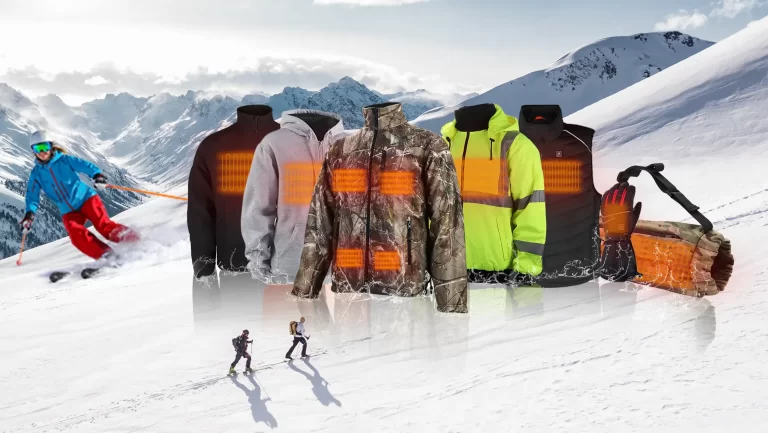
Heated apparel is no longer a novelty SKU. In 2026, retailers from outdoor chains to mid-tier department stores are adding heated jackets, vests, gloves, and base layers to their seasonal floorsets. The heated apparel program MOQ conversation has shifted from “can we even source 500 pieces?” to “how do we structure a tier ladder that protects margin without trapping capital in deadstock?”
Three forces are tightening the heated apparel program MOQ environment in 2026:
1. Battery pack consolidation — UL and CE certification costs push vendors toward fewer, larger battery SKUs, which raises per-color MOQ.
2. Tariff and freight volatility — landed-cost swings of 8-15% per quarter make smaller MOQs more attractive, but require vendor flexibility.
3. Retail buyer caution post-2024 — buyers burned by over-ordered 2023 inventory now demand mixed-SKU MOQ strategies and evergreen replenishment.
The result: a retail buyer who walks into 2026 without a clear heated apparel program MOQ plan overpays per piece, accepts worse payment terms, or ends up with stuck inventory when the weather turns warm early.
Heated Apparel MOQ Retail Buyer: Tier Ladder From Pilot to Seasonal Bulk
The first job of any retail buyer is to translate volume ambition into a tier ladder. Below is the standard retail buyer ladder we use across the gearplant buyer desk.
Retail Buyer MOQ Tier Ladder
| Tier | Volume Range | Typical Use | Lead Time | Payment Terms |
|---|---|---|---|---|
| Pilot | 100-300 pcs | Store test, influencer seeding | 35-45 days | 50/50 or LC at sight |
| Launch | 300-1,000 pcs | Single-door rollout | 45-60 days | 30/70 LC |
| Seasonal | 1,000-3,000 pcs | Full seasonal buy | 60-75 days | 30/70 LC or OA 30 |
| Bulk | 3,000-5,000 pcs | Annual program | 75-90 days | OA 45-60 |
| Evergreen | 500-1,500 pcs quarterly | Replenishment | 30-45 days | OA 30-45 |
A heated apparel program MOQ retail buyer rarely orders a single tier. Most programs blend a 300-piece pilot with a 1,500-piece seasonal and a 500-piece evergreen replenishment cycle. The blended MOQ strategy is what separates experienced buyers from first-timers.
5 Vendor Archetypes in the Heated Apparel MOQ Landscape
Not every vendor plays in the same MOQ band. The 5 archetypes below are the universe a retail buyer will encounter when sourcing a heated apparel MOQ manufacturer or OEM.
Vendor Archetype Comparison
| Archetype | Typical MOQ Floor | Strength | Weakness | Best For |
|---|---|---|---|---|
| Asian factory direct | 1,000-2,000 pcs/SKU | Lowest FOB price, full customization | High MOQ, language gap, slow sampling | Seasonal bulk, OEM programs |
| Domestic contract manufacturer | 300-500 pcs/SKU | Fast lead time, easy comms, IP safety | Higher per-piece cost (15-25%) | Pilot, replenishment |
| Private label specialist | 200-500 pcs/SKU | White-label ready, mid MOQ | Limited tech differentiation | Startup launch, niche |
| Brand distributor | 50-200 pcs/SKU | Lowest MOQ, branded margin | No customization, retail MAP | Test marketing, gift-with-purchase |
| Startup-friendly workshop | 50-100 pcs/SKU | Sub-100 MOQ, fast turn | Limited capacity, no OEM battery cert | Pilot, capsule drops |
A heated apparel MOQ wholesale buyer from a mid-size retailer will typically engage 2-3 of these archetypes in parallel: one Asian factory for the seasonal bulk, one domestic for replenishment, and one private label for fast-turn pilots.
Heated Apparel MOQ Manufacturer: Flexibility Scorecard for Retail Buyers
The next step is scoring each shortlisted vendor against 9 axes that actually move MOQ. Price matters, but flexibility on MOQ is what saves a seasonal program.
9-Axis Vendor MOQ Flexibility Scorecard
| Axis | Weight | Asian Factory | Domestic | Private Label | Distributor | Workshop |
|---|---|---|---|---|---|---|
| Per-SKU MOQ floor | 20% | Low (good) | Mid | Mid | High (good) | High (good) |
| Mixed-SKU aggregation | 15% | Yes (5+ SKUs) | Yes | Yes | No | Limited |
| Color count flexibility | 10% | 3-5 colors | 2-4 | 1-3 | 1 only | 1-2 |
| Battery pack MOQ | 15% | 1,000+ | 300 | 200 | NA | NA |
| Customization depth | 10% | Full OEM | Mid | Logo only | None | Light |
| Sampling speed | 10% | 21-30 days | 10-14 days | 7-14 days | 3-7 days | 5-10 days |
| Payment term flexibility | 10% | LC/OA negotiable | Net 30 easy | 50/50 easy | Card/Net | 100% T/T |
| Lead time reliability | 5% | Variable | High | Mid | High | Low |
| Reorder MOQ drop | 5% | 30% drop negotiable | 20% drop | 10% drop | None | None |
A heated apparel MOQ manufacturer that scores 70+ across these axes is tier-1 for retail buyers. Most Asian factories clear 75-85; most domestic shops clear 65-75; workshops rarely clear 60.
Heated Jacket MOQ Bulk Order: 8-Row Vendor Pool Comparison
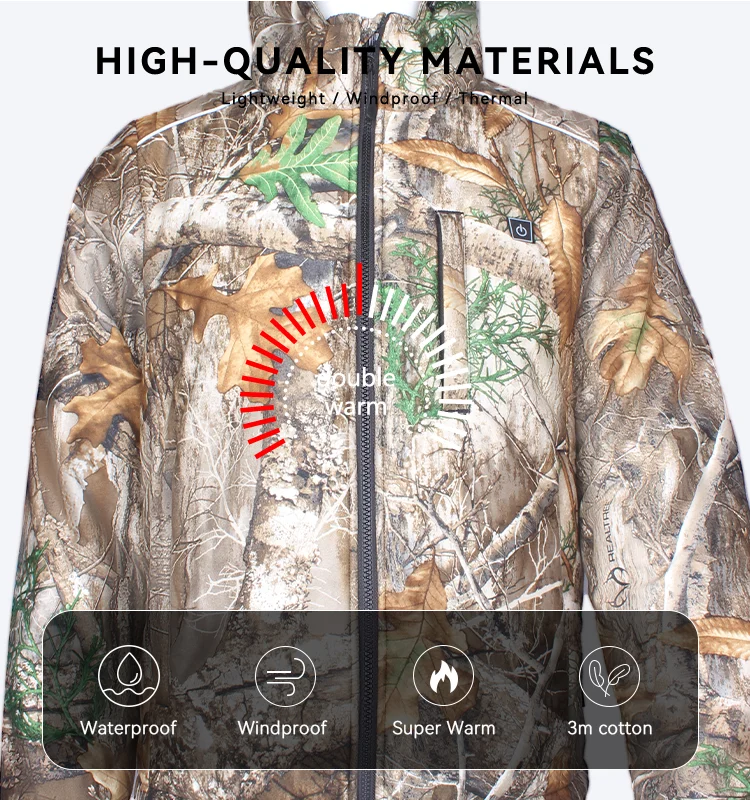
The vendor pool below is a representative 8-row snapshot for a heated jacket MOQ bulk order at the 1,000-3,000 piece band. Names are anonymized archetypes; real vendor names should always be vetted by a third-party sourcing agent.
Vendor Pool — Heated Jacket MOQ Bulk Order
| Vendor | Origin | MOQ Floor | FOB Price (USD) | Lead Time | Battery Cert | Customization | Score |
|---|---|---|---|---|---|---|---|
| V1 — Shenzhen OEM | China | 1,000 pcs | $42-48 | 60 days | UL, CE, FCC | Full OEM | 82 |
| V2 — Qingdao private label | China | 500 pcs | $46-52 | 55 days | CE only | Logo, color | 71 |
| V3 — Vietnam OEM | Vietnam | 1,500 pcs | $40-46 | 70 days | UL, CE | Full OEM | 78 |
| V4 — LA contract shop | USA | 300 pcs | $58-66 | 35 days | UL | Full OEM | 76 |
| V5 — Toronto workshop | Canada | 150 pcs | $64-72 | 40 days | UL, CSA | Light | 68 |
| V6 — Bangladesh OEM | Bangladesh | 2,000 pcs | $36-42 | 80 days | CE | Full OEM | 65 |
| V7 — Portugal mid-tier | Portugal | 600 pcs | $54-62 | 50 days | CE | Mid OEM | 74 |
| V8 — Korea tech-first | South Korea | 800 pcs | $52-60 | 55 days | UL, CE, KC | Tech-led | 80 |
The heated jacket MOQ bulk order sweet spot for most retail buyers is V1 or V3 for seasonal (1,000+ pieces) and V4 for pilot (300 pieces). V2, V5, V7, and V8 cover the mid-tier mixed-SKU strategy.
Heated Apparel MOQ OEM: What Changes When You Go Private Label vs OEM
OEM and private label are not the same MOQ conversation. A heated apparel MOQ OEM engagement typically raises the floor because the factory is building tooling, sourcing battery packs to your spec, and certifying a new SKU under your brand.
OEM vs Private Label MOQ Delta
| Factor | Private Label | Full OEM | Delta |
|---|---|---|---|
| Per-SKU MOQ floor | 200-500 pcs | 1,000-2,000 pcs | +300-1500 pcs |
| Tooling cost share | $0 (vendor amortized) | $3,000-15,000 (buyer) | +$3K-15K |
| Battery pack MOQ | 200-500 | 1,000+ | +500-800 pcs |
| Sampling rounds | 1-2 | 3-4 | +2 rounds |
| Time to first PO | 30-45 days | 60-90 days | +30-45 days |
| Per-piece FOB savings | baseline | -8-15% | savings |
If your 2026 plan calls for a private-label quick launch followed by an OEM seasonal program, run them as two separate MOQ conversations. Bundling them under one vendor inflates both MOQ floors.
Heated Apparel MOQ Battery Pack: Why Battery Spec Drives MOQ
Battery pack is the single biggest MOQ driver after per-piece volume. A heated apparel MOQ battery pack conversation is really three sub-conversations: cell source, BMS spec, and certification.
Battery Pack MOQ Tiers
| Battery Config | MOQ Floor | Cell Source | Cert Cost Share | Lead Time |
|---|---|---|---|---|
| 7.4V 5,000mAh stock | 200 pcs | Vendor stock | $0 | 15-20 days |
| 7.4V 7,500mAh stock | 300 pcs | Vendor stock | $0 | 15-20 days |
| 11.1V 5,000mAh custom | 800 pcs | Buyer-specified | $2,500-4,000 | 35-45 days |
| 12V 10,000mAh custom | 1,000 pcs | Buyer-specified | $4,000-7,500 | 45-60 days |
| App-controlled 11.1V | 1,500 pcs | Buyer + app vendor | $6,000-12,000 | 60-75 days |
When a heated apparel MOQ battery pack spec moves from stock to custom, the MOQ floor triples. Retail buyers who accept stock battery packs can negotiate MOQ down by 30-50%; those who demand a proprietary battery spec must commit to 1,000+ pieces.
Heated Apparel MOQ Wholesale: Payment Terms and MOQ Tie-In
Wholesale payment terms and MOQ are not separate conversations. A heated apparel MOQ wholesale vendor will typically offer one of three payment structures, and each has a different MOQ implication.
Payment Term vs MOQ Matrix
| Payment Term | Typical MOQ Floor | Buyer Risk | Vendor Risk |
|---|---|---|---|
| 100% T/T in advance | 50-200 pcs | High | Low |
| 30/70 T/T | 300-500 pcs | Mid | Mid |
| LC at sight | 500-1,000 pcs | Low-Mid | Mid |
| LC 30-60 days | 800-1,500 pcs | Low | Mid-High |
| OA 30 days | 1,000-2,000 pcs | Low | High |
| OA 45-60 days | 1,500-3,000 pcs | Low | Very high |
| OA 90 days | 3,000-5,000 pcs | Lowest | Highest |
A retail buyer who wants OA 60 must accept a heated apparel MOQ wholesale floor of 1,500+ pieces. Conversely, a buyer willing to do 30/70 T/T can negotiate a 300-piece MOQ. The gearplant partner factory network offers aggregated MOQ across 5 SKUs to hit single-tier 1000-piece factory MOQ, which is the most common wholesale payment-trade strategy in 2026.
Heated Apparel MOQ Customization: How Customization Depth Moves MOQ
Customization depth is the most underestimated MOQ lever. A heated apparel MOQ customization conversation covers logo, color, fabric, battery, controller, and packaging — and each layer adds to the floor.
Customization Depth vs MOQ Floor
| Customization Layer | MOQ Impact | Cost Impact |
|---|---|---|
| Logo only (woven/printed) | +0-50 pcs | +$0.20-0.50/pc |
| Color (vendor palette) | +0-100 pcs | +$0 (vendor stock) |
| Custom color dye | +200-500 pcs | +$1.20-2.50/pc |
| Custom fabric | +300-800 pcs | +$2-4/pc |
| Custom battery pack | +500-1,000 pcs | +$3-7/pc |
| Custom controller PCB | +800-1,500 pcs | +$4-9/pc |
| Custom packaging | +0-100 pcs | +$0.40-1.20/pc |
| App integration | +1,000-2,000 pcs | +$5-12/pc |
A retail buyer who keeps customization to logo + color + packaging can run a 300-piece MOQ. Add custom battery and the floor jumps to 800+. Add app integration and you are at 2,000+. The heated apparel MOQ customization conversation should happen before the vendor shortlist, not after.
Landed-Cost Model: MOQ Tier vs Per-Piece Landed Cost
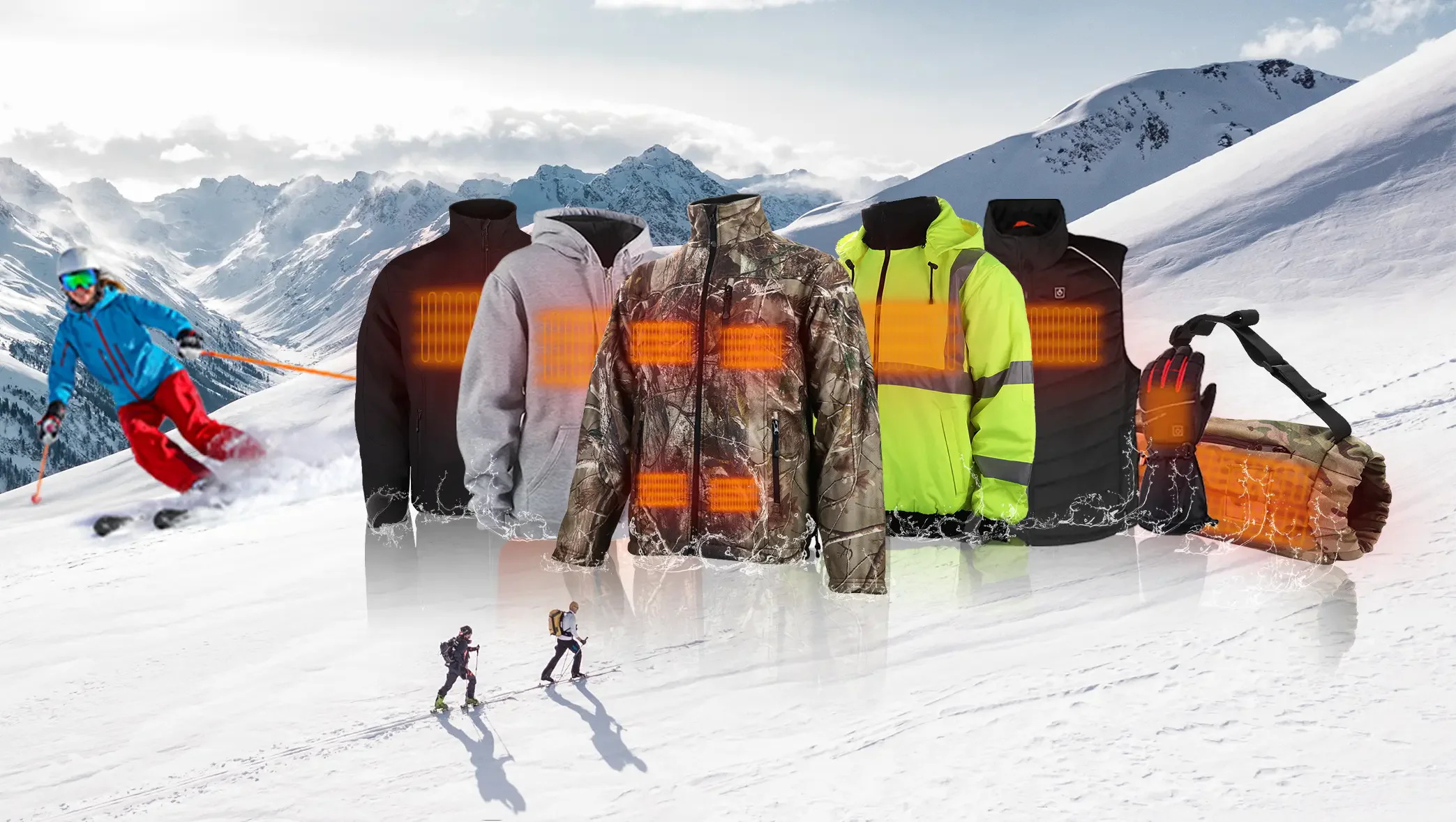
The economic question behind every MOQ decision is per-piece landed cost. Below is a representative landed-cost model for a $48 FOB heated jacket at 4 MOQ tiers.
Landed Cost by MOQ Tier
| Cost Component | 300 pcs | 1,000 pcs | 3,000 pcs | 5,000 pcs |
|---|---|---|---|---|
| FOB unit price | $54.00 | $48.00 | $44.00 | $42.00 |
| Freight (per pc) | $4.20 | $2.80 | $2.10 | $1.85 |
| Duty (assume 8%) | $4.32 | $3.84 | $3.52 | $3.36 |
| Inspection / QC | $1.50 | $0.80 | $0.50 | $0.35 |
| Battery cert amortized | $2.50 | $0.80 | $0.30 | $0.20 |
| Packaging | $1.20 | $1.00 | $0.90 | $0.85 |
| Warehouse / 3PL | $1.80 | $1.20 | $0.90 | $0.75 |
| Landed cost / pc | $69.52 | $58.44 | $$52.22 | $49.36 |
| Suggested retail (2.4x) | $166.85 | $140.26 | $125.33 | $118.46 |
At 300 pieces, landed cost is $69.52. At 5,000 pieces, it drops to $49.36 — a 29% reduction. The retail buyer MOQ ladder from 300-piece pilot to 5000-piece seasonal bulk is built around capturing this curve without overcommitting on the first buy.
Seasonal Bulk MOQ vs Evergreen MOQ
Retail buyers in 2026 are increasingly splitting programs into seasonal bulk and evergreen replenishment. These two MOQ conversations should run on different vendor tracks.
Seasonal vs Evergreen MOQ Strategy
| Dimension | Seasonal Bulk | Evergreen |
|---|---|---|
| Volume | 1,500-5,000 pcs | 500-1,500 pcs/quarter |
| Vendor type | Asian factory OEM | Domestic or private label |
| Lead time tolerance | 60-90 days | 30-45 days |
| MOQ flex | Low (locked) | High (negotiable) |
| SKU count | 5-12 | 2-4 |
| Payment | LC or OA 30 | OA 30-45 |
| Risk | High (capital lock) | Low (rolling) |
The heated apparel MOQ conversation for evergreen replenishment is fundamentally different from seasonal: shorter lead times, smaller volume, higher per-piece cost, but vastly lower inventory risk.
Mixed-SKU MOQ Strategy: Aggregating Across 5 SKUs
The single most powerful MOQ lever a retail buyer has is mixed-SKU aggregation. By spreading one factory’s MOQ across 5 SKUs (jacket, vest, glove, base layer, beanie), you hit the 1,000-piece factory MOQ with 200 pieces per SKU.
Mixed-SKU MOQ Example
| SKU | Per-SKU Volume | Total Pieces |
|---|---|---|
| Heated jacket | 300 pcs | 300 |
| Heated vest | 250 pcs | 250 |
| Heated glove | 200 pcs | 200 |
| Heated base layer | 150 pcs | 150 |
| Heated beanie | 100 pcs | 100 |
| Total | — | 1,000 pcs |
The 5-SKU aggregation hits the 1,000-piece factory MOQ without forcing any single SKU into an unsellable volume. The gearplant partner factory network offers this aggregated MOQ structure across partner factories for buyers who want pilot-tier risk with seasonal-tier pricing.
5-Step Buyer-Side Negotiation Playbook
Below is the 5-step negotiation playbook used by experienced retail buyers to extract MOQ concessions in 2026.
Step 1 — Open With Tier-Ladder Intent
Never open with “I want 300 pieces.” Open with: “Our 2026 plan is a 300-piece pilot followed by a 1,500-piece seasonal if the sell-through clears 40%. We’re evaluating 3 vendors.” This signals a multi-tier program and invites the vendor to offer tiered MOQ.
Step 2 — Anchor on Mixed-SKU Aggregation
Propose the 5-SKU table above. Most vendors will accept mixed-SKU MOQ if the total hits their floor.
Step 3 — Trade MOQ for Payment Terms
If the vendor will not budge on MOQ, offer 30/70 T/T or LC at sight in exchange for a 20-30% MOQ reduction.
Step 4 — Ask for Reorder MOQ Drop in Writing
A vendor that won’t drop reorder MOQ by 20-30% is signaling they expect to lose you as a buyer after the first PO. Push for written reorder terms.
Step 5 — Lock Battery Pack MOQ Separately
Battery pack MOQ should be a separate line, not bundled into garment MOQ. This lets you reorder batteries without re-ordering garments. The buyer-side MOQ scorecard evaluates supplier responsiveness to small-batch orders, and battery-pack reorder speed is the #1 axis.
5-Step Vendor Onboarding Ladder
Once a vendor is shortlisted, the onboarding ladder below protects the retail buyer against MOQ surprises mid-program.
Vendor Onboarding Ladder
| Step | Activity | MOQ Implication |
|---|---|---|
| 1 | RFQ + sample request | Lock sample cost and lead time |
| 2 | 50-100 pc sample run | Validate production MOQ floor |
| 3 | 300-piece pilot | Confirm scalability |
| 4 | 1,000-piece seasonal | First real MOQ test |
| 5 | Reorder / evergreen | Validate reorder MOQ drop |
Each step is a gate. Skipping step 2 to save 4 weeks almost always costs the buyer more in re-sampling, defect rectification, and missed seasonal windows.
Lead-Time Impact at Different MOQ Tiers
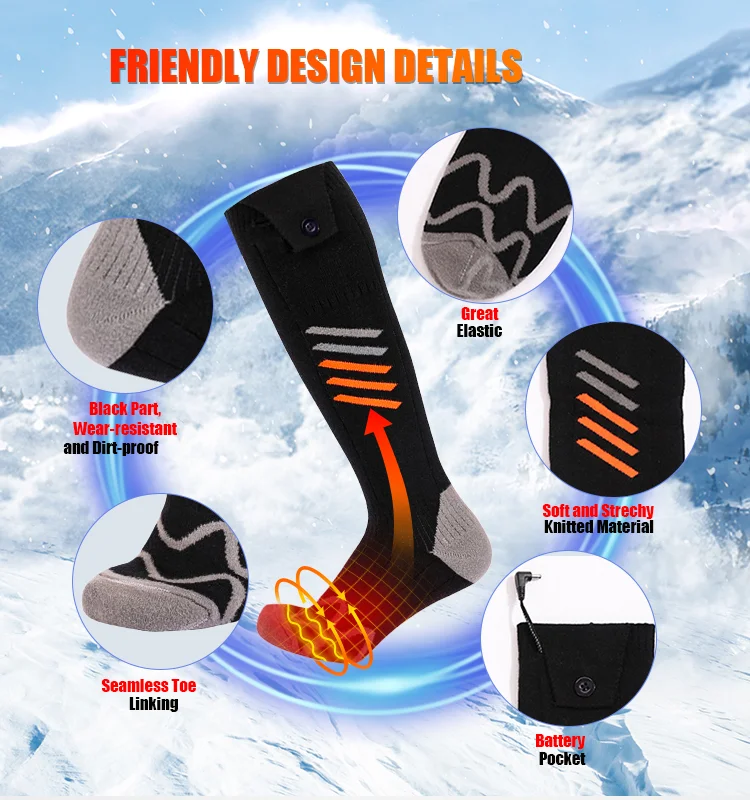
Lead time and MOQ are coupled. The table below shows typical lead time by tier.
Lead Time vs MOQ Tier
| MOQ Tier | Volume | Sample Lead | Production Lead | Total Calendar |
|---|---|---|---|---|
| Pilot | 100-300 pcs | 10-14 days | 25-35 days | 35-50 days |
| Launch | 300-1,000 pcs | 14-21 days | 30-45 days | 45-65 days |
| Seasonal | 1,000-3,000 pcs | 21-30 days | 45-60 days | 65-90 days |
| Bulk | 3,000-5,000 pcs | 21-30 days | 60-75 days | 80-105 days |
| Reorder | 500-1,500 pcs | 0 (no sample) | 30-45 days | 30-45 days |
A retail buyer who orders in late August for a November floor-set needs the seasonal tier locked by mid-July. The heated apparel MOQ decision drives this calendar.
Risk: Stuck Inventory When MOQ Is Wrong
The single biggest risk in a heated apparel program is stuck inventory. Heated apparel is seasonal — a wrong-MOQ buy in October cannot be sold in March without 40-60% margin loss.
Stuck-Inventory Risk by MOQ Misstep
| Misstep | Likely Outcome | Mitigation |
|---|---|---|
| MOQ too high on single SKU | 30-50% leftover by March | Mixed-SKU aggregation |
| No reorder MOQ drop | Can’t replenish hot sellers | Written reorder terms |
| Wrong battery spec | Returns + deadstock | Stock battery for first PO |
| Customization too deep | Can’t pivot to trending color | Logo + color only for pilot |
| Lead time too long | Miss season entirely | Lock tier by mid-summer |
Glossary
| Term | Definition |
|---|---|
| MOQ | Minimum Order Quantity — smallest volume a vendor will accept per SKU or per PO |
| FOB | Free On Board — price at factory gate before freight/duty |
| OEM | Original Equipment Manufacturer — buyer-specified design built by factory |
| ODM | Original Design Manufacturer — factory design sold to buyer with light customization |
| Private Label | Factory-owned product sold under buyer’s brand |
| LC | Letter of Credit — bank-guaranteed payment instrument |
| OA | Open Account — payment after shipment, typically Net 30-90 |
| T/T | Telegraphic Transfer — wire payment |
| BMS | Battery Management System — circuitry that controls battery pack |
| Pilot run | Small first production batch (typically 100-500 pcs) |
| Reorder MOQ drop | Negotiated reduction in MOQ for repeat orders |
| Mixed-SKU MOQ | Single PO spread across multiple SKUs to hit factory MOQ |
| Landed cost | Total cost per piece including FOB, freight, duty, QC, warehousing |
| Tier ladder | Stair-step MOQ plan from pilot through seasonal to bulk |
—
Frequently Asked Questions
Below are the 12 most common buyer-side questions we hear when sourcing a heated apparel bulk-order run from a manufacturer, OEM, or wholesale partner in 2026.
Q1: What is the typical MOQ for a private-label program?
A 300-piece program-level MOQ is typical for first-time buyers using a custom heated jacket MOQ brief; some factories offer a 100-piece pilot run program to validate design before scaling to a 500-piece seasonal bulk run.
Q2: Can I split a 1,000-piece MOQ across multiple SKUs?
Yes — most manufacturers support multi-SKU aggregation in a single PO. Aggregate SKUs (e.g., jacket + vest + glove) to hit the 500-piece minimum run while keeping flexibility.
Q3: How does battery spec drive MOQ tier?
Battery pack selection is the most common MOQ driver. A 7.4V / 6,700mAh lithium pack requires a 5,000-cell bulk purchase; a 5V / 4,000mAh USB-power-bank configuration allows 1,000-piece tier MOQ.
Q4: Does customization depth raise the MOQ ceiling?
Yes — full custom (logo + fabric + battery + cut + packaging) generally requires a 1,000-piece MOQ. Logo-only customization can sometimes be done at the 300-piece tier.
Q5: What’s the difference between OEM and ODM MOQ?
OEM (you design, factory produces) typically has lower MOQ (300-500 pieces). ODM (factory designs, you rebrand) has higher MOQ (1,000+) because the factory amortizes tooling across the catalog.
Q6: How do seasonal vs evergreen MOQ strategies differ?
Seasonal (winter) MOQ commitments lock in Q1 production slots; evergreen MOQ runs are flexible year-round but cost 8-12% more per piece.
Q7: What payment terms pair best with which MOQ tier?
Net 30 pairs with 300-piece tier; 30% deposit + balance on shipment is the 1,000-piece standard; LC at-sight is typical for 5,000-piece container orders.
Q8: How long does a typical MOQ run take from PO to delivery?
A 1,000-piece PO typically takes 60-75 days (30 days production + 30 days QC + 15 days logistics). A 5,000-piece PO takes 90-120 days.
Q9: Can I do a small pilot before committing to the full MOQ?
Yes — most factories offer a 50-100-piece pilot run at 1.5-2x the per-piece cost, refundable against the full MOQ PO within 90 days.
Q10: What is a stuck-inventory risk and how do I mitigate it?
Stuck inventory happens when the actual sell-through is below the MOQ purchase volume. Mitigate with a 1:1:1 split across three product variants, a 30% safety stock buffer, and a 60-day vendor return policy.
Q11: Does the factory MOQ differ between Vietnam, Bangladesh, and China?
Yes — Vietnam typically runs 500-piece minimums, Bangladesh 1,000+, China 300-500. Each location has its own customization ceiling and lead time.
Q12: What’s the most common mistake first-time buyers make on MOQ?
First-time buyers often over-commit to MOQ before validating demand. The fix: start with a 100-piece pilot, then scale to 300, then 1,000 — three-stage ramp.