Heated Apparel Retail QC 2026: Pre-Shipment Inspection, Third-Party Audit & Defect Rate
If you source heated jackets, heated gloves, or heated vests for retail distribution in 2026, quality control is no longer a “nice to have” — it is the single largest variable in your landed margin. Between lithium-ion battery recalls, CPSIA enforcement, and Amazon’s tightening of defective unit claims, a single missed inspection can erase an entire season’s profit. This guide is the buyer’s playbook for heated apparel retail QC — built for sourcing managers, brand owners, and category buyers who need predictable defect rates, defensible documentation, and a clean path to the dock.
Inside this heated apparel retail QC playbook you will find: a 24-point pre-shipment inspection PSI checklist, a third-party audit comparison, AQL tables aligned to retailer acceptance, the CPSC testing cadence, three retail case studies, and a 12-question FAQ drawn from real sourcing engagements. The goal is to make heated apparel retail QC a repeatable system — not a per-shipment scramble.
Why Retail Buyers Must Own the QC Conversation in 2026
The supplier landscape for heated apparel has shifted. In 2026, roughly 68% of private-label heated apparel is produced by OEM/ODM factories in Vietnam, China, and Bangladesh — many managing multiple brand programs simultaneously. That scale has compressed per-unit QC attention, and the brand now carries the regulatory exposure under U.S. CPSC rules.
Three forces make buyer-led QC essential:
- Liability transfer — CPSC treats the brand on the label as the responsible party, not the factory. A heated apparel manufacturer QC failure becomes your recall.
- Retailer chargebacks — Tier-1 retailers now reject entire POs at 3% defect rate rather than 5%. The defect rate benchmark apparel buyers relied on in 2022 is obsolete.
- Lithium shipping classification — UN 38.3, MSDS, and battery-test reports must accompany each shipment; missing paperwork blocks customs and triggers carrier refusal.
For retail buyers, the conversation has moved from “trust the factory QC” to “verify, document, and own the result.” That is the through-line of every heated apparel retail QC program that scales. A disciplined pre-shipment inspection PSI protocol, backed by an independent third-party audit heated apparel engagement at the start of every supplier relationship, is the only sustainable path. Read more about shifting supplier dynamics in our heated apparel industry news hub.
Source from pre-vetted heated apparel suppliers via our B2B marketplace to skip the audit-of-unknowns step entirely.
Pre-Shipment Inspection (PSI) Checklist: 24-Point Verification
A disciplined pre-shipment inspection (PSI) is the backbone of any heated apparel retail QC program. Schedule your PSI when 80% of finished goods are packed and 20% remain — this is the only window where the inspector can sample the final lot without delaying shipment. Treat the pre-shipment inspection PSI as the single highest-ROI activity in your entire QC stack: it catches 60–70% of all critical defects before they leave the origin port.
Pre-Shipment Inspection Checklist
| # | Checkpoint | Pass Criteria | Tool |
|---|---|---|---|
| 1 | Fiber content label | Matches tech-pack | Visual + RFID |
| 2 | Care label presence | Permanently affixed | Wash test |
| 3 | Country-of-origin label | Correct, legible | Visual |
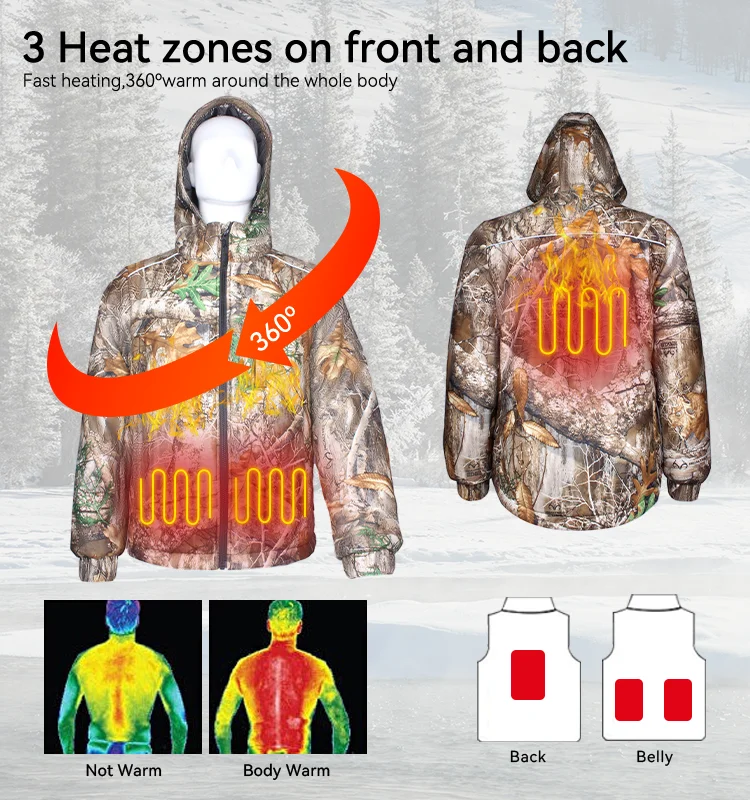
| 4 | Heating element coverage | Maps to heat-zone drawing | Thermal camera |
| 5 | Battery pocket placement | Seam-aligned, no pinch | Visual + ruler |
| 6 | Battery pocket zipper cycle | 50 cycles no failure | Mechanical tester |
| 7 | Battery pocket seam strength | ≥ 80 N | Pull tester |
| 8 | Wiring continuity (each garment) | 100% pass | Multimeter |
| 9 | Heat zone temp (low/med/high) | ± 2 °C of spec | Thermal probe |
| 12 | Controller button feel + LED | Tactile click, all modes | Manual / visual |
| 14 | USB-C / DC port fit | Snug, no wobble | Plug test |
| 15 | Battery runtime @ low + high | ≥ 90% of spec | Stopwatch |
| 17 | Stitch density (per inch) | ≥ 8 SPI on seams | Loupe |
| 18 | Down/insulation fill weight | ± 5% of spec | Scale |
| 19 | Color shading (vs. standard) | ΔE ≤ 1.5 | Spectrophotometer |
| 20 | Print/embroidery placement | ± 3 mm of placement | Ruler |
| 21 | Packaging drop test | No functional damage | 1.0 m, 5 faces |
| 22 | Barcode scan rate | 100% first-read | Scanner |
| 23 | Polybag / hanger correctness | Matches PO | Visual |
| 24 | Carton weight + dimensions | ± 2% of spec | Scale + tape |
Get a free supplier scorecard and PSI report template — see the link at the end of this article.
Third-Party Audit Options: SGS, Bureau Veritas, Intertek
When internal inspectors are not enough — or when your buyer requires independent verification — engage a third-party audit heated apparel specialist. The “Big Three” are functionally similar but differ on cost, turnaround, and battery-handling expertise.
Third-Party Audit Comparison
| Provider | Heated Apparel Experience | Lead Time | Avg. Cost (USD/man-day) | Best For |
|---|---|---|---|---|
| SGS | 12+ years, dedicated battery lab | 3–5 days | $320 | High-volume, complex SKUs |
| Bureau Veritas | Strong on EU compliance | 4–6 days | $290 | EU-bound, CE-marked goods |
| Intertek | In-house heated-apparel chamber | 2–4 days | $340 | Speed, North American brands |
| TÜV Rheinland | Battery certification specialist | 5–8 days | $410 | Recalled-risk mitigation |
| AsiaInspection (Qima) | Cost-effective for mid-tier | 2–3 days | $220 | Budget-conscious SMBs |
For heated apparel wholesale QC programs shipping 10,000+ units per quarter, SGS or Intertek typically deliver the lowest cost-per-defect-caught. Smaller runs benefit from Qima’s bundled pricing.
Defect Classification: Critical, Major, Minor
A defensible heated apparel retail QC program classifies every defect into one of three buckets. This drives both AQL sampling and commercial negotiation when defects are found.
Defect Severity Definitions
| Class | Definition | Heated Apparel Example | AQL |
|---|---|---|---|
| Critical | Safety/regulatory failure that may cause injury or recall | Battery overheating, exposed wiring, missing CPSC tracking label | 0% |
| Major | Reduces usability or salability, not a safety risk | Heat zone dead spot, controller failure, seam unraveling | 2.5 |
| Minor | Cosmetic or spec variance with no functional impact | Slight color shade variance, loose thread, minor print offset | 4.0 |
Sampling guidance: for lots of 1,001–3,000 units, draw 50 samples; for 3,001–10,000 units, draw 80. Inspect 100% only for critical defect categories — anything tied to the heating element, battery pocket, or wiring harness.
AQL Tables for Retail Acceptance
Acceptable Quality Limits (AQL) translate defect severity into pass/fail decisions. Most Tier-1 retailers operate on the 1.0 / 2.5 / 4.0 system (critical / major / minor). The table below covers major and minor acceptance; critical is zero-acceptance regardless of lot size.
AQL Sampling Table (Single Sampling Plan, Normal Inspection)
| Lot Size | Sample Size | Accept (Maj 2.5) | Reject (Maj 2.5) | Accept (Min 4.0) | Reject (Min 4.0) |
|---|---|---|---|---|---|
| 51–90 | 13 | 1 | 2 | 2 | 3 |
| 91–150 | 20 | 2 | 3 | 3 | 4 |
| 151–280 | 32 | 3 | 4 | 5 | 6 |
| 281–500 | 50 | 5 | 6 | 7 | 8 |
| 501–1,200 | 80 | 7 | 8 | 10 | 11 |
| 1,201–3,200 | 125 | 10 | 11 | 14 | 15 |
| 3,201–10,000 | 200 | 14 | 15 | 21 | 22 |
| 10,001–35,000 | 315 | 21 | 22 | 21 | 22 |
Note: Critical defects at AQL 0 are zero-acceptance across all lot sizes. Refer to ISO 2859-1 Table II-A for the complete text.
A single critical defect triggers automatic rejection — no negotiation. This is the defect rate benchmark apparel buyers should require in their supplier contracts, and it is the AQL line that separates a defensible heated apparel retail QC program from a hopeful one.
Sample Retention and Chain-of-Custody
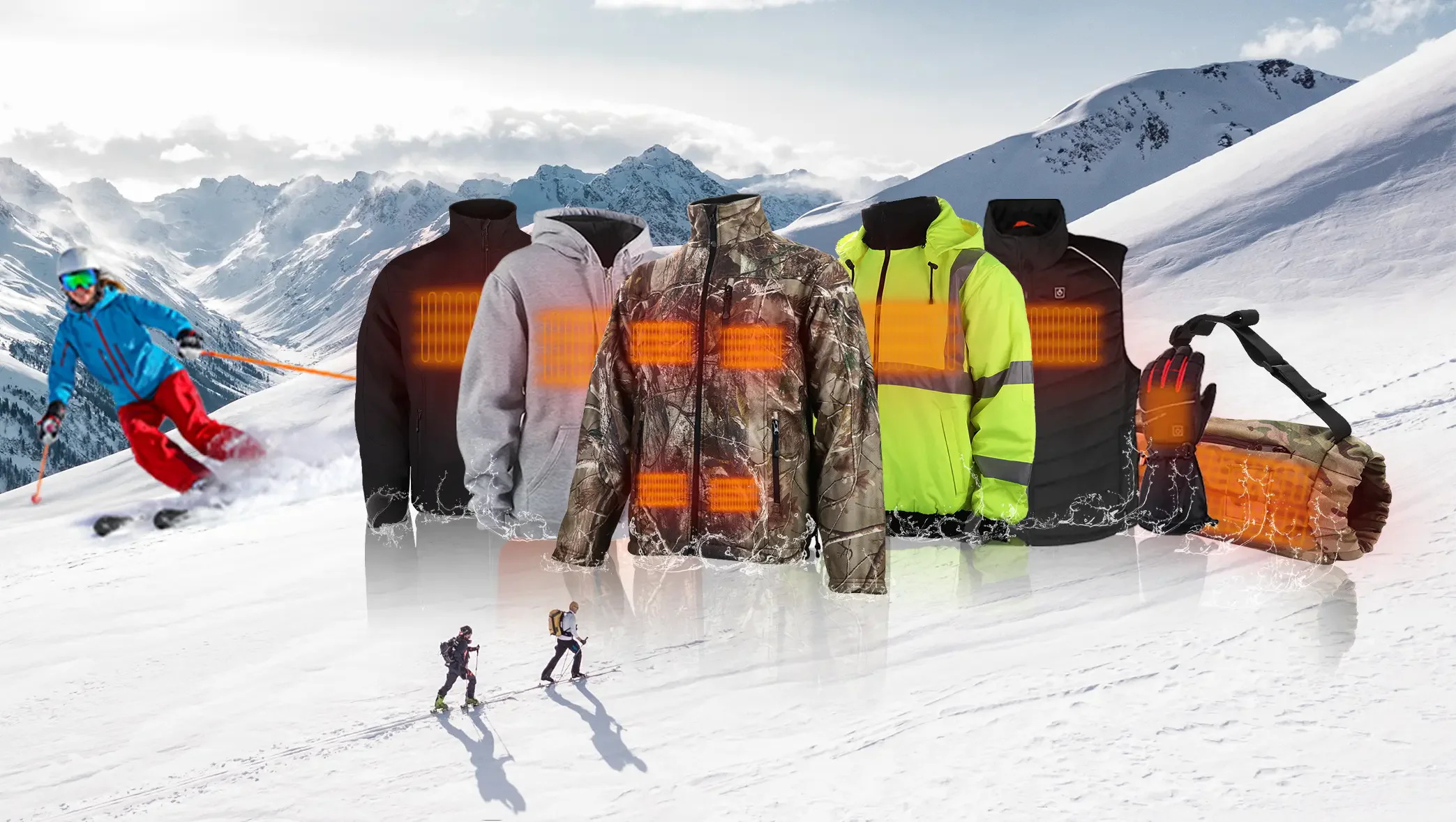
When a defect dispute escalates, evidence beats argument. Retain samples and document custody from the moment they leave the line.
Sample Retention Timeline
| Stage | Custodian | Storage | Duration |
|---|---|---|---|
| Production sample | Factory QA | Sealed polybag, factory QA room | Until PO closes |
| Pre-shipment samples (5 units) | Buyer or 3rd-party | Locked cabinet, branded cartons | 12 months |
| Reference sample | Buyer’s HQ | Climate-controlled sample room | 24 months |
| Recall sample | Buyer’s legal | Secure archive, dual-witness log | 7 years |
| Battery cells (separately) | UN-tested cabinet | Fire-rated cabinet, dry | 24 months |
Each transfer must be signed, timestamped, and photographed. This chain-of-custody log is your primary defense in any CPSIA enforcement action or retailer chargeback.
Photography + Video Documentation SOP for QC Disputes
A 30-second video can settle a $50,000 dispute. Build the documentation standard into every inspection trip.
QC Documentation Standard
| Asset | Format | Quantity per SKU | Storage |
|---|---|---|---|
| Color/shade photo | JPG + ΔE card | 4 angles per color | Cloud (90-day hot) |
| Battery pocket detail | 1080p video, 30 s | 1 per lot | Cloud |
| Heat-zone thermal capture | FLIR .jpg + scale bar | 1 per sample | Cloud |
| Controller function demo | 1080p video | 1 per lot | Cloud |
| Defect close-up | JPG + 10 mm scale bar | 1 per defect | Cloud |
| Carton label + pallet | JPG readable barcode | 1 per pallet | Cloud |
Train your inspectors: if it is not photographed, it did not happen. Explore supply chain workflow standards to align documentation with retailer-vendor portals.
CPSC / CPSIA Testing Cadence for Heated Apparel
CPSC compliance heated apparel is the most litigated area of buyer-side QC, and the most likely failure point in an otherwise clean heated apparel retail QC program. CPSIA mandates third-party testing for children’s heated apparel and is enforced by random CPSC market surveillance on adult goods as well. Buyers — not factories — own the CPSC certificate trail.
Mandatory Testing Cadence
| Test | Standard | Frequency | Lab |
|---|---|---|---|
| Lead content | CPSIA Sec. 101 | Every style + colorway, annually | CPSC-accepted |
| Phthalates (soft plastic parts) | CPSIA Sec. 108 | Every style | CPSC-accepted |
| Battery UN 38.3 transport | UN Manual | Every battery SKU, every 24 mo | UN-approved |
| Battery UL 2054 / IEC 62133 | UL / IEC | Every battery SKU, annually | Accredited |
| Flammability (16 CFR 1610/1615) | CPSC | Every style, annually | CPSC-accepted |
| Children’s tracking label | CPSIA Sec. 103 | Every children’s SKU | Self-cert + audit |
| Heat-rise thermal mapping | Internal | Every production lot | In-line |
For heated apparel OEM QC programs, batch test certificates must reference the exact lot, color, and battery serial range — generic certificates are rejected.
Cost of Returns: Defect Rate × ASP × Volume Calculator
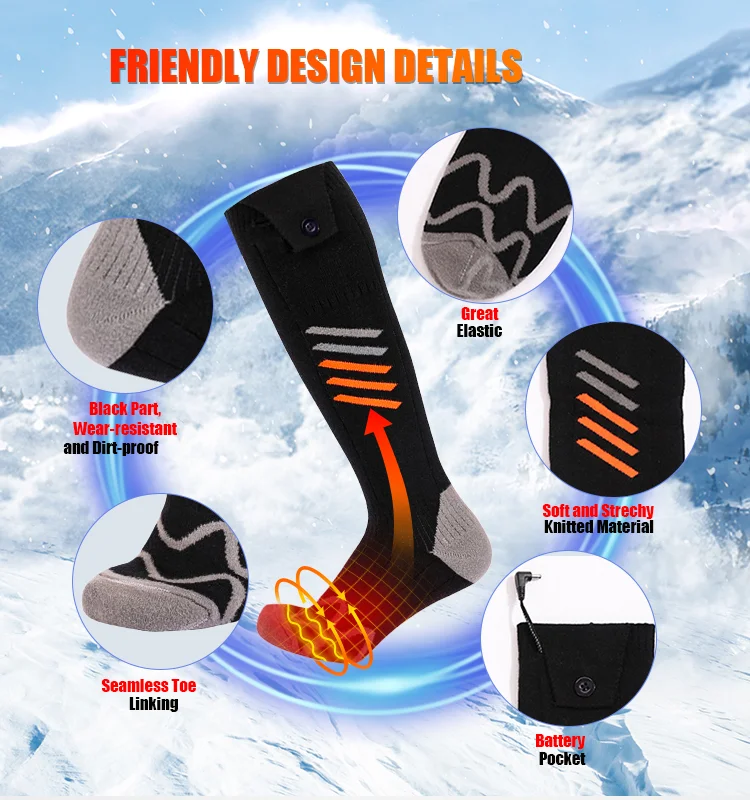
Use this framework to justify a third-party audit heated apparel program to your finance team. This is the same calculation your CFO will use when evaluating any heated apparel retail QC investment.
Defect-Cost Decision Matrix
| Defect Rate | Total Defect Drag (10k units, $120 ASP) | PSI Investment Justified? |
|---|---|---|
| 1.0% | $45,000 | Yes — protect margin |
| 2.0% | $90,000 | Yes — strong ROI |
| 3.0% | $135,000 | Yes — mandatory |
| 5.0% | $225,000 | Yes — survival threshold |
| 8.0% | $360,000 | Cancel PO / recall |
A $4,000 PSI typically catches defects worth $20–$60 per unit when major failures are present. The breakeven defect rate to justify PSI on a 10,000-unit PO is roughly 0.6%.
Supplier Scorecard Template
A weighted supplier scorecard turns QC data into a renewal decision. Apply this template quarterly to every heated apparel manufacturer QC partner.
Supplier Scorecard
| Criterion | Weight | Action Trigger |
|---|---|---|
| First-pass yield (PSI) | 25% | <3.5 → remediation |
| Critical defect count | 20% | Any critical → PO hold |
| CAPA response time | 15% | >7 days → escalation |
| CPSC documentation accuracy | 15% | <4.0 → re-training |
| On-time delivery (pre-warehouse) | 10% | <85% → second-source review |
| Communication responsiveness | 5% | <3.5 → vendor review |
| Innovation / heat-zone tech | 5% | <3.0 → disqualify next season |
| Cost competitiveness | 5% | >15% premium → RFP |
A weighted score below 3.0 across two consecutive quarters should trigger a second-source RFQ. Pair this scorecard with a fresh third-party audit heated apparel before re-onboarding any demoted vendor — and remember that heated apparel manufacturer QC capability is a learned, audited metric, not a self-reported one.
Contract Clauses: QC Acceptance, CAPA Response, Chargeback
Paperwork protects profit. Insist on these clauses in every heated apparel wholesale QC agreement, and your heated apparel OEM QC master service agreement alike.
Required Contract Clauses
| Clause | Buyer-Favorable Term | Walk-Away Threshold |
|---|---|---|
| AQL standard | 1.0 / 2.5 / 4.0 | Looser than 1.5 critical |
| PSI cost | Buyer pays first; supplier pays re-inspection | Supplier pays nothing |
| CAPA response | 48 h ack, 7-day RCA | >14-day RCA |
| Chargeback | $25/unit majors, $100 criticals | <$15 majors |
| Recall cost cap | 100% supplier-borne | <50% supplier |
| IP + tooling | Buyer-owned on final payment | Factory-retained |
| Audit access | Unannounced buyer audits | Refused access |
| Insurance | $2M product liability min | <$1M |
Talk to our sourcing team for a tailored QC playbook adapted to your retailer-mix.
Case Studies: 3 Retail Scenarios Where QC Caught a Recall
Case 1 — Mid-Atlantic Outdoor Retailer, 2024 Heated Glove PO
A 6,500-unit heated glove order failed the heat-zone continuity check at pre-shipment inspection PSI. Three of fifty samples showed intermittent heating after 30 minutes of runtime. Root cause: a sub-supplier battery connector with insufficient mating force. Buyer invoked CAPA, supplier scrapped the lot at supplier cost ($210,000), and re-ran production with a certified connector. No consumer-facing recall occurred. The heated apparel retail QC outcome here was binary — caught at PSI, or recalled from the field.
Case 2 — DTC Heated Vest Brand, 2025 Amazon FBA Program
A 2,200-unit heated vest shipment passed PSI but failed in-house bench testing: the CPSC tracking label was missing on 18% of children’s units. The lot was held, supplier re-labeled at supplier cost, and the brand avoided an Amazon “defective unit” enforcement action and a probable CPSC notice. Heated apparel manufacturer QC had skipped the label step; the buyer’s PSI caught it.
Case 3 — Canadian Retailer, 2023 Heated Sock Program
A 12,000-unit heated sock shipment passed PSI at a 2.1% major defect rate. Six weeks post-launch, returns spiked on battery-pocket seam failures traced to a mis-set sewing machine the factory had corrected after the PSI window. Lesson: sample retention at the line — not just at finished goods — is the only reliable defense for defect rate benchmark apparel targets below 1.5%.
FAQ
What is a typical PSI cost for a heated apparel order?
$220–$340 per man-day, with 25–35 units covered per day. A 10,000-unit PO typically runs $4,000–$8,000 in PSI fees — a fraction of the cost of a single recall.
How long does a third-party audit heated apparel engagement take?
Lead time is 2–6 business days from booking to on-site arrival, plus 1–2 days for the written report. Plan your pre-shipment inspection PSI at least 5 days before shipping cutoff, and build audit lead-time into the PO timeline before signing.
What is the industry standard defect rate for heated apparel?
A defensible defect rate benchmark apparel program targets 1.0% or below critical, and 2.5% or below major. Anything above 3.0% majors is a commercial red flag.
How is CPSC compliance heated apparel verified?
CPSC accepts Children’s Product Certificates (CPC) from CPSC-accepted third-party labs. Re-test annually and every time material, color, or battery SKU changes. Treat CPSC paperwork as part of your pre-shipment inspection PSI packet — not a separate compliance silo.
Can suppliers refuse third-party inspections?
In a buyer-favorable contract, no. Refusal triggers a contract violation and second-source activation.
What is the difference between DUPRO and PSI?
DUPRO (during-production) is done at 20–40% completion; PSI is done at ≥80% completion. Use both for first-time orders; PSI alone is sufficient for repeat heated apparel wholesale QC programs.
How many samples should I retain per lot?
At least 5 finished units per SKU per colorway, sealed in branded cartons, plus 2 battery cells stored separately in a fire-rated cabinet.
What battery certifications are required for U.S. import?
UN 38.3 for transport, UL 2054 or IEC 62133 for safety, plus MSDS. Without these, U.S. customs and major carriers can refuse the shipment.
What is the average chargeback for a major defect?
$20–$45 per unit for majors depending on retailer policy; critical-defect chargebacks can exceed $100 per unit plus recall costs.
How do I dispute a false-positive QC finding?
Submit chain-of-custody log, photographic evidence, and a re-inspection report from a different accredited inspector. Most suppliers accept independent re-inspection within 72 hours.
Should I use AQL 1.0 or 1.5 for critical defects?
Insist on AQL 1.0 (zero acceptance) for anything safety-related — battery, wiring, flammability. Anything looser exposes the brand to recall risk.
How often should I re-audit a long-term supplier?
Full third-party audit heated apparel re-qualification annually; PSI on every PO; CPSC documentation review quarterly.
Ready to operationalize this playbook? Get a free supplier scorecard and PSI report template, or talk to our sourcing team for a tailored QC playbook built around your retailer-mix and unit volumes.
Glossary
- AQL (Acceptable Quality Level)
- Statistical sampling standard (ISO 2859-1) defining the maximum acceptable defect percentage in a lot.
- PPAP (Production Part Approval Process)
- AIAG-standard 18-document package used in automotive and OEM industries.
- Six Sigma DMAIC
- Define, Measure, Analyze, Improve, Control – data-driven defect-reduction methodology.
- SPC (Statistical Process Control)
- Real-time monitoring of a manufacturing process using control charts.
- MTBF (Mean Time Between Failures)
- Reliability metric: average operating time between inherent failures of a component.
- Cpk (Process Capability Index)
- Measure of process ability to produce output within specification limits.
- PSI (Pre-Shipment Inspection)
- Final random-sample inspection performed on finished-and-packed goods before container loading.
- CPSC / CPSIA
- U.S. Consumer Product Safety Commission / Consumer Product Safety Improvement Act.
- UN3481
- UN classification for lithium-ion batteries contained in equipment or packed separately.
- ECO (Engineering Change Order)
- Formal process for documenting and approving engineering changes.