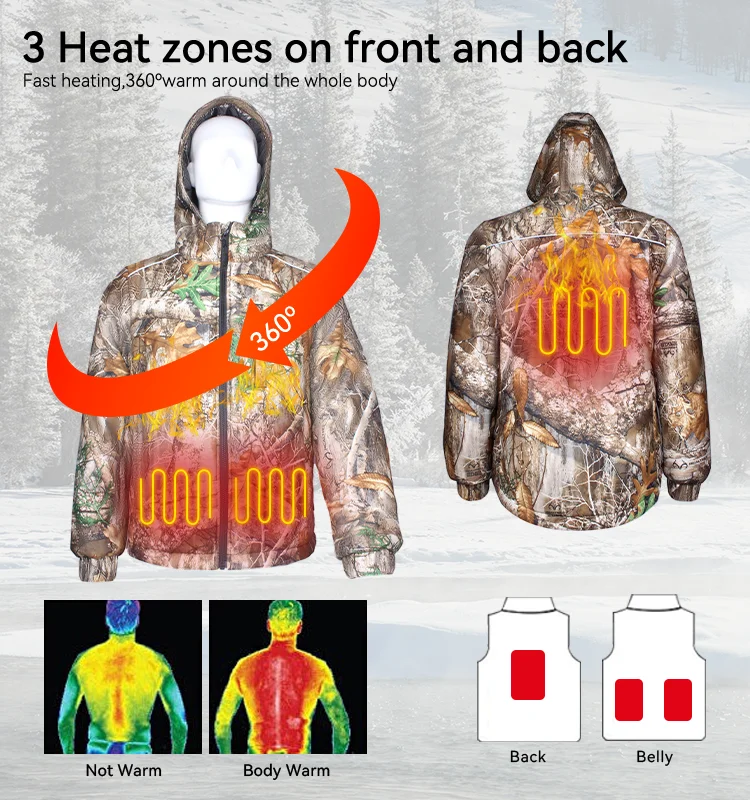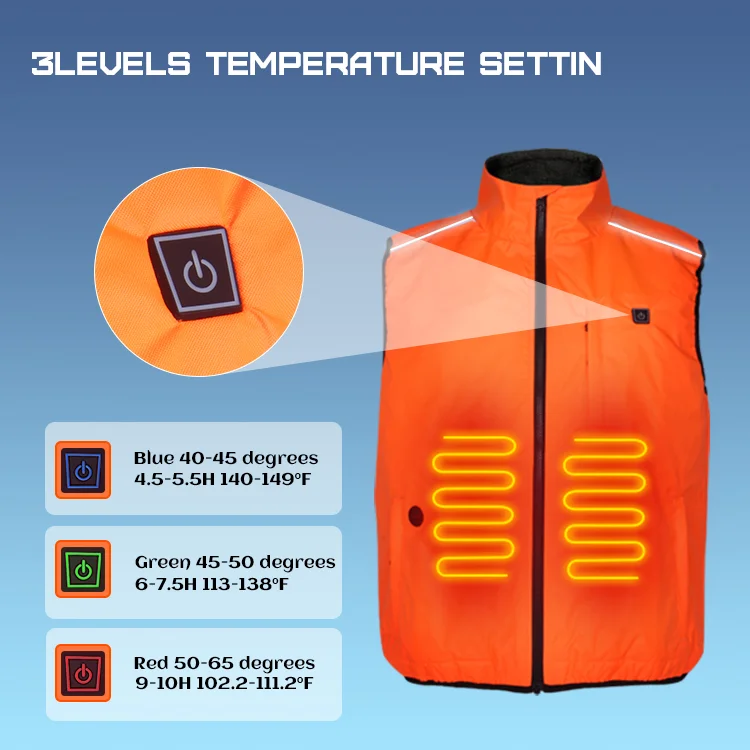
Wholesale Heated Apparel Battery EPR 2026: the Buyer Acceptance Binder and Amazon EU EPR Onboarding
1. Why heated apparel battery EPR became a buyer-side document in 2026
Heated apparel battery EPR used to arrive as a PDF in a supplier pack. It now arrives as dated, auditable records, and the buyer who signs a 5,000-unit purchase order signs for it.
The 65% lithium-based recycling efficiency deadline under Art. 71 of Regulation (EU) 2023/1542 passed on 31 December 2025, so from 1 January 2026 recycler claims are dated and checkable. Art. 13 labelling and Art. 11 removability land on 18 February 2027, pulling packaging and artwork refreshes into this buying window.
For a heated apparel battery EPR wholesale buyer the shift is simple: ask for a certificate and check it. A supplier replying with a policy statement has not read the requirement.
This site tracks the regulatory side of the category in heated apparel industry news.
2. Who is the producer: the clause that decides your liability

Under Art. 55, producer registration attaches to the party that puts the battery on the EU market. For a wholesale buyer importing finished heated garments, that party is normally the importer of record. The factory in Vietnam is not.
This is the most common contract mistake in the category. Buyers sign an agreement saying the manufacturer handles every EPR obligation, then fail at marketplace onboarding because the platform wants the registration number of the entity that placed the goods.
Three clauses fix it: a producer determination naming the importer of record for Art. 55 purposes, an indemnity for pre-delivery non-compliance, and a data handover obligation so the factory supplies the fields you must file.
Every order ships with a heated apparel battery EPR producer registration file and a heated apparel battery EPR manufacturer documentation pack holding the Art. 55 determination text, the Art. 71 recycler certificate chain and the battery passport field set, priced at a wholesale reserve of $0.83 per unit, which is $4,150 per 5,000-unit lot.
| Contract clause | What it must say | Risk removed |
|---|---|---|
| Producer determination | Importer of record is the Art. 55 producer | Who registers and pays |
| Compliance warranty | Factory warrants docs at delivery | Risk moves to shipment date |
| Data handover | Passport fields supplied per SKU | Enables marketplace filing |
| Change notification | Art. 11 and Art. 13 redesign notice | Protects the 2027 launch |
| Cost allocation | Registration and reporting fees split | Removes margin disputes |
3. The acceptance binder: what you demand and what you reject
The binder is the file you hand to legal, finance and the marketplace team before payment: a chain of custody from cell maker to listing, not a stack of certificates.
Six parts make a complete file: Art. 55 producer registration per member state of import, the Art. 71 efficiency certificate naming recycler and chemistry, the UN 38.3 test summary with IEC 62133-2:2017+AMD1:2021 conformity, take-back and Art. 56 reporting terms, Art. 13 label artwork, and the battery passport field set. Reject in writing any undated or unnamed claim.
| Binder document | Named | Dated | Accept |
|---|---|---|---|
| Art. 55 registration | Yes | Yes | Yes |
| Art. 71 efficiency certificate | Yes | Yes | Yes |
| UN 38.3 summary | Yes | Yes | Yes |
| IEC 62133-2 conformity | Yes | Yes | Yes |
| Art. 13 label artwork | Yes | Yes | Yes |
| Battery passport field set | Yes | Yes | Yes |
| Policy brochure | No | No | No |
Our compliance desk returns an itemised gap list within two working days and holds a 2.8% RMA reserve of $4,000 per 5,000-unit lot against field-failure claims, released on acceptance.
4. Art. 56 collection targets and what a 2027 run costs you
Art. 56 collection targets for portable batteries sit at 45% for 2023, 51% for 2027 and 63% for 2030. A 2027 run falls inside the 51% year, and the obligation attaches to the producer, which for your import is you.
Two consequences follow. The take-back clause in a heated apparel battery EPR contract must run to the 51% collection rate, not the rate the recycler was signed up to when the framework was drafted. Member state reporting is per country: an importer moving 5,000 units into Germany, France and Poland needs three registration lines.
| Year | Portable collection target | Buyer action |
|---|---|---|
| 2023 | 45% | Baseline in file |
| 2027 | 51% | Reprice take-back now |
| 2030 | 63% | Model forward cost |
| Per state | Same rate | One registration per market |
5. Annex XII recovery targets and the recycler contract that survives 2031
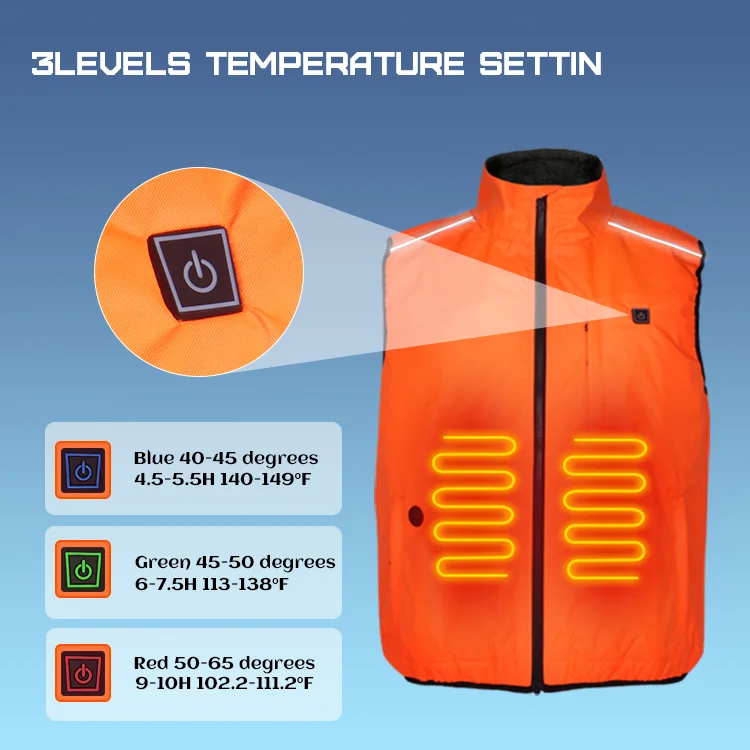
Annex XII recovery targets tighten inside the life of any contract you sign now. Lithium is 50% from 2027, rising to 80% by 2031. Cobalt, copper, lead and nickel are 90% from 2027, rising to 95% by 2031.
A heated apparel battery EPR recycler contract that promises “compliance with Annex XII” without years is unfalsifiable. Name the year-by-year schedule, and state who pays when the lithium target moves from 50% to 80%.
| Material | Recovery 2027 | Recovery 2031 | Contract wording |
|---|---|---|---|
| Lithium | 50% | 80% | Year-stated |
| Cobalt | 90% | 95% | Year-stated |
| Copper | 90% | 95% | Year-stated |
| Lead | 90% | 95% | Year-stated |
| Nickel | 90% | 95% | Year-stated |
Ask for the downstream route, not the intake volume. A recycler sending lithium-bearing streams to a smelter route has a ceiling at the 50% figure.
6. Amazon EU EPR onboarding and how listings get suspended
Every heated apparel battery EPR Amazon EU onboarding file should carry the registration number of the seller entity for each market served, plus the producer-responsibility records behind it.
Where the evidence is missing, expired or does not match the entity on the account, the outcome is a suppressed or deactivated listing, usually without an explanation attached.
| Seller file state | Amazon EU outcome | Buyer response |
|---|---|---|
| Registration missing | Listing suppressed | File before launch |
| Entity mismatch | Listing deactivated | Align importer of record |
| Certificate expired | Listing flagged | Replace dated certificate |
| Data incomplete | Listing rejected | Fill passport fields |
| Market not onboarded | Cannot list | Register per market |
Two buyers lost a November launch to a suppressed listing, both holding a valid registration at the factory rather than the importing entity: a fixable contract clause.
7. Amazon FBA inbound: UN 3481, state of charge and the paperwork you inherit
The heated apparel battery EPR Amazon FBA inbound file is where compliance meets freight. A battery-heated garment in an FBA shipment is UN 3481, lithium-ion batteries contained in equipment, with a state of charge condition at or below 30% for shipment and dangerous-goods paperwork that becomes yours once the container is booked under your name.
| FBA document | Class or limit | Failure mode if missing |
|---|---|---|
| UN 38.3 test summary | Exact pack | Booking refused |
| Carrier DG paperwork | UN 3481 | Load rejected at hub |
| State of charge record | At or below 30% | Non-conforming shipment |
| Spare pack declaration | Each spare in carton | Delivered non-compliant |
| Art. 71 certificate | Chain of custody | Listing flag on audit |
Art. 47 due diligence does not apply to portable apparel packs. The thresholds are 2 kWh for industrial and EV batteries and 5 kg for portable batteries, and a heated garment pack sits below all of them. Do not let a supplier scope one into a quote.
Our FBA prep service builds the per-shipment dangerous-goods packet, including the UN 3481 classification sheet and the 30% state of charge instruction issued to the factory, for $11,600 per 5,000-unit lot when a notified body route is required.
8. battery passport end-of-life data field mapping
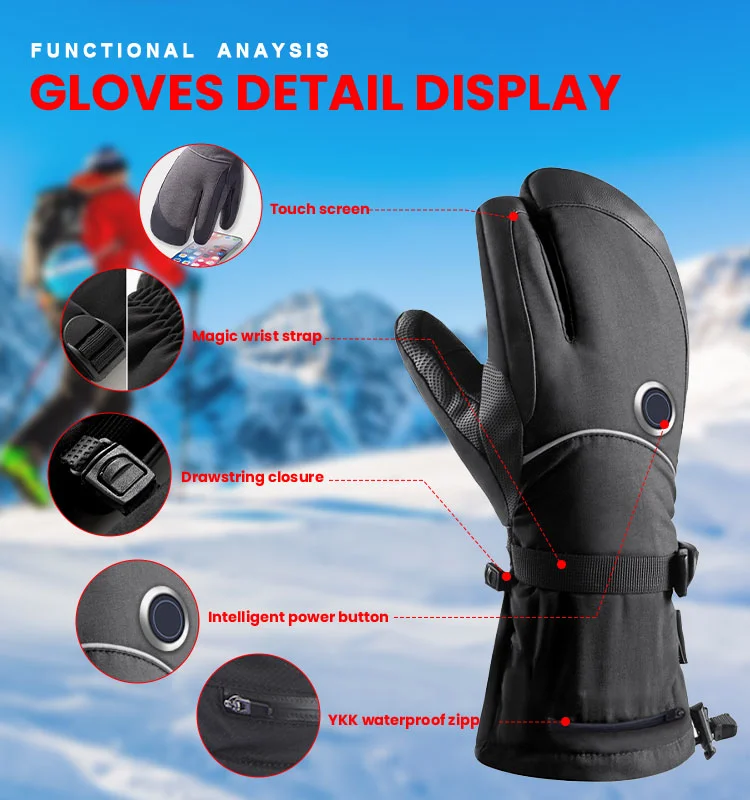
The battery passport end-of-life data field mapping is the least understood deliverable in the file, because most factories treat it as a QR code rather than a data set you can move into your own systems.
You need a heated apparel battery EPR passport field set you can pass to your EU importer record and into your marketplace producer-responsibility profile without re-keying anything.
| Passport field | Source | Destination | If missing |
|---|---|---|---|
| Cell chemistry | Cell datasheet | Importer battery record | Listing blocked |
| Cell mass | Battery BOM | End-of-life weight | Take-back cost wrong |
| Battery ID | Pack label | Marketplace profile | Listing suspended |
| Removability status | Design spec | Art. 11 evidence | Reprint at 2027 |
| Collection duty | Art. 55 entity | Member state filing | Registration rejected |
| Recycling route | Art. 71 certificate | Art. 56 reporting | Reporting rejected |
A factory that sends a PDF instead of a field mapping has handed you a screenshot of the problem.
9. Art. 11 removability and Art. 13 labelling: the 2027 refresh
Art. 11 removability and Art. 13 labelling both bite on 18 February 2027. For heated garments this is a design question first, because the pack often sits in a wired pocket with a connector routed through a seam.
Removability means the pack comes out without destroying the garment. Labelling means the pack carries the required marking and the listing carries matching product information. Both force a packaging and artwork refresh in the 2027 run.
Plan the refresh into the 2026 programme: confirm the pocket cut and label position, and make the factory deliver final label artwork for every heated apparel battery EPR SKU before print approval.
10. The landed-cost ladder and the 60-day acceptance calendar
Treat heated apparel battery EPR compliance as a line in the landed cost. A buyer who prices it after the purchase order is late. The base is $28.40 FOB, which becomes $31.13 CIF, then $35.73 DAP, then $36.81 DDP-FBA once Amazon prep, dangerous-goods paperwork and EPR filing sit inside the delivered price.
| Cost step | Unit cost | Included at this step |
|---|---|---|
| FOB factory | $28.40 | Goods, docs, compliance file |
| CIF | $31.13 | Freight and marine insurance |
| DAP | $35.73 | Import duty and delivery |
| DDP-FBA | $36.81 | Prep, DG paperwork, EPR filing |
On the acceptance side, run a 60-day acceptance calendar that starts when the binder lands, not when the factory says it will ship. That keeps a Q1 2027 EU launch on schedule while labelling runs in parallel. Packaging and freight mechanics are tracked in supply chain.
11. The five questions that expose an incomplete file
Every heated apparel battery EPR file fails at one of these five questions. Use them on every supplier.
1. Which recycler certified the 65% lithium efficiency under Art. 71, and what is the certificate date?
2. For Art. 55 purposes, which legal entity is the producer for my units in Germany, France and Poland?
3. Which member states and reporting years are covered by the take-back terms in the contract?
4. Can you supply the battery passport fields as a structured per-SKU export, not a PDF?
5. What is the Art. 13 label artwork for this SKU, and does the pack pass Art. 11 removability as built?
Answer question 2 with a factory name and you have your first red flag.
Frequently Asked Questions
Who is the producer for Art. 55 in a wholesale heated apparel import?
The importer of record is normally the producer, because it places the battery-containing garment on the EU market.
Does Art. 47 due diligence apply to a heated apparel battery pack?
No, because portable apparel packs sit below the 5 kg portable threshold and the 2 kWh industrial and EV thresholds.
What changed on 1 January 2026 for heated apparel battery EPR buyers?
The 65% lithium-based recycling efficiency deadline under Art. 71 passed on 31 December 2025, so recycler claims are now dated and auditable.
What are the Art. 56 collection targets for portable batteries?
They are 45% for 2023, 51% for 2027 and 63% for 2030, and each one attaches to the producer of the battery.
Do I need Annex XII recovery targets written into my recycler contract?
Yes, because lithium moves from 50% in 2027 to 80% in 2031 while the other listed metals move from 90% to 95%.
How do I get a listing suspended on Amazon EU?
Missing, expired or entity-mismatched EPR registration and producer-responsibility data at listing level is the usual cause.
What documents are required for Amazon FBA inbound of a heated garment?
The UN 38.3 test summary, the carrier dangerous-goods paperwork for UN 3481 and the state of charge confirmation at or below 30%.
When do Art. 11 removability and Art. 13 labelling apply?
Both apply from 18 February 2027, forcing a packaging and listing refresh inside any 2026 buying programme.
What should I reject from a supplier’s compliance pack?
Any undated, unnamed or scope-only claim, including recycling brochures and generic EPR statements without a certificate.
How long should a compliance acceptance review take?
A 60-day acceptance calendar starting at binder receipt keeps a Q1 2027 EU launch on schedule.
Does the factory in Vietnam hold the Art. 55 producer registration for my order?
Usually not, because the importer of record is the producer for Art. 55 purposes unless the contract provides otherwise.
How should I pay for EPR compliance on a bulk order?
Build it into the unit price, which is why our wholesale reserve of $0.83 per unit sits inside the FOB base rather than on a separate invoice.