Wholesale Heated Apparel Battery Passport 2026: the Buyer Acceptance Binder and the Four Field Claims to Reject in Writing
1. The scope answer comes before the price
Article 77 of Regulation (EU) 2023/1542 requires a battery passport for LMT batteries, industrial batteries with internal storage above 2 kWh, and EV batteries, from 18 February 2027. A heated-garment pack is sealed, hand-carried, under 5 kg. It is a portable battery, outside the Article 77 trigger.
That is the portable battery versus LMT battery scope question, and it belongs in the RFQ. Any battery passport manufacturer quoting a passport fee for a 2x 21700 heated jacket pack is selling scope you do not need.
Article 11 removability and Article 13 labelling still bite on 18 February 2027. Track the wider clock on our heated apparel industry news desk.
| Battery category | Article 77 passport | Application date | Heated-garment relevance |
|---|---|---|---|
| Portable, sealed, under 5 kg | Not required | No trigger | Art. 11, 13, 56, 71 only |
| LMT battery | Required | 18 Feb 2027 | Not a garment product |
| EV battery | Required | 18 Feb 2027 | Not a garment product |
| Industrial above 2 kWh | Required | 18 Feb 2027 | Not a garment product |
| Industrial, 2 kWh or below | Not required | No trigger | Not a garment product |
2. The data spine you still have to buy
Scope removes the passport obligation. It does not remove the Article 8 information cascade, the cell datasheet, the test reports, or the traceability record. The cost of that spine for a heated apparel battery passport programme is $0.83 per unit, $4,150 per 5,000-unit lot.
Write the reserve onto the PO as its own line. The $0.42 supplier document line and the $0.10 engineering data-export line cost nothing extra when they sit on the PO at signature. The $0.31 buyer-side evidence audit line is yours: $1,550 a lot buys a two-day binder review that otherwise returns as a refused FBA shipment.
| Compliance reserve line | Per unit | Per 5,000-unit lot | What it buys |
|---|---|---|---|
| Supplier document line | $0.42 | $2,100 | Datasheet, UN 38.3, IEC 62133-2:2017+AMD1:2021 |
| Engineering data-export line | $0.10 | $500 | Schema-shaped field export per SKU |
| Buyer-side evidence audit line | $0.31 | $1,550 | Your own check of 14 field groups |
| Total wholesale compliance reserve | $0.83 | $4,150 | Budgeted, auditable, not optional |
3. The landed-cost ladder, reconciled
A compliance reserve not reconciled against the Incoterm ladder is a rounding error. FOB US sits at $28.40, DDP-FBA US at $36.81. The spread is $8.41 per unit, $42,050 per lot, and most of it is freight, prep, duty and hazmat staging, not compliance.
Origin decides the rest. Section 301 at 10% (List 4A) applies to China-origin goods; Vietnam-origin goods clear under EVFTA/ATIGA with C/O issuance via VCCI. Any heated apparel battery passport wholesale quote that bundles freight and compliance into one number is hiding which one you pay.
| Incoterm stage | Unit cost | Delta vs FOB | What changes here |
|---|---|---|---|
| FOB US | $28.40 | — | Export packing, declaration, Section 301 10% List 4A |
| CIF US | $31.13 | +$2.73 | Ocean freight and marine insurance to US port |
| DAP US | $35.73 | +$4.60 | 3PL inbound handling, prep, hazmat segregation |
| DDP-FBA US | $36.81 | +$1.08 | Duty cleared, FBA delivery, SoC 30% or under |
4. Four field claims to reject in writing
These four come up on nearly every quote. Each sounds reasonable. Each is unfunded. Reject them in writing, in the PO, naming the evidence you accept.
| # | Supplier claim | Why it fails | Write this into the PO | Evidence that closes it |
|---|---|---|---|---|
| 1 | “Our passport is already compliant.” | No data-carrier evidence | “Provide the data-carrier identifier and record URL per SKU.” | Live record URL plus data-carrier ID |
| 2 | “The QR code proves the passport.” | Code resolves to a PDF | “A PDF behind a QR is not a battery passport QR code data carrier. Rejected.” | Scan returns a machine-readable record |
| 3 | “Portable scope means no passport work, so we charge nothing.” | Contradicts the Art. 8 cascade | “Portable scope removes Art. 77, not the evidence duty. The $0.10 data-export line stays.” | Export mapped to 14 groups |
| 4 | “One passport covers all SKUs.” | Shared record kills traceability | “One record per SKU and per battery lot. A shared record is rejected.” | Distinct IDs per SKU and lot |
5. The Annex XIII information set, field by field
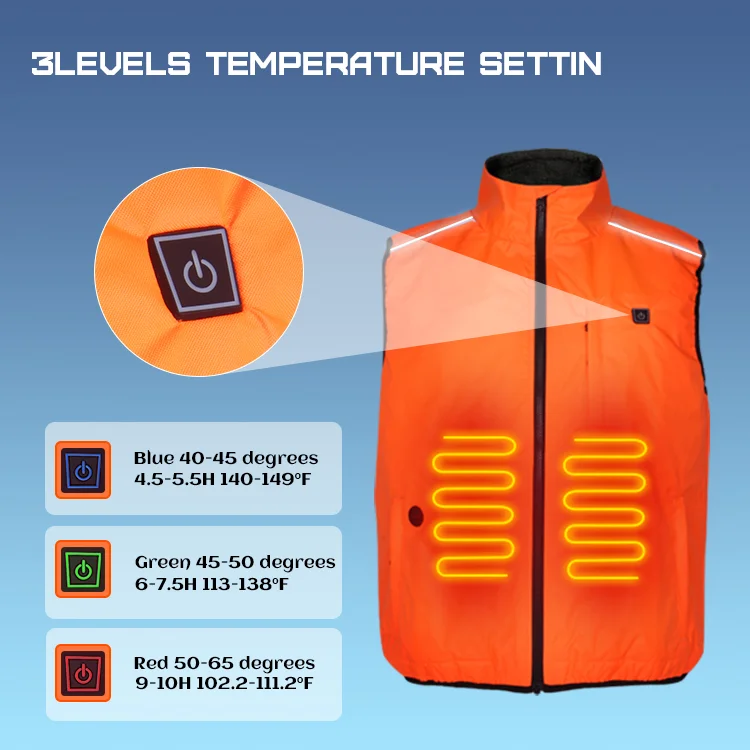
The Annex XIII battery passport information set carries 14 field groups. Eleven already sit inside the Article 8 information cascade, so your supplier may hold them and never produced them. Three are new for passports, and those three are where qualification fails.
Treat this as the working schema for the heated apparel battery passport export. Ask any battery passport OEM for its field mapping. Few have one.
| Field group | Source | Evidence you collect | Typical buyer gap |
|---|---|---|---|
| Identifier, chemistry, capacity, 2x 21700 | Art. 8 | Cell datasheet | 500-cycle claim unevidenced |
| Mass, dimensions, portable status | Art. 8 | Pack drawing | Portable status unconfirmed |
| Status: new, used or refurbished | Art. 8 | Sales declaration | Missing from most quotes |
| Safety and conformity marks | Art. 8 | UN 38.3, IEC 62133-2:2017+AMD1:2021 | Marks quoted without reports |
| Data-carrier identifier | New | ID list per SKU | Factories cannot produce it |
| Record owner plus access URL | New | Named owner, live access URL | Owner must be placer on market |
| Firmware and schema version | New | Version string per release | Drives the 90-day re-issue SLA |
6. The QR code data carrier test
Run it on a physical sample, not a catalogue PDF. A battery passport QR code data carrier must resolve to a machine-readable record, must be physically attached to the battery rather than the carton, and must carry data uploaded by the economic operator placing the battery on the market.
This is where battery passport data model readiness shows up. The Commission delegated act specifying the essential elements of the passport data model is not yet published in the EU Official Journal as of writing. Export against your own schema, then re-issue when the act lands.
| Test | Pass condition | Fail signal |
|---|---|---|
| Scan target | Machine-readable record with access URL | URL ends in .pdf or returns an image |
| Uniqueness | Different data-carrier identifier per SKU and lot | One identifier across colourways |
| Physical attachment | Carrier on the pack itself | Serial sticker on the carton only |
| Access rights | Link resolves without a login request | Dead link or password-walled portal |
| Publisher identity | Record names the placer on the market | Generic “Made in China” landing page |
| Version field | Firmware and schema version present | Field absent from the record |
7. The 60-day buyer acceptance calendar
Sixty days from PO release to FBA inbound, if you front-load the evidence. The calendar turns a heated apparel battery passport requirement into a funded line item instead of a fire drill. Hold the PO against the $0.31 per unit evidence audit as a gate: no signed field checklist, no lot release.
| Day | Milestone | Evidence you receive | Gate |
|---|---|---|---|
| 0 | PO released with reserve line | Signed PO carrying $4,150 | No PO, no supplier kickoff |
| 5 | Supplier document pack issued | UN 38.3, IEC 62133-2:2017+AMD1:2021, UL reports | Missing report is an escalation |
| 15 | Engineering data export delivered | Export mapped to 14 groups | Unmapped export holds the PO |
| 30 | Buyer evidence audit closed | Signed field-by-field checklist | Two-day review, $1,550 per lot |
| 40 | PPAP and production sample | 18-element PPAP, Cpk 1.33 or above | Reject the lot |
| 50 | Shipment and hazmat staging | UN 3481 documents, SoC 30% or under | Above 30% blocks inbound |
| 60 | FBA inbound received | Goods received, RMA reserve funded | 30-day RMA SLA, 21-day Premium |
8. The clocks that actually hit a portable pack
No heated apparel battery passport is due on 18 February 2027. Four other dates are. Article 56 collection targets reprice your take-back terms, and Article 71 already forces a recycling-efficiency answer from every upstream partner.
| Date | Instrument | What it demands of a heated-garment pack |
|---|---|---|
| 31 Dec 2023 | Art. 56 portable collection | 45% collection target, the EPR baseline |
| 31 Dec 2027 | Art. 56 portable collection | 51% target; take-back clauses tighten |
| 31 Dec 2030 | Art. 56 portable collection | 63% target; EPR fees reprice upward |
| 1 Jan 2026 | Art. 71 recycling efficiency | 65% lithium recycling efficiency live now |
| 18 Feb 2027 | Art. 11 removability | Pack must be user-replaceable and documented |
| 18 Feb 2027 | Art. 13 labelling | Marking and label content on pack and packaging |
9. The conformity route you are actually buying
Most buyers assume CE is one thing. It is two, and the second costs $11,600 more per 5,000-unit lot when a notified-body route is required instead of Annex II self-assessment. That is $2.32 per unit, larger than your entire compliance reserve. Confirm the route in writing before you accept the price.
| Route or line | Per 5,000-unit lot | Per unit | Trigger |
|---|---|---|---|
| Annex II self-assessment | $0 | $0.00 | Default route for a portable pack |
| Notified-body CE route | $11,600 | $2.32 | Buyer contract or assembly-level CE |
| Supplier document line | $2,100 | $0.42 | Always budgeted |
| Engineering data-export line | $500 | $0.10 | Always budgeted |
| Buyer-side evidence audit line | $1,550 | $0.31 | Always budgeted |
10. Qualification gates behind the paperwork
A supplier can pass every document test and still ship a bad pack. These gates have stopped lots at 3PL inbound. Our supply chain desk tracks them against live programme data. Fail one and you reject the lot. A heated apparel battery passport file excuses nothing.
| Gate | Threshold | Where you verify | Fail action |
|---|---|---|---|
| UN 38.3 | Current transport test summary | Supplier report | Reject the lot |
| IEC 62133-2:2017+AMD1:2021 | Cell and pack safety conformity | Supplier report | Reject the lot |
| UL 1642 / UL 2054 | US listing for the US channel | Supplier report | Block US Amazon only |
| Cycle life | 500 cycles to 80% retention | Cell datasheet | Challenge the claim |
| IP67 and hipot 500V | Seal and isolation | PPAP results | Reject the lot |
| PPAP | 18 elements, Cpk 1.33, RPN 100, AQL 2.5 / 4.0 | Documented pack | Reject the lot |
| 3PL inbound AQL level II | Same AQL at inbound | 3PL report | Charge back |
11. Amazon EU and FBA execution
Even with a portable pack outside Article 77, the FBA inbound gate is the one that stops your cash. UN 3481 hazmat at SoC 30% or under, an 8-step verification, a Brand Registry 2.0 pipeline of 9 artifacts. A heated apparel battery passport file you cannot feed into a listing pipeline is worth little.
| Step | Requirement | Cost or timing consequence |
|---|---|---|
| Hazmat classification | UN 3481, SoC 30% or under | Above 30% the shipment is refused |
| FBA verification | 8-step hazmat verification | Gate before receiving, no exceptions |
| Brand Registry 2.0 | 9-artifact pipeline | Listing and claims blocked without it |
| IP position | USPTO Class 009, US CBP IPR recordation | $0.41 per unit IP reserve |
| RMA posture | 2.8% reserve, $4,000 per 5,000-unit lot | 30-day standard SLA, 21-day Premium tier |
12. Frequently asked questions
Q: Does a heated-garment battery need an EU battery passport under Article 77?
A: No, it is a portable battery under 5 kg and outside the Article 77 categories.
Q: Why do some battery passport suppliers quote a passport fee for heated apparel?
A: They sell a generic heated apparel battery passport package against a scope that does not cover portable packs.
Q: What is the portable battery versus LMT battery scope distinction in practice?
A: LMT batteries serve vehicles, and a heated-garment pack is none of them.
Q: What does the Annex XIII battery passport information set require?
A: Fourteen field groups, eleven in the Article 8 cascade, three new.
Q: Which three field groups are new for passport purposes?
A: The data-carrier identifier, the record owner plus access URL, and the schema version.
Q: What does battery passport data model readiness mean for a buyer in 2026?
A: The data-model delegated act is unpublished in the EU Official Journal, so export to your own schema.
Q: What is a battery passport QR code data carrier?
A: A unique code linked to a carrier attached to the battery, data uploaded by the placer on the market.
Q: Does a QR code that opens a PDF satisfy that test?
A: No, it is a datasheet, not a machine-readable record with an access URL.
Q: How much should compliance evidence cost per unit?
A: $0.83 per unit, $4,150 per 5,000-unit lot, split $0.42, $0.10 and $0.31.
Q: What does “one passport covers all SKUs” actually mean?
A: A shared record across variants, which destroys traceability.
Q: How long does the buyer acceptance calendar run?
A: Sixty days from PO to FBA inbound, plus a 90-day schema-change re-issue SLA.
Q: What changes on 18 February 2027 for a heated-garment pack?
A: Article 11 removability and Article 13 labelling apply, but no heated apparel battery passport is due.