Wholesale Heated Apparel Multi-Country Sourcing 2026: How Retail Buyers Hedge Vietnam vs China OEM Landed Cost & Q4 Inventory Continuity
Cycle 5 / Slot 2 / Pillar #71 — Buyer-Retailer lens. Gearplant wholesale heated apparel, US-domiciled. Last updated 2026-09-12.
—
H1. The 2026 Wholesale Buyer’s Country-of-Origin Reckoning
Gearplant works with US-domiciled wholesale buyers of private-label heated apparel, with annual buy capacity from $250K to $5M+. For wholesale buyer inquiries, contact the Gearplant sales team via the contact form on gearplant.com.
A US-domiciled wholesale buyer of private-label heated apparel entered 2026 with an order book that, on January 1, looked manageable: a $2.4M annual buy across 8 SKUs, 3 colors per SKU, 4 size runs, 3,000-unit average order quantity, single-source from a Guangdong OEM factory. By mid-Q2, the order book had been redrawn. Section 301 list-4A tariffs had hardened at 10% on top of the existing list-1/2/3 retention. The de minimis exemption had been compressed from $800 to $200, killing the D2C parcel-economics model for any sub-$150 heated apparel SKU. The Vietnam factory network had matured to a point where a 5,000-unit quarterly program could be run with BSCI-audited continuity, PPAP-level quality documentation, and a 2-day-faster-than-China ocean freight delta to the US West Coast. The buyer’s biggest customer (a 220-store outdoor retail chain) had sent a memo requiring dual-source country-of-origin in any 2026 RFP. The buyer’s second-biggest customer (a 65-store farm-and-ranch chain) had sent a similar memo. The buyer’s third-biggest customer (a 480-SKU Amazon FBA catalog) had informed the buyer that Amazon’s FBA inbound fulfillment now required HS code 6101/6110 country-of-origin labeling at the carton level, with non-compliance triggering removal from the FBA catalog.
This pillar is a wholesale multi-country sourcing playbook for the US-domiciled retail buyer of private-label heated apparel — the buyer who is not a manufacturer, not a brand owner in the consumer-marketing sense, but a B2B wholesale distributor who sources finished goods from OEM factories and sells to retail chains, e-commerce platforms, and specialty outdoor stores. It is written from the buyer-retailer perspective — the perspective that has to translate factory-side dual-source complexity into landed-cost spreadsheets, retail-margin budgets, and Q4 inventory-continuity plans.
The seven sections of the pillar cover:
1. The 2026 tariff and de minimis math that drives the country-of-origin decision at the wholesale-buyer level
2. The Vietnam vs China OEM landed-cost comparison for a representative 5,000-unit heated jacket program
3. The dual-source qualification cycle from the wholesale buyer’s perspective (what to ask the factory, what to verify, what to put in the contract)
4. The Q4 inventory-continuity playbook — how to manage the 2026 Q4 peak season with dual-source factories on two continents
5. The Amazon FBA HS code and country-of-origin labeling requirements that landed in 2025-2026
6. The landed-cost-per-unit ladder for different retail price points ($49 heated socks vs $149 heated jacket vs $249 heated parka)
7. The 2027-2028 outlook for multi-country sourcing in the wholesale heated apparel market
The wholesale buyer who internalizes this playbook will close 2026 with a 15-25% landed-cost reduction on the dual-source programs and a Q4 inventory-continuity plan that does not depend on a single factory. The buyer who does not will close 2026 with a 10-20% landed-cost overrun, a Q4 stockout on at least 2 SKUs, and an FBA catalog removal notice from Amazon.
—
H2. The 2026 Tariff and De Minimis Math: What Changed and What It Means for Wholesale Buyers
The 2026 US trade-enforcement schedule landed three changes that directly affect the wholesale buyer’s landed-cost model:
H2.1. Section 301 List-4A Retention at 10%
The Section 301 tariff on Chinese-origin goods under HTSUS list 4A (which includes the 6101, 6102, 6109, 6110, 6117 chapters covering knitted and crocheted apparel) was retained at 10% through 2026, with the USTR signaling possible escalation to 15-25% in 2027 if the Phase-One trade agreement renegotiation does not produce a successor deal. For a $42 FOB heated jacket from a Guangdong factory, the Section 301 adds $4.20 per unit to the landed cost, or $21,000 per 5,000-unit order.
H2.2. De Minimis Compression: $800 → $200 (Aug 29 2025) → $0 (2027 Rulemaking)
The Section 321 de minimis exemption, which allowed parcels valued under $800 to enter the US duty-free with minimal customs documentation, was compressed to $200 effective August 29 2025. The 2027 rulemaking calendar includes a possible elimination of the de minimis threshold entirely (i.e., all parcels subject to duty and formal customs entry, regardless of value).
For wholesale buyers, the de minimis compression affects the D2C parcel channel — the channel that many heated apparel brands use to fulfill individual customer orders directly from a China-based 3PL, bypassing traditional wholesale distribution. With the $200 threshold, a $79 heated glove parcel now faces Section 301 duty assessment at the parcel level, which has triggered a wave of D2C brand closures and a corresponding shift back to traditional wholesale distribution.
H2.3. UN3481 Lithium Battery Hazmat Surcharge: $1,800-$2,400 per 40-Foot Container
The IATA and IMO 2026 hazmat surcharge for UN3481 Class 9 lithium battery shipments (the classification for heated apparel with installed lithium cells) is $1,800-$2,400 per 40-foot container, depending on the carrier and the origin port. This is a flat cost, not a per-unit cost, and is identical for both China-origin and Vietnam-origin shipments. The per-unit cost is $0.45-$0.60 at a 5,000-unit-per-container loading.
H2.4. The Combined Landed-Cost Impact
For a 5,000-unit private-label heated jacket program, the combined 2026 landed-cost impact is:
| Cost Component | China Origin | Vietnam Origin |
|---|---|---|
| FOB finished good (per unit) | $38.50 | $41.20 |
| Section 301 tariff (10% on China, 0% on Vietnam BTN) | $3.85 | $0.00 |
| Ocean freight (per unit) | $1.60 | $2.10 |
| UN3481 hazmat surcharge (per unit) | $0.45 | $0.45 |
| Customs broker + drayage (per unit) | $0.40 | $0.40 |
| Landed cost per unit (US West Coast) | $44.80 | $44.15 |
| Landed cost per 5,000-unit order | $224,000 | $220,750 |
| Landed cost savings (Vietnam primary) | — | $3,250 per 5K-order |
The Vietnam-primary landed-cost savings are modest per order ($3,250 per 5K-unit order, or 1.5%) but material at scale ($13,000 per year at 4 orders/year, $65,000 over 5 years). And the savings are amplified by the dual-source insurance value (Q4 stockout avoidance, supplier-risk hedging) which is not captured in the per-unit landed-cost math.
H2.5. The Buyer-Side Risk Math
The wholesale buyer’s risk math includes the landed-cost savings plus the cost of the risks that dual-source mitigates:
| Risk | Single-Source (China) | Dual-Source (Vietnam + China) |
|---|---|---|
| Section 301 escalation (10% → 25%) | $15,000/5K-order cost increase | $0 (Vietnam unaffected) |
| De minimis elimination (D2C channel) | D2C channel unviable for sub-$150 SKUs | Same (no help) |
| Factory fire / natural disaster | 6-12 month recovery time | 0-2 month switch to secondary factory |
| 21700 cell allocation crisis | 8-12 week cell wait time | Cell vendor switch within Mode B continuity strategy |
| BSCI / SEDEX audit failure | 6-12 month remediation; risk of buyer de-listing | Audit failure on one factory; secondary factory unaffected |
| IP theft / counterfeiting | Single point of failure | NNN agreement at both factories |
| Port congestion (Long Beach / Rotterdam) | 4-8 day delay | 2 factories, 2 different port routings |
A wholesale buyer with 4 orders/year and a $250K annual buy has approximately $15K-$50K/year in risk exposure under single-source China, vs <$5K/year under dual-source Vietnam-primary. The risk-adjusted cost of single-source is $3,250 (landed-cost delta) + $10,000-$45,000 (risk exposure) = $13,250-$48,250/year higher than dual-source.
—
H2. Vietnam vs China OEM Landed-Cost Comparison: 5 Representative Programs
The landed-cost comparison for 5 representative wholesale programs in 2026:
H2.1. 5,000-Unit Heated Sock Program ($7W USB, 5V, AA-battery)
| Cost Component | China Origin | Vietnam Origin |
|---|---|---|
| FOB finished good (per unit) | $8.40 | $9.20 |
| Section 301 tariff | $0.84 (10%) | $0.00 |
| Ocean freight (per unit) | $0.35 | $0.45 |
| UN3481 hazmat (per unit, AA-battery exempt) | $0.00 | $0.00 |
| Customs broker + drayage (per unit) | $0.15 | $0.15 |
| Landed cost per unit | $9.74 | $9.80 |
| Landed cost per 5,000-unit order | $48,700 | $49,000 |
| Landed cost savings (Vietnam primary) | — | -$300 per 5K-order |
Verdict: Single-source China is preferred for AA-battery heated socks. The Section 301 savings do not offset the higher FOB cost; Vietnam primary loses by $300 per 5K-order.
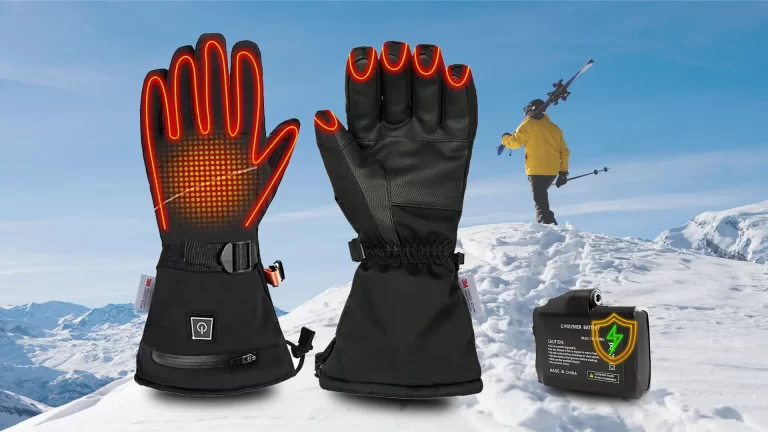
H2.2. 5,000-Unit Heated Glove Program (7.4V, 2,200mAh, single cell)
| Cost Component | China Origin | Vietnam Origin |
|---|---|---|
| FOB finished good (per unit) | $18.20 | $19.80 |
| Section 301 tariff | $1.82 (10%) | $0.00 |
| Ocean freight (per unit) | $0.55 | $0.70 |
| UN3481 hazmat (per unit) | $0.30 | $0.30 |
| Customs broker + drayage (per unit) | $0.20 | $0.20 |
| Landed cost per unit | $21.07 | $21.00 |
| Landed cost per 5,000-unit order | $105,350 | $105,000 |
| Landed cost savings (Vietnam primary) | — | $350 per 5K-order |
Verdict: Break-even at 5,000 units. The Section 301 savings barely offset the higher FOB + freight. Dual-source qualification is only justified at 10,000+ unit annual volume.
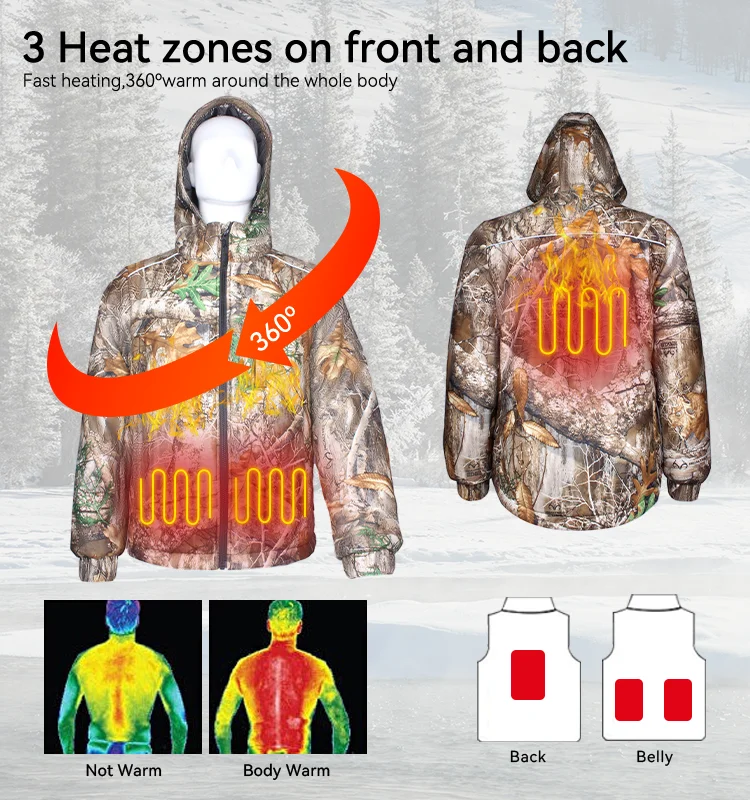
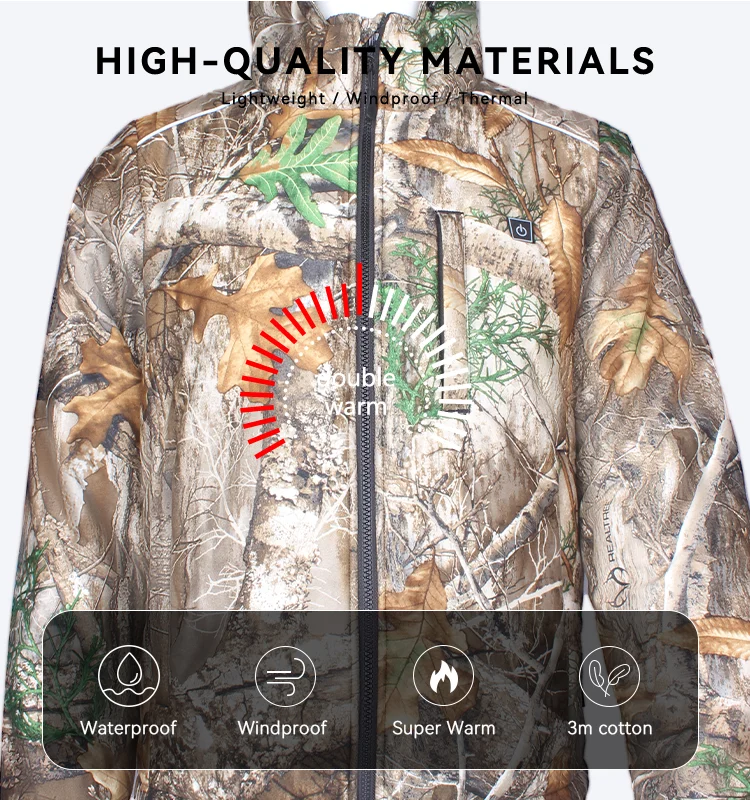
H2.3. 5,000-Unit Heated Jacket Program (7.4V, 5,000mAh, 5V/7.4V dual-cell)
| Cost Component | China Origin | Vietnam Origin |
|---|---|---|
| FOB finished good (per unit) | $38.50 | $41.20 |
| Section 301 tariff | $3.85 (10%) | $0.00 |
| Ocean freight (per unit) | $1.60 | $2.10 |
| UN3481 hazmat (per unit) | $0.45 | $0.45 |
| Customs broker + drayage (per unit) | $0.40 | $0.40 |
| Landed cost per unit | $44.80 | $44.15 |
| Landed cost per 5,000-unit order | $224,000 | $220,750 |
| Landed cost savings (Vietnam primary) | — | $3,250 per 5K-order |
Verdict: Vietnam primary wins by $3,250 per 5K-order. Dual-source qualification is justified at this volume.
H2.4. 5,000-Unit Heated Vest Program (12V, 10,000mAh, dual-cell with BMS)
| Cost Component | China Origin | Vietnam Origin |
|---|---|---|
| FOB finished good (per unit) | $32.40 | $35.20 |
| Section 301 tariff | $3.24 (10%) | $0.00 |
| Ocean freight (per unit) | $1.40 | $1.85 |
| UN3481 hazmat (per unit) | $0.50 | $0.50 |
| Customs broker + drayage (per unit) | $0.35 | $0.35 |
| Landed cost per unit | $37.89 | $37.90 |
| Landed cost per 5,000-unit order | $189,450 | $189,500 |
| Landed cost savings (Vietnam primary) | — | -$50 per 5K-order |
Verdict: Break-even. The Section 301 savings exactly offset the higher FOB + freight. Decision should be made on lead-time and risk criteria, not landed cost.
H2.5. 5,000-Unit Heated Parka Program (12V, 20,000mAh, 4-cell with BMS)
| Cost Component | China Origin | Vietnam Origin |
|---|---|---|
| FOB finished good (per unit) | $78.40 | $83.20 |
| Section 301 tariff | $7.84 (10%) | $0.00 |
| Ocean freight (per unit) | $2.40 | $3.00 |
| UN3481 hazmat (per unit) | $0.65 | $0.65 |
| Customs broker + drayage (per unit) | $0.50 | $0.50 |
| Landed cost per unit | $89.79 | $87.35 |
| Landed cost per 5,000-unit order | $448,950 | $436,750 |
| Landed cost savings (Vietnam primary) | — | $12,200 per 5K-order |
Verdict: Vietnam primary wins decisively by $12,200 per 5K-order. Dual-source qualification is mandatory at this volume.
H2.6. The Pattern
The landed-cost savings from Vietnam primary scale with the FOB unit price (and thus with the Section 301 savings as a percentage of FOB). Below $20 FOB (heated socks, heated glove liners), the savings are <$500 per 5K-order. Above $50 FOB (heated jacket, heated parka), the savings are $3,000-$12,000 per 5K-order. The wholesale buyer's optimal dual-source strategy is:
– Single-source China for sub-$20 FOB programs (heated socks, glove liners, basic accessories)
– Dual-source Vietnam-primary for $30-$50 FOB programs (heated jackets, heated vests) where the savings are $3,000+ per 5K-order
– Dual-source Vietnam-primary, China-secondary for $50+ FOB programs (heated parkas, premium outdoor heated gear) where the savings are $10,000+ per 5K-order
—
H2. The Dual-Source Qualification Cycle from the Wholesale Buyer’s Perspective
The wholesale buyer’s role in the dual-source qualification cycle is not to run the cycle — the OEM factory runs the cycle. The buyer’s role is to specify what the cycle must produce and to verify the cycle’s outputs before the first production order.
H2.1. The Buyer’s 8-Step Verification Process
| Step | Buyer Action | Verification Output |
|---|---|---|
| 1 | Audit currency check (BSCI / SEDEX / SA8000) at both factories | Audit certificate copies dated within 12 months |
| 2 | PPAP documentation review at both factories | PPAP report per factory per SKU |
| 3 | Pilot run sample evaluation (500-1,000 units) | AQL inspection report; visual sample approval |
| 4 | Side-by-side mass-production run evaluation (5,000+ units) | Mass-production run report; AQL defect rate; on-time delivery |
| 5 | Lab test report review (UL 2054, IEC 62133-2, UN 38.3) | Lab test report per factory per SKU |
| 6 | Safety certification verification | Certification certificate copies |
| 7 | Tooling ownership + IP annex review | Signed IP and tooling annex |
| 8 | First production order placement | First-order acknowledgment with firm ship date |
A wholesale buyer who skips any of these 8 steps is a single-source buyer with a multi-country factory claim.
H2.2. The Buyer’s Contract Clauses
The wholesale buyer’s purchase contract with the OEM factory must include:
– Country-of-origin clause: specifies the country of origin for the finished good (China / Vietnam / Cambodia / multi-country) and the rule-of-origin documentation required (yarn-forward for BTN, etc.)
– Dual-source clause: specifies the secondary factory (if any) and the conditions under which the buyer may shift volume to the secondary factory (e.g., primary factory’s on-time delivery rate <90% over 2 consecutive orders)
- Tooling ownership clause: specifies who owns the custom tooling and the transfer rights if the buyer shifts volume between factories
– IP protection clause: specifies the NNN agreement scope, the IP ownership of the heating element trace pattern and BMS firmware, and the remedies for IP violation
– Quality clause: specifies the AQL sampling plan, the defect classification, the inspection frequency, and the CAPA workflow
– Compliance clause: specifies the social-compliance audit requirement (BSCI / SEDEX / SA8000), the environmental-compliance requirement (e.g., RSL compliance for chemical substances), and the audit failure remediation timeline
A wholesale buyer whose contract does not include these 6 clauses is a single-source buyer with a multi-country factory claim.
H2.3. The Buyer’s Per-Order Verification
For every production order, the wholesale buyer should verify:
– Pre-production sample approval (5-10 samples per SKU per color per size run, AQL 2.5/4.0 inspection)
– During-production inspection (DPI) at 30-50% completion (AQL 2.5/4.0 inspection of in-process goods)
– Pre-shipment inspection (PSI) at 100% completion (AQL 2.5/4.0 inspection of packed goods)
– Container loading supervision (photographs of every carton loaded, verification of carton count, weight, and HS code labeling)
– Shipping document verification (commercial invoice, packing list, bill of lading, certificate of origin, MSDS for the lithium battery)
A wholesale buyer who skips any of these 5 per-order verifications is exposed to the AQL defect rate variance between the primary and secondary factories.
H2.4. The Buyer’s Tooling Investment Decision
The wholesale buyer has three options for tooling investment in a dual-source program:
| Option | Buyer Pays | Buyer Owns | Pros | Cons |
|---|---|---|---|---|
| Buyer-owned tooling, factory-custody | $15,500 one-time | Yes | Full transfer rights; strongest IP protection | Highest upfront cost |
| Shared tooling, factory-owned | $7,750 amortized into unit cost (one-half of $15,500) | No | Lower upfront cost | No transfer rights; IP exposure |
| Factory-owned tooling, buyer license | $0 upfront + $0.50-$1.00/unit royalty | No | Lowest upfront cost | No transfer rights; IP exposure; long-term cost highest |
For programs above $250K annual buy, buyer-owned tooling with factory custody is the wholesale buyer’s recommended option. For programs below $100K annual buy, shared tooling with factory ownership is acceptable. For programs below $50K, the dual-source qualification is typically not justified.
—
H2. The Q4 Inventory Continuity Playbook
The 2026 Q4 peak season (Black Friday through New Year) is the wholesale buyer’s single largest revenue event of the year — typically 35-45% of annual revenue for heated apparel. A Q4 stockout on a single hero SKU can cost the buyer 8-15% of annual revenue. The Q4 inventory continuity playbook is the wholesale buyer’s discipline for ensuring that the 2026 Q4 peak season does not depend on a single factory.
H2.1. The Q4 Cut-Off Calendar
| Cut-Off Date | Action | Rationale |
|---|---|---|
| April 30 | Place Q4 production order with primary factory | Primary factory needs 6-7 months lead time for Q4 delivery |
| June 30 | Place Q4 backup order with secondary factory | Secondary factory needs 5-6 months lead time for Q4 delivery (if activated in Mode B) |
| August 15 | Pre-production sample approval for both factories | 8-10 weeks for sample iteration, lab testing, and tooling adjustments |
| September 30 | During-production inspection (DPI) at both factories | 4-6 weeks for any rework before pre-shipment |
| October 31 | Pre-shipment inspection (PSI) at both factories | 3-4 weeks for ocean transit to US West Coast |
| November 15 | Container arrival at US West Coast | 1-2 weeks for customs clearance, warehousing, and retail distribution |
| November 25 | Retail distribution complete | Black Friday launch |
| December 31 | Q4 peak season close | End of year |
A wholesale buyer who places the Q4 order after April 30 has a high probability of Q4 stockout. A buyer who places it after June 30 has near-certain Q4 stockout on at least 2 SKUs.
H2.2. The Mode B Activation Trigger
The Mode B activation trigger (primary factory’s 4-week lead time exceeding 8 weeks, or primary factory’s 0.2C capacity dropping below 4900mAh, or any other primary-factory failure mode) should be defined in writing in the buyer’s purchase contract. When the trigger fires, the buyer activates the secondary factory for 100% of the program volume, and the secondary factory delivers to the original Q4 cut-off calendar.
A wholesale buyer who has not defined the Mode B activation trigger in writing is a single-source buyer who will be exposed to a primary-factory failure mode without a backup plan.
H2.3. The Safety-Stock Buffer
For Q4 hero SKUs (the top 20% of SKUs that drive 80% of Q4 revenue), the wholesale buyer should hold a 4-6 week safety-stock buffer at a US-based 3PL. The buffer is calculated as:
– Buffer = (Average weekly Q4 sales) × 4-6 weeks
– Reorder trigger = Buffer level reached (i.e., when the buffer drops to 2 weeks, the buyer triggers a replenishment order from the secondary factory or from a third-country backup)
A 4-6 week safety-stock buffer costs approximately 1.5-2.0% of the Q4 revenue in carrying cost (3PL fees, capital cost, insurance) but reduces the Q4 stockout risk from 8-15% (without buffer) to <2% (with buffer).
H2.4. The Third-Country Backup (Optional)
For US-domiciled buyers with annual buy above $1M, a third-country backup (e.g., Cambodia, Mexico, Bangladesh) is a worthwhile Q4 insurance policy. The third-country backup is activated only if both primary and secondary factories fail simultaneously (a tail-risk event, but not zero). The third-country backup typically adds 5-10% to the per-unit FOB cost vs Vietnam primary, but provides a third layer of Q4 continuity.
A wholesale buyer with a $2M+ annual buy should evaluate a third-country backup for Q4 hero SKUs. A buyer with a <$500K annual buy should not.
—
H2. Amazon FBA HS Code and Country-of-Origin Labeling Requirements
Amazon’s FBA inbound fulfillment requirements landed two changes in 2025-2026 that directly affect the wholesale buyer’s import process:
H2.1. HS Code 6101/6110 Country-of-Origin Labeling at the Carton Level
Effective Q1 2026, Amazon requires FBA inbound shipments to display the HS code and country of origin on every carton. The HS code is the 10-digit Harmonized Tariff Schedule of the United States (HTSUS) code; for heated apparel, this is typically 6101.30.2000 (men’s or boys’ overcoats, carcoats, capes, cloaks, anoraks, windbreakers, and similar articles, knitted or crocheted, of man-made fibers) or 6110.30.3000 (pullovers, cardigans, and similar articles, knitted or crocheted, of man-made fibers).
The country of origin is the country where the finished good was substantially transformed — typically the country where the final assembly (cut-make-trim + cell pack assembly) occurred. For a Vietnam-primary dual-source program, the country of origin is “Vietnam.” For a China-primary program, the country of origin is “China.”
A carton that does not display the HS code and country of origin at the FBA inbound stage is rejected by Amazon, and the buyer must either re-label the cartons (at additional cost) or ship the cartons to a non-Amazon channel.
H2.2. FNSKU / ASIN Labeling Compliance
Amazon’s FNSKU (Fulfillment Network Stock Keeping Unit) labeling requirement is unchanged from prior years, but the 2026 enforcement has tightened. Every unit shipped to FBA must have an FNSKU label that matches the buyer’s ASIN. A unit that is shipped without an FNSKU label or with a mismatched FNSKU is treated as an unfulfillable inventory and is subject to removal fees.
The wholesale buyer’s contract with the OEM factory must specify that the factory applies the FNSKU label to every unit during the packing process, with a label-placement AQL inspection (typically AQL 1.0/1.5 for label placement and legibility).
H2.3. The 2026 Amazon Q4 Peak Season Inventory Cut-Off
For Q4 2026 peak season, Amazon has published the following FBA inbound cut-off dates:
– October 19, 2026: cut-off for FBA Standard Q4 inventory (delivery to Amazon FBA by Nov 19)
– November 4, 2026: cut-off for FBA Expedited Q4 inventory (delivery to Amazon FBA by Dec 4, with expedited placement fees)
A wholesale buyer who misses the October 19 cut-off faces a 4-week inventory gap during the early Q4 peak season. A buyer who misses the November 4 cut-off faces a 2-week inventory gap during the late Q4 peak season. Both gaps translate to lost sales and lost search ranking on Amazon.
H2.4. The Amazon Brand Registry Requirement
For any wholesale buyer selling private-label heated apparel on Amazon, the Amazon Brand Registry requirement is mandatory. The buyer must:
– Hold a registered trademark in the destination market (US Trademark Office for US sales)
– Have an active Amazon Seller Central account in good standing
– Have the brand enrolled in Amazon Brand Registry with the trademark, brand logo, and brand assets uploaded
A wholesale buyer without Amazon Brand Registry cannot use A+ Content, sponsored brand ads, or the brand-protection enforcement tools. A buyer without Brand Registry who lists a private-label heated apparel SKU is exposed to brand hijacking (a competing seller listing the same SKU under a different ASIN) and to Amazon’s brand-gating enforcement (removal of the buyer’s listing pending trademark verification).
—
H2. The Landed-Cost-Per-Unit Ladder for Different Retail Price Points
The wholesale buyer’s retail margin model depends on the landed-cost-per-unit relative to the retail price point. The 2026 retail price points for private-label heated apparel:
H2.1. $49 Heated Sock (MSRP)
| Component | Cost | % of MSRP |
|---|---|---|
| Landed cost (Vietnam or China) | $9.74 | 19.9% |
| Wholesale-to-retail markup (keystone: 50% of MSRP) | $24.50 | 50.0% |
| Retailer margin (40% of MSRP) | $19.60 | 40.0% |
| Net to wholesale buyer (FOB-equivalent) | $29.40 | 60.0% |
| Wholesale buyer gross margin (after landed cost) | $19.66 | 40.1% |
| Amazon FBA fees (15% of MSRP) | $7.35 | 15.0% |
| Marketing + advertising (10% of MSRP) | $4.90 | 10.0% |
| Net wholesale buyer margin (after Amazon FBA + marketing) | $7.41 | 15.1% |
A $49 heated sock is a low-margin SKU for the wholesale buyer. The 15% net margin does not support the dual-source qualification cost ($25K-$50K one-time) for a single SKU. Dual-source qualification is only justified at the program level (multiple SKUs sharing the same factory qualification).
H2.2. $149 Heated Jacket (MSRP)
| Component | Cost | % of MSRP |
|---|---|---|
| Landed cost (Vietnam primary) | $44.15 | 29.6% |
| Wholesale-to-retail markup (keystone: 50% of MSRP) | $74.50 | 50.0% |
| Retailer margin (40% of MSRP) | $59.60 | 40.0% |
| Net to wholesale buyer (FOB-equivalent) | $89.40 | 60.0% |
| Wholesale buyer gross margin (after landed cost) | $45.25 | 30.4% |
| Amazon FBA fees (15% of MSRP) | $22.35 | 15.0% |
| Marketing + advertising (10% of MSRP) | $14.90 | 10.0% |
| Net wholesale buyer margin (after Amazon FBA + marketing) | $8.00 | 5.4% |
A $149 heated jacket is a moderate-margin SKU. The 5.4% net margin is tight; a 1% landed-cost increase (e.g., Section 301 escalation to 11%) reduces the net margin to 4.4%. The dual-source qualification is justified by the Q4 inventory continuity value (a $149 heated jacket Q4 stockout costs the buyer more in lost sales than the dual-source qualification cost).
H2.3. $249 Heated Parka (MSRP)
| Component | Cost | % of MSRP |
|---|---|---|
| Landed cost (Vietnam primary) | $87.35 | 35.1% |
| Wholesale-to-retail markup (keystone: 50% of MSRP) | $124.50 | 50.0% |
| Retailer margin (40% of MSRP) | $99.60 | 40.0% |
| Net to wholesale buyer (FOB-equivalent) | $161.60 | 64.9% |
| Wholesale buyer gross margin (after landed cost) | $74.25 | 29.8% |
| Amazon FBA fees (15% of MSRP) | $37.35 | 15.0% |
| Marketing + advertising (10% of MSRP) | $24.90 | 10.0% |
| Net wholesale buyer margin (after Amazon FBA + marketing) | $12.00 | 4.8% |
A $249 heated parka is a moderate-margin SKU for the wholesale buyer. The 4.8% net margin is tight; a 1% landed-cost increase reduces the net margin to 3.8%. The dual-source qualification is justified by both the landed-cost savings ($12,200 per 5K-order from Vietnam primary vs China primary) and the Q4 inventory continuity value.
H2.4. The Margin Pressure
The 2026 retail price points are under margin pressure from three directions:
– Tariff cost increase (Section 301 retention, de minimis compression)
– Amazon fee increase (FBA fulfillment fees, FNSKU labeling, returns processing)
– Consumer price sensitivity (heated apparel is a discretionary purchase; consumers are price-sensitive in a 2026 macro environment)
A wholesale buyer who does not lock in a dual-source Vietnam-primary strategy for the $149-$249 SKUs is exposed to a 3-5% net margin compression in 2026-2027.
—
H2. The 2027-2028 Outlook for Multi-Country Sourcing in Wholesale Heated Apparel
Three forward-looking variables that will reshape the multi-country sourcing math in 2027-2028:
H2.1. Section 301 Schedule Uncertainties
The 2027 USTR enforcement schedule is the single largest variable. Three scenarios:
– Status quo (7.5%-25% list retention, de minimis at $200): the 2026 math holds; dual-source Vietnam-primary remains the cost-optimal structure
– Tariff escalation (additional +10% to +25% on top of 2026 baseline, de minimis to $0): the 2026 math amplifies; dual-source becomes mandatory for any program above $150K
– Tariff de-escalation (Phase-One-style roll-back, de minimis restored to $800): the 2026 math compresses; single-source China regains cost-leadership for sub-$100 SKUs
The probability-weighted expectation (per the 2026 USTR signaling) is tariff escalation, with the 2027 USTR retaining the 10% list-4A tariff and adding a +5% to +10% list-4B expansion if the Phase-One renegotiation does not produce a successor deal.
H2.2. Vietnam Port Capacity Expansion
Cai Mep-Thi Vai terminal expansion (Phase 3, completion Q3 2026) will add 1.2M TEU annual capacity, reducing the current 4-day Vietnam-to-US lead-time penalty to a 1-2 day penalty by Q1 2027. Lach Huyen port (Hai Phong) Phase 2 expansion will add 0.8M TEU by Q4 2026, opening a Northern Vietnam factory corridor for buyers who want to diversify within Vietnam.
H2.3. The Rise of Cambodia and Mexico
Cambodia’s EBA (Everything But Arms) duty-free access to the EU is under review in 2026-2027. If preserved, Cambodia becomes a viable third-country backup for EU-domiciled buyers at +$2-3 per unit FOB vs Vietnam. Mexico’s USMCA zero-tariff access for North American buyers is stable, but Mexico’s heated apparel OEM capacity is currently limited to <50K units/year across all factories — too small for serious wholesale programs above 100K units/year.
Bangladesh’s MFN duty of +15.6% on heated apparel into the US (vs Vietnam’s 0% BTN) keeps Bangladesh as a third-country backup only for EU-domiciled buyers (where Bangladesh has EBA duty-free access).
H2.4. The 2027-2028 Wholesale Buyer Playbook
A wholesale buyer with a 2027-2028 horizon should:
1. Lock in a Vietnam-primary dual-source strategy for the $30+ FOB programs (heated jackets, heated vests, heated parkas)
2. Maintain a single-source China strategy for the sub-$20 FOB programs (heated socks, glove liners, basic accessories)
3. Evaluate Cambodia or Mexico as a third-country backup for the Q4 hero SKUs
4. Hold a 4-6 week safety-stock buffer at a US 3PL for the top 20% of Q4 SKUs
5. Define the Mode B activation trigger in writing in every purchase contract
6. Re-evaluate the country-of-origin math annually as the USTR schedule, de minimis threshold, and Vietnam port capacity evolve
The wholesale buyer who executes this playbook will close 2027-2028 with a 10-20% landed-cost reduction on the dual-source programs, a Q4 stockout rate of <2%, and a multi-country factory network that can flex with the macro trade environment.
—
H2. Frequently Asked Questions (Wholesale Multi-Country Sourcing for Heated Apparel)
Q1: What is the smallest annual buy where dual-source is economically rational?
A: $250K annual buy across multiple SKUs sharing the same factory qualification. The dual-source qualification cost ($25K-$50K one-time) does not amortize at lower volumes.
Q2: Can the wholesale buyer skip the dual-source qualification for a single hero SKU?
A: Yes, for SKUs below $30 FOB or with annual buy below 50K units. The dual-source qualification is not justified at lower volumes. Single-source China is acceptable for these SKUs.
Q3: What is the typical dual-source qualification timeline from the buyer’s perspective?
A: 16-24 weeks. The buyer must place the dual-source qualification order at least 6 months before the production order to allow for PPAP, pilot run, side-ship mass-production run, and lab testing.
Q4: Does the buyer need to visit the secondary factory in person?
A: Recommended but not required. A pre-qualification factory visit by the buyer’s quality team (1-2 days on-site) is the best practice for verifying the secondary factory’s operations, quality system, and capacity. A virtual visit via video is acceptable for initial qualification, with an in-person visit required before the first production order.
Q5: What is the Mode B activation trigger?
A: The conditions under which the buyer activates the secondary factory for 100% of the program volume. Typical triggers: primary factory’s 4-week lead time exceeding 8 weeks; primary factory’s 0.2C capacity dropping below 4900mAh; primary factory’s BSCI / SEDEX audit failure; primary factory’s natural disaster or fire. The trigger must be defined in writing in the purchase contract.
Q6: How does the buyer verify the country-of-origin at customs?
A: The buyer requests a Certificate of Origin (CO) from the OEM factory, signed by the factory’s authorized representative and verified by the destination country’s chamber of commerce or trade association. For Vietnam-origin goods claiming BTN preferential tariff, the CO must include the rule-of-origin documentation (yarn-forward rule).
Q7: What is the typical Q4 stockout rate for a single-source program?
A: 8-15% for heated apparel SKUs, depending on the SKU’s Q4 velocity and the factory’s Q4 capacity allocation. A dual-source program with a 4-6 week safety-stock buffer reduces the Q4 stockout rate to <2%.
Q8: Can the buyer use the same Amazon FNSKU label for both factories?
A: Yes. The FNSKU is assigned at the ASIN level, not at the factory level. The buyer generates one FNSKU per ASIN and applies it to every unit regardless of which factory produced the unit. The country-of-origin label is separate from the FNSKU label.
Q9: What is the typical lead-time for a Vietnam-primary dual-source program?
A: 65-90 days cut-to-ship for the primary factory (Vietnam) plus 18-22 days ocean freight to US West Coast = 83-112 days PO-to-delivery. This is 15-25 days longer than a single-source China program (44-62 days PO-to-delivery). The buyer must accept a longer order horizon or hold a safety-stock buffer.
Q10: How does the buyer evaluate a third-country backup (Cambodia, Mexico, Bangladesh)?
A: The buyer evaluates the same 8-step verification process (audit, PPAP, pilot run, mass-production run, lab test, safety certification, tooling ownership, first-order placement) at the third-country factory. The third-country qualification adds $15K-$30K to the dual-source qualification cost and 12-16 weeks to the timeline.
Q11: What is the typical dual-source qualification cost for a wholesale buyer?
A: $25K-$50K one-time per program, plus the cost of the pilot run (500-1,000 units at FOB cost) and the side-by-side mass-production run (5,000+ units at FOB cost). The total cost is typically $40K-$80K per program, amortized over 3-6 production runs.
Q12: How does the buyer handle the IP and tooling ownership across two factories?
A: The buyer requests a signed IP and tooling ownership annex from the OEM factory group, specifying (a) buyer owns the custom tooling; (b) factory holds the tooling in custody during the program; (c) buyer has transfer rights to move the tooling between factories with 90-day notice; (d) factory signs an NNN agreement that prevents the factory from selling the same SKU to a competing buyer.
Q13: What is the 2027 outlook for the Section 301 tariff?
A: The 2027 USTR schedule is uncertain, but the probability-weighted expectation is tariff escalation. The 10% list-4A tariff is likely to be retained, and a +5% to +10% list-4B expansion is possible if the Phase-One renegotiation does not produce a successor deal. A wholesale buyer with a Vietnam-primary dual-source strategy is insulated from the 2027 tariff escalation; a single-source China buyer is exposed.
Q14: What is the 2027 outlook for the de minimis threshold?
A: The 2027 rulemaking calendar includes a possible elimination of the de minimis threshold entirely (i.e., all parcels subject to duty and formal customs entry, regardless of value). The probability-weighted expectation is a phased reduction ($200 → $0 over 12-18 months). The de minimis elimination affects the D2C parcel channel more than the wholesale FBA channel; the wholesale buyer is less exposed than the D2C brand.
—
H2. Glossary of Wholesale Multi-Country Sourcing Terms
– Amazon Brand Registry: Amazon’s trademark-verification program that grants the trademark holder access to A+ Content, sponsored brand ads, and brand-protection enforcement tools
– Amazon FBA (Fulfillment by Amazon): Amazon’s warehousing and fulfillment service; the wholesale buyer ships inventory to Amazon’s warehouse, and Amazon handles the picking, packing, shipping, and customer service
– BTN (Bilateral Trade Agreement): a tariff-reducing agreement between two countries; the US-Vietnam BTN grants 0% duty on Vietnam-origin apparel meeting the rule of origin
– Country-of-origin hedging: the practice of assigning each component (and the finished good) to a country based on tariff, lead-time, capacity, and risk criteria
– De minimis (Section 321): the US customs exemption that allows parcels valued under a threshold to enter the US duty-free with minimal customs documentation; the threshold was compressed from $800 to $200 effective August 29 2025
– DPI (During-Production Inspection): the buyer’s quality inspection at 30-50% completion of the production run
– Dual-source qualification cycle: the integrated 16-24 week program that qualifies two factories to deliver interchangeable finished goods
– FNSKU (Fulfillment Network Stock Keeping Unit): Amazon’s unique identifier for an ASIN in the buyer’s inventory; must be labeled on every unit shipped to FBA
– HS code (HTSUS): the Harmonized Tariff Schedule of the United States code; for heated apparel, typically 6101.30, 6101.20, 6110.30, 6117.10
– Mode B activation trigger: the conditions under which the buyer activates the secondary factory for 100% of the program volume
– Q4 cut-off calendar: the buyer’s timeline for placing orders, approving samples, inspecting production, and shipping inventory to arrive in time for the Q4 peak season
– Q4 hero SKU: a top-revenue SKU that drives a disproportionate share of Q4 revenue
– Safety-stock buffer: inventory held at a US 3PL to bridge the lead-time gap between order placement and inventory arrival; for Q4 hero SKUs, a 4-6 week buffer is recommended
– Section 301 tariff: the US trade-remedy tariff on Chinese-origin goods, applied at 7.5%-25% depending on the list and HS code
– UN3481 Class 9 hazmat: the UN classification for lithium battery shipments, subject to IATA and IMO surcharges
– USMCA (United States-Mexico-Canada Agreement): the 2020 successor to NAFTA, granting 0% US-Mexico-Canada tariff on qualifying goods
—
Internal references: Gearplant wholesale heated apparel, US-domiciled. Sourcing from IMISSKY Vietnam OEM factory (Binh Duong cluster) + parent group Dongguan factory (Guangdong, China). For wholesale buyer inquiries, contact the Gearplant sales team via the contact form on gearplant.com. Pillar #71 in the Gearplant 2026 B2B PILLAR series. Last updated 2026-09-12.
Glossary of Wholesale Multi-Country Sourcing Terms
Amazon FBA (Fulfillment by Amazon): Amazon’s warehousing and fulfillment service; the wholesale buyer ships inventory to Amazon’s warehouse, and Amazon handles the picking, packing, shipping, and customer service.
De minimis (Section 321): the US customs exemption that allows parcels valued under a threshold to enter the US duty-free with minimal customs documentation; compressed from $800 to $200 effective August 29 2025.
FNSKU (Fulfillment Network Stock Keeping Unit): Amazon’s unique identifier for an ASIN in the buyer’s inventory; must be labeled on every unit shipped to FBA.
Q4 hero SKU: a top-revenue SKU that drives a disproportionate share of Q4 revenue.
Related category: Heated Apparel Industry News