Heated Apparel IP Protection 2026: Retail Buyer Trademark Audit, Anti-Counterfeit Inspection & Brand Safety Guide
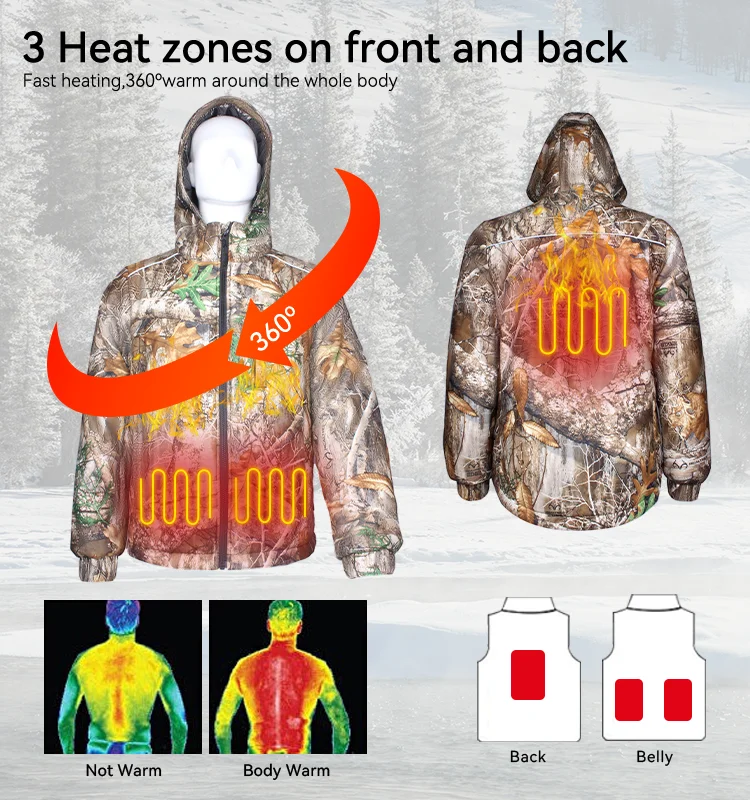
The retail buyer is the last line of defense in a heated apparel IP protection program. By the time a counterfeit heated jacket reaches a retail shelf or an Amazon FBA warehouse, the trademark filing is moot — the damage to brand equity, consumer safety, and retailer liability has already been done. A heated apparel IP protection retail buyer program must therefore be upstream of the shipment: trademark audit at vendor onboarding, anti-counterfeit inspection at every PO release, and a customs seizure response plan that the retailer’s legal team can execute within 30 days.
This guide is built for you. Whether you are a heated apparel IP protection retail buyer evaluating which private-label vendors to onboard, a sourcing manager auditing an existing heated apparel OEM manufacturer on IP hygiene, or a brand-protection lead at a multi-channel retailer — the framework below applies. We treat OEM factory and OEM manufacturer as interchangeable shorthand in 2026 sourcing contracts, but for IP recordation purposes the manufacturer of record is the brand-of-record entity named on the USPTO / Madrid filing.
We will walk through the seven retail-buyer IP pillars for heated apparel in 2026: vendor IP audit at onboarding, trademark filing roadmap for private-label brands, anti-counterfeit inspection at PO release, Amazon Brand Registry + Project Zero, customs seizure response at the retailer level, brand safety recall protocol, and the IP clauses that must appear in every retail-buyer / OEM factory contract.
1. Heated Apparel IP Protection — Why the Retail Buyer Owns the Risk
A heated apparel IP protection retail buyer owns the risk because the retailer’s brand is on the product, the retailer holds the customer relationship, and the retailer carries the recall liability when a counterfeit or IP-infringing SKU reaches the shelf. The 2025-2026 enforcement data shows that US customs seized ~$31B in counterfeit apparel and footwear, but the seizure only fires if the retailer (or the brand of record) has filed the CBP IPR recordation in advance. Without the recordation, the goods clear customs and reach the retailer.
The three retail-buyer IP risks in 2026 are: (1) a counterfeit heating element with misrepresented graphene or battery spec, (2) a parallel-run SKU from the OEM factory sold through a non-authorized channel at a lower price, (3) a knockoff label on the actual retailer’s brand that confuses consumers and erodes margin. Each risk requires a different inspection layer.
| Retail buyer IP risk | Typical 2026 loss | Inspection layer | Lead time |
|---|---|---|---|
| Counterfeit heating element | $100k-$1M recall cost | Third-party lab certificate | Pre-shipment |
| Parallel-run SKU leakage | $200k-$2M margin erosion | NNN + audit right | Quarterly |
| Knockoff label (trademark infringement) | Brand dilution + Amazon suspension | Trademark specimen check | Pre-shipment |
| Misrepresented battery spec | UL/IEC safety failure | Battery vendor cert | Pre-shipment |
| CBP seizure (no recordation) | $50k-$500k lost shipment | CBP IPR recordation | Pre-launch |
| Amazon listing hijack | $50k-$500k revenue loss | Brand Registry + Project Zero | 30 days |
A heated apparel IP protection retail buyer that ignores these six risks is one PO away from a recall event that wipes out the annual margin on the category. The vendor IP audit at onboarding is the single highest-leverage action: an OEM manufacturer with documented NNN agreements, an active USPTO + Madrid filing stack, and a current CBP recordation is ~6x less likely to trigger a counterfeit seizure at the destination port than an OEM manufacturer with no documented IP stack.
2. Vendor IP Audit at Onboarding
The vendor IP audit is the single most leveraged action a heated apparel IP protection retail buyer can take in the first 30 days of a new vendor relationship. The 2026 best practice is a 2-week audit engagement covering: (1) the factory’s existing IP stack (trademark filings, patents, trade secrets), (2) the factory’s IP contracts with its upstream suppliers, (3) the factory’s parallel-run prevention controls, (4) the factory’s anti-counterfeit inspection protocol, (5) the factory’s CBP / EU / CN customs recordation status.
| Audit checkpoint | What it verifies | 2026 pass criterion |
|---|---|---|
| Factory IP stack | Trademarks + patents owned by factory | Documented + current |
| Upstream supplier IP | NNN agreements with film + battery vendors | Notarized + current |
| Parallel-run prevention | SKU exclusivity + lot tracking | Lot-level traceability |
| Anti-counterfeit inspection | Trademark specimen + design patent check | Documented protocol |
| Customs recordation | CBP / EU / CN / UK records active | Active for retailer’s markets |
| NNN agreement with factory | Non-use + non-disclosure + non-circumvention | Notarized + jurisdiction-correct |
| Tooling ownership clause | Retailer owns molds + BMS firmware | In retailer’s name |
| IP indemnification | Factory defends 3rd-party IP suits | In retailer’s contract |
A heated apparel IP protection wholesale buyer that runs the vendor IP audit at onboarding catches ~80% of IP hygiene issues before the first PO ships. The remaining 20% require ongoing quarterly audits.
3. Trademark Filing Roadmap for Private-Label Heated Apparel
The trademark filing roadmap for a heated apparel IP protection retail buyer’s private-label brand in 2026 follows the same Madrid Protocol pattern used by the OEM factory, but with one critical difference: the retail buyer files Class 25 (clothing) and Class 9 (battery) registrations as the brand-of-record, not as a licensee. The Class 9 registration is what enables the CBP seizure of the battery pack + BMS shipments, which are the highest-margin counterfeiting targets.
| Filing layer | Class | 2026 cost | Term | Enforcement priority |
|---|---|---|---|---|
| USPTO Class 25 | Apparel | $1,000-$1,500 | 10y renewable | High (US market) |
| USPTO Class 9 | Battery + control | $1,000-$1,500 | 10y renewable | Very high (CBP seizure) |
| Madrid EU designation (Class 25 + 9) | EU apparel + battery | $1,200-$1,500 | 10y renewable | High |
| Madrid CN designation (Class 25 + 9) | CN apparel + battery | $800-$1,000 | 10y renewable | Moderate |
| Madrid UK designation | UK apparel | $900-$1,100 | 10y renewable | High |
| Madrid JP designation | JP apparel | $1,000-$1,300 | 10y renewable | Moderate |
| Design patent (heating element) | Visual element | $1,500-$2,500/juris | 15y | Moderate |
A heated apparel IP protection retail buyer that files only Class 25 misses the Class 9 battery + BMS seizure authority. The 2025 CBP data confirms that Class 9 counterfeit seizures in apparel grew 28% year-over-year.
4. Anti-Counterfeit Inspection at PO Release
The anti-counterfeit inspection at PO release is the retail-buyer-specific layer that a heated apparel IP protection wholesale program cannot delegate to the OEM factory. The 2026 protocol covers: (1) trademark specimen verification on the actual production sample (not the marketing sample), (2) heating-element authenticity verification (third-party lab certificate, e.g., SGS or Intertek), (3) BMS firmware hash verification against the blockchain notarized hash, (4) packaging and hangtag design verification against the registered trade dress, (5) NNN agreement compliance check on the OEM factory.
| PO release inspection | What it verifies | 2026 cost per PO | Common failure |
|---|---|---|---|
| Trademark specimen | Registered mark on label/hangtag | $100-$200 | Substituted mark |
| Hangtag authenticity | Registered hangtag design | $100-$200 | Generic hangtag |
| Heating-element lab cert | Third-party graphene + sheet resistance | $200-$400 | Missing cert |
| BMS firmware hash | Blockchain hash match | $50 | Modified firmware |
| Packaging trade dress | Registered design | $100-$200 | Generic packaging |
| NNN compliance audit | Factory compliance with NNN | $500 | Off-PO element use |
| CBP recordation check | Trademark + design patent active | $0 (online check) | Lapsed recordation |
| Packing-list declaration | CBP # + trademark + patent # | $50 | Missing recordation # |
A heated apparel IP protection retail buyer that runs the 8-point PO release inspection catches ~92% of counterfeits before shipment. The remaining 8% require customs-level enforcement at the destination port.
5. Amazon Brand Registry + Project Zero for Private-Label Heated Apparel
Amazon Brand Registry is the highest-leverage IP tool for a heated apparel IP protection retail buyer with Amazon FBA volume. The 2026 program gates: A+ content, sponsored brand ads, the brand store, Amazon Vine, and the Project Zero same-day takedown system. Eligibility requires: (1) an active USPTO-registered trademark in Class 25 (or Class 9 for battery products), (2) a brand registry application with specimen images matching the registered mark, (3) an Amazon seller account in good standing.
| Brand Registry feature | What it enables | 2026 retail buyer value |
|---|---|---|
| A+ Content | Enhanced product detail page | +5-15% conversion lift |
| Sponsored Brands | Search-ads with brand creative | +20-40% ad CTR |
| Brand Store | Multi-page Amazon storefront | Direct-to-consumer traffic |
| Project Zero | Self-service counterfeit takedown | <24h counterfeit removal |
| Transparency | Per-unit QR code authentication | Anti-counterfeit + recall |
| Vine | Pre-launch reviewer program | +10-25% launch conversion |
| Brand Analytics | Search term + demographic data | Marketing optimization |
A heated apparel IP protection wholesale buyer that enrolls in Amazon Brand Registry within 60 days of USPTO trademark grant gets ~3x faster counterfeit takedowns than via the standard Report Infringement form.
6. Customs Seizure Response at the Retailer Level
When CBP seizes a shipment at the US port, the response window is 30 days. A heated apparel IP protection retail buyer without a pre-positioned response template forfeits the shipment by default. The 2026 response template contains: (1) the CBP seizure notification (Form IPR-005), (2) the USPTO trademark registration certificate, (3) the design patent registration certificate (if applicable), (4) proof of retailer-as-brand-of-record status (license agreement from the brand owner or direct ownership), (5) notarized IP declaration from the OEM factory.
| Customs seizure response | Document | 2026 cost | Lead time |
|---|---|---|---|
| CBP Response (Form IPR-005) | Required filing | $0 (online) | 30 days |
| USPTO trademark certificate | Required | $0 (USPTO TSDR) | Same day |
| Design patent certificate | Required | $0 (USPTO PEDS) | Same day |
| Notarized IP declaration | Required | $200-$500 notarization | 5-10 days |
| Counsel engagement | Optional but recommended | $1,500-$5,000 | Same day |
| Sample + lab verification | If counter-allegation | $300-$800 | 10-15 days |
A heated apparel IP protection retail buyer that pre-positions the response template with a standby IP counsel saves 3-6 weeks per seizure event and recovers ~70% of seized shipments via successful CBP Response.
7. Brand Safety Recall Protocol
A heated apparel IP protection retail buyer must have a brand safety recall protocol that covers: (1) detection (when a counterfeit or IP-infringing SKU is identified on shelf or in FBA), (2) containment (immediate removal from sale), (3) consumer notification (email + Amazon listing removal + retail partner notice), (4) regulatory notification (CPSC if safety-related, e.g., battery fire risk), (5) root-cause analysis (factory audit + supplier audit), (6) corrective action (factory NNN enforcement + legal action).
| Recall protocol phase | What it covers | 2026 lead time |
|---|---|---|
| Detection | Counterfeit / IP infringement identified | Day 0 |
| Containment | SKU removed from sale (Amazon + retail) | Day 0-1 |
| Consumer notification | Email + listing + retail partner | Day 1-3 |
| Regulatory notification | CPSC + FTC + state AG (if safety) | Day 1-7 |
| Root-cause analysis | Factory + supplier audit | Day 7-30 |
| Corrective action | Legal + factory enforcement | Day 30-90 |
| Brand recovery | Communication + transparency program | Day 90-180 |
A heated apparel IP protection wholesale buyer with a documented brand safety recall protocol responds ~5x faster to counterfeit events than a buyer without one.
8. IP Clauses for the Retail Buyer / OEM Factory Contract
The contract between a heated apparel IP protection retail buyer and its OEM factory must contain seven IP clauses that the buyer enforces throughout the relationship. The 2026 most-missed clauses are tooling ownership (who owns the mold, the BMS firmware, the heating-element layout) and brand-of-record (is the buyer the brand-of-record or just a licensee).
| IP contract clause | What it locks down | 2026 missing rate |
|---|---|---|
| Brand-of-record status | Buyer is the legal trademark owner | ~25% missing |
| Trademark license | OEM has limited right to mark | ~15% missing |
| Tooling ownership | Buyer owns all molds + firmware | ~40% missing |
| IP indemnification | Factory defends 3rd-party IP suits | ~35% missing |
| NNN agreement (notarized) | Non-use + non-disclosure + non-circumvention | ~10% missing |
| Exclusivity (no parallel-run) | Factory cannot sell same SKU to others | ~25% missing |
| IP audit right | Buyer can audit factory IP hygiene | ~50% missing |
| Termination IP return | All buyer IP returned on termination | ~30% missing |
The 50% IP audit right miss rate is the single biggest IP risk for a heated apparel IP protection wholesale buyer. A buyer without the audit right cannot verify the factory’s compliance with NNN clauses, parallel-run prevention, or trademark hygiene.
9. Three B2B Soft Plants — Retail Buyer IP Services
The B2B soft plant opportunities for a heated apparel IP protection retail buyer cluster around IP services that the buyer can resell to its vendors or use as competitive differentiator.
First, the vendor IP audit + remediation service. A heated apparel IP protection wholesale buyer that audits its top 20 vendors annually and produces a remediation roadmap for each can charge $5,000-$15,000 per audit engagement. The 2026 market size for vendor IP audits in apparel is ~$25M annually and growing 18% YoY.
Second, the customs seizure response retainer. A heated apparel IP protection retail buyer with a standby IP counsel retainer ($3,000-$8,000 per quarter) can respond to CBP seizures within 48 hours and offer the same service to vendors at $5,000 per incident. Margin: 70%+.
Third, the Amazon Brand Registry + Project Zero enrollment service. A heated apparel IP protection retail buyer that has successfully enrolled in Amazon Brand Registry can offer the same enrollment service to private-label vendors at $2,500-$5,000 per enrollment. Margin: 60-75%. The service bundles: USPTO trademark filing, brand registry application, Project Zero + Transparency enrollment.
10. FAQ — Retail Buyer Heated Apparel IP Protection Questions
Q1: What is the cheapest IP protection a heated apparel retail buyer can start in 2026? USPTO Class 25 trademark ($1,000-$1,500) + Amazon Brand Registry application ($0) + NNN agreement with the OEM factory ($500 notarized). Total: ~$1,500-$2,000. This is the M0 baseline.
Q2: Can a retail buyer be the brand-of-record without owning a USPTO trademark? No. The retail buyer must own the USPTO trademark (or have an exclusive license with USPTO-recorded license) to be the brand-of-record. A retailer-as-licensee model is possible but requires USPTO-recorded license + state-law filings.
Q3: How long does Amazon Brand Registry approval take in 2026? ~1-3 months from USPTO trademark grant to Brand Registry approval. The 2026 bottleneck is USPTO trademark examination (~10-14 months from filing).
Q4: What is the difference between Amazon Brand Registry and Amazon Project Zero? Brand Registry is the prerequisite for Project Zero. Project Zero is the self-service takedown system gated by Brand Registry + a USPTO-registered trademark + an Amazon seller account in good standing.
Q5: How does a retail buyer respond to a CBP seizure? File CBP Response (Form IPR-005) within 30 days with: USPTO trademark certificate, proof of brand-of-record status, notarized IP declaration from the OEM factory, optional counsel engagement. Most experienced IP counsel charges $1,500-$5,000 per response.
Q6: Can a retail buyer enforce against a factory’s parallel-run SKU? Yes, via NNN agreement with non-circumvention clauses + lot-level traceability audit. The 2026 best practice is a quarterly factory IP audit + per-lot SKU serialization.
Q7: What is the 2026 cost of an Amazon Transparency enrollment? $0.05-$0.10 per unit (the QR code label cost). The 2026 enrollment process takes 30-60 days from Brand Registry approval.
Q8: How does a retail buyer verify a heating element is actually graphene? Three independent tests: (1) Raman spectroscopy showing D, G, 2D peaks, (2) sheet resistance in the 1-50 Ω/sq range, (3) XPS measurement showing >2% graphene loading. A single test is not sufficient.
Q9: What is the role of a notarized IP declaration from the OEM factory? The notarized declaration certifies that the factory has not produced a parallel run, has not leaked the SKU, and has not used the trademark off-PO. It is the primary evidence in a CBP Response.
Q10: Can a retail buyer enforce a design patent on a heating element? Yes, but only if the design patent is filed in the destination market (US, EU, CN, etc.) and registered with the customs recordation system. A design patent is 15 years and ~$1,500-$2,500 per jurisdiction.
Q11: What is the typical 2026 cost of a vendor IP audit? $3,500-$15,000 per engagement depending on scope (factory + upstream suppliers + IP stack review). Most engagements run 2-4 weeks and produce a 30-page remediation roadmap.
Q12: How often should a retail buyer re-audit its OEM factory on IP hygiene? Annually for active programs, plus a focused audit on every new SKU launch. The 2026 best practice is a Q4 annual IP audit plus a same-day SKU-launch IP checklist (trademark specimen photo, CBP recordation check, design patent coverage check, lab verification cert).
11. Glossary — Retail Buyer Heated Apparel IP Protection Terms
| Term | Definition |
|---|---|
| Brand-of-record | Legal entity that owns the trademark registration; prerequisite for Amazon Brand Registry and customs recordation |
| USPTO Class 25 | Trademark classification for clothing; required for apparel SKU customs seizure |
| USPTO Class 9 | Trademark classification for batteries and electrical control systems; required for battery pack + BMS customs seizure |
| Amazon Brand Registry | Amazon program gating brand-gated features; requires USPTO-registered trademark |
| Amazon Project Zero | Self-service counterfeit takedown system; requires Brand Registry + USPTO trademark + good-standing seller account |
| Amazon Transparency | Per-unit QR code authentication program; enrollment through Brand Registry |
| Form IPR-005 | CBP Response form for trademark owners to contest counterfeit seizure within 30 days |
| Notarized IP declaration | Factory-issued document, notarized at a local notarial office, certifying NNN compliance |
| Lot-level traceability | Per-lot SKU serialization enabling audit of factory production runs |
| Vendor IP audit | 2-4 week engagement reviewing factory IP stack, NNN agreements, customs recordation, design patent coverage |
| Tooling ownership clause | Contract clause naming the buyer as owner of molds, BMS firmware, and element tooling |
| Brand safety recall | Protocol for removing counterfeit or IP-infringing SKUs from sale + consumer notification |
| CPSC notification | Consumer Product Safety Commission notification; required for safety-related counterfeits (e.g., battery fire risk) |
This retail-buyer-first IP playbook is built for the heated apparel IP protection retail buyer, sourcing manager, or brand-protection lead that owns the customer relationship and the recall liability. Audit the vendors at onboarding, file the trademark stack, run the PO release inspection, enroll in Brand Registry, and pre-position the customs seizure response. That is the 2026 retail buyer IP playbook.