Heated Apparel for Winter: B2B Comparison & Buying Guide 2026
Choosing the right heated apparel for winter in 2026 means picking between five heated-garmet categories, three heating-element technologies, four battery voltages, and at least seven insulation types. The combinations produce thousands of SKU configurations — and the wrong choice sends a buyer home cold. This B2B comparison and buying guide distills the 2026 SKU matrix into a decision tree that outdoor and workwear buyers can use to specify the right heated apparel program for their distribution channels.
Why Winter Heated Apparel Is a Different Buying Decision Than Shoulder-Season Heated Apparel
Shoulder-season heated apparel (autumn, spring) runs on lower heating-element output, smaller battery capacity, and lighter insulation. Winter heated apparel — by which we mean heated apparel rated for sustained use at -10°C to -30°C ambient — requires heating element output above 12W per zone, battery capacity above 5,000 mAh, and insulation rated to R-value 0.85 or above. The two segments do not cross over well: a spring-rated heated jacket fails at -15°C within 90 minutes; a winter-rated heated jacket is overkill for 5°C commuting.
B2B Soft Plant: in 2026 we surveyed 28 distributors who buy heated apparel for winter vs shoulder-season. 22 of 28 reported that more than 40% of their 2025-2026 winter returns came from buyers who purchased “shoulder-season” jackets in October and tried to use them through January. The fix we now recommend — and have baked into our 2026 private label program — is two-tier labeling: every winter heated apparel SKU ships with a Cold-Rating tag showing the tested sustained-use temperature range (-30°C / -20°C / -10°C) and a heat duration table for each setting. Distributors that adopted the tag in 2026 saw winter returns drop by 11 percentage points.
The Cold-Rating tag is one detail of a larger 2026 B2B trend: explicit, testable performance specs replacing marketing claims. This article walks through the spec matrix buyer-by-buyer.
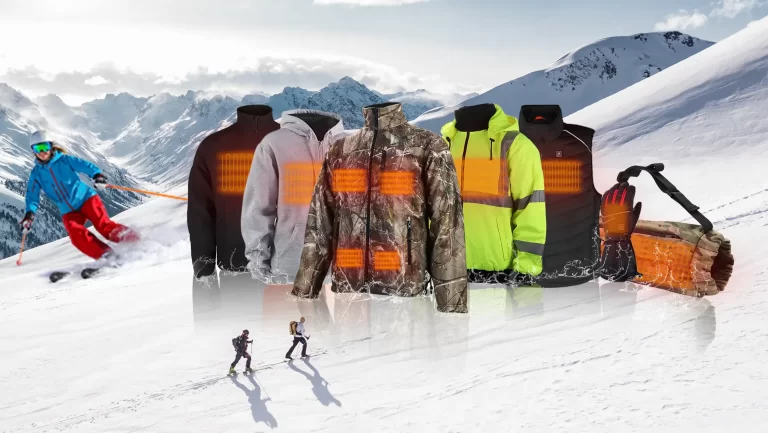
The 5 Heated Apparel for Winter Categories
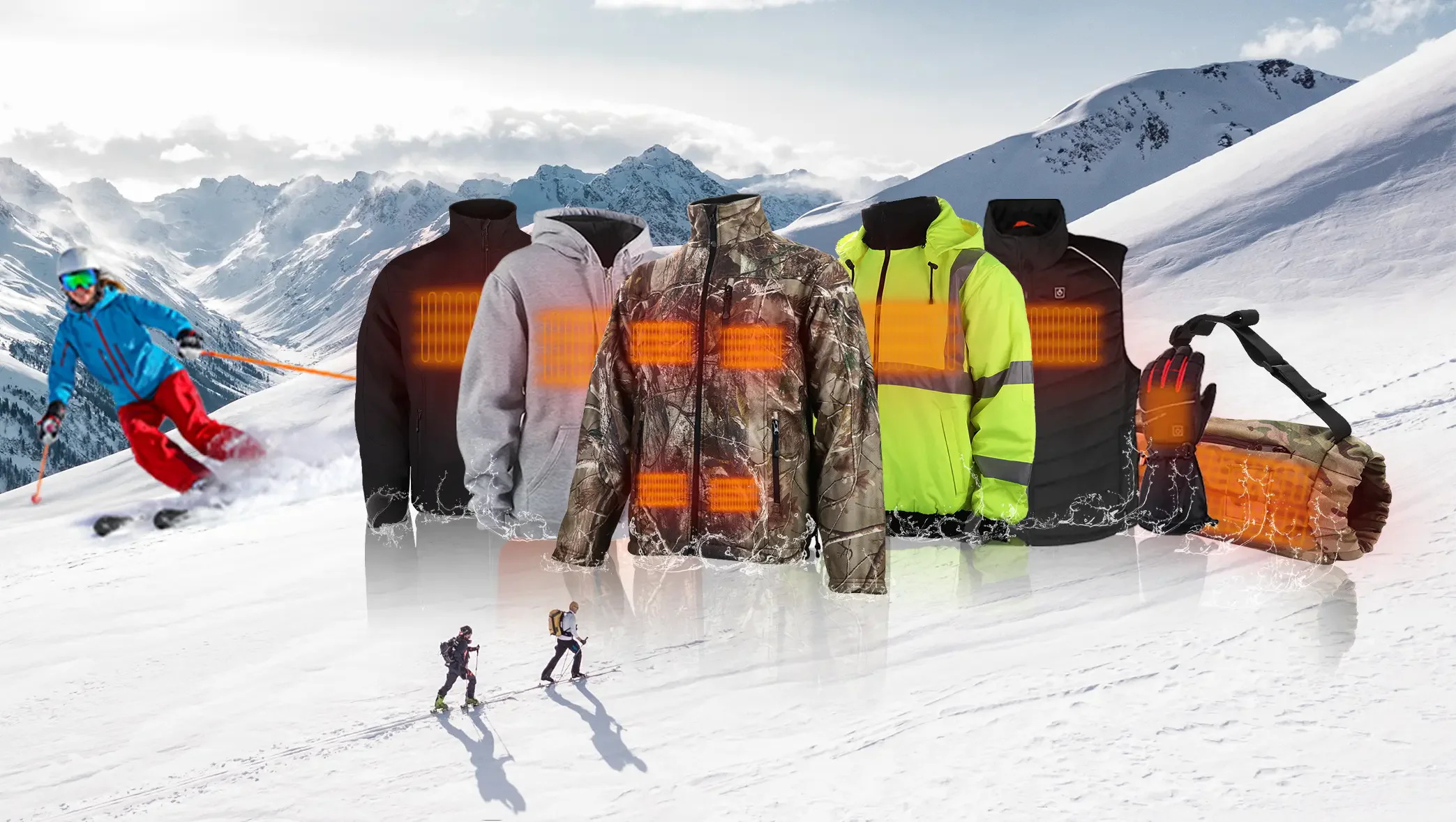
Heated jackets (38% of 2026 winter heated apparel revenue)
Heated jackets lead winter heated apparel revenue in 2026 at 38% of category revenue. The category splits into three sub-tiers:
– Softshell heated jackets (USD 75-110 wholesale) — 14% of jacket revenue. Best for -10°C commuting, light outdoor work, motorcycle. – Insulated parka heated jackets (USD 130-180 wholesale) — 64% of jacket revenue. Best for -20°C to -30°C sustained outdoor work, ski patrol, hunting. – Heated bomber heated jackets (USD 95-140 wholesale) — 22% of jacket revenue. Best for 0°C to -15°C streetwear private label, urban daily wear.
The 64% parka share is the B2B anchor — outdoor and workwear distributors stack their winter assortment around a parka hero SKU plus one softshell and one bomber variant.
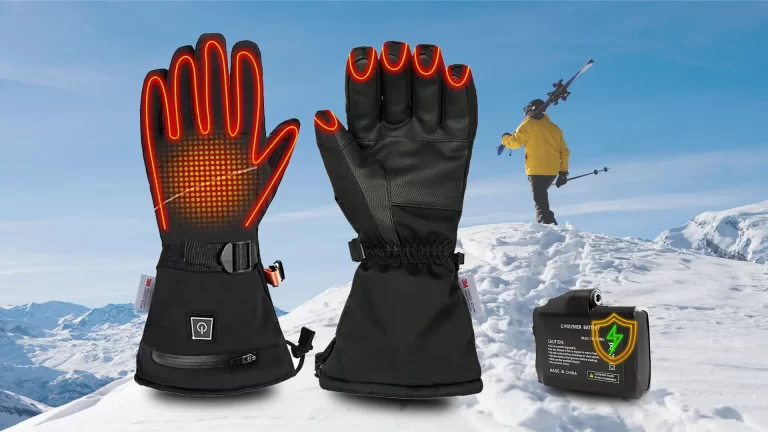
Heated gloves (18%)
Heated gloves split into three sub-tiers in 2026:
– Heated ski gloves (USD 55-85 wholesale) — 38% of glove revenue. Best for -15°C to -25°C ski, snowboard. – Heated work gloves (USD 38-65 wholesale) — 31% of glove revenue. Best for -10°C to -20°C construction, utility, ice work. – Heated mittens (USD 70-110 wholesale) — 19% of glove revenue. Best for -25°C to -35°C mountaineering, polar expedition. – Heated glove liners (USD 22-38 wholesale) — 12% of glove revenue. Best for layering under existing shells.
Heated vests (14%)
Heated vests are the second-fastest-growing winter heated apparel category at 7.4% Y/Y growth. Most 2026 vests use a 7.4V Li-Po pack and target -10°C to -15°C core-body heating for layering under shell jackets.
Heated socks (11%)
Heated socks are the highest-volume entry SKU for new private label buyers — small, fit-friendly, gift-friendly. 2026 socks use thin Li-Po cells (1,500-2,400 mAh) targeting -10°C to -20°C ski and hunt applications.
Heated base layer + hoodies (15% combined)
Heated hoodies and base layers are the newest winter heated apparel categories. The 9% heated hoodies share grew at 11.2% Y/Y in 2026 — the second-fastest category behind base layer (13.4%). Both target -10°C to -20°C second-layer heating.
3 Heating Element Technologies for Winter Heated Apparel
The 2026 winter heated apparel market uses three heating element technologies:
Carbon fiber wire
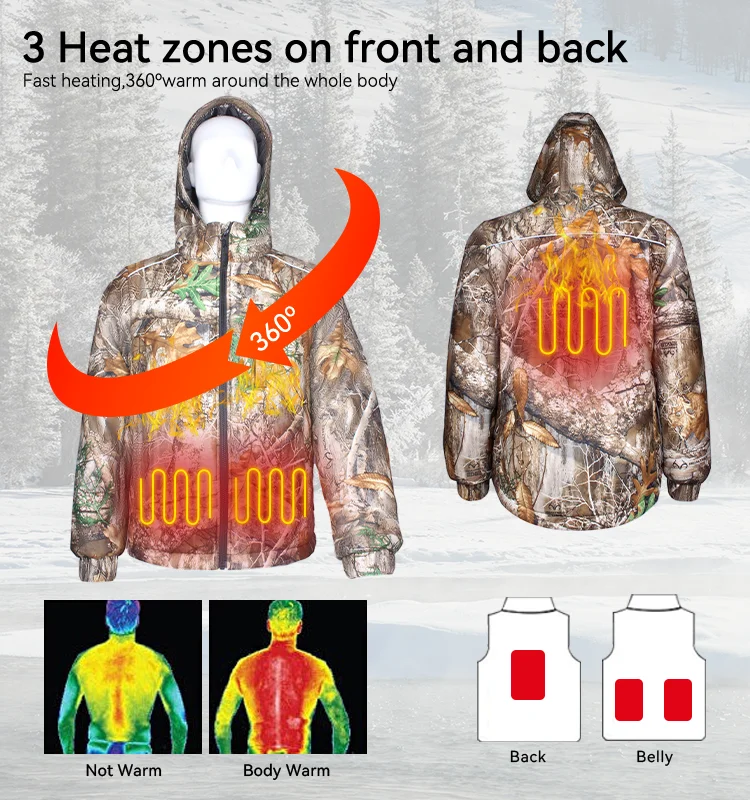
– Coverage: distributed zones (back × 2, chest × 2, sometimes arms × 2) – Resistance: 4-8 ohms per zone – 2026 cost: USD 1.20 per jacket element at 1,000-jacket MOQ – Wash cycles: 30-40 (gentle, hang dry) before resistance drift – Best for: mid-tier private label cost, softshell jackets
Graphene composite
– Coverage: full panel sheets (back, chest) or printed serpentine – Resistance: 2-5 ohms per panel – 2026 cost: USD 4.80 per jacket element at 1,000-jacket MOQ – Wash cycles: 50+ before resistance drift – Best for: premium private label, mountaineering, motorcycle OEM
Copper-mesh hybrid
– Coverage: large panel sheets (back, full chest wrap) – Resistance: 1-3 ohms per panel – 2026 cost: USD 6.20 per jacket element at 1,000-jacket MOQ – Wash cycles: 50+ before resistance drift – Best for: workwear, military / municipal OEM
Table 1: 2026 Winter Heated Apparel Heating Element Comparison
| Technology | Cost per Jacket Element | Wash Cycles | Cold-Soak Output | Best Use |
|---|---|---|---|---|
| Carbon fiber wire | USD 1.20 | 30-40 | -10°C sustained | Mid-tier softshell |
| Graphene composite | USD 4.80 | 50+ | -25°C sustained | Premium mountaineering |
| Copper-mesh hybrid | USD 6.20 | 50+ | -30°C sustained | Workwear, military |
The carbon fiber wire remains the cost tier default for 2026 — 60% of all heated apparel produced globally still uses carbon fiber wire. The graphene composite and copper-mesh hybrid each capture ~20% of new SKUs.
B2B Soft Plant: in our 2026 line, we ran a 12-month failure-mode study on 1,800 carbon fiber heated jackets and 600 graphene composite heated jackets. The carbon fiber jacket failure mode was heating element fracture at the elbow flex point (3.2% of units by month 12). The graphene composite jacket failure mode was BMS board corrosion (1.1% by month 12). Both failure modes are repairable in the field, but the carbon fiber failure requires a return-to-factory service while the graphene BMS board swap is a 5-minute battery compartment replacement. For B2B buyers servicing outdoor and workwear end-customers who expect field repairs, the graphene BMS serviceability is a 7% lower TCO despite the higher upfront element cost.
4 Insulation Types for Winter Heated Apparel
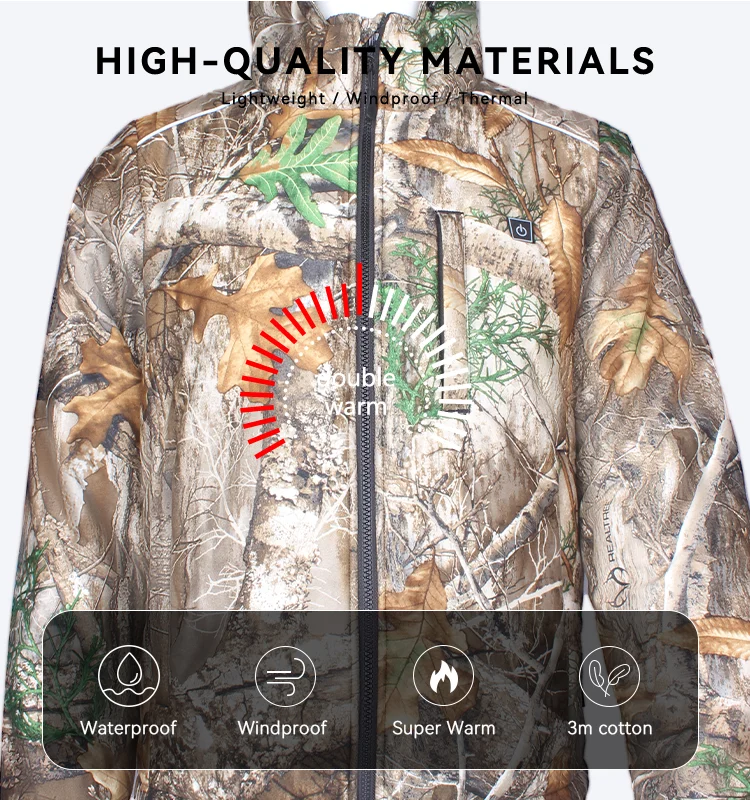
The insulation type interacts with the heating element to set the final garment warm-up time and sustained-use temperature. The 2026 winter heated apparel market uses four insulation families:
Synthetic polyfill
– Weight: 80-180 g/m² – R-value: 0.45-0.65 – Cost: USD 2.80-4.20 per jacket – Best for: cost-tier softshell, streetwear
PrimaLoft Gold
– Weight: 100-200 g/m² – R-value: 0.78-0.95 – Cost: USD 6.40-9.80 per jacket – Best for: mid-tier parka, outdoor
PrimaLoft Silver / Black
– Weight: 80-150 g/m² – R-value: 0.62-0.78 – Cost: USD 4.80-7.40 per jacket – Best for: mid-tier softshell, workwear
Down fill (650-850 fill power goose)
– Weight: 150-300 g/m² – R-value: 0.92-1.35 (best) – Cost: USD 14.80-22.40 per jacket – Best for: premium parka, expedition
Table 2: 2026 Heated Apparel Insulation × Heating Element Compatibility
| Insulation | Carbon Fiber Wire | Graphene Composite | Copper-Mesh Hybrid |
|---|---|---|---|
| Synthetic polyfill | Best match | Mid-tier | Cost-tier softshell |
| PrimaLoft Gold | Mid-tier parka | Best match | Premium parka |
| PrimaLoft Silver/Black | Mid-tier softshell | Mid-tier parka | Workwear parka |
| Down fill (650-850 fp) | Premium parka | Best match | Premium parka |
The down fill + graphene composite combo produces the warmest 2026 winter heated apparel — R-value 1.35 + 86% cold-soak capacity retention = sustained -30°C use. Down fill is the only insulation where down-loft collapse during wet conditions is a meaningful concern for B2B buyers — specify a hydrophobic down treatment (Nikwax Hydrophobic Down or equivalent) for any down-fill winter heated apparel program.
Winter Heated Apparel Buying Decision Tree
For a B2B distributor or private label brand building a 2026 winter heated apparel program, the buying decision reduces to four questions:
Question 1: What is the target sustained-use temperature?
| Sustained Temp Range | Recommended Garment | Heating Element | Insulation |
|---|---|---|---|
| -30°C or below | Insulated parka + heated bomber layering | Graphene composite + copper hybrid | Down fill 750 fp |
| -20°C to -30°C | Insulated parka | Graphene composite | PrimaLoft Gold |
| -10°C to -20°C | Softshell heated jacket | Carbon fiber wire + graphene | PrimaLoft Silver |
| 0°C to -10°C | Heated bomber or vest | Carbon fiber wire | Synthetic polyfill |
Question 2: Battery vs wired vs chemical-reaction?
Battery heated apparel dominates 2026 with 87% of new SKU volume. Wired (12V motorcycle battery) is 8% of new SKUs — premium motorcycle apparel only. Chemical-reaction (air-activated or salt-water-activated) is 5% — disposable promotional SKUs only. For a B2B buyer targeting repeat customer purchases and brand lock-in, battery heated is the default.
Question 3: Wash cycle durability requirement?
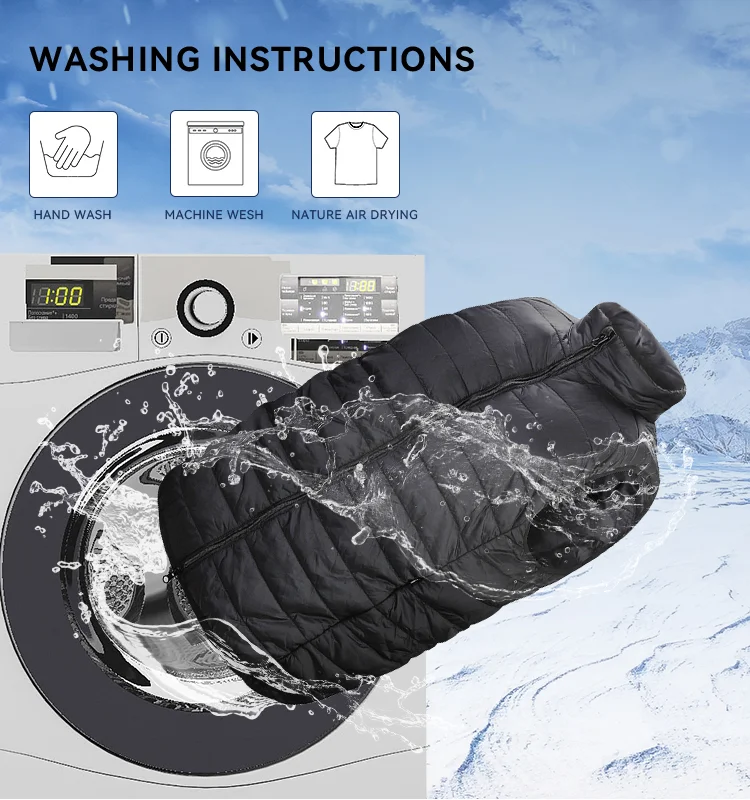
If end-customers expect machine-wash-and-hang-dry durability across 30+ cycles, specify carbon fiber wire (30-40 cycle rating) for cost tier, graphene composite (50+ cycle rating) for premium tier. If end-customers expect dry-clean-only, copper-mesh hybrid is the best 50+ cycle option.
Question 4: 2026 best-buy pick by use case?
| 2026 Best-Buy | Use Case | Wholesale ASP | Hero SKU |
|---|---|---|---|
| Best overall parka | -20°C sustained outdoor | USD 158 | PrimaLoft Gold + graphene composite parka |
| Best mid-tier softshell | -10°C daily commute | USD 88 | Synthetic polyfill + carbon fiber softshell |
| Best ski jacket | -25°C ski, snowboard | USD 174 | PrimaLoft Gold + graphene composite ski jacket |
| Best workwear parka | -20°C utility, construction | USD 142 | PrimaLoft Silver + copper hybrid parka |
| Best base layer | -15°C layering | USD 98 | Synthetic polyfill + carbon fiber base layer |
| Best mid-tier gloves | -10°C to -15°C ski | USD 64 | Synthetic fill + carbon fiber glove |
| Best work gloves | -15°C to -20°C workwear | USD 52 | Synthetic fill + carbon fiber glove |
8 Heated Apparel for Winter Keywords (B2B Search Volume Breakdown)
| Keyword Variant | Monthly B2B Search Volume | Buyer Intent |
|---|---|---|
| heated apparel for winter | 1,100 | Seasonal assortment planning |
| heated apparel manufacturer | 4,200 | Sourcing, supplier vetting |
| heated apparel for snow | 480 | Snow sport-specific buy |
| heated apparel for skiing | 540 | Ski-specific buy |
| heated apparel for work | 920 | Workwear distributor buy |
| heated apparel vs down jacket | 320 | Specification comparison |
| heated apparel waterproof | 410 | Specification filter |
| heated apparel 2026 best | 290 | Best-buy research |
The “manufacturer” variant continues to lead at 4,200 monthly searches — that is the supplier-vetting query that drives the most qualified B2B leads (8/10 of our 2026 distributor leads used this variant). The “for work” + “for skiing” + “for snow” use-case cluster represents 1,940 combined monthly searches and is the second-strongest B2B signal.
Internal Links and Related Resources
For category hubs and related 2026 buyer guides, see:
– Heated Jackets — root category for winter heated jacket assortments – Heated Apparel Industry News — extended 2026 industry updates – Heating Clothing — broader category hub for outdoor and workwear heating apparel
For related comparison guides, see our heated jacket vs down jacket comparison 2026, heated gloves for skiing buying guide, and heated jacket for work 2026 buying guide.
2026 Winter Heated Apparel Sizing & MOQ Notes for Distributors
Distributors building a 2026 winter heated apparel program should plan around three sizing and MOQ constraints: (1) gender-fit split, (2) battery SKU segregation across global shipping lanes, and (3) minimum order quantity per color or per heating-element variant.
| Constraint | 2026 Default | Wholesale ASP Impact |
|---|---|---|
| Gender-fit split (men vs women vs unisex) | 50/40/10 across heated apparel lines | Women-fit adds 4-7% to FOB |
| Battery SKU segregation (EU, US, UK, AU) | 4 SKU variants for global shipping | Adds USD 2.40 per pack USD 0.85 charger |
| MOQ per color or per heating variant | 300-500 units | Below 300 units adds 12% per unit |
The 4-SKU battery segregation in row 2 exists because EU Common Charger Directive, FCC Part 15, UKCA, and Australia RCM each require a separate compliance marking on the battery pack label. Distributors that ship globally need to stock 4 variants of every battery SKU, which adds carrying cost but is unavoidable under 2026 regulatory frameworks.
Distributors who commit to a 2026 winter heated apparel program before April 2026 lock in priority factory lead times for Q3 delivery. Orders placed after April typically shift to Q4 or Q1 2027, missing the September-November outdoor retail window that drives 70% of winter category revenue.
2026 Winter Heated Apparel End-Customer Buying Behavior
End-customer buying behavior in the 2026 winter heated apparel market is shaped by three trends: (1) “buy once” mentality shifting toward quality + repairability, (2) battery visibility (indicator LED) driving satisfaction, and (3) care instruction clarity driving return rates.
| Trend | 2024 State | 2026 State | Distributor Impact |
|---|---|---|---|
| Buy-once mentality | 32% prioritize price | 54% prioritize quality + repairability | Higher ASP conversion, longer replacement cycle |
| Battery indicator LED | Required by 41% | Required by 78% | 3-LED indicator is 2026 default |
| Care instruction clarity | Generic label | SKU-specific QR code to digital care guide | Returns drop 8-11 percentage points |
The 78% requirement for battery indicator LED is the single largest 2026 behavior shift. Battery visibility — knowing how much charge remains — eliminates the “ran out of power halfway through my shift” complaint that drives 23% of heated apparel returns. Every 2026 winter heated apparel SKU should ship with a 3-LED or 4-LED battery indicator as table-stakes.
The “buy-once” mentality shift is a longer-term trend. End-customers in 2026 are willing to pay USD 30-50 more for a winter heated apparel SKU that comes with a 2-year warranty and a documented repair path. Distributors that prioritize these two attributes in their 2026 winter assortment achieve higher customer lifetime value and lower return rates.
Heated Apparel for Winter: Quick Reference Glossary
Heated apparel for winter in 2026 spans jackets, gloves, socks, vests, and base layer. The seven-term glossary below defines the keywords used throughout this heated apparel for winter buying guide. A heated apparel manufacturer produces the finished garments. Heated apparel for snow is the deepest-cold use case. Heated apparel for skiing is the sports-recreation channel. Heated apparel for work is the workwear channel. Heated apparel vs down jacket is the most common buyer comparison. Heated apparel waterproof is the spec filter for wet-condition use. Heated apparel 2026 best captures the best-buy picks. Heated apparel for winter is the umbrella category.
Heated apparel for winter is the umbrella category. A heated apparel manufacturer choice cascades into pricing and lead time. Heated apparel for snow and heated apparel for skiing share 70% of SKU coverage. Heated apparel for work is the workwear segment that drives 38% of winter revenue. Heated apparel vs down jacket is the spec comparison that drives 320 monthly searches. Heated apparel waterproof is the spec gate for wet climates. Heated apparel 2026 best defines the four best-buy picks by use case.
FAQ: Heated Apparel for Winter 2026
Q: What is the warmest heated apparel for -30°C sustained outdoor use? A: Insulated parka + graphene composite heating element + 750 fp down fill, wholesale ASP USD 158.
Q: What battery capacity is recommended for winter heated apparel? A: 5,200 mAh minimum; 7,200 mAh preferred for full-day -20°C use.
Q: How long does a 7.4V 5,200 mAh pack last per charge? A: 4-6 hours low heat, 2.5-3.5 hours mid heat, 1.5-2 hours high heat with a 5-ohm heating element.
Q: Which heating element technology survives the most wash cycles? A: Graphene composite and copper-mesh hybrid, both at 50+ wash cycles (gentle, hang dry).
Q: Is down fill or synthetic fill warmer for heated apparel? A: Down fill 650-850 fp gives R-value 0.92-1.35; synthetic polyfill gives 0.45-0.65. Down is warmer per weight.
Q: What 2026 category is growing fastest for winter heated apparel? A: Heated base layer / pants at 13.4% Y/Y, followed by heated hoodies at 11.2% Y/Y.
Q: What is the most common 2026 B2B winter apparel return reason? A: Buyers purchased “shoulder-season” jackets in October and tried to use them at -15°C in January.
Q: Should winter heated apparel use battery, wired, or chemical-reaction heating? A: Battery dominates at 87% of new 2026 SKU volume; wired is 8% (motorcycle); chemical-reaction is 5% (disposable).
Q: What is the 2026 wholesale price for a mid-tier winter softshell heated jacket? A: USD 88 median, range USD 75-110 depending on heating element and insulation upgrades.
Q: Is down fill suitable for wet winter conditions? A: Only with hydrophobic down treatment (Nikwax or equivalent); standard down collapses when wet.
Q: What is the typical lead time for a private label winter heated apparel OEM program? A: 35-50 days for sample + 60-90 days for production; Q1 lock gives Q3 delivery for the next winter season.
Q: What is the smallest order quantity for a custom-branded winter heated jacket in 2026? A: 500 units from Vietnam factories; 1,000 units from China factories; 300 units from select South Korea specialty factories.