Wholesale Heated Apparel Battery Removability 2026: The Buyer Acceptance Binder for Removable Packs, User Documentation and Amazon EU Listing Compliance
Removability Is Now a Buyer Acceptance Gate, Not a Design Feature
Regulation (EU) 2023/1542 puts the end user in control of the battery: a heated apparel pack must leave the garment without tools. For the wholesale buyer, wholesale heated apparel battery removability is a purchase-order acceptance criterion that changes the landed cost of every heated vest shipped into the EU. A 5,000-unit lot at $28.40 FOB treats the compliance file as a deliverable.
The Buyer Compliance Reserve: $0.83 per Unit on a 5,000-Unit Lot
Work the compliance line before the ex-works price. Wholesale heated apparel battery removability carries build, label, documentation and inspection cost a glued-in pack never does.
| Cost line | Per unit | 5,000 units | Type |
|---|---|---|---|
| Garment FOB, 7.4 V vest | $28.40 | $142,000 | Base |
| Removable pack + release latch | $6.10 | $30,500 | Build |
| Art. 13 label print | $0.34 | $1,700 | Build |
| Manual, 8 languages | $0.22 | $1,100 | Build |
| CE DoC + test amortisation | $0.41 | $2,050 | Build |
| EU inbound, 3PL prep | $0.55 | $2,750 | Landed |
| Compliance reserve | $0.83 | $4,150 | Reserve |
Carve that out of margin as a named line: a $0.83 per-unit buyer-side wholesale compliance reserve is $4,150 on a 5,000-unit lot, and it closes a label gap, a missing translation or a re-issued test report. Without the line it returns as a change order after the cells are booked.
Art. 13 Battery Labelling Requirements and the 18 February 2027 Deadline
Art. 13 battery labelling requirements apply from 18 February 2027 and cover chemistry, mass, producer identity and a digital identifier. Enforcement rarely arrives as a customs letter; it arrives as a marketplace block and a 3PL refusal at the EU door. That is the single question behind wholesale heated apparel battery removability for this channel, and it is answered with documents rather than assurances.
| Milestone | Date | Owner | If missed |
|---|---|---|---|
| Season sell-through closes | 30 Nov 2026 | Buyer | Cost locked on old art |
| Cell allocation locked | 15 Dec 2026 | Buyer | Lead time starts late |
| EU listing, artwork refreshed | 8 Jan 2027 | Factory | 6-week buffer lost |
| Factory label audit | 20 Jan 2027 | 3PL | Lot refused at inbound |
| Print run released | 25 Jan 2027 | Factory | Reprint lands late |
| Art. 13 labelling in force | 18 Feb 2027 | EU market | Listing blocked, dead stock |
Treat 18 February 2027 as the hard gate and refresh Amazon EU listing copy and packaging artwork by 8 January 2027, leaving a 6-week buffer for reprint, upload and a 3PL audit. Six weeks absorbs a failed label proof, a translation slip and a re-shoot.
The 4 Acceptance Gates a Removable Pack Must Clear
Four gates cover the failures that reach the EU buyer: a pack that will not come out, one that cannot be swapped fast, one the end user cannot understand, and one not correctly labelled. Any wholesale heated apparel battery removability manufacturer that cannot name the release mechanism and the timed swap has proved neither.
| Evidence | Gate | Document | Pass criterion |
|---|---|---|---|
| Tool-free battery release latch drawing | G1 | Drawing, cycle test | 3,000 cycles, no failure |
| Disassembly timing record | G2 | Timed video | 42-second pack swap |
| User manual master | G3 | Print-ready PDF | Steps in 8 languages |
| Art. 13 label artwork | G4 | Print-ready file | Chemistry, mass, QR |
| Cell specification sheet | G1 | Maker datasheet | 18 mm x 70 mm 21700, 10-12 cells |
| CE DoC + test reports | G4 | Signed PDF | Models, standards cited |
Gate G1 is binary: a welded, glued or captive-screw housing fails regardless of documentation quality. Gate G2 protects the returns rate, because a consumer who cannot remove the pack returns the garment.
The 7 Documents to Demand from a Heated Apparel Removable Battery Wholesale Supplier
Ask for the file as a set. A partial set is the commonest cause of a stalled EU shipment, and a heated apparel removable battery wholesale supplier sending one datasheet and one test summary is telling you the pack was never engineered for it. Buyers writing wholesale heated apparel battery removability into a 5,000-unit purchase order should treat it as a landed-cost line, not a feature claim.
| Document | Issuer | Must contain | Refresh |
|---|---|---|---|
| UN 38.3 test summary | Cell maker | Cell ID, mass, Wh | Per cell lot |
| IEC 62133-2 pack report | Pack assembler | Voltage, Wh, limits | Per model |
| BMS specification | Pack assembler | Charge, short, discharge | Per model |
| CE Declaration of Conformity | Legal maker | Directives, standards | Annual |
| EN 62368-1 / EN 13271 | Test lab | Model, standard, date | 24 months |
| Art. 13 label proof | Factory + 3PL | Chemistry, mass, QR | Per artwork |
| User manual master | Factory | 8 languages, steps | Per model |
The CE Declaration of Conformity names the legal manufacturer. If the wholesaler cannot name that entity, the CE mark fails a marketplace compliance check.
Pack Engineering: 7.4 V Nominal, 10-12 Cells and the Tool-Free Battery Release Latch
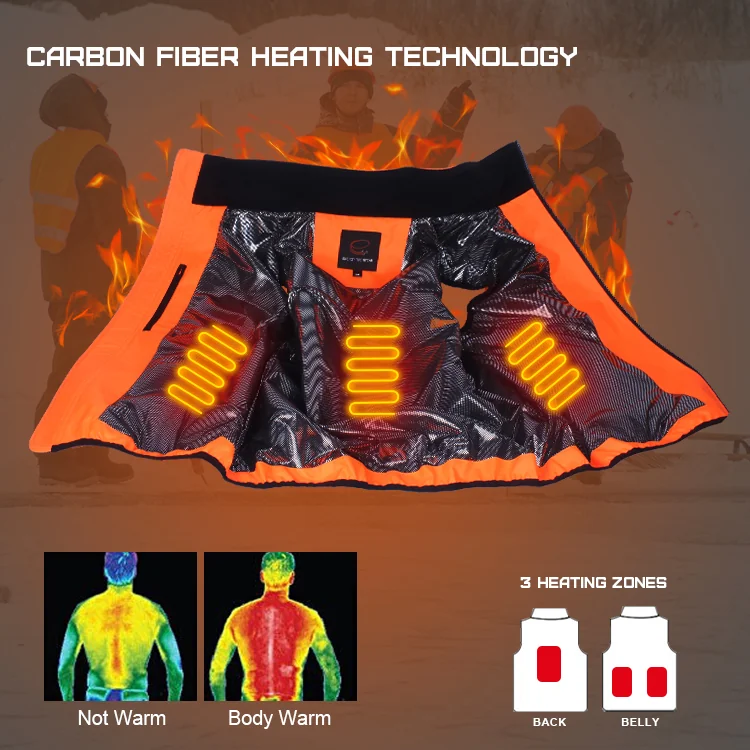
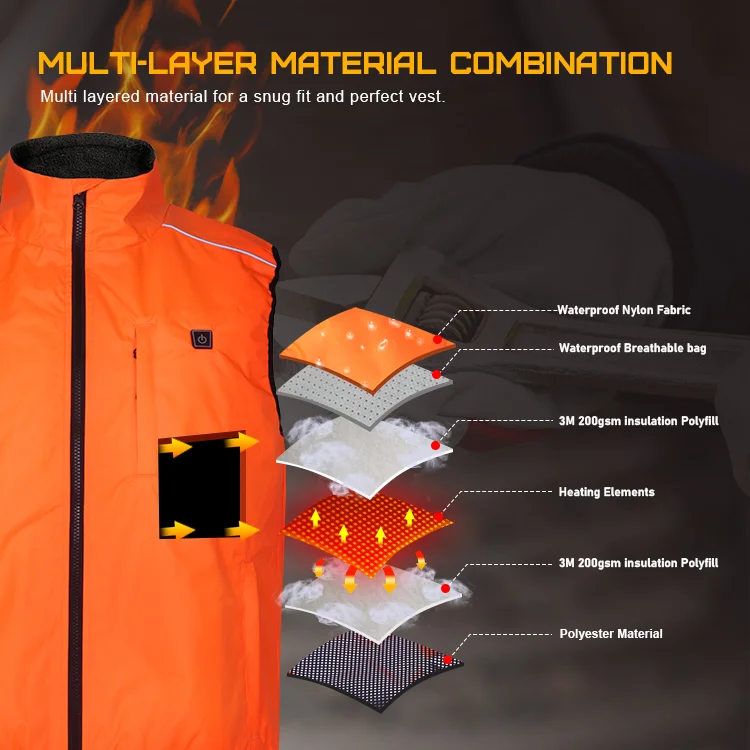
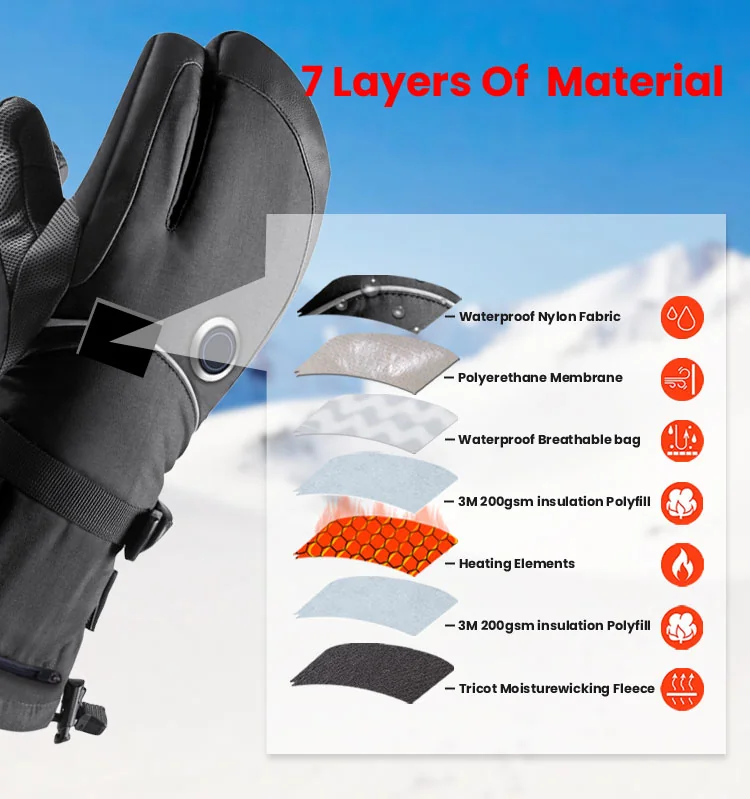
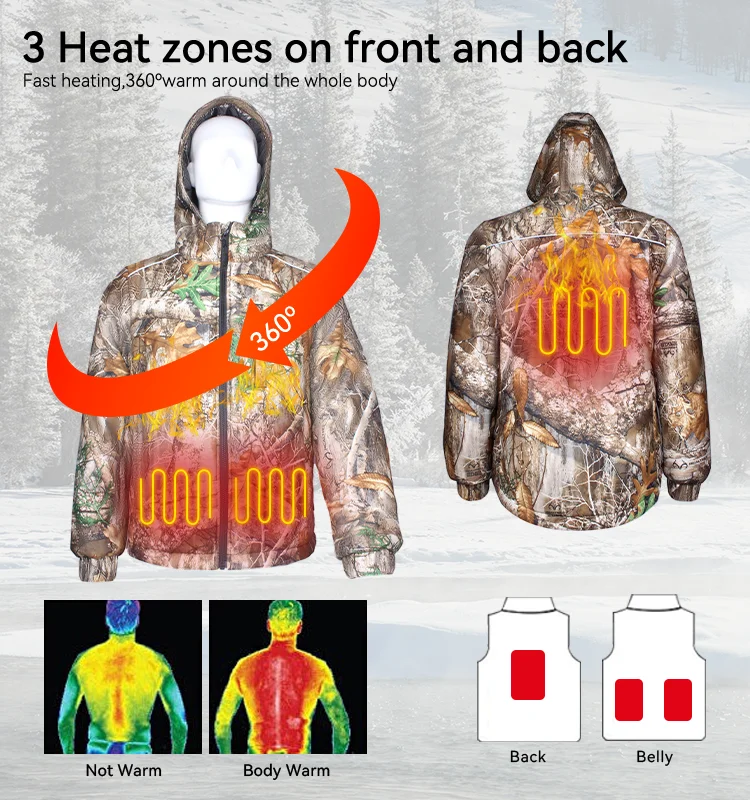
Typical 2026 packs run 7.4 V nominal, 10-12 cells, 2,000-6,000 mAh and 50-400 g pack mass. The 18 mm x 70 mm 21700 cell is what makes a tool-free battery release latch feasible and what a heated vest battery pocket wholesale pattern must accommodate: the pack lies flat in a rail and slides out.
| Parameter | Glove | Vest | Jacket |
|---|---|---|---|
| Nominal voltage | 7.4 V | 7.4 V | 7.4 V |
| Cell count | 10 | 10 | 12 |
| Capacity | 2,000 mAh | 4,000 mAh | 6,000 mAh |
| Cell format | 21700 | 21700 | 21700 |
| Pack mass | 50-90 g | 150-250 g | 300-400 g |
| Swap time | 42 s | 42 s | 42 s |
| Output | 3.7 W | 5 W | 10 W |
| Charge port | USB-C | USB-C | USB-C + DC |
A wholesale heated apparel battery removability OEM should state the release mechanism, pocket depth and swap time without escalation. A pack needing a screwdriver fails the gate that matters most: the 42-second swap that keeps returns at a normal apparel rate.
The Supplier Acceptance Scorecard and the 2.8% RMA Reserve
Score every candidate supplier on the same four weighted gates before releasing a deposit. It turns a verbal assurance into a comparable number and gives you a defensible reason to move volume to a second source.
| Gate | Weight | Score 0-5 | Points |
|---|---|---|---|
| G1 Mechanism | 30% | 4 | 1.20 |
| G2 Swap | 25% | 5 | 1.25 |
| G3 Documentation, 8 languages | 20% | 3 | 0.60 |
| G4 Art. 13 label, CE DoC | 25% | 4 | 1.00 |
| Weighted total | 100% | — | 4.05 of 5.00 |
| Pass rule | Below 4.00 rejected | — | Dual-source |
Run the file through a 4-gate supplier acceptance scorecard, then hold a returns and RMA reserve of 2.8% — worth $4,000 on a 5,000-unit lot at a $28.40 FOB unit. Removable packs create one failure the apparel reserve never carried: the user removes the pack, cannot refit it, and returns the garment. Reserve pack faults separately, and tell the 3PL to quarantine returned packs rather than restock them.
Landed Cost Stack: $28.40 FOB to Amazon EU Fulfilment
Build the ladder from the FOB number, not a supplier’s landed-cost sheet. Every step is verifiable against a document.
| Step | Per unit | Cumulative | Basis |
|---|---|---|---|
| Garment + removable pack, FOB | $28.40 | $28.40 | 5,000-unit lot |
| Export docs, third-party QC | $0.55 | $28.95 | Pre-shipment |
| Ocean freight + insurance | $1.10 | $30.05 | 40-day transit |
| Duty paid + VAT cash flow | $3.05 | $33.10 | 12% duty, VAT recoverable |
| EU 3PL inbound, prep | $0.80 | $33.90 | Carton, labelling |
| FBA placement fee | $1.35 | $35.25 | 2026 size rate |
| Compliance reserve | $0.83 | $36.08 | $4,150 on 5,000 |
| RMA reserve, 2.8% | $0.80 | $36.88 | $4,000 on 5,000 |
Duty is a cost of capital more than a margin hit when you reclaim VAT, but it is cash out for 60-90 days. Carry the $3.05 duty-and-VAT step on a 5,000-unit lot as working capital, not expense.
Amazon EU Listing and Packaging Changes to Force Through
Most heated apparel sellers fail the deadline at the listing, because the copy was written by someone who never read Article 13. Treat the refresh as a supplier deliverable with an approval date.
| Element | Today | From 18 Feb 2027 | Owner |
|---|---|---|---|
| Bullet one | “3 heat levels” | Add “user-removable battery” | Copy |
| Product type | Generic heated vest | Battery-containing apparel | Taxonomy |
| Pack label | Model + voltage | Chemistry, mass, producer QR | Artwork |
| Manual files | English PDF | 8 languages with steps | Upload 8 |
| Hazard notice | Not shown | UN3481 handling statement | Carton art |
| Warranty copy | “12 months” | Pack covered separately | Legal |
| Gallery | 6 lifestyle images | One 42-second swap frame | Reshoot |
Track the cycle in our heated apparel industry news notes, as marketplace enforcement teams publish their own checklists.
UN3481 and FBA Inbound: The 30% State of Charge Rule
A 7.4 V pack of lithium-ion cells travels as UN3481, lithium ion batteries contained in equipment. For FBA inbound the constraint is state of charge: cells must arrive at 30% or below, so the factory charges to 30% before dispatch, not 100%.
| Requirement | Rule | Value | Buyer action |
|---|---|---|---|
| Classification | In equipment | UN3481 | Confirm with 3PL |
| State of charge | Max at inbound | 30% | Factory charges to 30% |
| UN 38.3 summary | Required | Test summary ID | From cell maker |
| Damaged packs | Prohibited | Zero tolerance | Exclude from returns |
| Carton marking | Class 9 | UN3481 | Print on carton |
| Declared mass | Pack mass | 50-400 g | SDS, customs file |
A 30% state of charge for FBA inbound changes your QC sample: opening a pack at the 3PL to test runtime destroys the compliant state. Sample at the factory.
MOQ, Lead Time and Dual-Sourcing the Compliant Pack
Cell lead time decides your calendar, not the sewing slot. Plan a 60-75 day cell lead time from PO to pack assembly, plus 40 days ocean transit and 14 days EU inbound prep. A 5,000-unit removable battery heated jacket wholesale programme needs a 5-6 month buying window, which is why allocations are placed against a 60-75 day cell lead time in the supply chain plan.
| Input | Lead time | MOQ | Dual-source |
|---|---|---|---|
| 21700 cells | 60-75 days | 5,000 cells | Two makers, same footprint |
| Pack assembly | 20-25 days | 1,000 packs | Second assembler |
| Housing + latch | 30-40 days | 2,000 sets | Shared tooling |
| Garment sewing | 25-30 days | 500 pcs | New pocket pattern |
| Print + label art | 10 days | 1,000 labels | Two print vendors |
| Translations, 8 languages | 15 days | 1 set | Per model |
Dual-sourcing matters more here than in ordinary apparel, because a non-compliant pack cannot be sold in the EU at any price. Qualify the second vendor against the same four gates and artwork, and confirm both use the 18 mm x 70 mm 21700 cell so a swapped pack fits the same pocket.
What a Non-Compliant 5,000-Unit Lot Actually Costs
Failures compound: a bad label blocks the listing, a blocked listing stops sell-through, and unsold seasonal stock does not clear until the next cycle. Model the worst case before you commit.
| Failure scenario | Cost | Per unit | Trigger |
|---|---|---|---|
| 3PL refuses, label mismatch | $9,000 relabel | $1.80 | Wrong chemistry or mass |
| Listing takedown | $6,500 plus ads | $1.30 | Missing Art. 13 content |
| FBA inbound reject, storage | $3,750 | $0.75 | Charge above 30% |
| RMA spike, fixed packs | $7,600 | $1.52 | User cannot remove pack |
| Customs hold, no UN 38.3 | $4,200 | $0.84 | Incomplete file |
| Worst case, all five | $31,050 | $6.21 | Against $0.83 reserve |
The gap between a $0.83 per-unit reserve and a $6.21 per-unit worst case is the return on doing the acceptance work early. Wholesale heated apparel battery removability is cheap to prove at the factory gate, expensive at the marketplace gate.
Frequently Asked Questions
Does the EU Battery Regulation apply to battery-heated jackets, vests and gloves?
Yes, if the battery is removable by the end user without specialist tools. Heated garments sit on that boundary, so buyers specify a tool-free release mechanism in the PO and demand evidence at acceptance, not at listing.
What documents prove that a heated apparel battery is user-removable?
A four-gate file: the tool-free release drawing with a cycle test, a timed 42-second swap record, an 8-language manual with removal steps, and the Art. 13 label artwork with a signed CE Declaration of Conformity.
What must the pack label say under Art. 13 battery labelling requirements?
Chemistry type, battery mass, producer identity and a digital identifier, plus capacity and, where required, safety information. The printed chemistry code must match the 3PL’s UN 38.3 file.
Does the CE mark cover the removable pack, the garment, or both?
It covers the legal manufacturer’s declared scope: the garment assembly and its electrical safety, with EMC and RoHS. The pack is covered separately by IEC 62133-2. The entity named on the Declaration must place the product on the EU market.
How should a wholesale buyer handle UN3481 on FBA inbound?
Classify the pack as lithium-ion batteries contained in equipment, obtain the UN 38.3 summary for every cell, mark the carton for Class 9, and have the factory charge cells to 30% or less before dispatch so the shipment passes FBA inbound.
What state of charge do cells need for FBA inbound, and who sets it?
Thirty percent maximum, set by the factory. Charger-side logistics are impractical for a 7.4 V pack, so the packing instruction must read “charge to 30% before packing”. QC sampling belongs at the factory, because opening a pack at the 3PL breaks the compliant state.
What Amazon EU listing changes are required by 18 February 2027?
Copy must state the battery is user-removable, the product type must identify battery-containing apparel, the manual must be uploaded in 8 languages with removal steps, and the gallery must show the release mechanism. Refresh by 8 January 2027.
How much should I reserve for returns and RMA on removable packs?
Hold 2.8% of FOB unit value: $4,000 on a 5,000-unit lot at $28.40 per unit. Split it between garment and pack faults, because a user who removes the pack and cannot refit it returns a garment the factory would otherwise have accepted.
What MOQ should I commit to for a compliant removable pack?
Most pack assemblers set the MOQ at 1,000 packs and the cell MOQ at 5,000 cells, so a 5,000-unit lot is one production run with no split. Below 1,000 units, tooling and translation minimums push per-unit cost above the $6.10 pack line.
What lead time should I plan for compliant 21700 cells?
A 60-75 day cell lead time from PO to pack assembly, plus 20-25 days assembly, 40 days ocean freight and roughly 14 days EU inbound prep. Buy on a five to six month horizon, placing next-season allocation before the season sells through.
Should I dual-source the removable pack, and does the second source need re-testing?
Yes, but qualify the second vendor against the same four gates and artwork revision. Requiring the same 18 mm x 70 mm 21700 cell across both vendors means a swap pack fits the same pocket without re-engineering.
What is the cost per unit of a compliant heated vest in 2026?
$28.40 FOB for the garment with removable pack, $36.08 landed to an EU 3PL including the $0.83 compliance reserve, $36.88 with the 2.8% RMA reserve. A compliant pack adds roughly $6.10 over a glued-in pack and saves a $6.21 worst case.
Can a tool-free battery release latch be added to an existing heated garment pattern?
Usually yes, if the pack already uses 21700 cells in a flat pocket. The change is a rail or pocket redesign plus a latch and new pattern, adding 30-40 days of hardware lead time. Confirm the 42-second swap in the timed video first.