Wholesale Heated Apparel ESPR Conformity Assessment 2026: the Buyer Acceptance Binder for the EU Declaration of Conformity
Regulation (EU) 2024/1781, adopted 13 June 2024 and in force since 18 July 2024, sets the framework for ecodesign requirements that will arrive through delegated acts under Article 4. No delegated act covering textiles, garments or heated apparel has been adopted, so every conformity assessment duty described here is conditional on an act that does not yet exist. Buyers who build a supplier approval file now avoid renegotiating terms mid-season and can answer a marketplace or customs question in hours rather than weeks. This guide covers what a wholesale buyer can verify today, what to demand in writing before releasing a deposit, and how to read the EU declaration of conformity once one exists.
Why conformity assessment belongs in your supplier approval file
Wholesale heated apparel ESPR conformity assessment belongs in your supplier approval file because heated apparel is a composite good: a battery, a controller and a textile shell arrive from different plants and are married at assembly, so the evidence sits in three places at once. Article 27 puts product identification, manufacturer contact details and a complaint channel on the manufacturer for products covered by a delegated act, and no such act exists for garments today. Collect those pieces now, because the electronics plant and the cutting plant will not share records. Our heated apparel industry news coverage tracks supplier announcements that often precede regulatory pressure.
| Supplier file item | Why it matters | Ask for it |
|---|---|---|
| Factory and importer identity | A reachable legal counterparty | Legal entity names |
| Declared manufacturer on the label | Must match the garment | Brand ownership proof |
| Battery and controller sourcing | Assembly spans several plants | Full supply chain map |
| Ecodesign delegated act coverage | Decides which duties apply | Nothing adopted yet |
Article 43: what the Commission must weigh when it picks a module
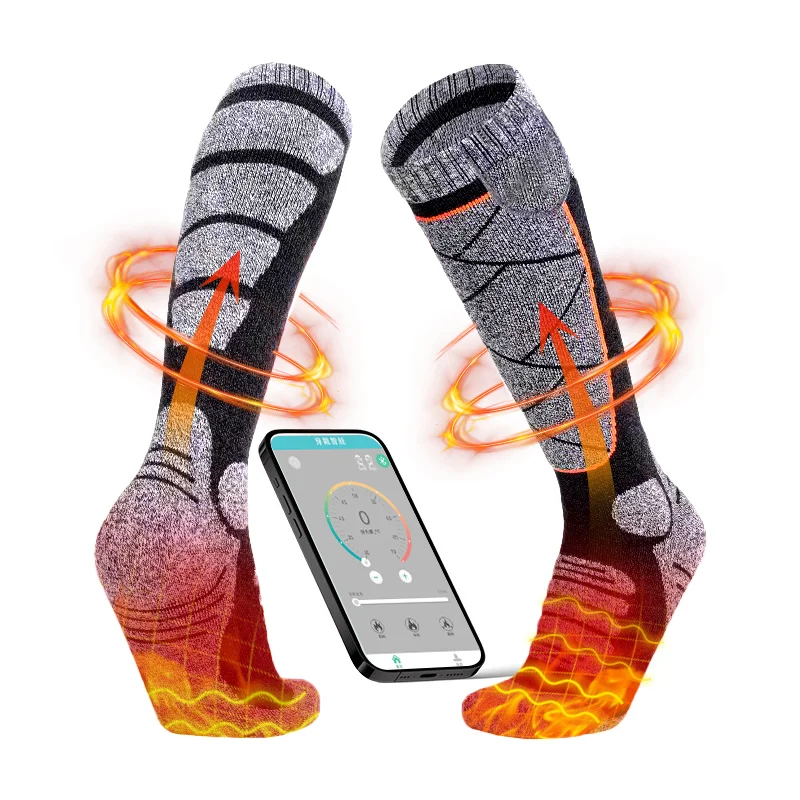
The Article 43 conformity assessment criteria are deliberately open, which helps a buyer who plans early. Before any product group is fixed, the Commission must weigh whether the module suits the product type and is proportionate to the public interest pursued, the nature of the risks and whether the assessment matches their degree, and, where third-party involvement is compulsory, whether the manufacturer can choose between a quality assurance module and a product certification module. Article 43(2) adds a practical point: records must be drawn up in an official language of the Member State where the notified body sits. For a battery-powered garment, the risk question decides the outcome.
| Criterion in Article 43 | What the Commission weighs | Buying consequence |
|---|---|---|
| Fit and proportionality | Module suits product and interest | Simpler modules likely |
| Nature and degree of risk | Battery risk sets assessment depth | Third-party testing possible |
| Manufacturer module choice | Quality assurance versus certification | Factory flexibility matters |
| Current legal status | No textiles delegated act adopted | Nothing binding on garments |
Module A internal production control and what it means for your supplier
Module A internal production control is the self-assessment route set out in Annex IV to the Regulation, and Article 4(5) lets a delegated act select it or one of the modules B to H1 in Annex II to Decision No 768/2008/EC. It keeps the assessment inside the factory, so wholesale heated apparel ESPR conformity assessment manufacturer capability becomes a question of audit depth rather than certificate volume. Article 4(4) requires at least 18 months between entry into force and the date of application, except in duly justified cases. Budget $0.71 per unit to check each incoming shipment against the file.
| Module A feature | What it means | Buyer question |
|---|---|---|
| Manufacturer self-assessment | No third party involved | Who signs the file |
| Annex IV to the Regulation | Route set out in the base act | Available only after an act |
| Document review cost | Per unit, set by order volume | Small but not zero |
| First delegated act | Not before 19 July 2025 | Long runway visible |
Article 44: reading an EU declaration of conformity before you pay a deposit
The Article 44 EU declaration of conformity has a fixed skeleton. Article 44(2) requires the model structure in Annex V, the elements specified in the applicable assessment procedure, a reference to the applicable delegated act, continuous updates, and translation into the languages required by the Member State where the product is placed. Article 44(3) allows one declaration to cover several Union legal acts, and it may be a dossier. Article 44(4) puts responsibility for compliance on the manufacturer who signs it. You are not that party, but the marketplace selling your stock is. Hold $3,550 per 5,000-unit order as an illustrative reserve for replacing a held shipment.
| Declaration element | Source | Check before deposit |
|---|---|---|
| Model structure | Annex V, Article 44(2) | Layout matches your file |
| Delegated act reference | Article 44(2) | Will name the applicable act |
| Required translations | Article 44(2) | Target market language present |
| Manufacturer signature | Article 44(4) | Names a legal entity |
Article 46: where the CE marking sits on a soft heated garment

The Article 46 rules and conditions for affixing the CE marking are short and, for a soft garment, awkward. Article 46(1) requires the marking to be affixed visibly, legibly and indelibly to the product or, where that is not possible or not warranted given the nature of the product, to the packaging and the accompanying documents. Article 46(2) requires affixing before the product is placed on the market. Article 46(3) adds a notified body’s identification number only where a body participates in the production control phase. For your re-labelling plan, that distinction decides everything: a printed hang tag and a sew-in label both satisfy the fallback, keeping re-labelling cost predictable.
| Article 46 point | The rule | Soft garment effect |
|---|---|---|
| Visible on the product | Legible, indelible affixing | Label, print or sew |
| Packaging fallback | Where affixing is unwarranted | Hang tag minimum |
| Before market placement | Affixed before sale | Check at your gate |
| Notified body number | Only where a body participates | Number appears only then |
Article 27(3) and Article 27(10): the retention and 15-day response duties behind the paperwork
Two duties decide whether a supplier can really answer a regulator. Article 27(3) requires manufacturers to keep the technical documentation and the EU declaration of conformity for 10 years after a product covered by a delegated act is placed on the market, unless that act specifies a different period, and Article 4(6)(a)(i) lets a future act change it for market surveillance reasons. Article 27(10) requires manufacturers to supply everything needed to demonstrate conformity, including the technical documentation, on a reasoned request from a competent national authority, in paper or electronic form, as soon as possible and in any event within 15 days. Article 27(4) adds a change log: when the design moves, the manufacturer reassesses conformity before the next run.
| Duty | Period | Buyer action |
|---|---|---|
| Retain technical file | Ten years from placing | Test file access now |
| Act may vary retention | Different period possible | Ask for written term |
| Respond to an authority | Fifteen days maximum | Check who signs |
| Reassess after changes | Series production conformant | Request change log |
Article 39, Article 40 and Article 41: test methods, circumvention rules and presumed conformity
Article 39 requires the tests, measurements and calculations behind ecodesign compliance to use harmonised standards or other reliable, accurate and reproducible methods reflecting the generally recognised state of the art, and to meet the methods set out in the relevant delegated act. Article 40 blocks operators from behaviour that undermines compliance, from products designed to detect testing and change behaviour, from test-specific instructions, and from firmware updates that worsen performance. Article 41 grants a presumption of conformity only where harmonised standard references have been published in the Official Journal, and none exist for garments today. Article 41(4) also lets an EU Ecolabel award support a presumption where the Ecolabel criteria cover the requirement.
| Article | Rule | Question for the factory |
|---|---|---|
| Harmonised or reliable methods | Article 39 | Which method was used |
| No testing detection | Article 40 | Do samples self-detect |
| Firmware cannot worsen performance | Article 40 | How controllers are updated |
| Presumption needs published standards | Article 41 | No presumption available yet |
Building the buyer acceptance binder into your wholesale file
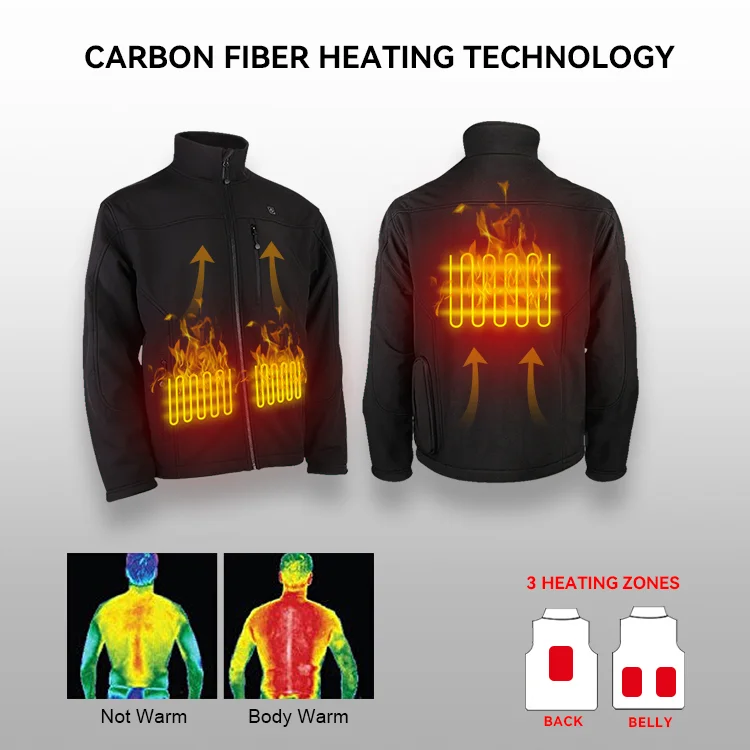
The buyer acceptance binder is your control, not the supplier’s certificate: one folder per factory, a scored evidence checklist, a signed pre-shipment declaration, a label approval record and an escalation path. It must reach the plant that assembles the battery and controller, not only the plant that cuts the shell, which is what a wholesale heated apparel ESPR conformity assessment OEM program has to mean. Build it once and reuse it for every order. Treat $8,900 one-time buyer acceptance setup as an illustrative year-one line for supplier travel, laboratory review and training, then carry it in every annual plan.
| Binder section | Contents | Owner |
|---|---|---|
| Factory profile | Site, contacts, assembly flow | Sourcing |
| Evidence | Test reports and sample records | Quality |
| Declaration | Version history and translations | Compliance |
| Labelling | CE placement proof, care labels | Merchandising |
What a wholesale heated apparel buyer should require now, before any delegated act lands
Because no delegated act covering textiles, garments or heated apparel has been adopted, you cannot demand a garment-specific certificate that does not exist. You can demand the evidence that makes certification cheap later, in writing rather than verbal promises. Ask each factory for a written conformity plan, a named technical contact, current battery test data using named methods, a labelling mock-up, and a contract remedy if documents arrive late. Record every answer in the binder and review it as a wholesale heated apparel ESPR conformity assessment wholesale channel check each season. Read our supply chain coverage for how factory relationships shift between seasons.
| Requirement now | Why it helps later | Acceptable answer |
|---|---|---|
| Written conformity plan | Shows readiness for future rules | Signed statement |
| Named technical contact | Speeds any authority response | Name and role |
| Labelling mock-up | Confirms CE placement | Photo and file |
| Contract remedy clause | Protects your deposit | Clause in the order |
Frequently asked questions
Twelve questions wholesale sourcing managers ask most often, answered from the Regulation text and from what is not yet in force. The theme is timing: the framework is settled, the product-specific rules are not, and today’s file makes the first delegated act cheap to absorb.
Does any ESPR delegated act already cover heated apparel?
No: nothing has been adopted pursuant to Article 4 for textiles, garments or heated apparel, so every duty described here waits for a future act.
What exactly is the buyer acceptance binder?
A per-factory file of evidence, checklists and signed records that you control as the distributor, so you can answer a marketplace or customs question without waiting on the supplier.
Who signs the EU declaration of conformity?
The manufacturer does, under Article 44(4), and you are not liable for that signature, but you carry the commercial risk when the document behind it is missing.
Can a supplier promise the declaration later?
Only in writing, because a verbal promise is not evidence you can show a marketplace when a shipment is challenged.
What does Article 43 conformity assessment decide in practice?
Whether the chosen module suits the product, matches the nature of the risk and, where third parties are compulsory, still leaves the manufacturer a choice.
What is module A internal production control?
A manufacturer self-assessment route set out in Annex IV to the Regulation that a delegated act may select under Article 4(5), with no third party in the loop.
Where does the CE marking go on a heated jacket?
Visibly, legibly and indelibly on the product under Article 46(1) where possible, and otherwise on the packaging and accompanying documents.
How long must a supplier keep the technical documentation?
Ten years after placing on the market or putting into service under Article 27(3), unless the applicable delegated act sets a different period under Article 4(6)(a)(i).
How quickly must a supplier answer a national authority?
As soon as possible and in any event within 15 days of a reasoned request, in paper or electronic form, under Article 27(10).
What if the factory has no harmonised test evidence?
Ask which method was used under Article 39, record it, and treat any Article 41 presumption as unavailable until a delegated act and published harmonised standards exist.
Is a notified body involved for garments today?
No textile product group act has been adopted and no notified body has been notified for textiles, so any reference to a notified body number is forward-looking only.
How should I treat a per-unit document review reserve?
As a small line in the landed-cost model that you set against order volume and review each season rather than absorb silently.