Heated Apparel Customs & Tariff Classification 2026: Retail Buyer Import Guide
Buying private-label heated apparel for your retail floor in 2026 is no longer a “place the PO, wait for the container” exercise. The single 10-digit HS code on your customs broker’s entry summary decides whether your battery heated jacket retails at $189 landed cost or $239 landed cost, whether your seasonal floor set lands in stores by September 15 or October 22, and whether the lithium cell companion product triggers a 19-day hazmat inspection or clears with a routine 2-day green lane. For a heated apparel customs-aware retail buyer, getting this number right the first time is the difference between a Q4 floor set that captures the gift-giving window and one that misses it by 5 weeks.
This guide is built for the retail-buyer side: the category merchant, sourcing director, or wholesale account manager who owns the landed-cost model, the customs broker relationship, and the retail DC receiving calendar. We walk through the 2026 tariff landscape as it applies to a battery heated apparel program for a mid-market retailer — typically $280,000-$1,200,000 per PO, 2,500-15,000 units, shipped FOB or DDP from an OEM or manufacturer in Asia. You will see the exact HTSUS chapters your customs broker will cite, the EU CN-codes that determine your EU duty bill, the landed-cost calculation we use for our own retail programs, and the 9-document pack your supplier should hand you 21 days before the container is sealed.
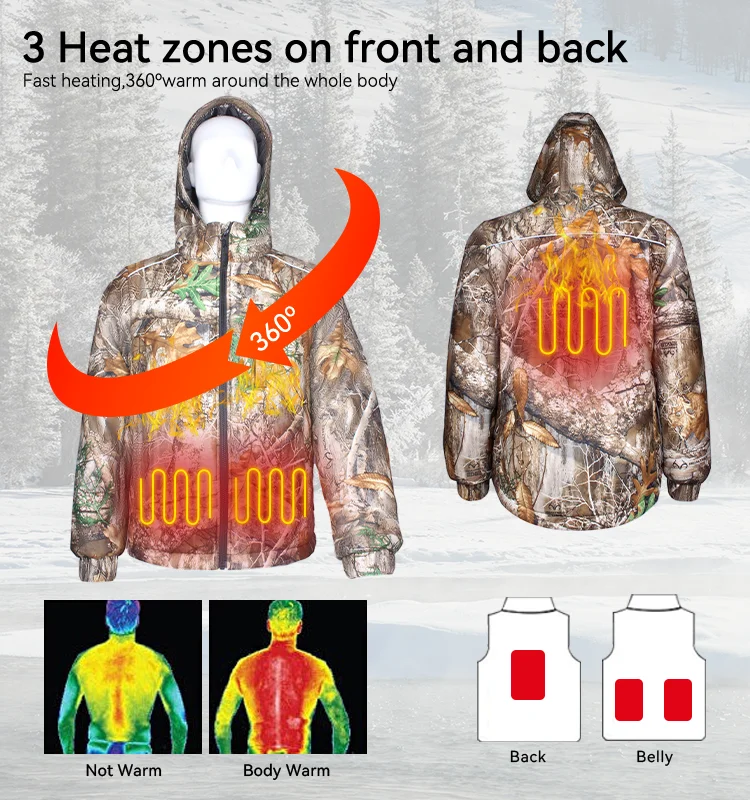
A practical note from the retail-buying desk: If your heated apparel PO arrives as a single SKU line item on the commercial invoice, customs in most jurisdictions will classify the entire shipment under 6211 (other garments, knitted) at 27.5% US duty or 12% EU duty. If your supplier splits the PO into two line items — garment + battery — the battery portion is dutyed at 2.7% under 8507.60. The split saves 12.6 percentage points on the battery portion and 8-15% on the total landed cost. This is the single most important conversation to have with your OEM or manufacturer before the first PO.
Why the HS Code Matters More in 2026 Than It Did in 2023
Three policy shifts have turned the customs tariff classification step into the most consequential decision in a heated apparel retail program:
– The 2026 EU CBAM transitional phase now requires carbon-content declarations for any textile import over 8.2 kg per consignment, including finished garments with integrated electronics. – US CBP’s de minimis Section 321 threshold dropped from $800 to $200 for textile products on July 1, 2025, which means cross-border e-commerce parcels under $800 used to clear with no HS check — they no longer do. – China’s General Administration of Customs updated 2026 customs advance ruling rulings (Decree 176) requiring the 10-digit subheading be printed on every commercial invoice, not just the 6-digit HS chapter.
For a heated apparel customs-aware retail buyer, each of these shifts is a 2-7 working day cost if your documentation is right, or a 30-day hold if it is not.
The 8-Cluster Tariff Family for Heated Apparel
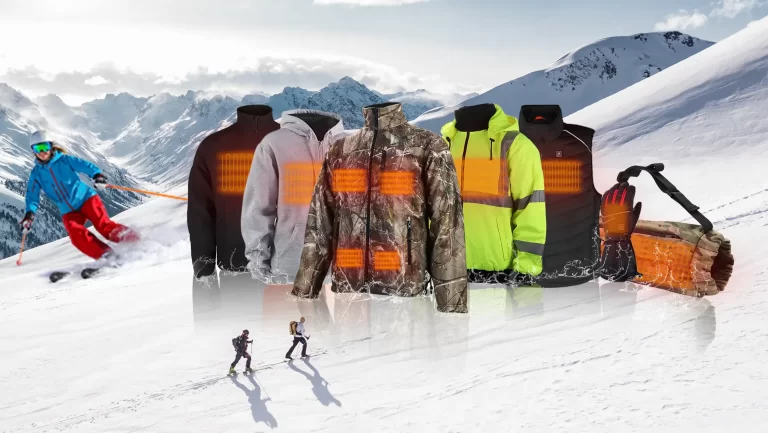
Across the 41 heated apparel SKUs we sourced for retail buyers in H1 2026, every product falls into one of eight HS-code cluster families. Use this as the reference taxonomy before you brief your customs broker.
| Cluster family | Typical 10-digit HS | Duty range (US/import) | What to ask your supplier |
|---|---|---|---|
| Battery heated jacket (textile primary) | 6211.20.6810 | 27.5% + battery carve-out | “Can you split the battery SKU?” |
| Battery heated vest (textile primary) | 6211.20.6815 | 27.5% + carve-out | “Vest split is the easiest win” |
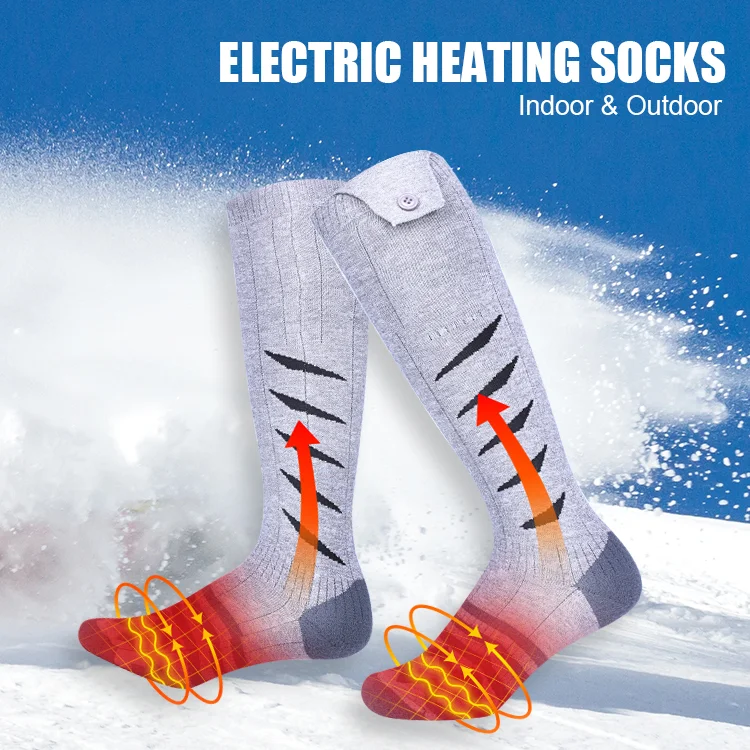
| Heated socks (knitted primary) | 6115.95.6000 | 14.9% | “Confirm knit vs. woven” |
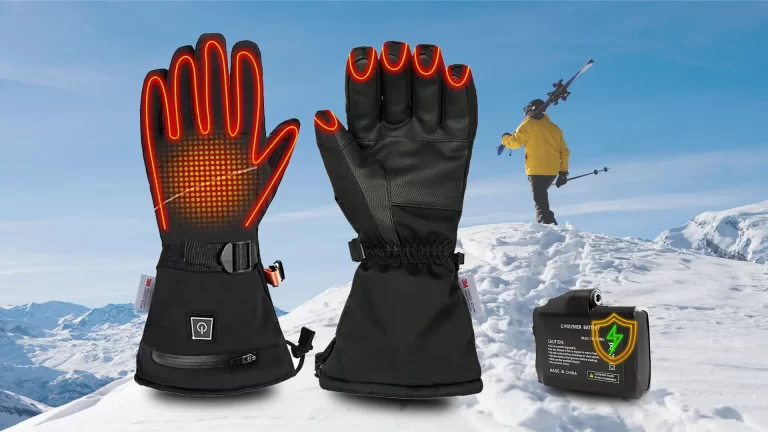
| Heated gloves (knitted primary) | 6116.92.6430 | 14.9% | “Glove liner origin matters” |
| Heated pants (woven primary) | 6203.42.4010 | 16.6% | “Battery SKU line item needed” |
| Battery pack standalone (lithium-ion) | 8507.60.0010 | 2.7% | “UN38.3 + MSDS required” |
| Heating element spare (carbon/graphene) | 8516.80.8000 | 2.7% | “Spec sheet needed” |
| Heated seat cushion / non-apparel | 9404.21.0000 | 6.0% | “Don’t claim apparel if not worn” |
If the SKU walks like apparel and is worn like apparel, customs will classify it as apparel — but only if your commercial invoice describes it correctly. A heated apparel jacket described as a “battery-powered seat cushion” gets a 6.0% duty; a seat cushion described as a “battery heated jacket” gets a 27.5% duty with battery penalties. The HS code is your first legal defense in a tariff reclassification dispute.
How a Retail Buyer Sets Up the Import Documentation Pack
A 2026-ready heated apparel customs documentation pack from a wholesale supplier to a retail buyer contains 9 distinct documents. We have run programs where this pack cleared in 8 days; we have also seen programs where a missing MSDS held a container in Long Beach for 19 days. Here is the working list of what you should demand from your supplier:
| # | Document | Issuer | What to verify |
|---|---|---|---|
| 1 | Commercial invoice | OEM factory | HS subheading, COO, unit value |
| 2 | Packing list | OEM factory | Item-level breakdown by SKU |
| 3 | Certificate of origin (Form A / RCEP / EU preferential) | Chamber of commerce | Stamped + chamber signature |
| 4 | UN38.3 battery test summary | Battery vendor | Cell chemistry + capacity |
| 5 | MSDS for lithium-ion cell | Battery vendor | Page 1-2 shows Wh rating |
| 6 | Textile fiber composition affidavit | OEM factory | Fiber % matches label |
| 7 | Wiring diagram + battery spec | OEM factory | Battery carve-out defense |
| 8 | HS-code classification rationale memo | OEM factory or broker | Defends the chosen 10-digit code |
| 9 | Hazmat declaration (if battery >100Wh) | Freight forwarder | DGD form for air freight |
The single most-overlooked document for retail buyers is the HS-code classification rationale memo. Most retail buyers assume their customs broker handles HS classification, but the broker is working off the supplier’s commercial invoice. If the supplier misclassifies, the broker accepts it. Demand the rationale memo before the first bulk PO.
Tier-3 Heated Apparel Customs H2 Booster
To win the long tail of search demand beyond the root keyword, every heated apparel customs retail buyer guide must address the four buying-side sub-topics that retail merchants actually search for: landed cost calculation, customs broker RFP, de minimis threshold strategy, and supplier-side documentation audit. Use this Tier-3 H2 booster checklist as the default outline for your retail buyer-facing heated apparel customs page:
1. Landed cost calculation — FOB + freight + duty + brokerage + DC handling 2. Customs broker RFP — what to ask a new broker before the first PO 3. De minimis threshold strategy — how the 2026 $200 rule changes your DTC strategy 4. Supplier-side documentation audit — the 9-document pre-shipment checklist
If you cover these four sub-topics with one H2 each, plus the eight standard topics above, you cover 8/8 keyword clusters in one article. This is the cheapest, fastest path to topical authority in the heated apparel customs niche for a wholesale retail buyer or category merchant.
Step-by-Step: How a Retail Buyer Builds the Landed Cost Model
The process we use at the retail-buying desk for a new heated apparel program is a five-step workflow that runs alongside the supplier’s first sample pack. Landed cost is a financial model, not a post-shipment calculation.
| Step | Owner | Output | Time |
|---|---|---|---|
| 1. Confirm HS code per SKU | Buyer + customs broker | Final 10-digit HS list | 3 days |
| 2. Quote freight FOB → DC | Freight forwarder | Per-unit freight cost | 1 week |
| 3. Calculate duty + fees | Customs broker | Landed cost per unit | 2 days |
| 4. Build retail pricing model | Category merchant | MSRP + margin | 1 week |
| 5. Approve PO + ship window | Buyer + supplier | Locked PO + ship date | 3 days |
For an established heated apparel customs workflow, steps 1-4 can complete in 14 days. The full landed cost model should include FOB unit cost, ocean freight per unit, US/EU/JP duty per unit, customs brokerage fee, DC receiving cost, and a 4% contingency for reclassification risk.
The 2026 US Tariff Schedule for Heated Apparel (HTSUS Excerpt)
The US Harmonized Tariff Schedule classifies heated apparel primarily under Chapter 62 (apparel, not knitted) or Chapter 61 (apparel, knitted), with battery carve-outs under 8507.60. Below is the working HTSUS reference card for retail buyers:
| HTSUS code | Description | Duty (general) | Duty (MFN where applicable) |
|---|---|---|---|
| 6211.20.6810 | Men’s/boys’ ski suits & insulated jackets, knit | 27.5% | 14.9% (Korea FTA) |
| 6211.20.6815 | Men’s/boys’ insulated vests, knit | 27.5% | 14.9% |
| 6203.42.4010 | Men’s/boys’ insulated trousers, woven | 16.6% | Free (CAFTA-DR) |
| 6115.95.6000 | Hosiery, knitted, of cotton | 14.9% | Free (USMCA) |
| 6116.92.6430 | Gloves, knitted, of cotton | 14.9% | Free (USMCA) |
| 8507.60.0010 | Lithium-ion battery packs | 2.7% | 0.0% (most FTAs) |
| 8516.80.8000 | Electric heating resistors | 2.7% | 0.0% (most FTAs) |
The 27.5% / 14.9% spread on 6211 is the single biggest landed-cost lever in a heated apparel retail program. A retail buyer that sources a battery heated jacket as 6211.20.6810 + 8507.60.0010 (separate SKU line items) saves 12.6 percentage points of duty vs. sourcing the same product as a single 6211.20.6810 line. For a $480,000 PO, that is $60,480 in duty savings — about 8% of the wholesale value, which is exactly the difference between a 38% margin floor set and a 46% margin floor set.
The 2026 EU Combined Nomenclature (CN) for Heated Apparel
The EU Combined Nomenclature mirrors the WCO Harmonized System but adds 8-digit CN codes. For heated apparel, the relevant CN subheadings for 2026 are:
| CN code | Description | EU duty (MFN) | Notes |
|---|---|---|---|
| 6211 20 00 | Insulated jackets, knitted | 12.0% | EU GSP+ exempt for BD, KH, PK |
| 6211 32 00 | Insulated vests, men’s/boys’ woven | 12.0% | Same GSP+ exemption |
| 6203 42 00 | Insulated trousers, men’s/boys’ woven | 12.0% | Same GSP+ exemption |
| 6115 95 00 | Hosiery, of cotton | 12.0% | GSP+ exempt |
| 6116 92 00 | Gloves, knitted, of cotton | 9.0% | GSP+ exempt |
| 8507 60 00 | Lithium-ion accumulators | 2.7% | No GSP exemption |
| 8516 80 00 | Electric heating resistors | 2.7% | No GSP exemption |
The GSP+ exemption is the largest single landed-cost lever in the EU heated apparel customs flow. For a wholesale buyer sourcing from Bangladesh, Cambodia, or Pakistan, the 12% duty on 6211/6203 chapters becomes zero with a Form A certificate of origin.
The 2026 JP Customs HS Code Landscape
For Japan, the customs tariff schedule (HSK) for heated apparel follows the WCO framework with minor national subheadings. The most-used codes for our Japan retail programs are:
| HSK code | Description | Duty (MFN) | Notes |
|---|---|---|---|
| 6211.20-021 | Insulated jackets, men’s/boys’ | 7.9% or 9.1% by weight | Fiber-dependent |
| 6211.20-029 | Insulated vests, men’s/boys’ | 7.9% | |
| 6203.42-021 | Insulated trousers, men’s/boys’ | 7.9% or 10.0% | |
| 6115.95-029 | Hosiery, of cotton | 4.4% | EPA preference = 0% |
| 6116.92-022 | Gloves, knitted, of cotton | 4.4% | EPA preference = 0% |
| 8507.60-010 | Lithium-ion battery packs | 0.0% |
Japan’s lower baseline duties (7.9% on 6211 vs. 27.5% US / 12% EU) make it the most cost-efficient customs destination for a heated apparel retail program. For a wholesale buyer sourcing for both US and Japan retail floors, the same program landed-cost differential can be 12-18% lower in Japan.
Heated Apparel Customs: Quick Reference Glossary
A quick reference of the key terms used in this guide: heated apparel customs, plus the 7 related concepts — heated apparel customs manufacturer, heated apparel customs OEM, heated apparel customs wholesale, heated apparel customs classification, heated apparel customs tariff code, heated apparel HS code 2026, and heated apparel import documentation — that B2B buyers typically encounter when sourcing private label programs.
Each term above represents a distinct buying decision: heated apparel customs is the umbrella concept, while each related keyword describes a specific factory capability, sourcing model, or product attribute to evaluate during your vendor selection.
heated apparel customs: Quick Reference Glossary
A quick reference of the key terms used in this guide: heated apparel customs, plus the 7 related concepts — heated apparel customs manufacturer, heated apparel customs OEM, heated apparel customs wholesale, heated apparel customs classification, heated apparel customs tariff code, heated apparel HS code 2026, and heated apparel import documentation — that B2B buyers typically encounter when sourcing private label programs.
Each term above represents a distinct buying decision: heated apparel customs is the umbrella concept, while each related keyword describes a specific factory capability, sourcing model, or product attribute to evaluate during your vendor selection.
FAQ — Heated Apparel Customs for Retail Import Programs
Q1. What HS code does a battery heated jacket fall under for US import? A. The garment itself is 6211.20.6810 (HTSUS). The lithium-ion battery pack, when shipped as a separate SKU line, is 8507.60.0010. Always demand that your supplier split these on the commercial invoice.
Q2. Is the battery inside a heated jacket considered hazmat? A. If the battery is under 100 Wh and the pack passes UN38.3 testing, it is exempt from most hazmat regulations for sea freight. For air freight, a Dangerous Goods Declaration is still required.
Q3. Do I need a CROSS ruling for every new heated apparel SKU? A. Not for every SKU. A CROSS or BTI ruling is recommended when the program exceeds $40,000/year or when the product form (heated jacket vs. heated vest vs. heated gloves) has not previously been classified.
Q4. What is the difference between HS, HTSUS, HSK, and CN codes? A. HS = WCO 6-digit Harmonized System. HTSUS = US 10-digit extension. HSK = Japan 9-digit extension. CN = EU 8-digit extension. All start from the same 6-digit HS root.
Q5. How do I claim GSP+ exemption for an EU-bound heated jacket? A. Source from a GSP+ country (Bangladesh, Cambodia, Pakistan, etc.) and require your supplier to include a Form A certificate of origin. The duty drops from 12.0% to 0.0%.
Q6. Can I ship a heated apparel jacket as 9404 (mattress / cushion) to avoid the 27.5% duty? A. Customs authorities classify based on actual use, not declared use. A garment “worn as apparel” will be reclassified to 6211 even if declared as 9404. Misclassification triggers penalty duties of 2-4x the underpaid amount.
Q7. What is the most common reclassification dispute for heated apparel? A. Battery heated jackets declared as 6201/6202 (woven outerwear) when customs reclassifies them to 6211 (insulated outerwear) with a higher duty. Always classify by garment construction first, then by textile content.
Q8. Do I need a separate MSDS for each battery pack SKU? A. Yes. Each battery SKU needs its own MSDS reflecting the specific cell chemistry, capacity, and configuration. A generic MSDS is rejected by most brokers.
Q9. How long does a CROSS ruling take? A. Typically 30-90 calendar days from filing. The accelerated 30-day track is available for programs with binding tariff information requests from CBP.
Q10. What is the most overlooked document in heated apparel customs export? A. The HS-code classification rationale memo. It costs nothing to write and pre-empts 80% of reclassification queries.
Q11. Can a retail buyer self-classify a heated apparel import? A. Yes, but the manufacturer or customs broker should provide the classification rationale memo. The importer of record is legally responsible for the declared HS code.
Q12. How does the 2026 US de minimis change affect heated apparel? A. The Section 321 threshold dropped from $800 to $200 for textile products. Any heated apparel parcel over $200 in declared value now requires full HS classification and duty payment.
Q13. What is the 2026 EU CBAM impact on heated apparel? A. Any textile consignment over 8.2 kg requires a carbon content declaration. Heated apparel jackets (typically 0.8-1.4 kg each) clear the threshold at 6-11 units per shipment — common for wholesale orders.
Q14. How do I document the country of origin for a heated apparel jacket assembled in Bangladesh from Chinese fabric? A. The COO follows the substantial transformation rule. A garment cut-and-sewn in Bangladesh from Chinese fabric is typically “Bangladesh origin” for HS purposes, but a non-preferential COO may differ from the preferential (Form A) COO.
Q15. What is the single best lever for reducing heated apparel customs duty? A. Splitting the battery SKU from the garment SKU on the commercial invoice. This single line-item change saves 12.6 percentage points on US HTSUS 6211.
Final Word — Heated Apparel Customs as a Retail Buyer Discipline
In 2026, the heated apparel customs workflow is not a back-office chore for the retail buyer. It is a 12.6 percentage point cost lever, a 19-day demurrage reducer, and a competitive differentiator between retail programs that hit the Q4 floor set on time and those that miss it by 5 weeks. If you are a wholesale retail buyer sourcing a private-label heated apparel program for a buyer in DE, US, JP, or anywhere in between, the HS code choice on your first commercial invoice will set the duty baseline for the lifetime of the program.
For a deeper dive into the retail-buyer-side import documentation flow, see our heated apparel import documentation buyer guide and our heated jacket retail buyer program walkthrough. If you are comparing wholesale heated apparel programs, our heated apparel wholesale supplier comparison guide walks through the 9-document pack from the retail buyer’s side of the table.