Wholesale Heated Apparel Supply Chain Due Diligence 2026: the Buyer Acceptance Binder
Heated apparel has moved from niche electric product to regulated consumer good, and the regulation lands on the importer of record. A wholesale buyer of heated jackets, heated vests and heated gloves can no longer point at a factory certificate and call the file closed. Their own customers — marketplace compliance teams, retail buying desks, market surveillance authorities — will ask the buyer to evidence the trail behind the factory that made the goods.
This is that file: the buyer acceptance binder, the working name for wholesale heated apparel supply chain due diligence in practice. You assemble it before the deposit goes out, hand it to your compliance lead, and produce it within 48 hours when an authority asks why a specific lot was imported. Six tabs, in a fixed order, because every tab is the input the next one is tested against. The heated apparel supply chain due diligence binder is a defensive document, not a marketing one.
1. Why the buyer is now the one who answers for the factory
Who signed the purchase order is who the regulator calls. Directive (EU) 2024/1760 (Corporate Sustainability Due Diligence), dated 2024-06-13 and applying from 25 July 2024, phases the obligations in as amended by Directive (EU) 2025/794, which postpones several of them to 30 December 2026 and 30 June 2027. Buyers who place their own orders on factories now carry the paper trail their customers will later demand, and the heated apparel supply chain due diligence OEM they contract becomes a record the buyer signs for. Wholesale heated apparel supply chain due diligence is not outsourced to the factory. When a listing is suspended, the buyer answers with the file, and a defective file reads as a seller who cannot describe its own product.
| Instrument | Dated | Applies from | Buyer must hold |
|---|---|---|---|
| Regulation (EU) 2023/988 (General Product Safety Regulation) | 2023-05-10 | 13 December 2024 | Technical file, incident log |
| Regulation (EU) 2023/1542 (Batteries Regulation) | 2023-07-12 | 18 February 2027 | Removability and labelling proof |
| Regulation (EU) 2023/1115 (deforestation-free products) | 2023-05-31 | 30 December 2026 | Geolocation and legality proof |
| Regulation (EU) 2024/3015 (forced labour products ban) | 2024-11-27 | 14 December 2027 | Chain mapping and screening |
| Directive (EU) 2024/1760 (Corporate Sustainability Due Diligence) | 2024-06-13 | 25 July 2024, postponed | Supplier code, grievance channel |
2. The six tabs of the buyer acceptance binder
The binder has six tabs and the order is deliberate: tab one tests people, tab two tests materials, tab three tests the chain, tab four tests the battery, tabs five and six test the paperwork and the people who signed it. The heated apparel supply chain due diligence binder is built in sequence, and wholesale heated apparel supply chain due diligence stops being a claim you repeat and becomes a file you can open on request.
Budget it before you negotiate. A heated apparel supply chain due diligence buyer programme funded only after the deposit is signed always ends up thin, and thin files fail at the first authority request. Choose the heated apparel supply chain due diligence OEM on evidence access, not on unit price.
| Tab | What it proves | Evidence holder |
|---|---|---|
| Tab 1 Forced labour | Tier-1 and tier-2 screening | Factory screening report |
| Tab 2 Origin | Legality and geolocation | Tier-2 supplier records |
| Tab 3 Traceability | Lot-to-component chain | Factory and tier-2 records |
| Tab 4 Battery | Cell origin, removability, labels | Pack maker and cell maker |
| Tabs 5-6 Audit and sign-off | Current audit, named signatory | Buyer and third-party auditor |
The $0.71 per unit compliance reserve equals $3,550 on a 5,000-unit purchase order. Split it the way you track it: $0.31 for screening and origin checks, $0.28 for tier-2 ledger verification, and $0.12 for battery and labelling documentation.
3. Tab one and tab two: forced labour screening and the deforestation-free proof
Regulation (EU) 2024/3015 (forced labour products ban), dated 2024-11-27 and applying from 14 December 2027, makes risk-based screening of the whole chain a question you must be able to answer. Regulation (EU) 2023/1115 (deforestation-free products), dated 2023-05-31, applies from 30 December 2026 for the deforestation-free requirement and expects geolocation for the commodities in scope.
You need neither screen run by your own team, but you do need them run on the right legal entity at a date that has not expired. Treat the heated apparel supply chain due diligence audit file as a perishable good: a screening report older than twelve months is an expired document, not a silent pass. The heated apparel supply chain due diligence buyer who accepts an expired screen has accepted nothing. Ask the heated apparel supply chain due diligence manufacturer for the underlying entity names, and budget $0.28 per unit for tier-2 audit verification cost, which is $1,400 on a 5,000-unit purchase order, recorded against the wholesale heated apparel supply chain due diligence line.
| Evidence item | What it must show | Validity |
|---|---|---|
| Entity screening report | Named entity screened, dated | 12 months |
| Tier-2 mapping | Every sub-supplier, by legal name | 12 months |
| Geolocation coordinates | Plot or origin for textiles | Per shipment |
| Legality statement | Commodity legal at origin | Per shipment |
4. Tab three: the tier-2 traceability ledger a buyer can verify
Tab three is where most binders fail. A factory can evidence its own sewing floor and still hide the fabric mill, the foil supplier and the cell source. The buyer needs a tier-2 traceability ledger an auditor can sample, not a supplier declaration with a logo.
Run the sampling test yourself: pick three finished lot numbers at random and walk backwards from carton to cutting table, mill, foil supplier and cell. If any link stops at a generic label such as “China agent” or “supplier confidential”, the file is incomplete whatever the certificate says. This is where wholesale heated apparel supply chain due diligence traceability turns into a walkable chain instead of a slogan. More on tier mapping in our supply chain coverage.
| Tier | What it proves | Buyer’s sample test |
|---|---|---|
| Tier 0 | Brand and importer of record | Contract, EORI, liability insurance |
| Tier 1 | Factory and battery pack maker | Site audit, production records |
| Tier 2 | Fabric mill, foil, cell source | Named entities, geolocation |
| Tier 3 | Raw material origin | Chain-of-custody documents |
5. Tab four: the battery pack and the buyer’s data cascade
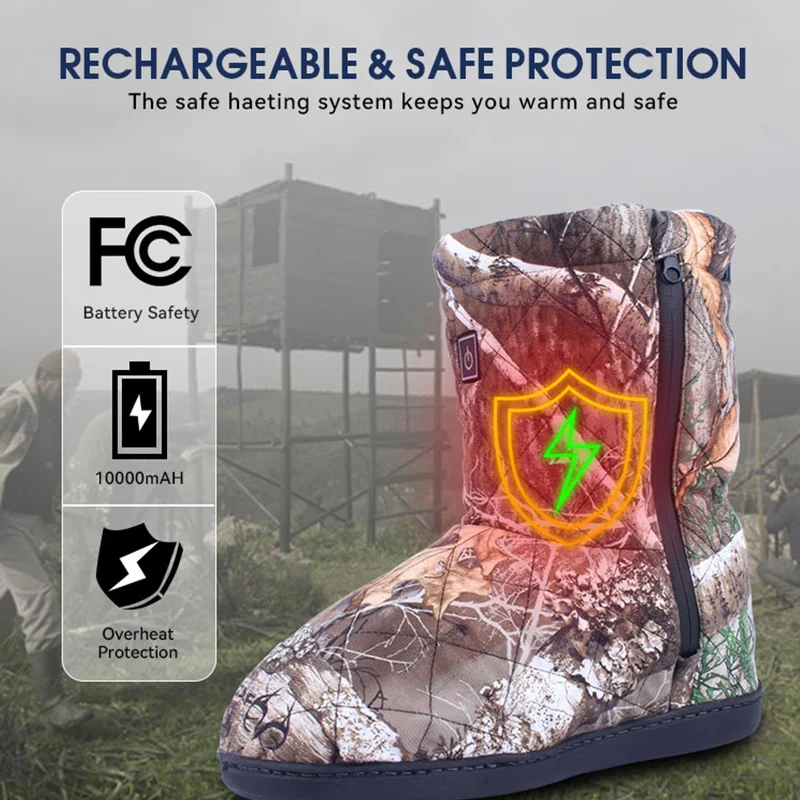
Regulation (EU) 2023/1542 (Batteries Regulation), dated 2023-07-12, sets removability and labelling obligations from 18 February 2027, and it bites heated apparel harder than other categories because the jacket ships with a lithium-ion pack as standard. The buyer inherits a data cascade: cell maker, pack assembler, firmware, charger, and eventually product passport data.
Directive (EU) 2024/825 (empowering consumers for the green transition, replacing Directive 2005/29/EC), dated 2024-02-28 and applying from 26 March 2024, sits on top of that. Any “warmest jacket on the market” claim needs a test method in the file. A heated apparel supply chain due diligence traceability file holding battery chemistry but no claim substantiation is half a file, and the half that fails is the half a retailer audits. The heated apparel supply chain due diligence buyer inherits that gap from the factory without ever seeing it.
| Data item | Source | What the buyer holds |
|---|---|---|
| Cell maker and chemistry | Cell datasheet | Signed declaration, test report |
| Removability design | Pack engineering drawing | Drawing revision number |
| Labelling and QR | Label artwork | Pre-production artwork proof |
| Claim substantiation | Brand test protocol | Report, date, sample size |
6. Tab five and tab six: audits, claims to reject, and what a failed audit costs
Tab five is the current heated apparel supply chain due diligence audit file; tab six is the signature page. Both fail the same way: a buyer accepts a document because a supplier called it good.
Three claims must be rejected in writing, not verbally. “We only audit direct suppliers” leaves the tier-2 blind spot where heated apparel supply chain due diligence traceability actually lives. “Our pack supplier is confidential” treats confidentiality as a legal exception, and the pack maker is still inside your product. “The audit happens annually so it is fine” treats a calendar as coverage, when the audit says nothing about the shipment you are accepting.
Name the evidence you will accept instead, in the contract annex. A failed audit is expensive in time rather than penalty: expect a hold on the deposit, an expedited re-audit and a re-booked freight slot, and expect the heated apparel supply chain due diligence manufacturer relationship to start again from tab one. The heated apparel supply chain due diligence binder needs a written refusal rule, because the heated apparel supply chain due diligence buyer who accepts the verbal version will accept it again next season.
| Question to ask | Signal of an incomplete file |
|---|---|
| Which legal entity owns the cell maker? | Brand names the cell only |
| Which mill dyed the shell fabric? | Answer names your factory |
| When was the last unannounced audit? | Only scheduled visits offered |
| Which tier-2 sites did the auditor visit? | Tier-2 listed as unvisited |
| Can we sample three lot numbers? | Lot-level data refused |
7. The four-gate buyer acceptance map
Gate the whole file. No deposit, no exposure to a consignment you cannot defend. Each gate has a test, an evidence artefact and a fail action, and this is the heated apparel supply chain due diligence buyer discipline that keeps a programme alive through peak season. Wholesale heated apparel supply chain due diligence earns its cost here, at the gate, or nowhere.
Passing all four gates does not guarantee a complete file. The gates catch the four failures that stop consignments — unverified people, unverified origin, unverified chain, unverified product. Everything else is diligence that improves the file rather than releasing the shipment.
| Gate | Test | Fail action |
|---|---|---|
| Gate 1 People | Screening current, tier-2 named | Hold the deposit |
| Gate 2 Origin | Geolocation and legality held | Exclude the lot |
| Gate 3 Chain | Three-lot backward trace | Hold the shipment |
| Gate 4 Product | Battery, labels, claims | Rework labelling |
8. What the buyer acceptance binder costs to hold
Holding the binder is not free, and the honest number is what keeps a heated apparel supply chain due diligence wholesale programme alive when margin tightens. For a first import programme, allow $12,900 one-off binder setup. Then $5,200 per annual refresh, because supplier data ages: audits expire, origin statements are refreshed per shipment, and battery declarations change with every pack revision. The heated apparel supply chain due diligence binder is refreshed on the same cycle.
Add a 2.4% RMA reserve, which is $1,200 on a 5,000-unit order, for returns that trace to a documentation defect rather than a garment defect — a missing battery label, an untraceable lot. The per-unit compliance reserve of $0.71 from tab two is the variable line inside that structure; the fixed line buys the machinery. Treat both as a heated apparel supply chain due diligence buyer cost of goods, not overhead, and the wholesale heated apparel supply chain due diligence reserve as a cost line rather than a tax on margin.
| Cost line | Amount | Basis |
|---|---|---|
| One-off binder setup | $12,900 | First import programme |
| Annual refresh | $5,200 | Per year, per factory |
| Per-unit compliance reserve | $0.71 | $3,550 per 5,000 units |
| RMA reserve | 2.4% | $1,200 per 5,000 units |
9. The 60-day pre-deposit buyer calendar
The binder is assembled in the 60 days before the deposit, not after. The sequence below fits a heated apparel supply chain due diligence wholesale launch without pausing a season, and it is what a buying desk and a compliance lead agree on week one. The heated apparel supply chain due diligence buyer owns the calendar; the factory owns the evidence.
Send the five exposing questions from section six in the first ten days. A supplier that answers all five in writing on day eight is a different supplier from one that answers on day forty, and both answers belong in the file. Wholesale heated apparel supply chain due diligence moves fastest when the questions are asked before tooling is paid for, and the heated apparel supply chain due diligence audit file must be current at shipment, not at contract signature. Every heated apparel supply chain due diligence wholesale buyer should read the same five questions. Seasonal lead times shift, so read our heated apparel industry news before fixing the calendar.
| Day | Action | Output |
|---|---|---|
| Days 1-10 | Issue five exposing questions | Written supplier answers |
| Days 11-20 | Verify screening and geolocation | Tab 1 and tab 2 file |
| Days 21-30 | Trace three sample lots | Tier-2 traceability ledger |
| Days 31-40 | Battery, labels, claim tests | Tab 4 evidence pack |
| Days 41-60 | Sign-off, reserve, deposit | Executed contract annex |
10. Frequently Asked Questions
Who owns due diligence for imported heated apparel?
The importer of record. A factory certificate does not transfer the obligation to you.
Is a factory social compliance certificate enough?
No. It rarely covers tier-2 mills or the battery pack maker in your file.
What is a buyer acceptance binder?
The six-tab file a buyer assembles to evidence and defend the chain behind the goods.
How long does a screening report stay valid?
Treat twelve months as the working limit for buyer-side acceptance purposes.
Does the forced labour ban apply to heated jackets?
Regulation (EU) 2024/3015 applies from 14 December 2027 and covers textiles generally.
Which commodities trigger the deforestation-free rules?
The listed commodities, mainly textiles and leather, not the electronics inside a jacket.
Does the Batteries Regulation affect a heated vest?
Yes. The removability and labelling obligations apply from 18 February 2027.
Can a supplier keep the battery maker confidential?
No. The pack maker must be named for traceability and product passport data.
How much does a buyer acceptance binder cost?
$12,900 one-off setup, then $5,200 per year for refreshes, plus per-unit reserves.
What does the $0.71 per unit buy?
Screening, origin and tier-2 verification, which is $3,550 on a 5,000-unit order.
Can we place a deposit before the file is complete?
Only for a supplier that already passed all four gates in an earlier programme.
What happens if an audit fails after shipment?
Expect a hold, an expedited re-audit and a re-booked freight slot.
Who signs the binder?
A named compliance signatory at the buying company, not the factory alone.
Does the corporate due diligence directive apply to us yet?
Directive (EU) 2024/1760 phases several obligations to 30 December 2026 and 30 June 2027.