Wholesale Heated Apparel Unsold Inventory Scope 2026: the Buyer Acceptance Binder for EU ESPR Annex VII Scope Changes
The EU ESPR Article 25(1) destruction ban on unsold consumer products listed in Annex VII has been in force since 19 July 2026 for large enterprises, and every buyer has now asked suppliers the obvious question: is our product on the list? The less obvious question arrives eighteen months later, when a delegated act changes the answer without changing a word of your purchase order. Article 25(3) lets the Commission amend Annex VII to add new products and to update the entries within product groups so they track changes to the commodity codes in Annex I to Regulation (EEC) No 2658/87. If your supplier’s answer to the scope question is a 2026 document with no version date, you have bought a static answer to a moving question. Heated apparel unsold inventory scope is a supply-chain data question, and the buyer answers it.
What Article 25(3) lets the Commission change, and what it means for a purchase order
Article 25(3) empowers the Commission to adopt delegated acts in accordance with Article 72 in order to amend Annex VII. The two limbs are not equally discussed, but a wholesale buyer cares about both because a purchase order is affected by both.
| Limb | What changes | What it does to a purchase order |
|---|---|---|
| 25(3)(a) | New products are added to Annex VII, in order to take account of the environmental impacts of their destruction | A style you have been buying for two years acquires a destruction ban with no amendment to the contract |
| 25(3)(b) | Entries within product groups are updated, to align them to modifications of commodity codes or descriptions in Annex I to Regulation (EEC) No 2658/87 | The supplier’s code and your customs entry can diverge from the legal reference without either party noticing |
The second limb is the quiet one, and the reason heated apparel unsold inventory scope wholesale is worth putting in a supply agreement. Annex VII states in its opening line that the commodity codes and descriptions are taken from the combined nomenclature as referred to in Article 1(2) of Regulation (EEC) No 2658/87 and as set out in Annex I thereto, in the version in force on 28 June 2024. That date is fixed in the published Annex. It is not a permanent anchor. The Combined Nomenclature is revised every year, and Article 25(3)(b) carries those revisions into the destruction ban.
Article 25(4): why your supplier’s discarded volume data is not confidential
Article 25(4) is the provision that changes what a buyer can ask for. When preparing a delegated act to be adopted under Article 25(3)(a), the Commission shall assess the prevalence and environmental impacts of the destruction of certain unsold consumer products, take into account the information disclosed by economic operators pursuant to Article 24(1), and carry out an impact assessment based on best available evidence and analyses, and on additional studies as necessary. That delegated act shall specify its date of application and, where appropriate, any tiered measures or transitional measures or periods.
| Article 25(4) input | What it means for a wholesale buyer | How to use it |
|---|---|---|
| 25(4)(a) Prevalence and environmental impacts of destruction | Your supplier’s discard volumes are evidence for scope expansion | Ask for volume by product group |
| 25(4)(b) Information disclosed under Article 24(1) | The published disclosure is Commission input | Cross-check your own supplier against the disclosure |
| 25(4)(c) Impact assessment on best available evidence | Independent studies move in both directions | Read the studies before the delegated act |
| Date of application, tiered and transitional measures | A new act can phase in, and a phase-in date is a stocking decision | Calendar the date, not the headline |
The practical consequence for a buyer is that the data a supplier treats as commercially sensitive is data the Commission is required to read when deciding scope. That is why heated apparel unsold inventory scope manufacturer capability and heated apparel unsold inventory scope oem capability are now qualifications in a supplier questionnaire: the supplier must be able to report discard volume by SKU and by destination, because that report decides whether their category enters Annex VII.
The commodity code mapping: where your purchase order and your customs file diverge
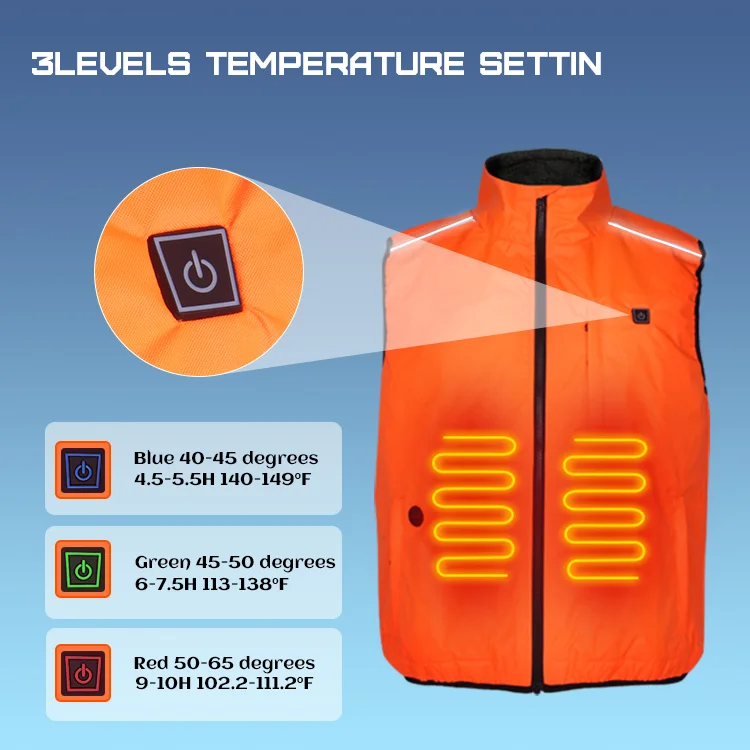
Annex VII is expressed in commodity codes, not product descriptions. Heated apparel sits under heading 61 for knitted or crocheted apparel and heading 62 for apparel not knitted or crocheted, with 4203 for leather or composition leather articles, 6504 and 6505 for headgear, and 6401 to 6405 for footwear.
| CN heading | Annex VII description | Where it lands for a wholesale heated apparel line |
|---|---|---|
| 4203 | Articles of apparel and clothing accessories, of leather or composition leather | Heated outerwear with leather or composite panels |
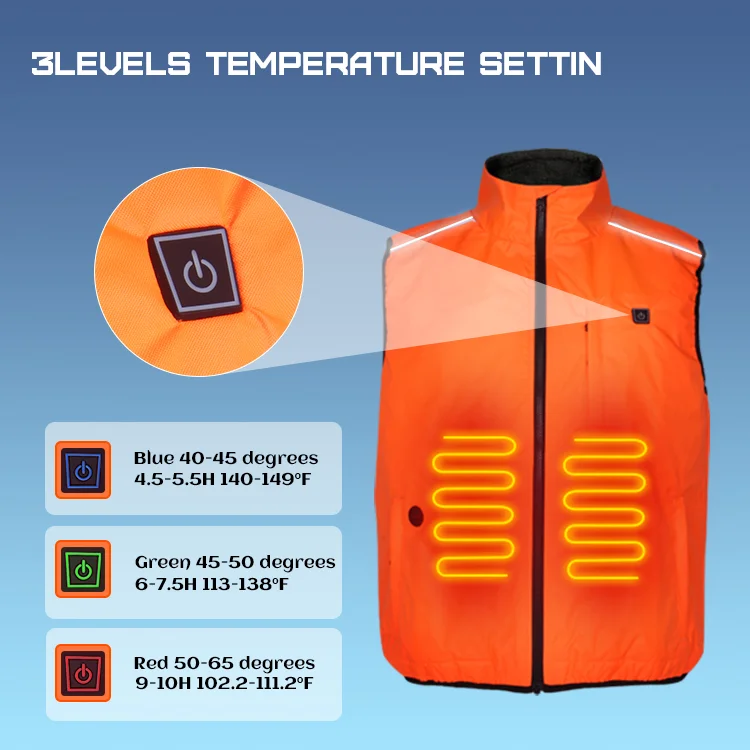
| 61 | Articles of apparel and clothing accessories, knitted or crocheted | Heated vests, hoodies, sweaters, socks |
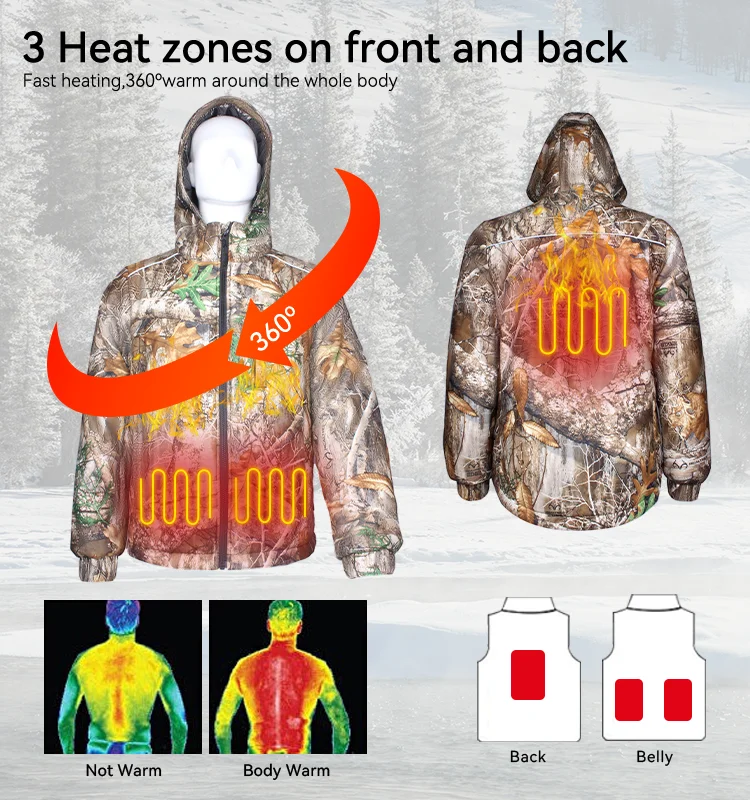
| 62 | Articles of apparel and clothing accessories, not knitted or crocheted | Heated jackets, pants, gloves |
| 6504 | Hats and other headgear, plaited or assembled from strips of any material | Assembled heated headwear |
| 6505 | Hats and other headgear, knitted or crocheted, or of lace, felt or other textile fabric | Heated beanies |
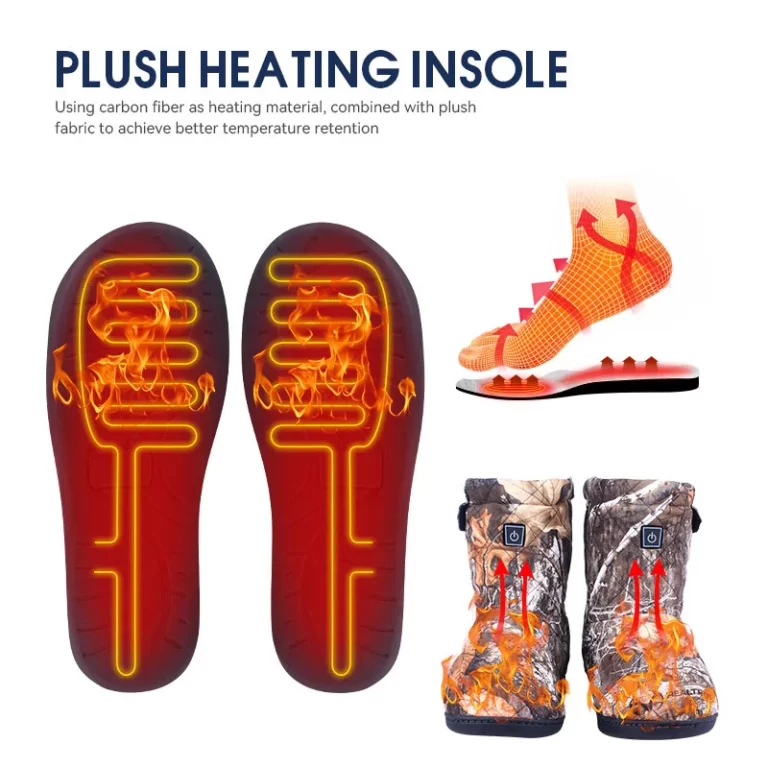
| 6401 to 6405 | Waterproof and other footwear with outer soles of rubber, plastics, leather, composition leather or textile materials | Heated footwear and battery heated insoles |
Three things go wrong at the boundary between a supplier’s ERP and a buyer’s compliance file, and each is invisible until it is expensive.
First, the supplier mapped the SKU in 2026 with no version date, so it cannot be re-verified against a revised Combined Nomenclature. Second, the supplier’s style code and the buyer’s customs entry have drifted apart, so neither file mirrors the other. Third, a heated apparel accessory classified under a heading nobody reviewed sits outside the Annex today and can be swept in when a product group is added under Article 25(3)(a).
The buyer-side control is one reconciled spreadsheet, agreed with the supplier yearly: SKU, supplier CN code, buyer CN code, Annex VII heading, Combined Nomenclature version date, assessment date, reviewer. If the two CN codes on a line differ, the line is unresolved, and unresolved lines should be held from the next season’s buy rather than carried.
Article 25(5) derogations: seven grounds and the scope question that comes before them
A derogation matters only if the product is in scope, and buyers routinely accept a derogation argument for a product that was never in Annex VII. Article 25(5) requires the Commission to adopt delegated acts in accordance with Article 72 to supplement this Regulation by setting out derogations from the prohibition of destruction of unsold consumer products listed in Annex VII, where appropriate, for any of seven reasons.
| Ground | Reason as listed in Article 25(5) | Document a buyer should demand |
|---|---|---|
| (a) | Health, hygiene and safety reasons | Contamination record and disposal instruction |
| (b) | Damage caused by handling or detected after return, not repairable cost-effectively | Damage photo and repair cost estimate |
| (c) | Unfitness for the intended purpose, taking into account Union and national law and technical standards | Failed test report with the standard cited |
| (d) | Non-acceptance of products offered for donation | Donation refusal letter from the charity |
| (e) | Unsuitability for preparing for reuse or remanufacturing | Rework rejection note with the failure mode |
| (f) | Unsaleability due to infringement of intellectual property rights, including counterfeit products | Trademark holder or platform notice |
| (g) | Destruction is the option with the least negative environmental impacts | Comparative route assessment |
| Question | In scope | Out of scope |
|---|---|---|
| May it be destroyed? | Only under an Article 25(5) derogation | No Annex VII prohibition applies |
| What binds the seller | Article 25 prohibition, Article 24 disclosure, Article 23 prevention | Article 23 prevention and national waste law |
| Evidence the buyer must hold | Derogation decision record plus outcome | Article 23 prevention measures and route records |
Ground (g) fails most often in practice, because it is a comparative test answered by asking what happened to the reuse alternatives. A supplier who cannot produce a record of the reuse attempt cannot satisfy ground (g), and so cannot lawfully destroy an in-scope heated jacket.
Article 22 and the SME layers: three different compliance dates to plan around

The prohibition in Article 25(1) applies from 19 July 2026 and does not apply to micro and small enterprises; it applies to medium-sized enterprises from 19 July 2030. The Article 24(1) disclosure obligation carries the same layering and dates. A buyer with a mixed supplier base is managing three different compliance clocks at once.
| Obligation | Micro and small | Medium | Large |
|---|---|---|---|
| Article 25(1) destruction ban | Not applicable | From 19 July 2030 | From 19 July 2026 |
| Article 24(1) disclosure | Not applicable | From 19 July 2030 | From 19 July 2026 |
| Article 23 prevention principle | Applies | Applies | Applies |
| Article 22 support access | Priority under Article 22 | Available | Available |
Article 22 obliges the Commission to ensure initiatives helping SMEs, in particular micro-enterprises, integrate environmental sustainability into their value chain, to accompany delegated acts with digital tools and guidelines covering SME specificities where appropriate, and to require Member States to help SMEs comply through one-stop shops, financial support, access to finance, training, and organisational and technical assistance.
For a wholesale buyer this is a sourcing strategy input, not a legal one. Small factories are most exposed to a delegated act landing without warning, and Article 22 is the channel through which they are meant to get support. A buyer who never asks how a supplier uses that support carries concentration risk on its smallest suppliers.
Second-hand and remanufactured stock: the Article 2 boundary a buyer must police
Recital 17 states that second-hand products, in particular products undergoing refurbishment or repair, originating within the Union are not new products and can circulate in the internal market without needing to comply with delegated acts setting ecodesign requirements that have entered into force after their placing on the market. It then states the boundary: however, remanufactured products are considered new products and will be subject to ecodesign requirements if they fall within the scope of a delegated act.
Article 2(16) defines remanufacturing as actions through which a new product is produced from objects that are waste, products or components and through which at least one change substantially affects the safety, performance, purpose or type of the product. A battery replaced in a used heated vest is a repair and the vest stays second-hand. A vest with a new heating element, a new battery management system and a new shell, where those changes substantially affect safety or performance, is remanufactured and is a new product.
| Stock route | Legal status under the ESPR | What the buyer must verify |
|---|---|---|
| Unsold first-hand stock never placed on the market | Undiscarded product, Article 24 and Article 25 apply | Route to reuse or recycling, no destruction |
| Second-hand product refurbished or repaired, originating within the Union | Not a new product | Union origin evidence |
| Remanufactured product | New product | Ecodesign applicability if a delegated act covers it |
| Product originating outside the Union | Outside the Union-origin statement in Recital 17 | Importer obligations on entry |
A buyer selling through the second-hand and refurbished channel needs this rule in the supplier agreement, because the warranty and the ecodesign position of the two routes differ.
The buyer acceptance binder: nine checks, one worksheet
One-off build cost for the complete buyer acceptance binder, covering the reconciled CN code worksheet, the Annex VII heading watch list, the Article 24(1) disclosure cross-check, the derogation evidence worksheet, the second-hand and remanufacturing classification rule, the SME compliance-date register, the delegated act monitoring log and the claim-rejection script, is $8,600. The annual refresh, the code reconciliation plus the delegated act watch, is $3,400 per year. The recurring per-unit cost of holding this data at the receiving end, across a 5,000-unit order, is $0.66 per unit, which is $3,300.
| Check | What is verified | Rejection trigger |
|---|---|---|
| 1 | SKU to CN code mapping reconciled between buyer and supplier | Codes differ on any line |
| 2 | Combined Nomenclature version date present on the mapping | Mapping has no version date |
| 3 | Annex VII heading identified for every SKU | Heading not stated |
| 4 | Article 25(5) derogation evidence file for any destroyed stock | No record for a destroyed in-scope line |
| 5 | Article 24(1) disclosure visible and consistent with your own data | Supplier has no disclosure page |
| 6 | Second-hand versus remanufactured classification rule acknowledged | Supplier does not classify stock routes |
| 7 | SME or large status stated, with the applicable date | Size status unknown |
| 8 | Delegated act monitoring log with a named owner | No one watches the scope list |
| 9 | Written rejection of three blanket scope claims | Supplier asserts scope permanence |
Three claims to write into the purchase order as rejected
The first is that our product is not technical apparel so Article 25 does not apply. There is no technical garment exemption; the test is the commodity code and the heading.
The second is that our Annex VII position was confirmed in 2026 so it is confirmed. Article 25(3)(b) couples the entries to the Combined Nomenclature, which is revised, so a 2026 mapping is a dated document, not a current one.
The third is that the disclosure is only a reporting obligation and does not affect scope. Article 25(4)(b) requires the Commission to take the information disclosed under Article 24(1) into account when adding products to Annex VII.
FAQ
When does the Article 25(1) destruction ban apply?
From 19 July 2026 for large enterprises, and from 19 July 2030 for medium-sized enterprises.
Are micro and small enterprises exempt?
Yes, the prohibition does not apply to micro and small enterprises.
Can new products be added to Annex VII after entry into force?
Yes, Article 25(3)(a) allows the Commission to add new products by delegated act.
Can the entries change without a new product?
Yes, Article 25(3)(b) allows entries to be updated to align with commodity code modifications in Annex I to Regulation (EEC) No 2658/87.
Which headings cover heated apparel?
Heading 61 for knitted or crocheted apparel, heading 62 for apparel not knitted or crocheted, plus 4203, 6504, 6505 and footwear 6401 to 6405.
Does the Article 24(1) disclosure influence scope decisions?
Yes, Article 25(4)(b) requires the Commission to take that information into account when adding products.
How many derogation grounds exist?
Seven, in Article 25(5)(a) to (g), covering health and safety, handling damage, unfitness, donation refusal, unsuitability for reuse, intellectual property, and least negative environmental impact.
What is a remanufactured product?
A new product produced from waste, products or components where at least one change substantially affects the safety, performance, purpose or type of the product.
Is a refurbished second-hand heated vest a new product?
Not when it originates within the Union and undergoes refurbishment or repair, but a remanufactured product is treated as new.
What still applies to a product outside Annex VII?
Article 23, the general principle of prevention of destruction, and national waste law.
When is consolidated public information published?
By 19 July 2027, and every 36 months thereafter.
What does the seller need to have on file?
A versioned commodity code mapping, a named owner for the scope watch, and derogation records for anything destroyed.
What to ask us
Send us your current supplier list and we will reconcile every SKU to its Combined Nomenclature code, flag every line that lands inside the Annex VII headings, mark the lines where a revised code or a delegated act would change the answer, and give you the cost of closing the gaps. If you want the nine-check buyer acceptance binder built from scratch, quote the $8,600 build, the $3,400 annual refresh and the $0.66 per unit receiving cost, and we will start from your next buying cycle. Our heated apparel industry news set out the code-level detail behind the routes, and the wider reference set in our supply chain category covers how the scope watch fits a normal buying calendar.