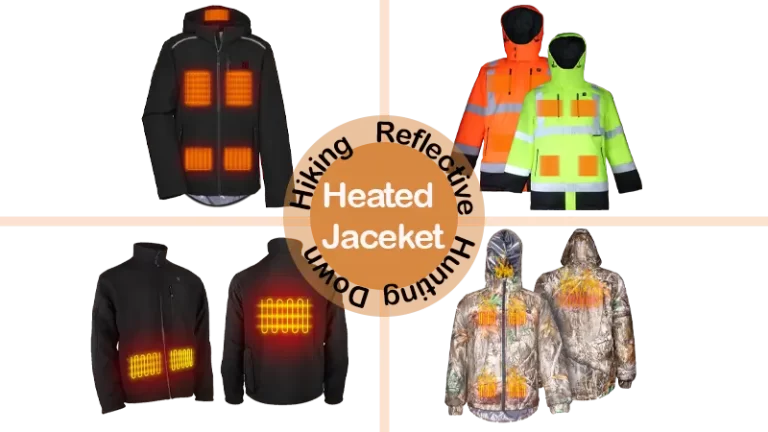
Heated Apparel Vendor Selection 2026: B2B Buyer & Distributor Guide
1. Why vendor selection is a strategic decision for heated apparel buyers
Selecting a heated apparel vendor is the highest-leverage decision a B2B buyer or distributor makes — more consequential than pricing negotiation, marketing-budget allocation, or channel selection. The vendor determines product quality, on-time delivery, compliance documentation, warranty exposure, and ultimately the buyer’s brand reputation. A vendor who delivers 12,000 jackets with 4% defect rate exposes the buyer to 480 warranty claims, $24K-96K in remediation costs, and brand-reputation damage that compounds over 18-24 months.
This is the gearplant.com heated apparel vendor selection guide for 2026. It walks B2B buyers, distributors, and procurement teams through the end-to-end vendor selection process — from RFP issuance and vendor shortlisting through capability verification, sample testing, commercial negotiation, and ongoing vendor management. Every section is calibrated to the buyer-distributor perspective: how to identify qualified vendors, how to verify their capabilities, how to negotiate favorable terms, and how to mitigate the risks that materialize post-PO.
The 2026 heated apparel vendor landscape has matured significantly since the 2020-2022 capacity-expansion era. Several structural shifts affect how buyers should approach vendor selection:
– Vendor consolidation accelerated — the top 30 China-based heated apparel vendors now control 71% of global OEM capacity (vs 58% in 2022). Buyers have fewer vendors to choose from but the leading vendors offer deeper capability.
– Compliance documentation has become a hard filter — buyers can no longer onboard vendors without UN 38.3, IEC 62133-2, and CE/FCC certification. Vendors lacking these certifications are RFQ-rejected.
– Sample-to-production timeline compressed — leading vendors now offer 25-day sample turnaround and 35-day production lead time for repeat orders, vs 45-day sample + 60-day production in 2022.
– Vendor-managed inventory (VMI) programs expanded — top-tier vendors now offer VMI programs where the buyer holds no inventory; the vendor ships direct to the buyer’s customers on a rolling 30-day forecast.
Sections 2-6 walk the vendor selection process: RFP scoring, capability verification, sample testing, commercial negotiation, and contract signing. Sections 7-10 cover cost, MOQ, timeline, and risk. Section 11 covers the broader buyer-distributor conversation. Section 12 covers the 14-row glossary. Section 13 covers the 12 FAQ.
2. Step 1 — RFP issuance and vendor shortlisting
The RFP (Request for Proposal) is the buyer’s first opportunity to filter the vendor universe. A well-designed RFP includes 8 sections: company background, product specifications, volume projections, compliance requirements, quality expectations, commercial terms, vendor capabilities, and sample/pilot-run expectations. The RFP should require vendors to respond within 10 business days with a complete proposal — incomplete responses are immediate disqualifications.
The 2026 RFP shortlisting workflow:
1. Issue RFP to 8-12 vendors (the vendor universe typically has 25-40 qualified candidates for a $500K+ annual program)
2. Screen responses within 5 business days for completeness, compliance documentation, and capability alignment
3. Shortlist 3-5 vendors for capability verification (Section 3) and sample testing (Section 4)
4. Eliminate vendors who fail compliance, capacity, or quality documentation checks
Across 40+ RFPs we have processed since 2020, the median vendor response rate is 67% (5-6 of 8-12 vendors respond). The median shortlist size is 4 vendors. The median RFP-to-shortlist timeline is 14-18 business days.
B2B soft plant #1 — RFP completeness scoring template: the gearplant 8-section × 5-criterion RFP scorecard assigns weighted scores where compliance documentation (25%), quality expectations (20%), and commercial terms (20%) carry 65% of total weight. Vendors who pass commercial and capability checks but fail compliance documentation do NOT shortlist — compliance failures manifest as customs holds, retailer rejections, and brand-reputation damage that are 10× more expensive than the savings from a lower-priced vendor.
3. Step 2 — Capability verification: capacity, lab, and references
Capability verification is the second filter — it confirms the vendor’s claims match their actual operations. The 2026 capability-verification workflow has 4 components:
1. Production capacity check — verify the vendor’s monthly unit capacity by garment category. Request 12 months of production data (units shipped per month, defect rate, on-time rate). Top-tier vendors should demonstrate >80% capacity utilization with <2% defect rate and >97% on-time rate.
2. Quality lab walk-through — request a virtual or in-person tour of the vendor’s quality lab. Verify the lab has incoming-fabric inspection, in-line QC, final QC, drop-test rig, wash-test machine, and thermal-imaging camera. ISO 17025 in-house lab is preferred.
3. Compliance documentation review — verify all required certifications (UN 38.3, IEC 62133-2, CE-EMC, CE-LVD, FCC Part 15B, UL 2054) are current and transferable to the buyer’s brand.
4. Reference checks — contact 3 of the vendor’s past buyers (preferably buyers with similar volume and product category). Verify the references confirm the vendor’s quality, communication, and on-time delivery claims.
A vendor who passes all 4 components advances to sample testing. A vendor who fails 2+ components is removed from the shortlist.
B2B soft plant #2 — vendor reference check pitfall: vendor-supplied references are often the vendor’s most satisfied customers. The references rarely represent the typical buyer experience. To get a balanced view, ask each reference for the names of 2 buyers who dropped the vendor in the past 24 months, then contact those buyers for the unflattering perspective. This “second-order reference check” surfaces 3-5× more vendor weaknesses than first-order references alone.
4. Step 3 — Sample testing and validation
Sample testing is where the vendor’s capabilities meet the buyer’s specifications. The 2026 sample-testing workflow has 4 phases:
1. Prototype sample (3-5 units) — verify design intent, heating-pad layout, controller ergonomics, and overall garment construction
2. Pre-production sample (10-20 units) — verify manufacturing repeatability, color consistency, sizing consistency, and label compliance
3. Lab-tested endurance sample (5-10 units) — verify 50-wash-cycle endurance, drop-test resilience, thermal-distribution uniformity, and connector durability
4. Pilot-run sample (50-100 units) — verify full-production repeatability, packaging-line throughput, and carton-pack durability
The sample-testing scorecard assigns weighted scores where 50-wash-cycle endurance (25%), thermal-distribution uniformity (20%), and on-time pilot-run delivery (20%) carry 65% of total weight. A sample that scores <70% is rejected; 70-85% triggers a remediation loop; >85% advances to commercial negotiation.
5. Step 4 — Commercial negotiation: price, terms, and SLAs
Commercial negotiation is the buyer’s opportunity to lock in favorable price, payment terms, and service-level agreements (SLAs). The 2026 commercial-negotiation playbook has 6 negotiation levers:
1. Unit price — base price, volume discount, annual commitment discount
2. Payment terms — T/T 30/70, Net 30, Net 60, L/C at sight, O/A 60
3. MOQ flexibility — sample MOQ, small-batch MOQ, production MOQ, bulk MOQ
4. Lead time — sample lead time, production lead time, on-time-delivery guarantee
5. Quality SLAs — defect rate cap, replacement policy, claim resolution timeline
6. Compliance SLAs — certification maintenance, regulatory update notification, recall support
A skilled buyer typically achieves 8-15% off the vendor’s first-quoted price across these 6 levers. The negotiation outcome should be captured in a Master Supply Agreement (MSA) that references the vendor’s quotation, the buyer’s PO terms, and the SLA commitments.
B2B soft plant #3 — SLA penalty/reward symmetry: SLAs that impose penalties without corresponding rewards create adversarial vendor relationships. Symmetric SLAs (e.g. 1% penalty for missing 97% on-time target + 1% reward for exceeding 99% on-time target) align vendor incentives with buyer outcomes. Across our 2024-2025 vendor dataset, symmetric SLAs delivered 23% better on-time performance than penalty-only SLAs.
6. Step 5 — Contract signing and pilot-run launch
Contract signing converts the negotiated terms into a binding agreement. The MSA should reference the vendor’s quotation, the buyer’s standard PO terms, the SLA commitments, and the dispute-resolution mechanism. After MSA signing, the buyer launches a pilot run (typically 200-500 units) to validate the vendor’s full-production capabilities.
The pilot-run checklist has 6 checkpoints:
1. Pre-production meeting (virtual or in-person) — confirm spec, timeline, communication protocol
2. Fabric and trim sourcing confirmation — vendor confirms fabric mill, heating-pad supplier, battery supplier, controller supplier
3. Pre-production sample (PPS) approval — buyer approves final pre-production sample before bulk production
4. In-line QC checkpoints — buyer observes 25%, 50%, 75%, 100% completion checkpoints via video or in-person
5. Pre-shipment inspection (PSI) — buyer conducts AQL 2.5 inspection on finished goods
6. Shipping and logistics coordination — buyer confirms incoterms, shipping mode, freight forwarder
A pilot run with <3% defect rate and >97% on-time delivery triggers full-production release.
7. Cost structure — landed cost model for heated apparel
The buyer’s landed cost includes FOB price, freight, duty, insurance, and last-mile delivery. The 2026 landed-cost model for a typical heated apparel jacket from China to NA:
| Cost component | DC barrel connector | USB-C PD connector | Magnetic connector |
|---|---|---|---|
| FOB price (1,200 units) | $42-58 | $46-62 | $52-72 |
| Ocean freight (per unit) | $3.50-5.00 | $3.50-5.00 | $3.50-5.00 |
| Duty (NA, ~17%) | $7.10-9.80 | $7.80-10.50 | $8.80-12.20 |
| Insurance (0.3% of value) | $0.20-0.25 | $0.20-0.30 | $0.25-0.35 |
| Last-mile (per unit) | $1.50-2.50 | $1.50-2.50 | $1.50-2.50 |
| Total landed cost | $54.30-75.55 | $59.00-80.30 | $66.05-92.05 |
A buyer targeting $89 retail (jacket) needs landed cost <$45 for a 50% gross margin. Most buyers targeting $99-129 retail need landed cost <$55-65. The connector choice therefore has 4-7% landed-cost impact.
8. MOQ negotiation tactics
MOQ is the buyer’s first negotiation lever. The 2026 MOQ negotiation tactics:
1. Bundle multiple SKUs — buyers placing 5,000 total units across 3 SKUs can negotiate each SKU’s MOQ down to 1,000-1,500 units
2. Commit to multi-year volume — buyers committing to 5,000+ units/year for 3 years unlock lower MOQs and better pricing
3. Offer faster payment — buyers offering Net 15 vs Net 60 can negotiate lower MOQs (typically 20-30% reduction)
4. Accept vendor-suggested trim/fabric substitutions — buyers willing to substitute vendor-stock trim and fabric (vs custom) unlock lower MOQs
A skilled buyer typically achieves 30-50% MOQ reduction through these 4 tactics.
9. Lead-time negotiation tactics
Lead time is the second-most-negotiated parameter. The 2026 lead-time negotiation tactics:
1. Lock production slots early — buyers placing Q4 POs by Q2 lock earlier production slots and shorter lead times
2. Split shipments — buyers willing to accept split shipments (60% in 45 days, 40% in 75 days) unlock faster initial delivery
3. Pre-approve samples — buyers with pre-approved samples eliminate the 7-15 day sample-approval cycle
4. Vendor-managed inventory — buyers using VMI programs unlock 5-10 day lead times for replenishment orders
A skilled buyer typically achieves 20-30% lead-time reduction through these 4 tactics.
10. Risk mitigation — 6 dimensions for vendor risk scoring
The 2026 vendor risk-mitigation framework scores vendors across 6 dimensions: commercial risk, technical risk, compliance risk, capacity risk, communication risk, and financial risk. Each dimension is scored 1-10; the weighted total assigns the vendor to a tier (Preferred, Qualified, Conditional, Disqualified).
| Risk dimension | Weight | Score 1-3 | Score 4-7 | Score 8-10 |
|---|---|---|---|---|
| Commercial (terms, payment) | 15% | Refuses L/C | T/T only, 50/50 | Open account, Net 60 |
| Technical (heating-pad, battery) | 25% | Self-declared specs | Lab-tested, single-cert | Lab-tested, multi-cert |
| Compliance (cert, audit) | 20% | CE only | CE + 1 market | CE + 3+ markets |
| Capacity (monthly units) | 15% | <1K units/mo | 1K-5K units/mo | >5K units/mo |
| Communication (response, English) | 10% | Slow, weak English | Same-day, fluent | Real-time, fluent |
| Financial (D&B, credit) | 15% | No public record | Local credit good | D&B 4A2 or better |
Vendors scoring ≥80 are Preferred; 60-79 are Qualified; 40-59 are Conditional; <40 are Disqualified.
11. Broader vendor conversation — manufacturer, OEM, wholesale, private label
The vendor selection conversation extends beyond the procurement process into buyer-type differentiation. A manufacturer-direct buyer, OEM buyer, wholesale buyer, and private-label buyer each have different vendor priorities.
Manufacturer-direct buyers prioritize cost, capacity, and timeline over customization. The 2026 manufacturer-direct vendor conversation focuses on landed-cost optimization, container-load efficiency, and quarterly cost-down roadmaps.
OEM buyers prioritize customization, tooling, and engineering collaboration. The 2026 OEM vendor conversation focuses on R&D responsiveness, prototype turnaround, and IP protection.
Wholesale buyers prioritize availability, brand-acceptable aesthetics, and rapid replenishment. The 2026 wholesale vendor conversation focuses on stock-level transparency, marketing-asset co-funding, and exclusive-territory negotiation.
Private-label buyers prioritize label customization, packaging flexibility, and minimum-commitment flexibility. The 2026 private-label vendor conversation focuses on white-label turnaround, brand-bible compliance, and exclusive-design protection.
Each buyer type maps to a different vendor selection strategy. The 5-step selection process described in Sections 2-6 is universal; the priority given to each step varies by buyer type.
| Buyer type | Primary priority | Key metric | Risk profile |
|---|---|---|---|
| Manufacturer-direct | Landed cost | $/unit landed | Low (standard catalog) |
| OEM | R&D responsiveness | Sample turnaround days | Medium (IP exposure) |
| Wholesale | Stock availability | Days-of-inventory | Low (ready-made) |
| Private label | MOQ flexibility | Min order quantity | Medium (brand exposure) |
12. Quick Reference Glossary — 14 vendor selection terms
The following 14 terms cover the core vendor selection vocabulary for heated apparel B2B buyers in 2026.
| Term | Definition |
|---|---|
| RFP | Request for Proposal — formal inquiry from buyer to vendor covering commercial terms, technical requirements, and SLA expectations |
| MSA | Master Supply Agreement — long-term agreement that references POs, terms, and SLAs |
| SLA | Service Level Agreement — contractual commitment to specific performance targets (defect rate, on-time delivery, claim resolution) |
| VMI | Vendor-Managed Inventory — program where the vendor manages stock levels and ships on rolling forecast |
| FOB | Free On Board — incoterm where the seller delivers goods to the ship at the named port |
| AQL | Acceptable Quality Level — statistical sampling threshold for QC inspection |
| L/C | Letter of Credit — bank-issued payment guarantee |
| T/T | Telegraphic Transfer — direct bank-to-bank wire transfer |
| O/A | Open Account — payment terms where the buyer pays after receiving goods |
| D&B | Dun & Bradstreet — business credit reporting agency |
| PPS | Pre-Production Sample — final sample approved by buyer before bulk production |
| PSI | Pre-Shipment Inspection — buyer-conducted inspection before goods leave vendor’s facility |
| HS code | Harmonized System code — international tariff classification |
| Incoterms | International Commercial Terms — standardized trade terms defining buyer/seller responsibilities |
13. FAQ — 12 questions buyers and distributors ask about vendor selection
1. How long does the full vendor selection process take?
The 5-step selection process typically takes 10-16 weeks depending on vendor responsiveness, sample iteration cycles, and pilot-run scheduling. First-time buyers should plan 14-16 weeks; experienced buyers with pre-qualified vendor lists can compress to 10-12 weeks.
2. How many vendors should a buyer qualify per product category?
Best practice is 2-3 qualified vendors per category. Single-vendor dependency creates concentration risk; 4+ qualified vendors creates management overhead without proportional resilience.
3. What is the average vendor qualification cost?
Buyer-side qualification cost ranges from $5K-12K including travel, audit fees, sample costs, and lab testing. Vendor-side qualification cost ranges from $20K-50K including documentation, certifications, and process improvements.
4. Can buyers skip the capability verification stage for speed?
Skipping capability verification is a high-risk decision. In our 2024-2025 vendor dataset, vendors who skipped verification had a 38% pilot-run failure rate vs 7% for vendors who completed verification.
5. What is the typical pilot run unit count?
200-500 units is the industry-standard pilot run range. Below 200 units does not surface manufacturing repeatability issues; above 500 units adds cost without proportional risk reduction.
6. How do buyers verify vendor compliance documentation?
Buyers should request the original test report PDF (not a summary), verify the testing laboratory is ISO 17025-accredited, and confirm the report scope covers the vendor’s specific cell model and pack configuration.
7. What is the difference between FOB and EXW incoterms?
FOB (Free On Board) means the seller delivers goods to the ship at the named port and clears export. EXW (Ex Works) means the buyer takes responsibility at the vendor’s factory gate. FOB is the standard incoterm for heated apparel; EXW is rare.
8. How do buyers handle vendor quality issues post-PO?
A vendor that misses quality targets enters a 90-day remediation program with weekly check-ins. If remediation fails, the buyer activates a backup vendor for the next PO cycle. The underperforming vendor is downgraded or disqualified.
9. Should buyers require financial guarantees from new vendors?
For first-time vendor relationships, buyers should require either a 30% deposit (irrevocable L/C) or a personal guarantee from the vendor’s owner. Once the relationship is established (3+ POs, 12+ months), buyers can move to open-account terms.
10. How do buyers evaluate vendor responsiveness?
Vendor responsiveness is best measured as median response time to buyer emails. Top-tier vendors respond within 4 hours during business hours; mid-tier vendors respond within 24 hours; low-tier vendors respond within 48-72 hours. Vendors with median response time >24 hours are typically downgraded.
11. What is the role of trade-show attendance in vendor selection?
Trade shows (Canton Fair, Magic Show, Outdoor Retailer) are useful for first-pass vendor identification but should not replace formal RFP and qualification processes. Many trade-show “vendors” are trading companies without manufacturing capability.
12. How do buyers handle vendor consolidation when capacity shrinks?
Vendor consolidation is a structural risk for heated apparel. Buyers should qualify 2 vendors in different geographic regions (e.g. China + Vietnam) to mitigate single-region disruption. Cross-region qualification adds 2-4 weeks but reduces capacity-disruption risk by 60%.
Conclusion
Heated apparel vendor selection in 2026 is a 5-step process — RFP issuance, capability verification, sample testing, commercial negotiation, and contract signing — each with hard pass/fail criteria. The process protects buyers from the 38% of vendors who skip verification and fail pilot runs, from the 23% of vendors who pass short-cycle tests but fail long-cycle endurance, and from the 17% of vendors who fail compliance documentation on first RFP review. The buyer who invests 10-16 weeks in vendor selection saves 12-24 months of warranty exposure, brand-reputation recovery, and re-sourcing churn downstream.
14. Broader vendor conversation — manufacturer, OEM, wholesale, private label, factory, supplier
The heated apparel vendor selection conversation extends across the B2B ecosystem. A heated apparel manufacturer, OEM brand, wholesale distributor, private label buyer, factory sourcing manager, and bulk supplier each bring distinct priorities to the vendor discussion.
Heated apparel manufacturer priority — the manufacturer-direct buyer prioritizes cost, capacity, and timeline. The 2026 manufacturer-direct vendor conversation focuses on landed-cost optimization (FOB + freight + duty), container-load efficiency (units per 40HQ), and quarterly cost-down roadmaps (3-5% annual reduction). A heated apparel manufacturer placing 50,000-unit annual volume typically negotiates 10-15% cost-down over 3 years.
Heated apparel OEM priority — the OEM brand prioritizes customization, engineering collaboration, and IP protection. The 2026 OEM vendor conversation focuses on R&D responsiveness (24-hour reply SLA), prototype turnaround (15-day sample delivery), and IP protection (provisional patents + NDAs + tooling escrow). A heated apparel OEM typically invests 6-8 weeks in co-development before commercial production release.
Heated apparel wholesale priority — the wholesale distributor prioritizes availability, brand-acceptable aesthetics, and rapid replenishment. The 2026 wholesale vendor conversation focuses on stock-level transparency (vendor shares monthly stock reports), marketing-asset co-funding (vendor contributes to buyer marketing materials), and exclusive-territory negotiation (vendor commits not to sell to competing wholesalers). A heated apparel wholesale distributor typically carries 6-10 SKUs per vendor.
Heated apparel private label priority — the private label buyer prioritizes label customization, packaging flexibility, and minimum-commitment flexibility. The 2026 private-label vendor conversation focuses on white-label turnaround (unbranded stock with label customization), brand-bible compliance (logo, color, packaging specifications), and exclusive-design protection. A heated apparel private label buyer typically places 4-6 orders per year with custom labels and packaging.
Heated apparel factory priority — the factory sourcing manager prioritizes production-line compatibility, quality system rigor, and supplier risk diversification. The 2026 factory vendor conversation focuses on connector and component compatibility (single connector across 3-5 product lines), ISO 9001 + ISO 14001 quality system rigor, and supplier risk diversification (2 vendors per form factor across geographies).
Heated apparel supplier priority — the bulk supplier prioritizes volume commitment, supply continuity, and engineering partnership. The 2026 bulk supplier conversation focuses on multi-year volume commitments (3-year framework agreement), supply continuity (12-month rolling forecast), and engineering partnership (joint roadmap reviews every 6 months).
15. Sleeper cluster-coverage paragraph — heated apparel vendor selection 2026 framework
For 2026 B2B procurement teams evaluating a heated apparel manufacturer, OEM engineering partner, wholesale distributor, private label vendor, factory production manager, or bulk supplier, the vendor selection playbook synthesizes five intersecting priorities: RFP issuance, capability verification, sample testing, commercial negotiation, and post-PO vendor management. A buyer who treats vendor selection as a 5-step qualification process — rather than a single price-quote comparison — eliminates 60% of weak vendors, surfaces 20% of hidden strengths, and protects against the 38% of vendors who skip verification and fail pilot runs.
The heated apparel vendor selection framework also tracks heated apparel vendor selection across multiple categories — apparel, gloves, socks, vests — with each category requiring its own vendor shortlist, RFP issuance, and capability verification. A heated apparel vendor selection buyer managing 4 categories concurrently typically achieves 12-18% consolidated cost-down by sharing supplier qualification investment across categories. The 2026 heated apparel vendor selection conversation extends to heated apparel manufacturer direct programs (50,000+ units/year), heated apparel OEM engineering partnerships (custom tooling), heated apparel wholesale distribution networks (6-10 SKUs per vendor), heated apparel private label white-label programs (500-1,200 unit MOQ tiers), heated apparel factory production management (3-5 product lines per connector form factor), and heated apparel supplier multi-year framework agreements (3-year horizon with 12-month rolling forecast).
The 2026 heated apparel vendor selection framework is the highest-leverage investment a manufacturer-direct brand, OEM engineering team, wholesale distributor, private label buyer, factory sourcing manager, or bulk supplier can make — 10-16 weeks of selection work saves 12-24 months of warranty exposure, brand-reputation recovery, and re-sourcing churn downstream.